
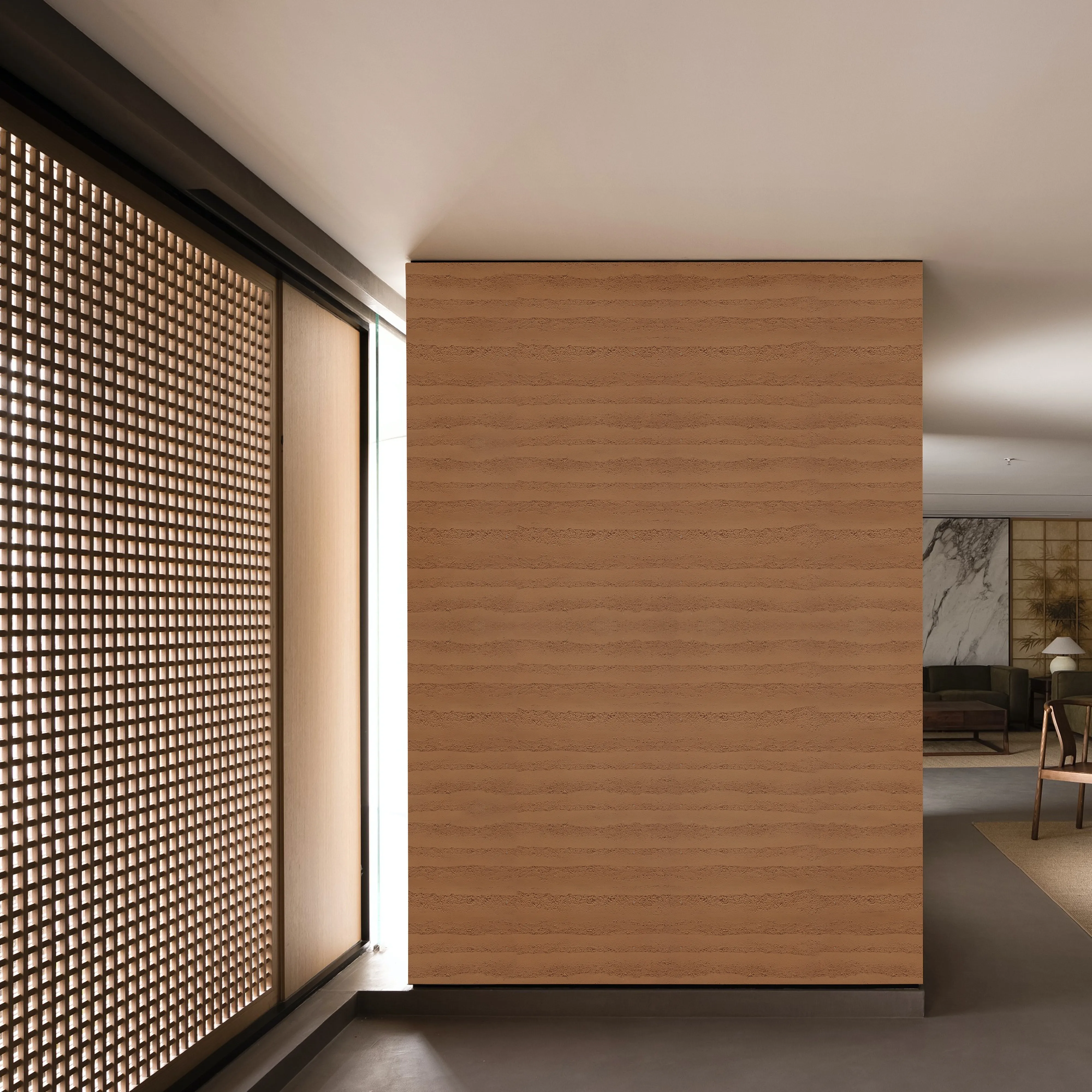
There's a quiet power in materials that feel like they've been shaped by time—materials that carry the weight of tradition but hum with the energy of modern innovation. Think of the way sunlight filters through a window and lands on a wall, turning its surface into a canvas of warmth and texture. That's the feeling COLORIA's Rammed Earth Board (Khaki) evokes: not just a building material, but a storyteller. For decades, COLORIA has been weaving together the past and present, and their Khaki Rammed Earth Board stands as a testament to how expertise, passion, and cutting-edge technology can turn something as elemental as earth into a masterpiece of design.
Walk into a space clad in this khaki-hued wonder, and you'll notice it immediately—the way it softens the light, the subtle variations in tone that mimic the natural gradients of soil, the gentle roughness that invites your fingertips to trace its surface. It's not just about aesthetics; it's about connection. This board doesn't just fill a wall—it creates a mood, a sense of rootedness in a world that often feels fleeting. And behind every slab lies a legacy: the legacy of rammed earth, reimagined through COLORIA's proprietary MCM (Modified Composite Material) technology, to meet the demands of today's architects, designers, and homeowners who refuse to compromise on beauty or durability.
Rammed earth isn't new. For centuries, civilizations across the globe—from the Great Wall of China to the cliff dwellings of the American Southwest—relied on this simple yet ingenious technique: compressing layers of earth, gravel, and clay into solid, load-bearing walls. There's a reason it endured: rammed earth is sturdy, sustainable, and deeply tied to the land it comes from. But as building trends shifted toward sleek concrete and mass-produced materials, traditional rammed earth took a backseat, dismissed as too fragile, too limited in color, or too slow to construct.
That's where COLORIA stepped in. In the early 2000s, as the world began to crave materials with soul—materials that told a story—COLORIA's team of engineers and designers asked a question: What if we could take the timeless charm of rammed earth and give it the strength, flexibility, and versatility of modern composites? The answer lay in MCM technology, a game-changer that would redefine what rammed earth could be. Unlike traditional rammed earth, which is heavy and prone to cracking, COLORIA's MCM-infused version is lightweight, flexible, and resistant to moisture, fire, and wear. It's rammed earth, but better—crafted for the way we live now.
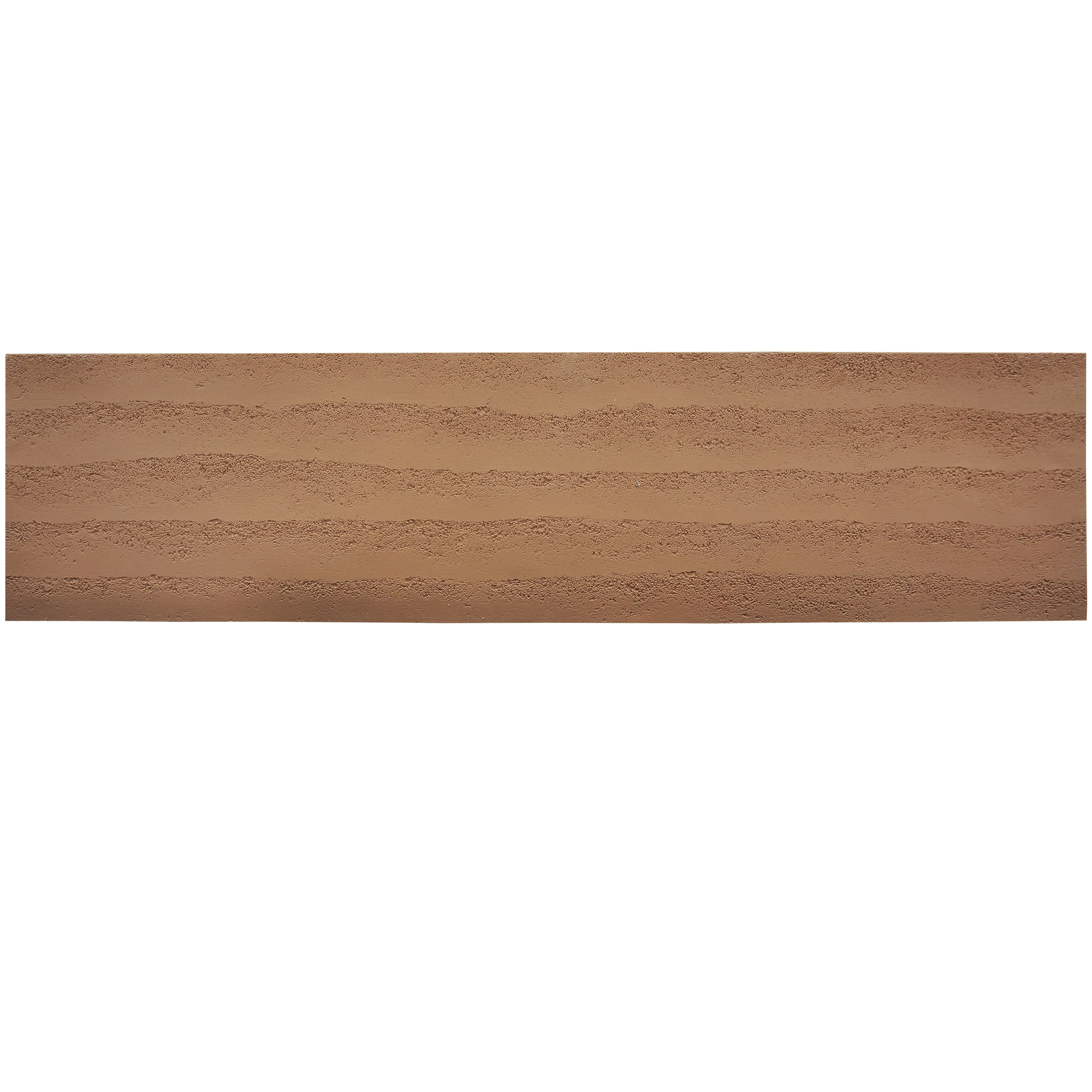
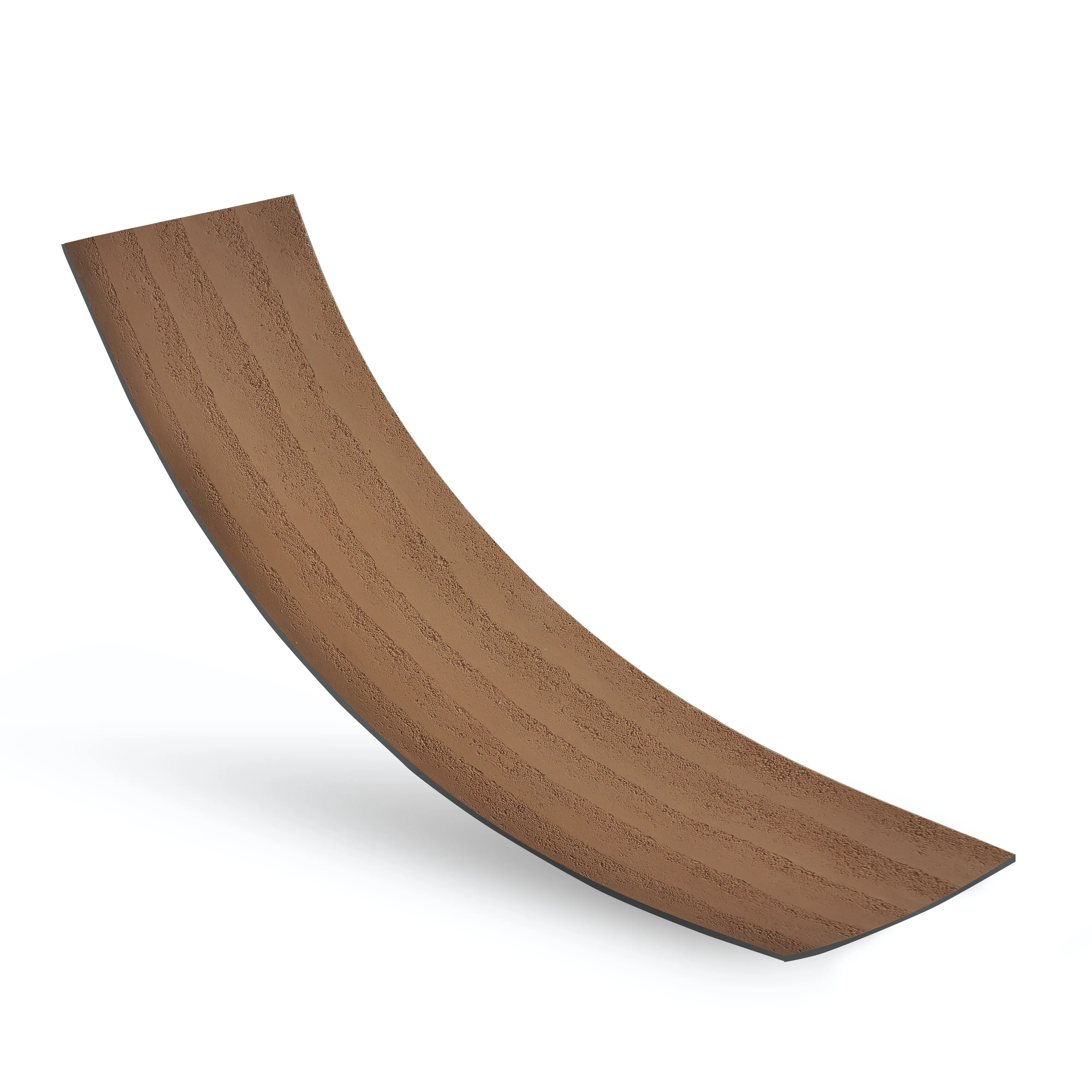
At the heart of COLORIA's Rammed Earth Board (Khaki) is MCM—Modified Composite Material—a technology that marries the best of natural materials with engineered precision. Here's how it works: raw earth (sourced from sustainable quarries, chosen for its rich, warm undertones) is blended with a proprietary mix of polymers and fibers, creating a composite that retains the earth's organic texture but gains remarkable strength. The mixture is then compressed under controlled pressure, layer by layer, in a process that mimics the ancient ramming technique but with modern rigor. The result? A board that's 30% lighter than traditional rammed earth, yet twice as strong. It's flexible enough to bend slightly without breaking (a boon for uneven walls or curved surfaces) and resistant to the elements, making it suitable for both indoor and outdoor use.
But MCM isn't just about durability—it's about preserving the "soul" of the material. Traditional rammed earth owes much of its beauty to imperfection: the tiny air pockets, the irregularities in color, the way it ages gracefully over time. COLORIA's MCM process enhances these qualities, not erases them. The Khaki shade, for example, isn't a uniform dye; it's achieved by carefully selecting earths with varying iron oxide content, which react differently to compression and light. The result is a hue that shifts subtly throughout the day—warm golden at dawn, soft taupe at noon, rich amber at dusk—like a landscape in motion.
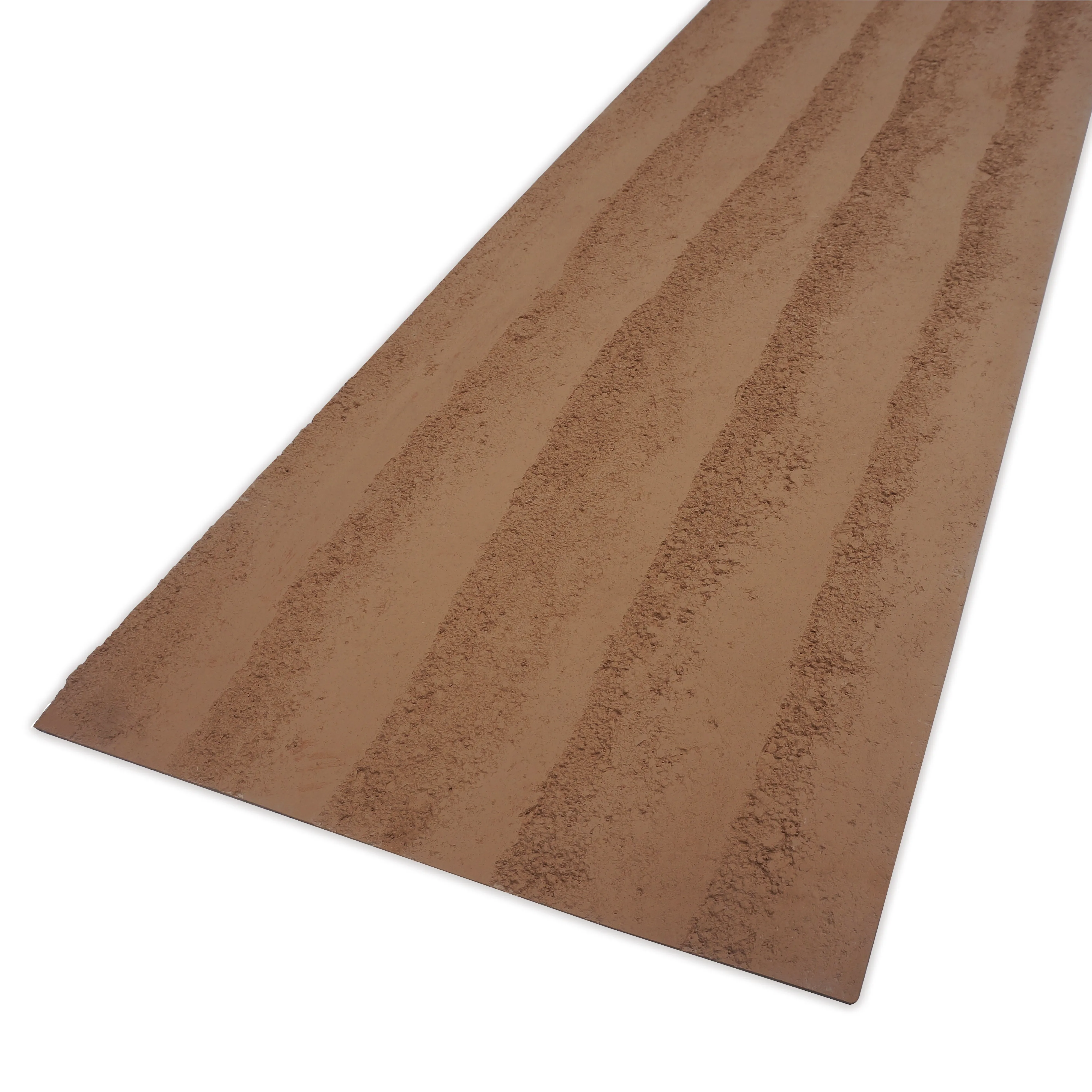
Why khaki? For COLORIA's design team, the choice was intentional. Khaki is a color that feels both grounded and versatile—it pairs effortlessly with cool grays and whites, adds depth to warm wood tones, and softens bold accents like terracotta or navy. It's the color of sun-baked fields, of desert sands at twilight, of the walls of a centuries-old adobe home. In a world of stark whites and harsh blacks, khaki is a breath of fresh air—a reminder of the earth's quiet beauty.
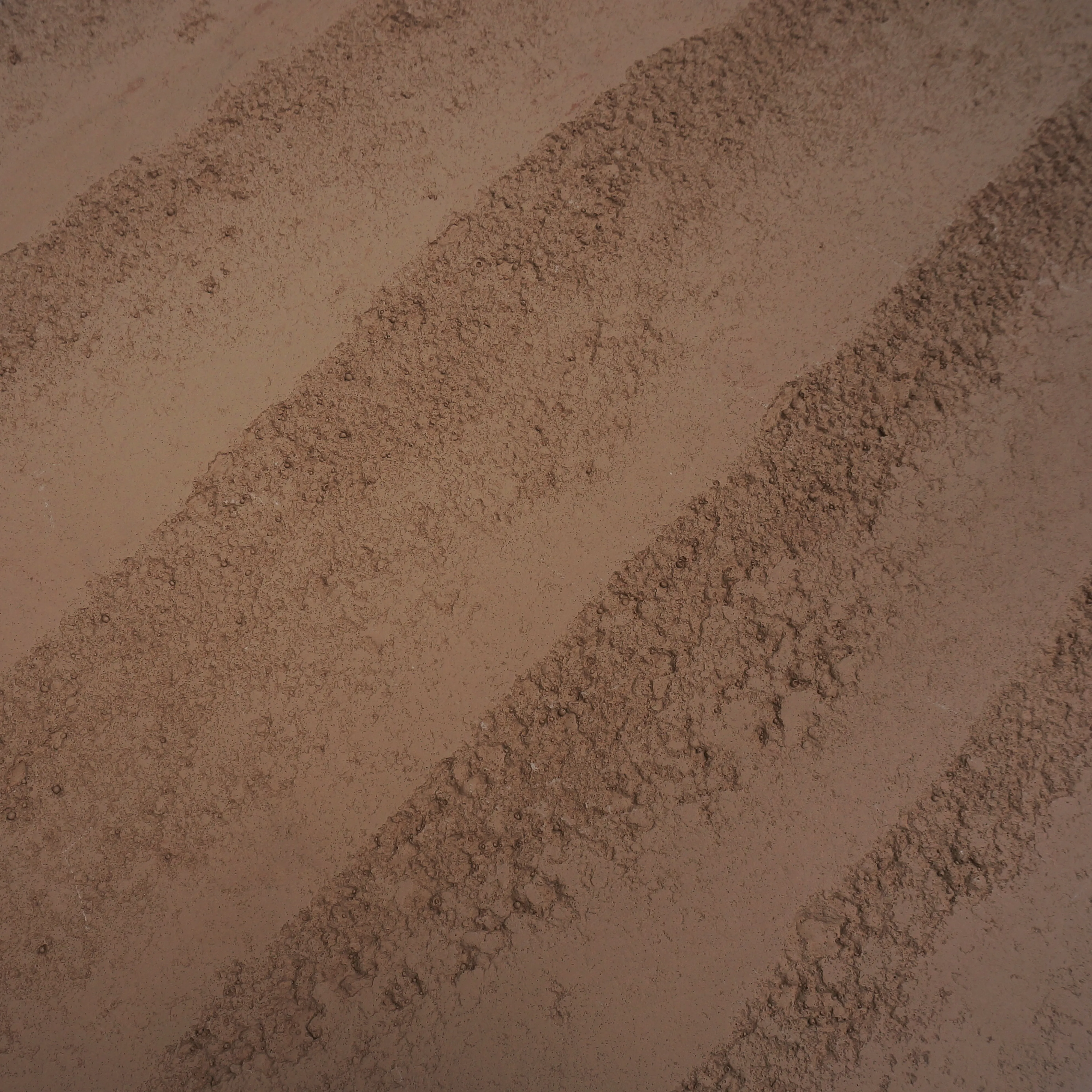
But the magic of this board goes beyond color. Let's talk texture. Run your hand over its surface, and you'll feel the telltale marks of the ramming process: tiny ridges and valleys, like the fingerprints of the craftsmen who made it. There are no two identical slabs—each one has its own unique pattern of light and shadow, a testament to the organic nature of the material. It's a texture that invites interaction: children will press their palms against it, guests will trace its lines while chatting, homeowners will find themselves pausing to admire how it catches the light. In a digital age where so much of life is smooth and screen-like, this tactile quality is revolutionary.
Durability, too, is a point of pride. Unlike wood grain board, which can warp or fade in moisture, or fair-faced concrete, which can crack under stress, the Khaki Rammed Earth Board holds its own. It's resistant to mold, mildew, and stains (a quick wipe with a damp cloth is all it takes to clean), and it ages like fine wine—developing a subtle patina over time that only deepens its character. One Colorado homeowner, who used it for their outdoor patio wall, put it best: "After five years of snow, rain, and harsh sun, it still looks like the day we installed it—only warmer, like it's absorbed the memories of all the barbecues and sunset conversations we've had there."
To truly appreciate the Khaki Rammed Earth Board, it helps to see how it compares to other popular materials. Let's break it down:
| Feature | Khaki Rammed Earth Board (MCM) | Fair-Faced Concrete | Wood Grain Board |
|---|---|---|---|
| Texture | Organic, earthy ridges with subtle variations; warm to the touch | Smooth, industrial; cool, hard surface | Reproduced wood grain; can feel artificial in high-traffic areas |
| Durability | Weather-resistant, mold-proof, fade-resistant; ages gracefully | Strong but prone to cracking; stains easily if unsealed | Prone to warping, scratching, and moisture damage |
| Aesthetic Vibe | Nostalgic yet modern; warm, inviting, and rooted | Minimalist, industrial; can feel cold in residential spaces | Cozy but limited to "rustic" or "farmhouse" styles |
| Sustainability | Made from natural earth and recycled polymers; low carbon footprint | High embodied energy; requires cement (a major CO2 emitter) | Often made from non-FSC wood or vinyl; not biodegradable |
| Flexibility | Can be curved or cut to custom shapes; lightweight for easy installation | Heavy and rigid; hard to modify once set | Limited to flat surfaces; prone to splitting if bent |
The beauty of the Khaki Rammed Earth Board lies in its versatility—it adapts to any space, enhancing its unique character. Let's explore a few ways designers and homeowners are using it to transform environments:
In homes, this board becomes more than a wall—it becomes a backdrop for life. Imagine a kitchen where the backsplash is clad in Khaki Rammed Earth: the earthy tone softens the gleam of stainless steel appliances, and the texture adds depth to an otherwise sleek space. Or a bedroom accent wall behind the bed, where the board's warmth creates a cocoon-like feel, making mornings feel slower and evenings more restful. One California family even used it to build a freestanding fireplace surround; "It's the heart of our home," they say. "The kids sit on the hearth, and the khaki color makes the firelight look like it's dancing on the earth itself."
Restaurants, boutiques, and offices are also falling in love with this material. A café in Portland, Oregon, used it for their main dining room wall, pairing it with reclaimed wood tables and pendant lights made from recycled glass. "Our customers often comment on how 'grounded' the space feels," says the owner. "It's not just a place to eat—it's a place to unwind, like visiting a friend's cozy cabin." A boutique clothing store in New York City took a different approach, using the board as a backdrop for their minimalist displays. "The khaki color lets the clothes take center stage, but the texture adds a tactile element that makes people linger," the designer explains. "It's a subtle way to say, 'Slow down. Touch. Experience.'"
Thanks to its weather resistance, the Khaki Rammed Earth Board is equally at home outdoors. A hotel in Arizona used it to build a series of private patios, each overlooking the desert. "The board blends seamlessly with the landscape," says the architect. "From a distance, you can barely tell where the natural desert ends and the hotel begins." A homeowner in Vermont used it to clad their garden wall, which now supports climbing roses and hosts a family of sparrows. "It's become a living part of the garden," they note. "The earthy color makes the flowers pop, and the texture gives the birds a place to nest. It's like we built a wall, but it built a community."
Behind every Khaki Rammed Earth Board is a team of craftsmen who treat their work not as a job, but as an art form. At COLORIA's facility in Colorado, the process begins with sourcing the earth. "We partner with local quarries that have been family-owned for generations," says Maria Gonzalez, COLORIA's head of material sourcing. "They know the land, and they know which layers of earth will give us that perfect khaki hue. It's a relationship built on trust—we visit the quarries seasonally, walking the sites and hand-selecting batches. Sometimes, we'll even delay production if the earth doesn't meet our standards. Quality can't be rushed."
Once the earth arrives at the facility, it's tested for consistency—moisture content, particle size, mineral composition—before being blended with the MCM additives. This blending is done in small batches, ensuring each mix is uniform but retains the earth's natural character. Then comes the ramming: using custom-built machines that mimic the pressure of traditional ramming tools but with precise control. "We don't just press once and call it a day," explains Juan Martinez, a master craftsman with 15 years at COLORIA. "We ram each layer three times, rotating the board to ensure even compression. It's like making bread—you have to feel the texture, adjust as you go. Machines help, but the human eye and hand are what make the difference."
After ramming, the boards are cured in a climate-controlled room for 48 hours, allowing the MCM polymers to bond with the earth. Finally, they're inspected by hand—each slab checked for color consistency, texture, and strength. "We reject about 5% of the boards," says Gonzalez. "Not because they're flawed, but because they don't meet our 'soul' standard. A board can be technically perfect, but if it lacks that subtle variation in tone or that little 'imperfection' that makes it feel alive, we won't send it out. Our customers deserve the best."
In the end, COLORIA's Rammed Earth Board (Khaki) is about more than building walls. It's about building connections—between people and the spaces they inhabit, between tradition and innovation, between the earth and the homes we create. It's a material that remembers its roots but embraces the future, and in doing so, it helps us create spaces that feel less like "design" and more like home.
As we move forward in a world that often prioritizes speed and efficiency over soul, materials like this remind us of what matters: the way a wall can make us feel safe, the way texture can spark joy, the way a color can bring back a memory of a childhood spent playing in the dirt. COLORIA's decades of expertise have culminated in something rare: a material that's technically advanced but emotionally resonant, durable but deeply human.
So the next time you step into a space clad in Khaki Rammed Earth Board, take a moment to pause. Let your fingers trace its surface. Notice how the light plays on its tones. And remember: this isn't just a wall. It's a story—of earth, of craft, of the people who believed that the most innovative materials are the ones that never forget where they came from.
Recommend Products












