
Walk into any iconic building—whether it's a century-old library with oak beams or a sleek modern museum with shimmering facades—and you'll feel it: materials aren't just building blocks. They're storytellers. For decades, architects and builders have danced between tradition and innovation, weighing the comfort of the familiar against the promise of the new. Today, we're zooming in on two materials that have shaped skylines and sparked debates in construction circles: MCM (Modified Composite Material) and Sawing Wood Board. One is a product of cutting-edge engineering; the other, a timeless classic. Let's unpack their journeys, their strengths, and how they stack up in the global projects that define our built world.
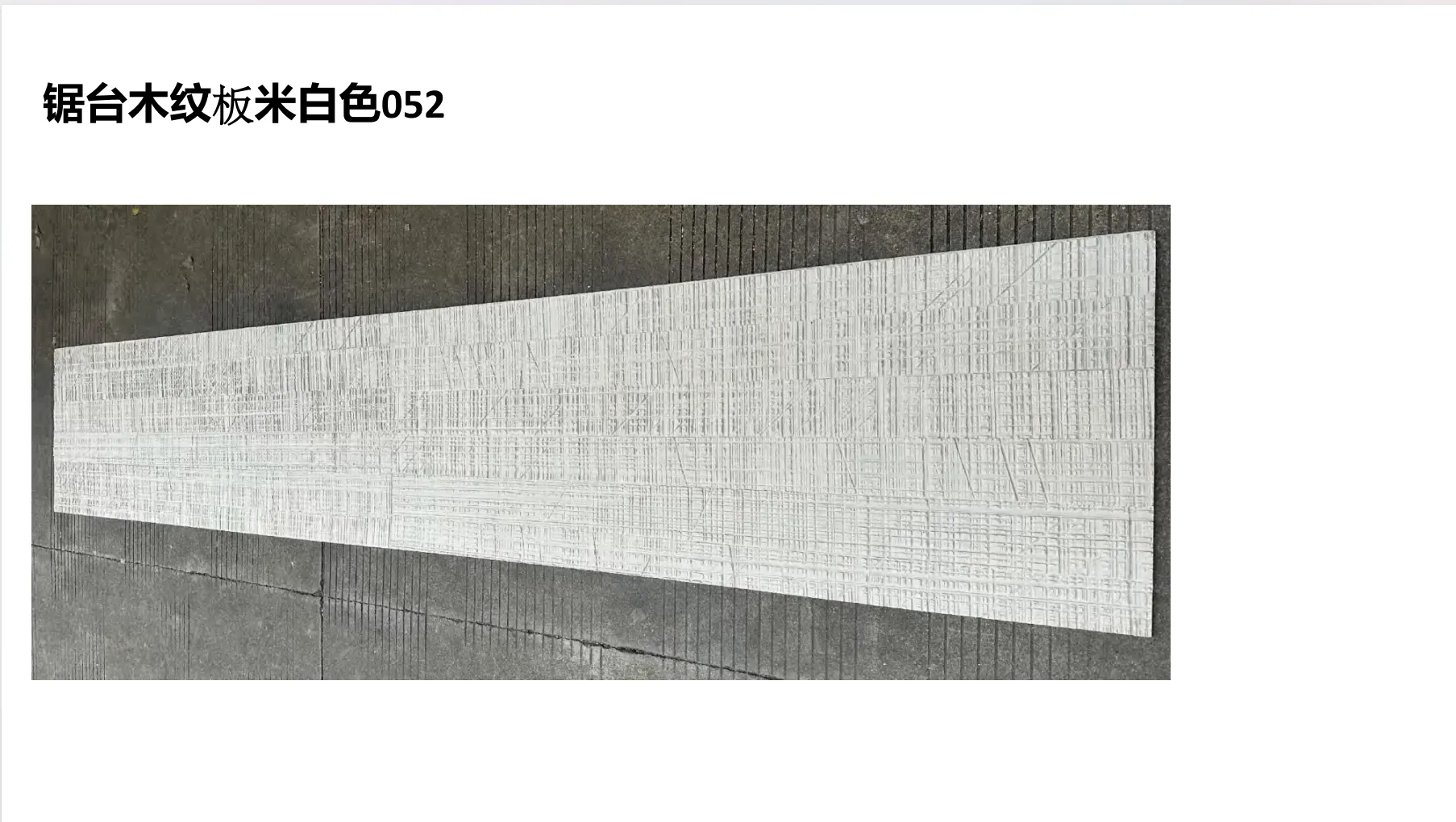
There's a reason sawing wood board has been a go-to for builders for centuries. Run your hand over a freshly cut plank, and you'll feel the grain—the fingerprint of nature itself. It's warm, organic, and carries a quiet elegance that no synthetic material has fully replicated. Think of the cozy cabins in the Swiss Alps, the rustic charm of a beachfront bungalow, or the polished wood paneling in a historic library; wood doesn't just fill space—it creates atmosphere.
But tradition comes with trade-offs. Let's talk about the elephant in the room: wood is a living material, even after it's cut. Expose it to moisture, and it swells; let it dry out, and it shrinks—often warping or cracking in the process. In humid climates like Southeast Asia, a wooden facade might start to rot within years. In termite-prone regions? You're looking at regular treatments and inspections. And then there's sustainability: while wood is renewable, mature trees take decades to grow, and deforestation remains a global concern. Even with certifications like FSC, the math is tough: a single commercial project might require hundreds of trees, and maintenance—staining, sealing, replacing damaged boards—adds up over time.
Don't get me wrong—sawing wood board still has its place. For low-traffic, climate-controlled spaces (think a boutique café or a residential interior), its warmth is unmatched. But when builders tackle global projects—say, a hotel in the Gobi Desert or a skyscraper in a coastal city—wood's limitations start to feel like deal-breakers.
If sawing wood board is the wise elder of building materials, MCM is the innovative upstart—bold, adaptable, and unafraid to challenge the status quo. Short for Modified Composite Material, MCM is exactly what it sounds like: a blend of materials (think polymers, resins, and natural minerals) engineered to be stronger, lighter, and more versatile than many traditional options. And it's not just one material—it's a family. From MCM flexible stone that bends like fabric to MCM 3D printing series that lets architects dream in impossible shapes, MCM has rewritten the rulebook for what a building material can do.
How did MCM become a global player? Let's rewind to the late 20th century, when builders started craving materials that could handle harsh environments without sacrificing aesthetics. Wood warped, concrete cracked, and natural stone was heavy and expensive. MCM stepped in with a promise: durability without the bulk, beauty without the upkeep. Take lunar peak silvery MCM panels, for example—designed to withstand sub-zero temperatures and heavy snowfall, they've become a staple in ski resorts from Colorado to the French Alps. Or foamed aluminium alloy board (vintage silver) , which adds a sleek, industrial edge to commercial buildings while resisting corrosion in coastal areas.
What really sets MCM apart is its flexibility—both literal and figurative. Unlike rigid stone or brittle wood, MCM can be curved, cut, or printed into intricate patterns. Want a facade that mimics the ripples of a stream? Wave panel MCM has you covered. Dreaming of a wall that shimmers like starlight? Travertine (starry blue) MCM brings that vision to life. And because it's lightweight, installation is a breeze—no need for heavy machinery or reinforced structures. For global projects where time and labor costs vary wildly, that's a game-changer.
To really understand the difference, let's put MCM and sawing wood board side by side. Below is a breakdown of their key features, based on decades of real-world use in projects across the globe:
| Feature | Sawing Wood Board | MCM |
|---|---|---|
| Durability | Prone to warping, rot, and pests; typically lasts 10–15 years with heavy maintenance. | Resistant to moisture, UV rays, and corrosion; lifespan of 30+ years with minimal upkeep. |
| Sustainability | Renewable but slow-growing; risks deforestation without responsible sourcing. | Often made with recycled materials; lower carbon footprint due to lightweight transport and longevity. |
| Design Flexibility | Limited by natural grain and rigidity; custom shapes require specialized tools. | Highly flexible—can be 3D printed, curved, or colored to match any design vision. |
| Installation | Labor-intensive; requires precise measuring and sealing to prevent damage. | Lightweight and easy to install; reduces labor time by up to 40% in many cases. |
| Cost | Lower upfront cost, but high long-term maintenance expenses (staining, repairs). | Higher upfront cost, but lower total cost of ownership over time. |
Numbers tell part of the story, but real projects? They tell the whole truth. Let's look at two examples where the choice between MCM and sawing wood board made all the difference.
A luxury hotel chain wanted to build two sister properties: one in Bali (tropical, humid) and one in Iceland (cold, windy). For Bali, the initial plan was to use sawing wood board for the facade, leaning into the island's "rustic luxury" vibe. But within three years, the wood had warped from monsoon rains, and termites had chewed through the lower panels. Repairs cost $200,000, and the hotel lost revenue during renovations.
For the Iceland location, the team pivoted to MCM—specifically boulder slab (vintage black) panels. These panels are designed to withstand freezing temperatures and high winds, and their matte finish complements the stark Icelandic landscape. Five years later, the facade looks as crisp as day one, with zero maintenance costs beyond an annual power wash. Guests rave about the "modern yet timeless" aesthetic, and the hotel has become a (Instagram hotspot) for its unique exterior.
A tech company in Singapore wanted to renovate its headquarters with a "biophilic design"—bringing nature indoors. The original plan called for sawing wood board accents in the lobby, but the city's high humidity raised red flags. Instead, the architects suggested MCM flexible stone in travertine (starry green) , which mimics the look of natural stone but bends to fit the lobby's curved walls. To add warmth, they paired it with fair-faced concrete floors, creating a space that feels organic without the risks of real wood.
Employees love the design, and the company reports a 15% boost in productivity (attributed to the calming, nature-inspired environment). Best of all? The MCM panels cost 10% less than the high-grade teak originally budgeted for, and installation took half the time.
In today's world, "sustainable" isn't just a buzzword—it's a mandate. Both MCM and sawing wood board have sustainability claims, but they're miles apart in execution.
Wood is often hailed as "renewable," but here's the catch: a mature oak tree takes 60+ years to grow, and even fast-growing pine takes 25–30 years. When you factor in logging, transportation, and treatment chemicals (to prevent rot), wood's carbon footprint can be surprisingly high. And let's not forget waste—sawing wood board generates 15–20% waste during production, as off-cuts and imperfect planks are discarded.
MCM, on the other hand, is a sustainability standout. Many MCM products (like foamed aluminium alloy board (vintage gold) ) are made with recycled metals and plastics, diverting waste from landfills. Its lightweight nature also reduces fuel consumption during shipping—transporting MCM panels emits 40% less CO2 than transporting the same area of natural stone. And because MCM lasts longer, it needs to be replaced less frequently, cutting down on lifecycle emissions.
That said, responsible wood sourcing matters. Brands like FSC-certified lumber are making a difference, and for small-scale, local projects, wood can still be a sustainable choice. But for global projects with large material needs? MCM's environmental edge is hard to ignore.
So, which is better? The answer, as with most things in construction, is: it depends. Sawing wood board will always have a place in projects where warmth and tradition are non-negotiable—think a small cabin in the woods or a heritage restoration where historical accuracy matters. Its natural beauty is irreplaceable, and when maintained properly in mild climates, it can last decades.
But for global projects—those spanning continents, climates, and budgets—MCM is the clear workhorse. It's durable enough to withstand Iceland's blizzards, flexible enough to match Bali's curves, and sustainable enough to align with 21st-century green goals. When you factor in lower maintenance costs, faster installation, and endless design possibilities, MCM isn't just an alternative to wood—it's a upgrade.
As architects and builders continue to push boundaries, materials like MCM are leading the charge. We're already seeing MCM 3D printing series create facades that were once impossible—think buildings that look like they're draped in fabric, or walls that change color with the light. And with innovations like gradient color rammed earth board and starmoon stone , MCM is blurring the line between "man-made" and "natural."
Sawing wood board, for its part, will endure as a symbol of craftsmanship and nostalgia. But in a world where buildings need to be resilient, sustainable, and stunning, MCM is proving that the future of construction isn't just about building—it's about building smarter.
So, the next time you walk past a striking building, take a closer look. Chances are, you're not just seeing walls—you're seeing the result of decades of expertise, and a choice that balances the best of the past with the promise of the future.
Recommend Products












