
Walk through any modern city, and you'll notice a quiet revolution happening on building facades, interior walls, and even furniture: curves are taking over. Gone are the days when architecture was defined solely by sharp angles and rigid lines. Today's designers and architects are embracing curves to create spaces that feel dynamic, inviting, and alive—think of the sweeping roof of a museum that mimics a wave, or a boutique's interior wall that gently wraps around customers, guiding them through the space. But here's the catch: not all materials are built to bend. When it comes to crafting those smooth, flowing curves, the choice of material can make or break a design. Two contenders often rise to the top in these conversations: the timeless Granite Portoro and the innovative MCM Flexible Stone . Let's dive into how these materials stack up, especially when the goal is to turn a flat blueprint into a curved masterpiece.
Before we compare their ability to handle curves, let's get to know each material. They're like two characters in a design story—one steeped in tradition, the other born from innovation—each with its own strengths, quirks, and loyal fans.
If architecture had a red carpet, Granite Portoro would be the A-lister strutting down it. Known for its dramatic black base swirled with golden veins, this natural stone has been turning heads for centuries. Quarried from select sites in Italy, it's prized for its luxury, durability, and the kind of depth that only nature can create. Walk into a high-end hotel lobby or a historic bank, and you might spot Granite Portoro on floors, countertops, or even feature walls. It's a material that screams "permanence"—heavy, dense, and built to last decades (if not centuries). But here's the thing about classics: they don't always play well with change. And in the world of curves, change is the name of the game.
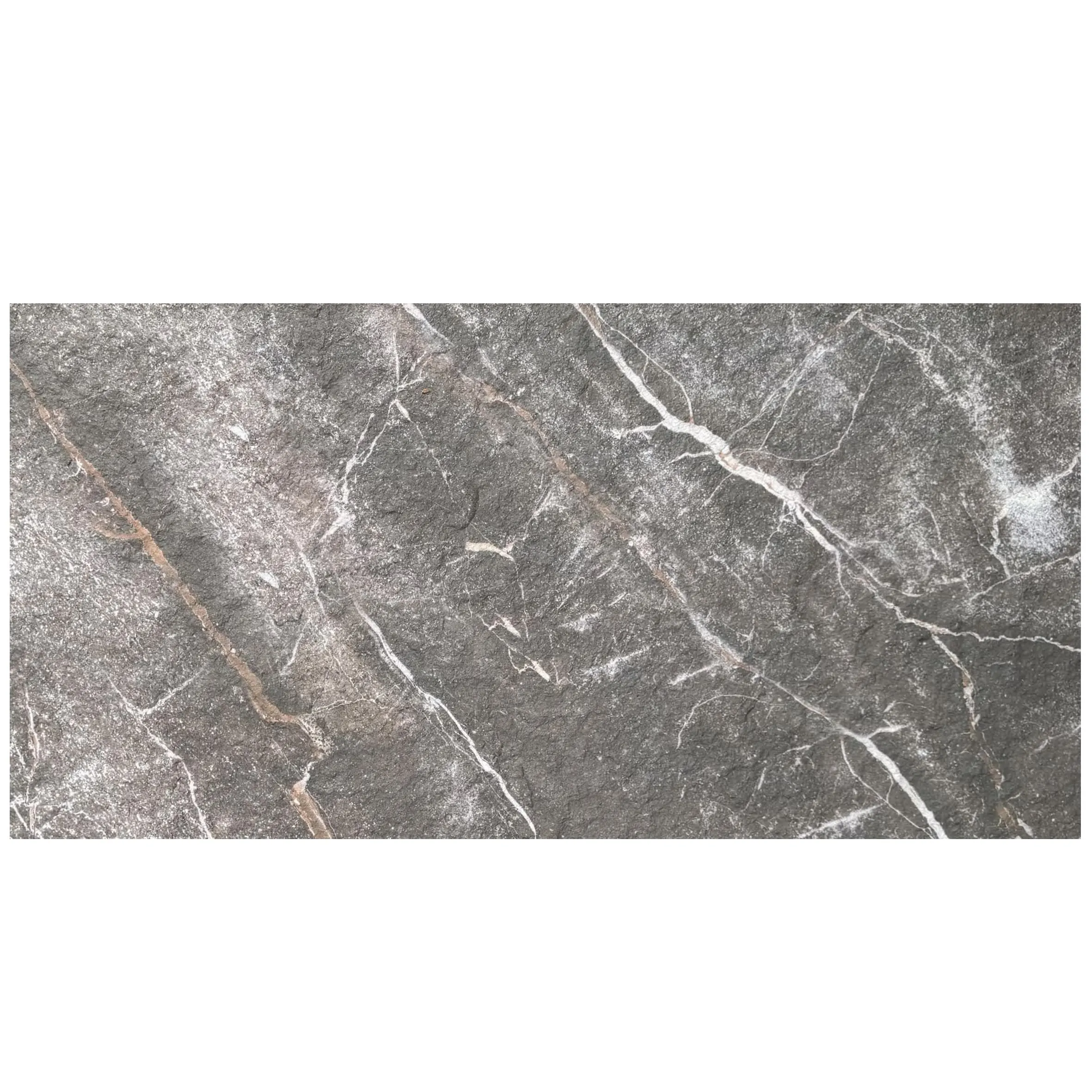
Enter MCM Flexible Stone, the new kid on the block that's rewriting the rules. Short for "Modified Composite Material," MCM is a lightweight, engineered material that blends natural stone particles with polymers and fibers. Think of it as stone's more adaptable cousin—retaining the look and texture of natural stone but with a flexibility that would make a gymnast jealous. Part of systems like the MCM big slab board series , MCM Flexible Stone comes in thin sheets (often just 3-5mm thick) that can bend, twist, and conform to curved surfaces without cracking. It's the material designers reach for when they want the beauty of stone but the freedom to dream in curves. And it's not alone in the innovation space—materials like foamed aluminium alloy board (another modern favorite) share similar lightweight, flexible traits, but MCM stands out for its ability to mimic the organic feel of natural stone.
Curved surfaces aren't just about aesthetics—they're about function, too. A curved wall can improve acoustics in a concert hall, create a sense of flow in a retail space, or even reduce wind resistance on a skyscraper facade. But to achieve those benefits, the material has to work with the curve, not against it. Let's see how our two contenders handle the pressure.
Imagine trying to wrap a brick around a basketball. That's roughly the challenge with Granite Portoro and curves. This stone is dense—we're talking 2.7 grams per cubic centimeter dense. A single slab can weigh over 100kg, and its rigid structure means it doesn't bend; it breaks if forced. So, how do designers even attempt curves with Granite Portoro? Typically, they use a technique called "segmenting." Instead of one continuous curve, the surface is made up of small, flat stone pieces cut at slight angles, creating the illusion of a curve when viewed from afar. It's like how a circle in a pixel art game is just a bunch of squares—close up, you see the seams; from a distance, it reads as smooth.
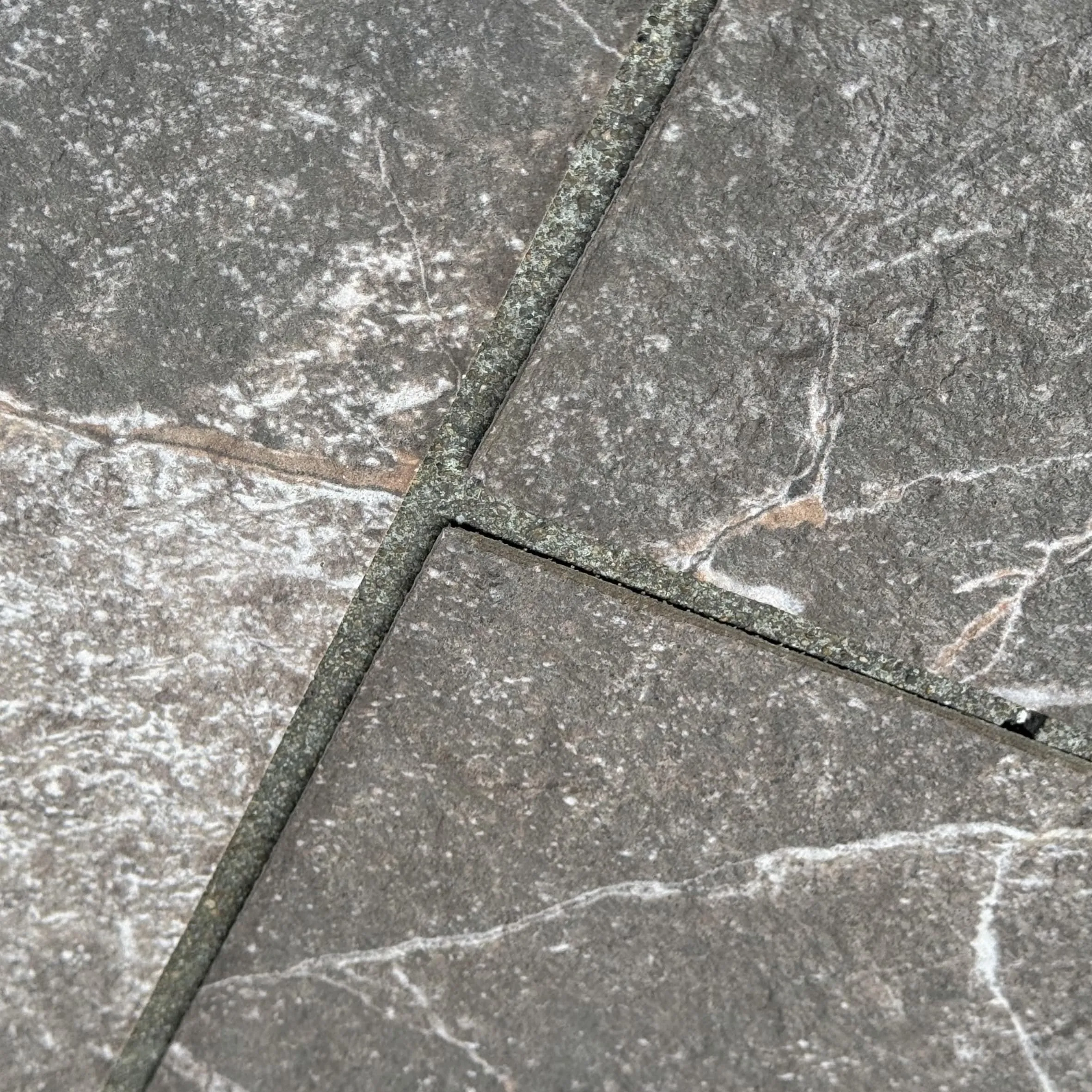
But this approach has trade-offs. First, it's labor-intensive. Each segment has to be precisely measured, cut, and polished to fit the angle, which drives up costs and installation time. Second, the seams are inevitable. Even with skilled craftsmanship, those tiny gaps can collect dust, water, or grime over time, dulling the stone's beauty. Third, weight becomes a structural issue. A curved wall made of segmented Granite Portoro requires heavy-duty support systems—steel frames, reinforced concrete—to hold up all that mass. For a small accent wall, this might be manageable, but for a large-scale facade or a free-standing curved structure? It quickly becomes impractical.
Take, for example, a designer tasked with creating a curved backdrop for a luxury jewelry store. They love Granite Portoro's opulence, but the budget and timeline can't accommodate the segmented installation. The result? A compromise: a flat wall with a Granite Portoro veneer, losing the fluidity the design originally called for. It's a common story—and one that highlights why traditional stone isn't always the best fit for curves.
Now, imagine wrapping a thin, flexible sheet of material around that same basketball. That's MCM Flexible Stone. At just 3-5mm thick and weighing 4-6kg per square meter (compared to Granite Portoro's 20-30kg per square meter), it's light enough to be handled by two people and flexible enough to bend to radii as small as 30cm (and even tighter with specialized manufacturing). No segmenting, no seams—just a single, continuous sheet that hugs the curve like a second skin.
How does it do that? The secret is in its composition. MCM starts with natural stone aggregates (think marble, granite, or travertine dust) mixed with a polymer binder and reinforced with fiberglass mesh. This blend creates a material that's strong but pliable—like a stiff fabric that can be shaped without losing its integrity. During manufacturing, the sheets can be pre-formed to specific curve radii, or they can be bent on-site during installation, giving designers last-minute flexibility to tweak the shape if needed.
For architects, this is a dream come true. Take the MCM big slab board series, which includes large-format sheets (up to 1200x2400mm) that can cover expansive curved surfaces with minimal joints. A museum facade with a 50-meter-long curved section? Instead of hundreds of segmented stone pieces, installers can apply a few large MCM sheets, cutting down on labor and ensuring a seamless look. And because MCM is lightweight, the structural support required is minimal—often just a simple metal frame or even a plywood backing. This not only reduces construction costs but also opens up possibilities for curved designs in spaces where weight is a concern, like rooftop gardens or interior partitions.
Consider a recent project: a boutique hotel in Barcelona wanted a curved lobby wall that felt like a "wave of stone," reflecting the city's coastal vibe. The design team initially considered natural travertine but worried about the weight and cost. Then they discovered MCM Flexible Stone, which could mimic travertine's texture and color while bending to their desired 2-meter radius curve. The result? A wall that flows from the floor to the ceiling, with no visible seams, and a installation process that took half the time of traditional stone. Guests walk in and immediately comment on how "soft" and "inviting" the space feels—all thanks to MCM's ability to bring the curve to life.
To make it easier to see how these materials stack up, let's break down the key factors designers care about when working with curved surfaces:
| Factor | Granite Portoro | MCM Flexible Stone |
|---|---|---|
| Weight (per sqm) | 20-30kg | 4-6kg |
| Minimum Bend Radius | Not bendable (requires segmentation) | 30cm (tighter with customization) |
| Installation Time | High (segment cutting, precision fitting) | Low (continuous sheets, easy adhesion) |
| Seam Visibility | High (segmented joints) | Low (minimal seams with large-format sheets) |
| Structural Support Needed | Heavy-duty (steel frames, reinforced concrete) | Light (simple metal or wood backing) |
| Cost (Material + Installation) | High ($150-$300 per sqm, plus labor) | Moderate ($80-$150 per sqm, lower labor) |
| Design Freedom | Limited (illusion of curves only) | High (true, continuous curves) |
Beyond the material itself, installation is where the rubber meets the road (or the curve meets the wall). Let's pull back the curtain on what it's like to work with each material on a curved project.
Installing Granite Portoro on a curved surface is a team sport. It starts with a structural engineer, who calculates the load-bearing requirements and designs a support frame. Then, a stone mason creates a 3D model of the curve, breaking it into segments—each with a specific angle and dimensions. The stone is quarried, cut into these segments using diamond-tipped saws, and polished to a high shine. On-site, the installation crew first mounts the support frame, then applies mortar or epoxy to each segment, carefully aligning them to create the angled illusion. Finally, the seams are filled with grout, and the entire surface is sealed to protect against stains.
Each step is prone to delays. If a segment is cut even 1mm off, it won't fit, requiring a replacement. Weather can slow down outdoor installations, as mortar needs time to cure. And let's not forget safety—maneuvering heavy stone slabs on scaffolding or ladders increases the risk of accidents. It's a process that demands patience, skill, and a healthy budget.
MCM Flexible Stone installation, by contrast, feels almost like a DIY project (though we still recommend pros!). The process starts with preparing the substrate—the surface the MCM will adhere to. Since MCM is lightweight, the substrate can be as simple as a wooden board, a metal mesh, or even a foam core for interior applications. The sheets are cut to size using standard tools—a utility knife or a jigsaw—no diamond saws needed. Then, a specialized adhesive (often a polymer-based mortar) is applied to the back of the MCM sheet, which is then pressed onto the curved substrate. Because the material is flexible, it conforms to the curve naturally, with no need for force. Finally, any seams between sheets are filled with a matching sealant, and the surface is cleaned with water.
The difference in time is staggering. A team of two installers can cover 50-100 square meters of curved surface with MCM in a day, compared to 10-15 square meters with Granite Portoro. And because there's no heavy lifting, the risk of injury is significantly lower. For a project on a tight deadline—say, a restaurant renovation that needs to open in six weeks—this speed is a game-changer.
Curved surfaces aren't just about looks—they need to stand the test of time, too. Granite Portoro has a reputation for durability, and for good reason. It's scratch-resistant, heat-resistant, and can withstand decades of wear and tear with minimal maintenance. A well-sealed Granite Portoro surface can last 50+ years, making it a favorite for historic buildings or high-traffic areas like hotel lobbies.
But MCM Flexible Stone holds its own here, too. While it's not as hard as natural stone, its polymer binder makes it resistant to cracks, chips, and moisture. Most MCM products come with a 15-20 year warranty, and real-world tests show they can last even longer with proper care. For example, a shopping mall in Singapore installed MCM Flexible Stone on a curved facade over 12 years ago, and today, it still looks as vibrant as the day it was installed—no fading, no peeling, just the same smooth curve.
The key difference? Maintenance. Granite Portoro needs annual sealing to prevent stains, especially in areas with high humidity or spills. MCM, on the other hand, is inherently water-resistant, and a simple wipe with soap and water is usually enough to keep it clean. For busy commercial spaces or homeowners who don't want to fuss with upkeep, MCM's low-maintenance nature is a big plus.
In today's design world, sustainability isn't just a buzzword—it's a priority. Both materials have environmental pros and cons, but MCM Flexible Stone edges ahead here, too.
Granite Portoro mining is resource-intensive. Quarrying stone requires heavy machinery that burns fossil fuels, and the process often disrupts local ecosystems. Plus, transporting those heavy slabs adds to the carbon footprint—shipping a container of Granite Portoro from Italy to the U.S., for example, emits significantly more CO2 than shipping lightweight materials. And because it's a natural resource, there's a limit to how much can be extracted without depleting the quarry.
MCM Flexible Stone, by contrast, is designed with sustainability in mind. Many manufacturers use recycled stone particles (leftover from natural stone processing) as the base material, reducing waste. The lightweight design means lower transportation emissions—one truck can carry 10 times more MCM sheets than Granite Portoro slabs, cutting down on fuel use. Plus, MCM is often installed without heavy metal fasteners or toxic adhesives, making it easier to recycle or repurpose at the end of its life.
Even materials like foamed aluminium alloy board , which share MCM's lightweight traits, often require energy-intensive manufacturing processes. MCM, with its blend of recycled stone and low-energy production, offers a more eco-friendly alternative for designers looking to reduce their project's carbon footprint.
The best way to understand the impact of material choice is to look at real projects. Let's explore two case studies where designers had to choose between Granite Portoro and MCM Flexible Stone for curved surfaces—and how that choice shaped the final result.
A museum in Lisbon wanted its new extension to feature a curved facade that symbolized "the flow of creativity." The design team initially leaned toward Granite Portoro for its artistic gravitas but quickly hit a wall (pun intended) with the structural engineer. The curved section was 25 meters tall and 10 meters wide—too large for segmented stone without massive steel supports, which would eat into the budget for art installations. They pivoted to MCM Flexible Stone, choosing a finish that mimicked the look of natural travertine (a lighter, more porous stone than Granite Portoro). The result? A seamless, curved facade that weighs 70% less than a Granite Portoro alternative, with installation completed in six weeks instead of three months. Today, visitors often comment on how the facade seems to "float" above the entrance, a effect made possible by MCM's light weight and flexibility.
A small café in Tokyo wanted a curved counter to encourage conversation between baristas and customers. The owner loved Granite Portoro's bold look but worried about the cost and weight. The solution? A hybrid approach: a base of MCM Flexible Stone (curved, lightweight, affordable) with a thin Granite Portoro veneer on the flat top surface (adding the luxury feel without the structural hassle). The curved front of the counter flows smoothly, thanks to MCM, while the countertop still has that high-end Granite Portoro shine. It's a creative compromise that shows how materials can work together—but it also highlights that when curves are the priority, MCM is often the practical choice.
At the end of the day, the choice between Granite Portoro and MCM Flexible Stone for curved surfaces comes down to priorities. If your project demands the unrivaled luxury of natural stone and you're willing to invest in segmentation, structural support, and maintenance, Granite Portoro can work—for small, accent curves. But for designs that prioritize fluidity, affordability, speed, and sustainability? MCM Flexible Stone is the clear winner.
Curved surfaces are more than just a trend—they're a way to create spaces that feel human, dynamic, and full of possibility. And with materials like MCM Flexible Stone (and innovations like the MCM big slab board series), designers no longer have to choose between beauty and functionality. They can have both: the organic look of stone, the freedom to bend, and the peace of mind that comes with a material built for the curves of modern design.
So, the next time you see a building with a sweeping, curved facade or a space with walls that seem to dance, take a closer look. Chances are, it's not just good design—it's the right material choice, working in harmony with the curve. And in that harmony? That's where truly unforgettable spaces are born.
Recommend Products












