
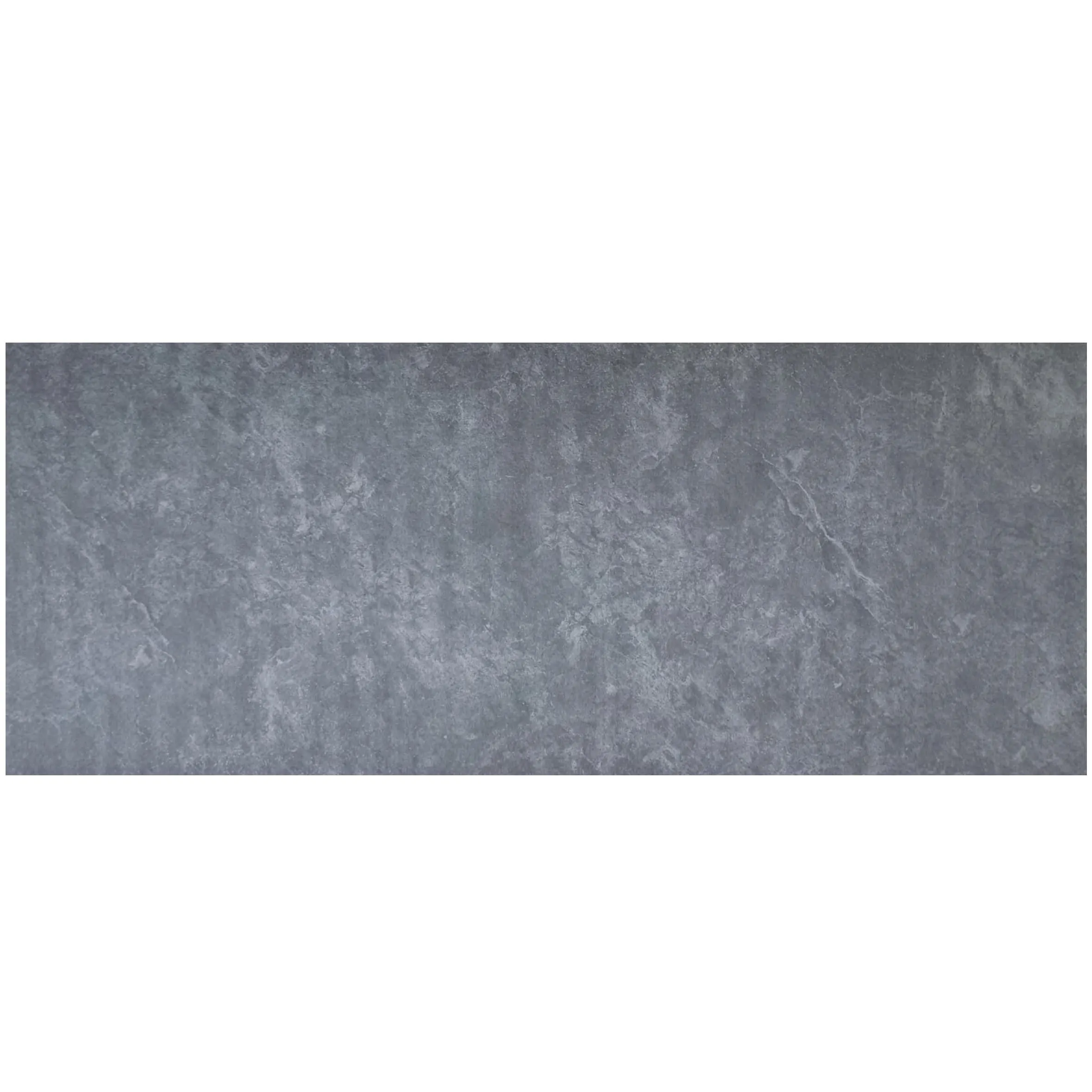
Every space has a story to tell—but it's the materials we choose that give that story a voice. When a client approached me last year with a vision for their urban loft—a space that felt both grounded in nature and unapologetically modern—I knew the journey would hinge on finding materials that could bridge those two worlds. Little did I know that one stone, with its quiet depth and celestial veining, would become the narrative anchor: Marble Interstellar Gray . What followed was a six-month odyssey of concept, collaboration, and creation, where every slab, every texture, and every color choice wove together to turn a blank canvas into a living, breathing story.
The client, a young architect with a love for both mid-century minimalism and stargazing, wanted their home to feel like "a conversation between the city skyline and the night sky." Their wish list was deceptively simple: open spaces, natural light, and materials that felt "alive"—not just static surfaces, but elements that changed with the time of day, that invited touch, that told a story of both human craft and natural formation.
We started with mood boards: images of concrete jungles at dusk, of galaxy photos from the Hubble Telescope, of Japanese ryokans with their tactile wood and stone. It was in one of those late-night sessions, flipping through samples, that I first laid eyes on Marble Interstellar Gray . Unlike the crisp whites or bold blacks of traditional marble, this slab had a soft, smoky base—like the haze of a distant nebula—shot through with threads of silver and charcoal that swirled and branched, almost as if constellations had been frozen mid-dance. Running my hand over it, I felt the coolness of stone, but also a subtle texture, as if tiny meteor showers had left their marks on its surface.
"That's it," the client said, leaning in. "It looks like the night sky, but it's right here, underfoot." In that moment, the concept clicked: we would build a space where Marble Interstellar Gray was the "sky," and other materials would be the "earth"—grounding it, balancing its ethereal quality with warmth and texture.

A hero material needs a supporting cast, and we spent weeks auditioning textures and tones that would complement Marble Interstellar Gray without overshadowing it. The goal was harmony, not competition—each material had to play a role in the narrative, whether as a counterpoint, a bridge, or a quiet accent.
| Material | Texture & Character | Role in the Space | Mood Contribution |
|---|---|---|---|
| Marble Interstellar Gray | Soft gray base with silver/charcoal veining; smooth with subtle crystalline texture | Flooring, kitchen island countertop | Ethereal, expansive, dynamic (shifts with light) |
| Fair-faced Concrete | Raw, matte finish with visible aggregate; cool to the touch | Wall paneling, fireplace surround | Industrial edge, grounding, timeless |
| Wood Grain Board | Warm, tactile grain; honey-toned with visible knots and growth rings | Accent wall, bookshelves, dining table | Nostalgic, inviting, organic warmth |
| Travertine (Starry Blue) | Porous, pitted surface with deep blue-gray hues and fossil-like inclusions | Bathroom backsplash, entryway bench | Mystical, earthy, textural contrast |
| Rammed Earth Board (Matcha Green) | Velvety matte finish; soft green with subtle gradient layers | Bedroom accent wall, window sills | Calming, rooted, connection to nature |
Each material was chosen for its ability to interact with light and touch. Fair-faced Concrete , for example, would absorb the harsh midday sun, softening the space, while Wood Grain Board would glow in the golden hour, its knots catching the light like scattered embers. Travertine (Starry Blue) , with its pitted surface, added a tactile mystery—run a hand over it, and you'd feel tiny indentations, like the surface of a moon. And Rammed Earth Board (Matcha Green) ? Its soft, almost powdery texture brought a quiet calm, a reminder of forest floors and misty mornings.
But the star, of course, was Marble Interstellar Gray . We decided to use it for the main flooring, where its veining would stretch across the open living area like a celestial map, and for the kitchen island—a slab so large (10 feet long) that it required a crane to install. "I want people to walk in and feel like they're stepping into a room that's been touched by both human hands and the universe," the client said. "No two veins are the same, right? Just like no two stars."

Design is rarely a solo act, and this project was no exception. The first hurdle? Sourcing the perfect Marble Interstellar Gray slab. We visited three quarries in Italy, sifting through dozens of samples until we found "the one"—a slab with a veining pattern that, when laid out, looked like the Andromeda Galaxy, with a single thick silver thread arcing across its center. "That's the comet," the client said, grinning. "It has to be."
Next came the contractors. Installing Marble Interstellar Gray required precision—its surface is softer than granite, prone to scratching if mishandled. We worked with a team that specialized in natural stone, but even they raised an eyebrow at the size of the kitchen island slab. "We'll need to reinforce the cabinets," the lead installer, Marco, said, tapping the slab with his knuckle. "This thing's a beauty, but she's heavy."
Then there was the challenge of balancing cool and warm tones. Marble Interstellar Gray and Fair-faced Concrete lean cool; Wood Grain Board and Rammed Earth Board (Matcha Green) lean warm. Too much cool, and the space would feel sterile; too much warm, and the marble's ethereal quality would get lost. We solved it by zoning the materials: the living area, with its large windows, got the marble and concrete, letting the light play up their coolness. The bedroom, a more intimate space, got the rammed earth and wood, creating a cocoon-like warmth. The bathroom, a bridge between the two, mixed Travertine (Starry Blue) with the marble, its blue-gray tones mirroring the marble's depth.
"Materials don't just sit next to each other—they talk," Marco told me one afternoon, as he laid the first marble tiles. "Your job is to make sure they're having a nice conversation, not arguing."
He was right. One afternoon, we noticed that the Wood Grain Board accent wall was casting a warm amber reflection onto the marble floor, turning the gray veining into a coppery hue. It was accidental, but magical—a reminder that the best design moments aren't planned; they're felt.

Six months after that first mood board session, we stood in the finished loft, sunlight streaming through the floor-to-ceiling windows. The Marble Interstellar Gray floor glowed, its veining shifting from silver to charcoal as clouds passed overhead. The kitchen island, now installed, dominated the space—not with size, but with presence. The Fair-faced Concrete fireplace, with its raw, unpolished edges, looked like it had grown from the floor, while the Wood Grain Board bookshelves, filled with the client's collection of vintage telescopes and star maps, felt like a bridge between past and present.
In the bathroom, Travertine (Starry Blue) covered the backsplash, its pitted surface catching water droplets like dew on stone. The bedroom, with its Rammed Earth Board (Matcha Green) wall, smelled faintly of clay and earth—a scent that lingered, even after the paint had dried. "It's like sleeping in a forest," the client said, running a hand over the wall. "I didn't realize a color could feel so… alive."
But the moment that stuck with me came later, at dusk. The client lit a single candle on the kitchen island, and as the light dimmed, the Marble Interstellar Gray seemed to transform. The silver veins glowed softly, as if lit from within, and the charcoal base deepened, swallowing the light. "Look," the client whispered, pointing to the arc of silver we'd loved in the quarry. "It's like the comet is moving now."

Design isn't just about creating pretty spaces—it's about creating spaces that hold memories. A year later, the client still texts me photos: "The marble caught the sunset today—it looked pink." "The rammed earth wall feels different in the rain, somehow softer." These materials, once just slabs and boards, have become part of their daily life, markers of moments both big and small.
Marble Interstellar Gray , in particular, has become a conversation starter. Guests trace its veins, asking if it's a custom design (it's not—it's nature's art). They comment on how it changes with the light, how it feels both luxurious and approachable. "It's not just marble," the client told me once. "It's a story. My story."
And isn't that what design is all about? We don't just choose materials for their looks—we choose them for the stories they tell, the feelings they evoke, the way they turn a house into a home. Marble Interstellar Gray didn't just finish the space; it gave it a soul. And in the end, that's the greatest magic of all.
Recommend Products












