
In today's fast-paced world, the spaces we live and work in are more than just physical structures—they're sanctuaries where we seek focus, relaxation, and connection. But there's an invisible intruder that often disrupts this balance: noise. From the chatter of coworkers in an open office to the thud of a neighbor's footsteps or the hum of city traffic filtering through windows, unwanted sound can turn even the most well-designed space into a source of stress. The good news? The solution might lie in a material as timeless as it is effective: dolomitic travertine. Paired with modern innovations like flexible stone, this natural wonder is redefining how we approach acoustic comfort in both commercial and residential settings.
Before diving into the specifics of dolomitic travertine, let's pause to acknowledge why acoustic insulation deserves a spot at the top of your design priorities. For office workers, persistent noise isn't just a nuisance—it's a productivity killer. Studies show that even low-level background noise can reduce concentration by up to 20%, leading to missed deadlines and increased errors. In homes, the stakes are personal: a noisy living room can make family dinners feel chaotic, a bedroom with poor soundproofing can ruin sleep, and a home office might leave you struggling to hear clients on calls. Simply put, quiet isn't a luxury—it's essential for our mental health, productivity, and overall quality of life.
Traditional solutions often feel like compromises. Heavy drywall can block sound but adds little to a room's aesthetic. Foam panels absorb echo but look industrial and out of place in a cozy home. What if there was a material that could tackle noise while elevating the design? Enter dolomitic travertine—a stone that marries functionality with natural beauty, and when paired with flexible stone options, becomes even more versatile.
First, let's clarify what dolomitic travertine is. Unlike standard travertine, which is primarily calcium carbonate, dolomitic travertine gets its name from its high dolomite content—a mineral rich in magnesium and calcium. This unique composition gives it a denser, more robust structure, while still retaining the porous texture that makes travertine so visually striking. Found in quarries around the world, from Italy to Turkey, dolomitic travertine forms in hot springs and limestone caves, where mineral-rich water slowly deposits layers of sediment over centuries. The result? A stone with a surface that's both rugged and refined, with tiny pores and irregularities that aren't just beautiful—they're acoustic powerhouses.
What makes dolomitic travertine stand out acoustically? It's all in the structure. Picture a slice of dolomitic travertine under a microscope: you'd see a network of tiny cavities and channels, like a sponge with a solid backbone. When sound waves hit this surface, they don't just bounce off—they get trapped. The porous pockets absorb the energy of the sound, converting it into heat (a process called thermoacoustic absorption) and reducing the amount of noise that reverberates around the room. At the same time, the stone's density means it's effective at blocking sound from passing through walls, making it a two-in-one solution for both absorption and insulation.
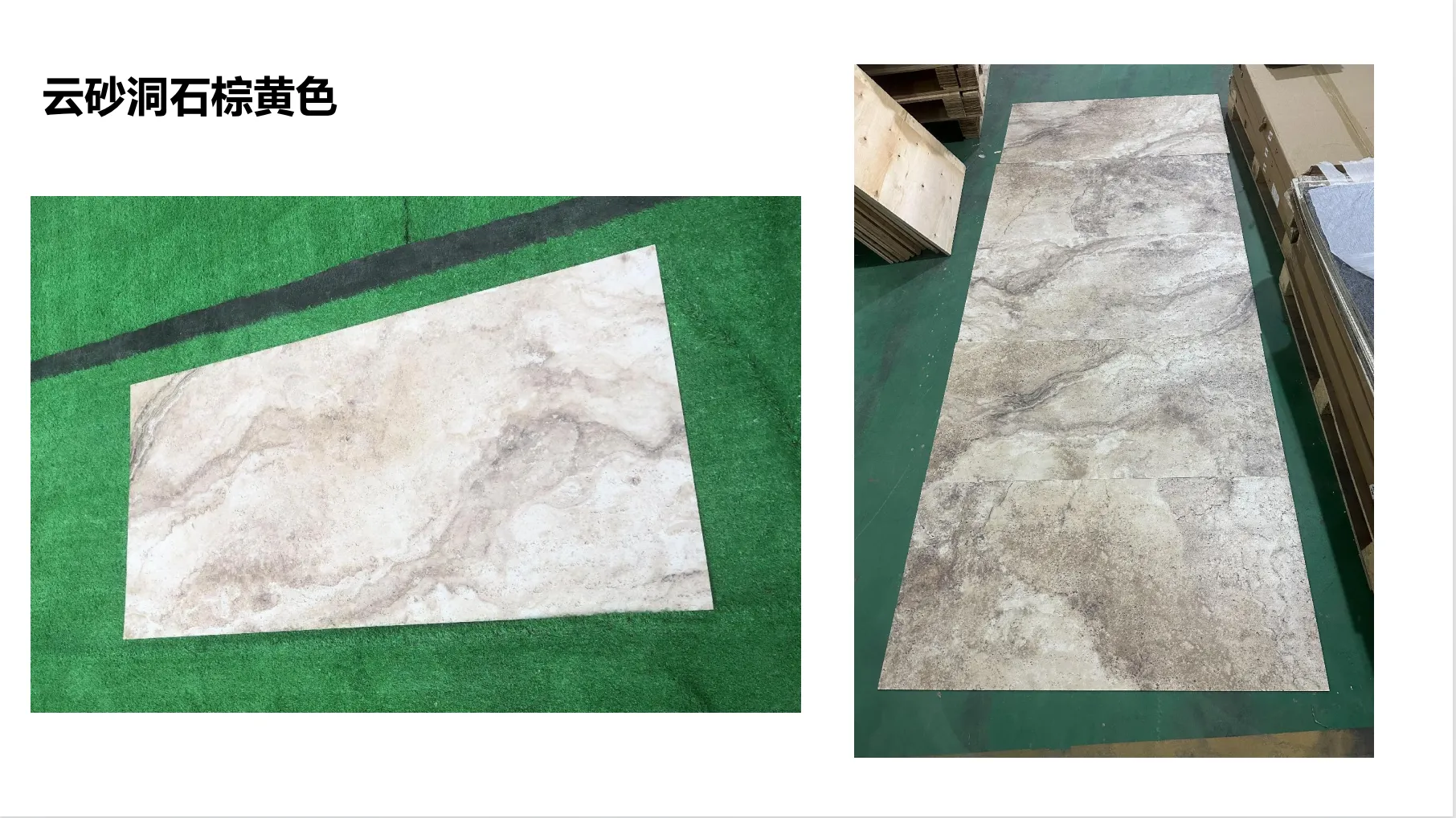
Take dolomitic travertine in dark grey as an example. Its deep, moody hue adds sophistication to any space, but it's the stone's texture that works overtime. Run your hand across it, and you'll feel the subtle bumps and valleys—each one a tiny sound trap. In contrast, dolomitic travertine in claybank offers a warmer, earthier tone, with a slightly smoother surface that still retains those crucial sound-absorbing pores. Both variants prove that when it comes to acoustics, nature's design is hard to beat.
While natural dolomitic travertine is exceptional, it's not without limitations. Traditional stone slabs can be heavy, making installation challenging in older buildings or on ceilings. They're also less flexible, meaning they can't conform to curved walls or unique architectural features. That's where flexible stone comes in—specifically, MCM flexible stone, a modern material that replicates the look and feel of natural stone but with added versatility.
MCM (Modified Composite Material) flexible stone is made by bonding thin layers of natural stone particles with a lightweight, flexible backing. The result? A material that's up to 70% lighter than traditional stone, easy to cut, and able to bend around corners or adhere to uneven surfaces. But here's the kicker: it retains the acoustic properties of its natural counterpart. The porous stone particles still trap sound waves, and the backing adds an extra layer of insulation. For designers and homeowners, this means acoustic benefits without the hassle of heavy installation or limited design options.
Imagine a home theater with curved walls clad in flexible stone, or an office lobby with a feature ceiling made from lightweight dolomitic travertine panels. These once-impossible designs are now feasible, thanks to flexible stone. It's a game-changer for spaces where aesthetics and acoustics need to coexist seamlessly.
To truly appreciate dolomitic travertine's acoustic, let's see how it compares to common building materials. The table below breaks down key factors like acoustic performance, aesthetics, and ease of installation:
| Material | Acoustic Performance (NRC*) | Aesthetic Appeal | Installation Ease | Best For |
|---|---|---|---|---|
| Dolomitic Travertine (Dark Grey) | 0.6–0.8 | High (natural texture, rich color) | Moderate (requires professional installation for slabs) | Statement walls, home offices, restaurants |
| Dolomitic Travertine (Claybank) | 0.5–0.7 | High (warm, earthy tones) | Moderate | Living rooms, bedrooms, boutique offices |
| MCM Flexible Stone (Dolomitic) | 0.5–0.7 | High (replicates natural stone) | Easy (lightweight, adhesive-backed) | Curved surfaces, ceilings, DIY projects |
| Standard Drywall | 0.2–0.3 | Low (plain, requires paint/wallpaper) | Easy | Basic wall construction, budget projects |
| Concrete Board | 0.3–0.4 | Moderate (industrial look) | Moderate (heavy, requires framing) | Warehouses, industrial-style spaces |
*NRC (Noise Reduction Coefficient): A scale of 0–1, where 1 means perfect sound absorption. Higher = better acoustic performance.
As the table shows, dolomitic travertine (and its flexible counterpart) outperforms standard materials in both acoustic performance and aesthetics. For spaces where design matters as much as function, this is a clear win.
Let's explore how dolomitic travertine and flexible stone are transforming real spaces. Start with offices: open floor plans are popular for fostering collaboration, but they're also notorious for noise. A tech company in Chicago recently renovated its headquarters with dolomitic travertine (dark grey) accent walls in meeting rooms and break areas. Employees reported a 35% reduction in background noise, and focus groups showed improved task completion times. The stone walls didn't just absorb sound—they added a touch of elegance, making the office feel more premium and less like a chaotic workfloor.
In residential settings, the impact is equally tangible. Take the case of a family in Portland with a busy household: two kids, a home office, and a living room that opened to the kitchen. After installing dolomitic travertine (claybank) on the living room walls and a flexible stone backsplash in the kitchen, the mother noted, "It's like someone turned down the volume. The kids can play in the living room while I work in my office, and I can actually hear myself think." Even better, the claybank tone complemented their rustic decor, turning a functional upgrade into a design highlight.
For home theaters and media rooms, dolomitic travertine is a standout choice. Its ability to absorb both high and low frequencies means clearer dialogue and richer sound quality. One home theater enthusiast in Texas replaced his foam panels with flexible stone panels, and the result was "night and day. The sound is crisper, and the room no longer feels like a recording studio—it feels like a luxury space."
If you're considering dolomitic travertine or flexible stone for acoustic purposes, here are a few tips to maximize results:
As we spend more time indoors, the demand for spaces that support both productivity and relaxation will only grow. Dolomitic travertine and flexible stone represent a shift in how we think about acoustic solutions—moving away from ugly, utilitarian fixes and toward materials that enhance our spaces in every way. They prove that nature and innovation can work hand in hand, offering a glimpse into a future where our homes and offices are not just quiet, but beautiful too.
So the next time you're designing a space, don't just think about how it looks—think about how it sounds. With dolomitic travertine and flexible stone, you might just find that the quietest spaces are also the most stunning.
In the end, acoustic comfort isn't about eliminating sound entirely—it's about creating spaces where the right sounds (laughter, conversation, music) are clear, and the wrong ones (noise, chaos, distraction) fade into the background. Dolomitic travertine, with its natural acoustic properties and timeless beauty, is helping us do just that—one stone at a time.
Recommend Products












