
Walk down any city street, and you'll notice how buildings tell stories—of eras past, of innovation, of the people who designed them. Today's architectural facades are no longer just about shelter; they're about dialogue. A dialogue between tradition and modernity, between natural beauty and engineered precision. In this conversation, two materials stand out: Dolomitic Travertine, a stone with roots in ancient quarries, and MCM Flexible Stone, a product of cutting-edge material science. Together, they're redefining what mixed-design facades can achieve.
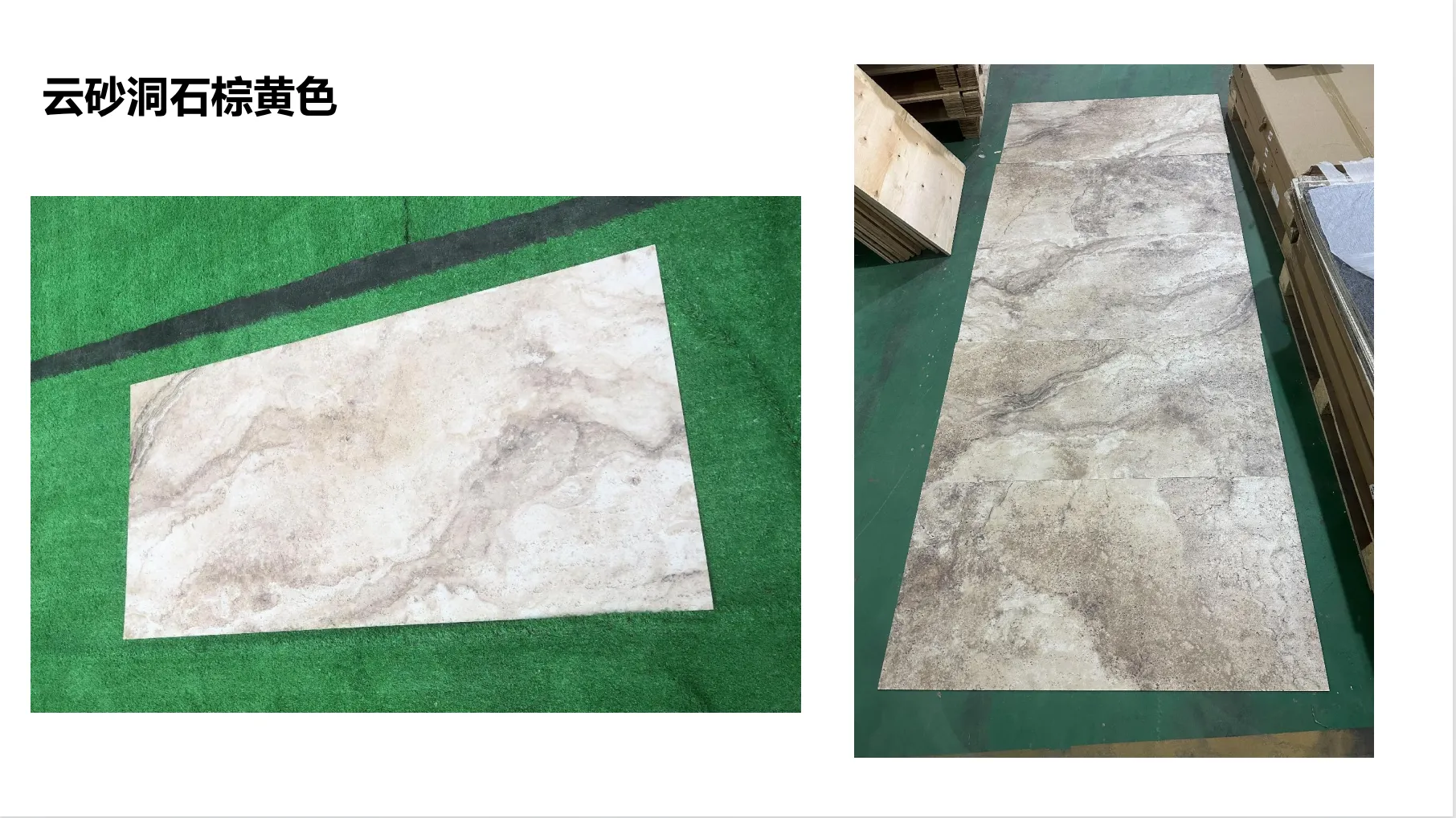
Let's start with Dolomitic Travertine. If you've ever visited a historic European square or a grand Mediterranean villa, you've likely seen travertine in action—its warm tones, subtle veining, and matte finish exuding a sense of permanence. But Dolomitic Travertine isn't just a blast from the past; it's a stone that's adapted to the needs of today's architects, especially in its dark grey and claybank variants.
Formed over millennia by mineral-rich springs depositing calcium carbonate, dolomitic travertine gets its unique character from the slow, natural process of layering. Unlike regular travertine, it contains dolomite, a mineral that adds extra density and durability. Run your hand over a slab of dark grey dolomitic travertine, and you'll feel the slight roughness of its surface—each pockmark and ridge a fingerprint of its formation. The claybank variant, on the other hand, leans into earthy warmth, with soft beige and taupe hues that evoke sun-baked landscapes.
What makes it so enduring? For starters, it's tough. Resistant to weathering, temperature fluctuations, and even the wear and tear of urban environments, dolomitic travertine can stand up to decades of exposure without losing its charm. Architects love it for its ability to age gracefully—developing a subtle patina over time that only enhances its character. Think of it as the architectural equivalent of a well-worn leather jacket: it gets better with age.
Traditionally, you'd find dolomitic travertine on classical facades, but modern designers are reimagining its use. The dark grey variant, with its moody, industrial edge, pairs surprisingly well with glass and steel in contemporary builds. Claybank, meanwhile, brings warmth to minimalist designs, softening sharp angles with its organic texture. It's a stone that bridges eras, making it perfect for projects that aim to honor history while embracing the future.
Now, shift gears to MCM Flexible Stone. If Dolomitic Travertine is the wise elder, MCM is the creative newcomer—bold, versatile, and unafraid to challenge conventions. Short for Modified Composite Material, MCM Flexible Stone is part of the broader MCM 3D Printing Series, a line of engineered materials that's changing how we think about building exteriors.
Here's the magic of MCM: it looks and feels like natural stone, but it's flexible. Imagine a stone that can curve around a rounded wall, wrap over a cantilever, or even be printed into custom 3D shapes—all while weighing a fraction of traditional stone. That's MCM. Made by bonding natural stone particles with a lightweight, flexible polymer matrix, it's manufactured using advanced processes that allow for precise control over texture, color, and thickness. The result? A material that's not just strong, but adaptable.
Architects and builders are raving about its practical perks. For one, it's lightweight—up to 80% lighter than natural stone, which means easier installation, reduced structural load, and lower transportation costs. It's also durable, resistant to fading, cracking, and moisture, making it ideal for both interior and exterior use. And because it's a composite, it's more sustainable than quarried stone, with less waste in production and the ability to incorporate recycled materials.
But where MCM really shines is in design freedom. Want a facade with undulating waves? MCM can do that. Need to clad a building with complex geometric patterns? MCM bends to the task. It's no wonder it's become a favorite for contemporary projects—from sleek office towers to avant-garde cultural centers. It's a material that lets architects dream bigger, without being limited by the rigidity of traditional stone.
You might be thinking: one is old, one is new—how do they possibly complement each other? The answer lies in their differences. Dolomitic Travertine brings timeless beauty and natural depth; MCM brings flexibility and modern versatility. Together, they create a facade that's greater than the sum of its parts. Let's break down their strengths side by side:
| Property | Dolomitic Travertine (Dark Grey/Claybank) | MCM Flexible Stone (MCM 3D Printing Series) |
|---|---|---|
| Weight | Heavier (requires sturdy structural support) | Lightweight (reduces structural load, easier handling) |
| Installation | Skilled labor needed; time-consuming due to weight | Simple, fast installation with standard tools |
| Design Flexibility | Best for flat/regular surfaces; limited to natural shapes | Can bend, curve, and be 3D-printed into custom forms |
| Aesthetic | Organic veining, natural texture, warm, earthy tones | Consistent texture, customizable colors, modern finish |
| Sustainability | Natural, but quarrying has environmental impact | Composite with recycled content; lower carbon footprint |
Beyond the table, there's an aesthetic harmony at play. Imagine a facade where Dolomitic Travertine forms the base—solid, grounded, with its claybank hues echoing the surrounding landscape. Above it, MCM Flexible Stone wraps the upper floors in a dynamic, 3D-printed pattern, its sleek finish contrasting with the travertine's roughness. The effect is striking: a building that feels rooted in place yet forward-thinking. Or picture a cultural center where dark grey dolomitic travertine clads the lower level, paying homage to the area's industrial past, while MCM in a matching tone but with a rippled texture covers the upper level, symbolizing progress. The color continuity ties them together, while the textural contrast adds visual interest.
Practically, combining them also solves common facade challenges. Use travertine for high-traffic, ground-level areas where durability is key, and MCM for upper levels or curved sections where weight and flexibility matter. It's a pairing that balances performance with beauty, ensuring the facade is both functional and visually compelling.
Theory is one thing, but seeing these materials in action is where the magic happens. Let's look at a few examples of how Dolomitic Travertine and MCM Flexible Stone have come together to create unforgettable facades.
Nestled along a river in a historic district, this cultural center needed to honor the area's heritage while serving as a modern hub for art and community. The design team chose claybank dolomitic travertine for the building's base and lower walls, its warm, earthy tone blending with the nearby stone bridges and cobblestone streets. For the upper floors and the sweeping, curved auditorium facade, they opted for MCM Flexible Stone in a complementary light beige shade, but with a 3D-printed "wave" texture that mimics the river's movement. The result? A building that feels both timeless and alive, with the travertine grounding it in history and the MCM adding a dynamic, contemporary flair.
A 15-story office building in the heart of a bustling city, this project aimed to stand out in a skyline of glass and steel. The architects used dark grey dolomitic travertine for the first three floors, its bold, industrial look creating a strong street-level presence. Above, they clad the tower in MCM Flexible Stone in a matching dark grey but with a smooth, polished finish, using 3D-printed panels to create a geometric pattern that catches the light differently throughout the day. The travertine's natural veining adds depth to the lower levels, while the MCM's uniformity gives the upper floors a sleek, modern edge. The combination? A facade that's both imposing and elegant, perfect for a building dedicated to innovation.
This residential project sought to create a sense of community by blending classic and modern living spaces. The exteriors of the townhouses feature claybank dolomitic travertine accents around windows and entryways, adding a touch of warmth and tradition. The main facades, however, use MCM Flexible Stone in a neutral tone with a wood-grain texture, creating a cozy, residential feel while keeping installation costs and weight low. For the complex's central courtyard, designers used MCM to create curved benches and planters, paired with dolomitic travertine flooring. The result is a space that feels both timeless and comfortable, where residents can connect with nature and each other.
As architecture continues to evolve, the demand for facades that tell nuanced stories will only grow. Dolomitic Travertine and MCM Flexible Stone represent more than just materials—they're partners in a design philosophy that values both roots and innovation. They remind us that the best buildings aren't just built; they're crafted, with thoughtfulness about how materials interact, how they age, and how they make people feel.
So whether you're an architect sketching your next big idea, a builder looking for practical solutions, or simply someone who appreciates beautiful buildings, keep an eye on this dynamic duo. Dolomitic Travertine and MCM Flexible Stone are proof that when tradition and technology collaborate, the possibilities for mixed-design facades are endless. And in a world that's always changing, that's a pretty exciting thought.
Recommend Products












