
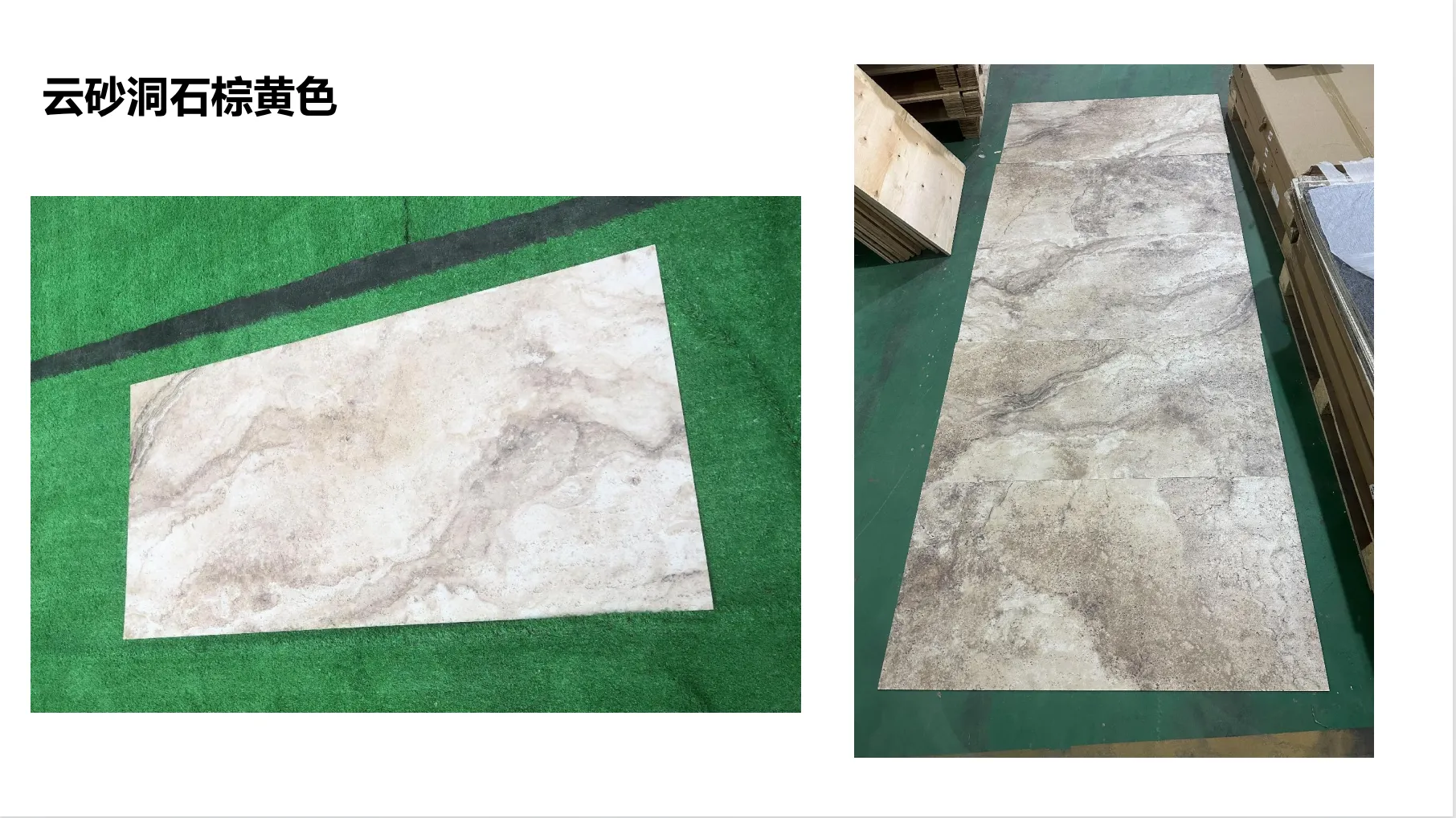
Step into a modern boutique hotel lobby, and your eyes might first land on the walls—warm, textured, and glowing softly under recessed lighting. Run your hand along the surface, and you'll feel subtle ridges, like the memory of water flowing over stone. The color shifts from deep, earthy claybank to cool, moody dark grey as you move from the morning sun to the shaded corner. This isn't just any wall covering; it's dolomitic travertine, brought to life through MCM panels. And in that moment, you realize: this is where nature's artistry meets human ingenuity.
Dolomitic travertine isn't just a material—it's a story written in stone. Formed over millennia, it begins as limestone, transformed by mineral-rich groundwater that seeps through caves and crevices, leaving behind layers of calcium carbonate and dolomite. The result? A stone that's porous yet surprisingly strong, with a texture that feels both ancient and alive. Run your fingers over it, and you'll trace the paths of those long-ago water flows, each tiny pocket and ridge a fingerprint of time.
What makes dolomitic travertine stand out is its versatility in color and character. Take dolomitic travertine (dark grey), for example—deep and moody, it adds drama to a space without overwhelming it, like a storm cloud softened by morning light. Then there's dolomitic travertine (claybank), warm and inviting, with hints of terracotta and sand that evoke sunbaked landscapes. These aren't just "colors"; they're moods. A restaurant clad in claybank dolomitic travertine feels like a cozy Italian villa, while a dark grey accent wall in a home office adds a touch of sophistication, grounding the space in calm.
Historically, travertine has adorned everything from Roman aqueducts to Renaissance palaces, prized for its durability and beauty. But dolomitic travertine takes that legacy further. Its higher dolomite content makes it denser than traditional travertine, resistant to scratches and stains, without losing the natural porosity that gives it charm. It's a stone that ages gracefully—patina over time only deepens its character, turning a new wall into a storyteller.
If dolomitic travertine is the heart of this partnership, MCM panels are the backbone—smart, strong, and designed to make nature's beauty accessible. MCM, or Modified Composite Material, isn't about replacing stone; it's about enhancing it. Imagine taking the texture and color of dolomitic travertine and compressing it into a panel that's lightweight enough to hang on drywall, flexible enough to curve around a staircase, and durable enough to withstand a coastal storm. That's MCM in action.
At the core of MCM's magic is its flexible stone technology. Traditional stone cladding is heavy, requiring structural support and careful installation. MCM changes that. By bonding a thin layer of natural stone (like dolomitic travertine) to a lightweight, high-strength backing (often aluminum or fiberglass), MCM panels cut weight by up to 80% compared to solid stone. Suddenly, that stunning travertine wall you love isn't limited to ground-floor lobbies—it can climb to the 10th floor of a high-rise, or wrap around a curved retail facade, without straining the building's structure.
Then there's the MCM big slab board series —a game-changer for modern design. Traditional stone slabs are limited by size; MCM big slabs, though, can reach widths of 1.2 meters or more, creating seamless, uninterrupted surfaces. Walk into a space clad in these slabs, and you won't see unsightly grout lines breaking up the travertine's pattern. Instead, you'll experience the stone as a single, sweeping work of art, like a mural painted by nature. It's a detail that transforms a room from "nice" to "breathtaking."
But MCM isn't just about convenience—it's about performance. These panels are engineered to resist moisture, UV rays, and impact. A beach house with MCM dolomitic travertine cladding won't warp in the salt air; a commercial kitchen backsplash won't stain from tomato sauce or oil. And because they're lightweight, installation is faster and more cost-effective, reducing labor time and minimizing disruption. For architects and designers, it's a dream: the beauty of natural stone, with the practicality of modern materials.
Dolomitic travertine and MCM panels aren't just two materials thrown together—they're collaborators. Nature provides the beauty; MCM provides the brains. The result? A product that's greater than the sum of its parts.
Take sustainability, for example. Quarrying solid stone generates waste—large blocks are cut into slabs, leaving scraps that often end up in landfills. MCM panels use just a fraction of the stone, recycling those "scraps" into thin, usable layers. It's a win for the planet, and for designers who want to create responsibly. Then there's versatility. MCM's flexibility means dolomitic travertine can now go places solid stone never could: think curved walls in a boutique hotel, or a lightweight facade on a renovation project where structural weight is a concern. It's nature, unchained.
And let's talk about aesthetics. MCM doesn't just mimic natural stone—it elevates it. The thin stone layer preserves every nuance of dolomitic travertine's texture: the tiny pores that catch light, the subtle color variations that make no two panels identical. Even better, MCM's backing protects the stone from moisture, preventing the staining and degradation that can plague solid travertine. Your wall won't just look beautiful on day one; it'll look beautiful in 10 years, with minimal maintenance.
Within the MCM-dolomitic travertine family, there are stars—and travertine (starry blue) is one of them. Imagine a slab that shimmers like a night sky, with flecks of iridescent blue scattered across a deep, dark background. It's not paint or glitter; it's mineral deposits trapped in the stone, brought to life through MCM's precision manufacturing. Install it in a home theater, and the walls become a canvas for the cosmos, turning movie night into an immersive experience. In a restaurant bar, it adds a touch of whimsy, making even a simple drink feel like a celebration under the stars.
Starry blue isn't alone. The MCM travertine lineup includes travertine (starry red) and travertine (starry orange) , each with its own celestial charm. These aren't just colors—they're emotions. Starry red feels passionate and bold, perfect for a statement wall in a living room. Starry orange, warm and energetic, turns a kitchen backsplash into a focal point that sparks joy. And because they're MCM panels, you can mix and match: a starry blue accent wall paired with claybank dolomitic travertine for a space that's both dramatic and grounded.
| Feature | Traditional Solid Stone | MCM-Dolomitic Travertine Panels |
|---|---|---|
| Weight (per sqm) | 25-30 kg | 4-6 kg |
| Installation | Requires structural support; labor-intensive | Lightweight; can be installed on drywall; faster installation |
| Durability | Prone to staining/weathering without sealing | Moisture-resistant; UV-stable; minimal maintenance |
| Design Flexibility | Limited by size/weight; hard to curve | Large slabs (big slab series); flexible for curves |
| Sustainability | High waste from quarrying | Uses recycled stone scraps; lower carbon footprint |
MCM-dolomitic travertine panels aren't just for hotels and lobbies—they're for everyday spaces, turning houses into homes and offices into inspirations. Let's walk through a few examples:
Residential Living: A family in Colorado wanted a fireplace wall that felt cozy but modern. They chose dolomitic travertine (claybank) in MCM big slabs. The result? A seamless, 3-meter-wide wall that anchors the living room, with the stone's warm tones complementing the wooden beams overhead. Because MCM is lightweight, they didn't need to reinforce the floor, and installation took just two days instead of a week. Now, on winter nights, they gather around the fire, the travertine radiating heat and stories.
Commercial Retail: A boutique in New York City wanted to stand out on a busy street. They opted for travertine (starry blue) MCM panels for their facade. The starry flecks catch the city lights, drawing pedestrians in. Inside, the same panels line the walls, creating a cohesive, otherworldly vibe that makes shopping feel like an adventure. Best of all, the panels are easy to clean—critical in a high-traffic space—and they've held up beautifully against rain, snow, and the occasional stray coffee spill.
Hospitality: A coastal resort in Bali needed outdoor cladding that could withstand saltwater and humidity. They chose dolomitic travertine (dark grey) MCM panels. The panels resist corrosion, and their lightweight design meant they could be installed on the resort's wooden terraces without compromising structural integrity. Now, guests wake up to ocean views framed by dark grey travertine, the stone's texture echoing the waves just steps away.
At the end of the day, materials aren't just about looks—they're about how they make us feel. Dolomitic travertine, with its natural texture and earthy tones, connects us to the outdoors, grounding us in a world that often feels too digital. MCM panels, with their innovation, make that connection possible in more places, for more people. It's about a homeowner who can finally have the stone wall they've dreamed of, without the hassle. A designer who can push boundaries, creating curved walls or high-rise facades that were once impossible. A planet that breathes easier, thanks to reduced waste and energy use.
So the next time you walk into a space and feel that warmth, that sense of being "at home" even if you've never been there before, take a closer look. Chances are, you're standing in front of dolomitic travertine and MCM panels—nature and engineering, holding hands, making magic.
Recommend Products












