
Walk through any sun-drenched cityscape—Dubai's glittering skyline, Barcelona's coastal promenades, or Arizona's desert resorts—and you'll notice a silent battle waged daily: the fight between building materials and the unrelenting sun. For architects and designers, choosing a facade material that can withstand harsh UV rays without fading, discoloration, or losing its aesthetic allure is more than a technical consideration; it's a promise to clients that their vision will endure, year after year. Enter dolomitic travertine, a natural stone that has quietly emerged as a champion in this arena. In particular, variants like dolomitic travertine (dark grey) and dolomitic travertine (claybank) have become go-to choices for projects where color stability isn't just a preference, but a necessity. Let's dive into why this stone stands out, how it resists the sun's fading power, and why it's redefining what we expect from sun-exposed building materials.
First, let's clarify: not all travertine is created equal. Traditional travertine is a form of limestone, formed from mineral-rich spring water depositing calcium carbonate (calcite) over time. It's beloved for its porous texture, warm tones, and organic veining—think the honey-colored facades of ancient Roman ruins. But when the mineral dolomite (a calcium-magnesium carbonate) replaces some or most of the calcite in the stone's composition, we get dolomitic travertine . This substitution isn't just a geological footnote; it's the secret to its remarkable durability, especially when facing the sun's wrath.
Dolomitic travertine forms in similar environments to regular travertine—hot springs, mineral-rich lakes—but with higher magnesium levels in the water. Over centuries, the magnesium ions bond with calcium to create dolomite crystals, which are harder, denser, and less soluble than calcite. This structural difference is key: denser stone means fewer pores for UV radiation to penetrate, and harder crystals are more resistant to the chemical breakdown caused by sunlight. It's like nature's own sunscreen for stone.
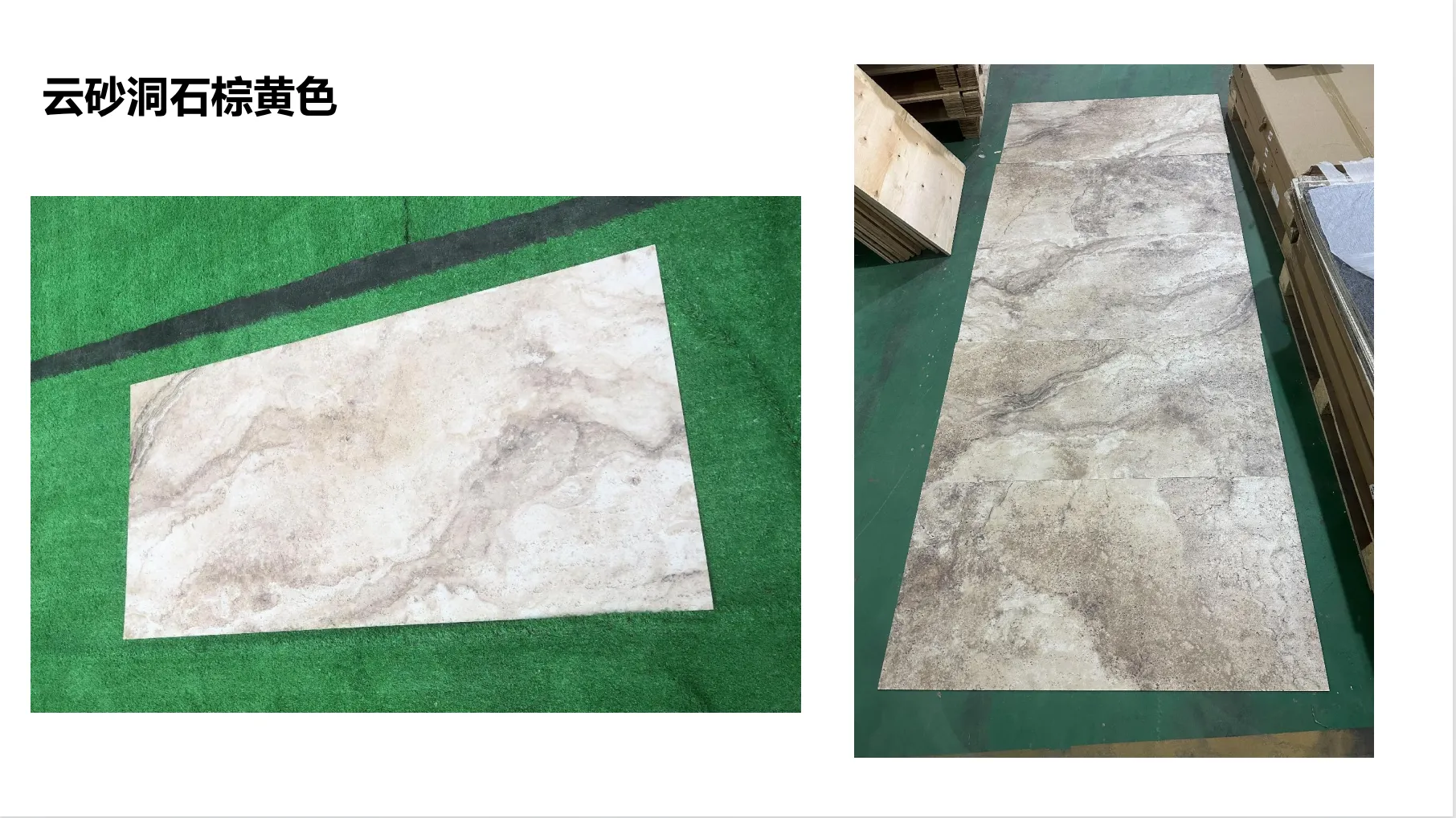
Take dolomitic travertine (dark grey) as an example. Its deep, moody hue comes from trace minerals like iron and manganese, locked within the dolomite matrix. Unlike calcite-based stones, where these pigments might leach or oxidize under UV exposure, dolomite's stable crystal structure acts as a protective cage, keeping the color intact. Similarly, dolomitic travertine (claybank) —with its earthy, terracotta-like warmth—owes its longevity to this same dolomite backbone. It's not just about looking good on day one; it's about looking good on day 1,000, even when baked by the sun.
To appreciate dolomitic travertine's UV resistance, we need to understand the enemy: ultraviolet radiation. Sunlight is a spectrum, and while visible light is what lets us see, UV rays (specifically UVA and UVB) are the invisible culprits behind material degradation. UVA rays penetrate deep into surfaces, breaking down chemical bonds in pigments and minerals, while UVB rays are more energetic, causing surface-level damage like chalking (a powdery residue) or discoloration.
For building facades, this translates to fading—vibrant reds turning to pinks, rich browns fading to tans—or worse, uneven color loss that creates a patchy, weathered look. Imagine a hotel in (Sanya) with a facade of regular travertine: after five years of intense tropical sun, the once-uniform beige might be streaked with lighter spots, making the building look older than its years. Or a commercial complex in Riyadh, where the summer sun beats down at nearly 100°F (38°C) daily; without UV-resistant materials, the facade could shift from warm gold to a dull, washed-out version of itself in a fraction of its expected lifespan.
It's not just about aesthetics, either. Fading can signal deeper structural issues. When pigments break down, the stone's surface may become weaker, more prone to cracking or erosion. For architects, this means callbacks, repairs, and unhappy clients. For building owners, it's increased maintenance costs and a devalued property. In short, UV resistance isn't a "nice-to-have"—it's a critical performance metric, especially in regions with high solar irradiance.
How does dolomitic travertine stack up against other popular facade materials? Let's put it to the test. Below is a comparison of key materials, focusing on UV resistance, color retention, and suitability for sun-exposed environments. We'll include not just dolomitic travertine, but also regular travertine, marble, polish concrete , and fair-faced concrete —all common choices for modern facades.
| Material | UV Resistance Rating* | Color Retention (5-Year Estimate) | Best For |
|---|---|---|---|
| Dolomitic Travertine (Dark Grey/Claybank) | Excellent (9/10) | 90-95% retention | Tropical, desert, or high-UV regions |
| Regular Travertine (Beige/Light Grey) | Moderate (6/10) | 65-75% retention | Temperate climates with mild sun |
| Marble (Veil White/Stream Stone) | Low (4/10) | 50-60% retention | Indoor use or shaded exteriors |
| Fair-Faced Concrete | Good (7/10) | 75-80% retention | Urban environments with moderate sun |
| Polish Concrete | Good (7.5/10) | 80-85% retention | Modern, industrial-style facades |
*Rating based on industry standards and accelerated weathering tests (ASTM G154). Higher scores indicate better resistance to UV-induced fading.
The data speaks for itself: dolomitic travertine outperforms regular travertine, marble, and even concrete in both UV resistance and color retention. What's striking is how it combines this durability with natural beauty. Unlike fair-faced concrete or polish concrete , which offer a sleek, modern look but lack the organic depth of stone, dolomitic travertine brings warmth, texture, and uniqueness—each slab tells a story of its geological formation. It's the best of both worlds: the resilience of concrete, the character of natural stone.
Numbers and tests are one thing, but real buildings tell the truest tales. Let's look at two projects that put dolomitic travertine to the test in some of the sunniest corners of the globe.
In Dubai, where summer temperatures soar to 113°F (45°C) and UV index levels often hit "extreme," the Desert Pavilion—a LEED Platinum-certified office building—chose dolomitic travertine (dark grey) for its exterior cladding. Completed in 2018, the building's facade features large-format slabs of the stone, arranged in a geometric pattern that mimics sand dunes. Today, seven years later, the dark grey hue remains as rich as the day it was installed. Facility managers report no noticeable fading, even on the south-facing elevation, which bears the brunt of the midday sun. "We expected some color shift, but it's been minimal," says the building's architect, Amina Al-Mansoori. "Dolomitic travertine was a gamble, but it paid off—both in sustainability (it reduces the need for repainting) and in keeping the design's integrity intact."
On the Greek island of Crete, where salt spray and intense Mediterranean sun are constant threats, a luxury villa opted for dolomitic travertine (claybank) to clad its outdoor terraces and facade. The stone's warm, earthy tone was chosen to complement the island's natural landscape, blending with the terracotta roofs of nearby villages. Now five years old, the villa's exterior shows no signs of UV damage. "We've had guests comment on how 'new' the stone looks, even though it's been through five harsh summers," says the villa's owner, Nikos Papadopoulos. "I compared it to my neighbor's villa, which used regular travertine—theirs is noticeably lighter, almost pinkish in spots. Ours still has that rich, clay-like color. It was worth the slightly higher upfront cost for the peace of mind."
Durability is only half the story—dolomitic travertine also shines as a design material. Its color palette, though rooted in earthy tones, offers surprising versatility. Dolomitic travertine (dark grey) brings a sense of modern sophistication, perfect for sleek, minimalist buildings or as a contrast to lighter materials like glass or metal. Imagine a high-rise in Singapore, where the dark grey stone facade reflects the city's skyline by day and glows under artificial light at night, its color unaltered by the equatorial sun.
Dolomitic travertine (claybank) , on the other hand, evokes warmth and nostalgia. It's a favorite for boutique hotels in Tuscany or coastal homes in California, where its terracotta-adjacent hue blends with natural surroundings. Unlike painted surfaces, which can look flat or artificial, dolomitic travertine's color is intrinsic—veined with subtle variations that catch the light, creating depth and movement. "It's alive," says designer Marco Rossi, who used claybank dolomitic travertine in a recent winery project in Napa Valley. "The color shifts slightly with the time of day—warmer at sunrise, cooler at sunset—but never fades. It's like having a facade that evolves with the light, without losing its core identity."
And for those seeking a middle ground, there's dolomitic travertine (medium grey) —a neutral tone that pairs effortlessly with both warm and cool palettes. It's a workhorse in commercial design, appearing in everything from retail storefronts to university campuses, where its ability to maintain a consistent look across large surfaces is a major advantage.
While dolomitic travertine is naturally UV-resistant, it still benefits from basic maintenance to ensure it stays looking its best. Here are practical tips for preserving its color and texture in sun-exposed areas:
These steps are minimal compared to the maintenance required for less durable materials. For example, painted concrete facades may need repainting every 3-5 years in high-UV areas; dolomitic travertine, with proper sealing, can go 10-15 years without major upkeep. It's low-effort, high-reward durability.
As the demand for sustainable, long-lasting building materials grows, dolomitic travertine is poised to play an even bigger role—especially when paired with cutting-edge technologies. One exciting development is the integration of dolomitic travertine with MCM 3D printing series —a process that allows architects to create custom facade panels with intricate textures and shapes, all while retaining the stone's natural UV resistance. Imagine a facade that mimics the flow of a river or the texture of tree bark, made possible by 3D printing, but with the durability of dolomitic travertine. It's a marriage of art and science that's already being explored in experimental projects in Europe.
Another trend is the use of dolomitic travertine in combination with other UV-resistant materials, like foamed aluminium alloy board (vintage silver) or bamboo mat board , to create dynamic, multi-textured facades. These hybrid designs leverage the best of each material: dolomitic travertine for color stability, aluminium or bamboo for lightweight strength. It's a testament to the stone's versatility that it can complement, rather than compete with, other innovative cladding options.
In the world of architecture, where form and function must coexist, dolomitic travertine is a rare gem. It doesn't just look beautiful—it stays beautiful, even when subjected to the harshest sunlight. Whether it's the deep drama of dolomitic travertine (dark grey) or the earthy warmth of dolomitic travertine (claybank) , this stone offers a promise: that the buildings we design today will still inspire tomorrow, their colors as vivid as the day they were built.
For architects, designers, and building owners, the message is clear: when sunlight is a challenge, dolomitic travertine is the solution. It's not just a material—it's a partner in creating spaces that endure, both in structure and in spirit. As we continue to build for a future of climate resilience and timeless design, dolomitic travertine will undoubtedly be at the forefront, proving that nature's best innovations are often the ones that stand the test of light.
Recommend Products












