
Bridging Tradition, Climate, and Modern Elegance in Home Design
In the sun-drenched landscapes of Saudi Arabia, where ancient mud-brick forts stand alongside sleek glass-and-steel villas, residential design is undergoing a quiet revolution. Homeowners and architects alike are no longer choosing materials solely for durability—they're seeking stories. Stories of heritage, of resilience, and of harmony with the harsh yet breathtaking desert environment. It's in this context that Dolomitic Travertine (Claybank) has emerged as more than just a building material; it's a narrative thread, weaving together the past and present of Saudi home design.
Walk through the gated communities of Riyadh or the coastal villas of Jeddah, and you'll notice a shift: warm, earthy tones are replacing stark modern grays; natural textures are softening minimalist lines; and materials that age gracefully—developing a patina that mirrors the desert's own weathered beauty—are becoming the new standard. Dolomitic Travertine (Claybank), with its muted clay-colored hue and organic veining, fits this vision like a key in a lock. It's not just about aesthetics, though. In a country where summer temperatures soar above 45°C and sandstorms are a seasonal reality, the right material must be as tough as it is beautiful. This is where Dolomitic Travertine (Claybank) truly shines—and why it's rapidly becoming a cornerstone of contemporary Saudi residential projects.
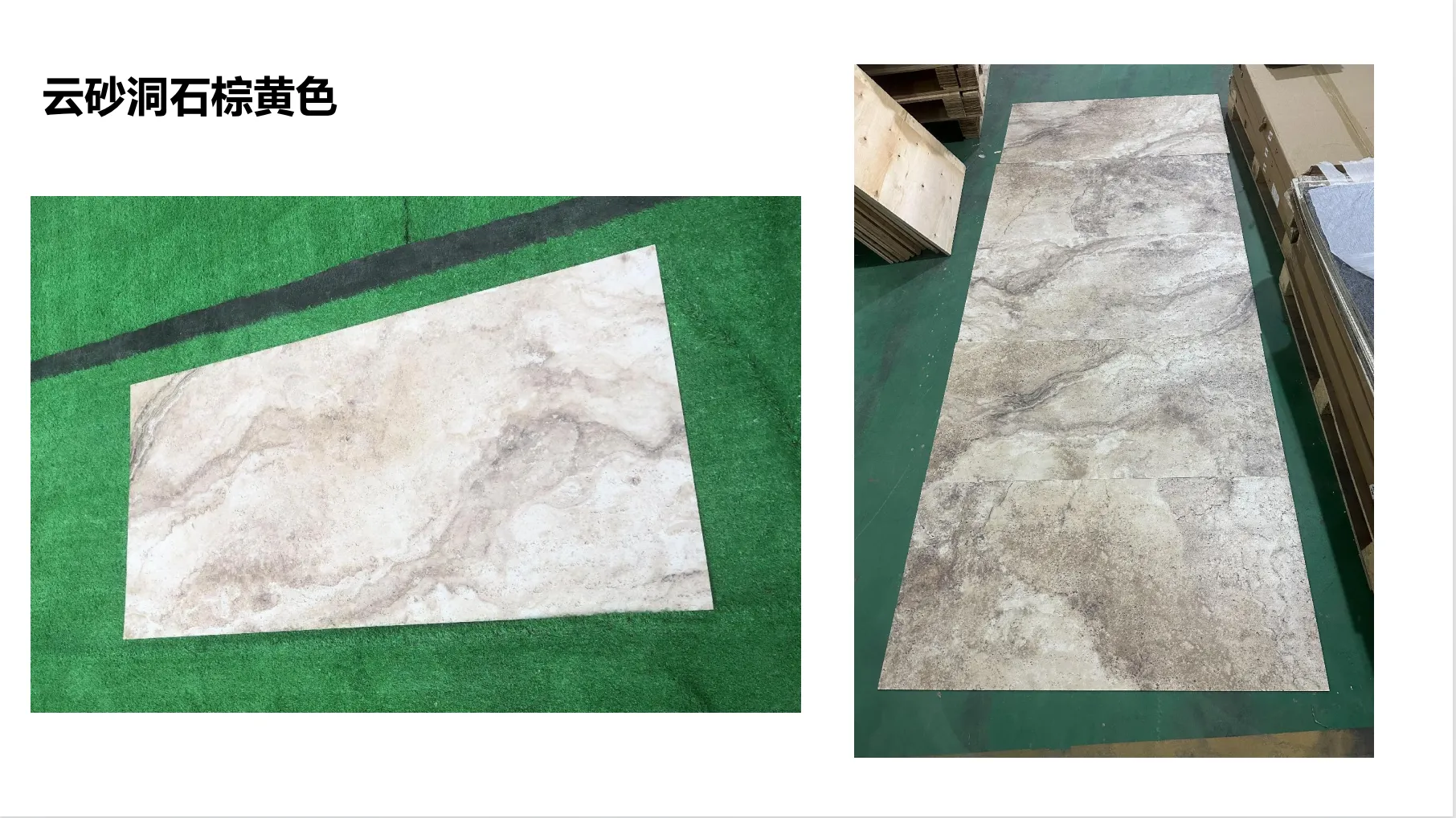
To understand Dolomitic Travertine (Claybank), we must first appreciate its origins. Unlike synthetic alternatives, this stone is born from the earth itself—formed over millennia by mineral-rich water flowing through limestone deposits, leaving behind layers of calcium carbonate and dolomite. The result? A material with a unique, porous surface that traps light, creating a soft, diffused glow, and a color palette rooted in the desert's own palette: think the warm beige of sun-baked sand, tinged with hints of terracotta and soft gray, like the claybanks of Wadi Rum at dawn.
But what truly sets Dolomitic Travertine (Claybank) apart—especially in the context of Saudi residential projects—is its adaptability. As part of MCM Flexible Stone series, it inherits the best of modern engineering: lightweight yet strong, flexible enough to be shaped into curves or large slabs, and resistant to the cracks and chips that plague lesser materials. MCM (Modified Composite Material) technology, a hallmark of innovative building solutions, transforms raw travertine into a panel that's 70% lighter than traditional stone, making it easier to transport, install, and integrate into both new builds and renovations. For Saudi homeowners, this means lower structural load on foundations, faster construction timelines, and the freedom to use the stone in creative ways—from sweeping facade cladding to intricate interior accent walls—without compromising on durability.
Let's talk about that durability. In a country where summer heat can warp plastics and fade paints, Dolomitic Travertine (Claybank) stands firm. Its natural density and resistance to UV radiation mean it won't discolor under the relentless sun; its porous surface, when sealed properly, repels water and resists staining from desert dust or accidental spills. Even in coastal areas like Dammam, where humidity and salt air can corrode metal and degrade wood, this stone remains steadfast. It's a material that doesn't just survive the Saudi climate—it thrives in it, aging like a well-loved story, its texture deepening and its color warming over time.
To say Dolomitic Travertine (Claybank) "fits" Saudi residential design is an understatement. It belongs here, and for three compelling reasons: cultural resonance, climate compatibility, and aesthetic versatility.
Cultural Resonance: Saudis have long revered earthy tones. From the traditional Najdi architecture, with its mud-brick walls and palm-frond roofs, to the Bedouin tents woven from camel hair in warm beiges and browns, the desert's palette is ingrained in the culture. Dolomitic Travertine (Claybank) doesn't clash with this heritage—it honors it. Its claybank color echoes the hues of the country's vast deserts and wadis, creating homes that feel grounded, not imposed. In a society that values continuity, this connection to the land isn't just aesthetic; it's emotional.
Climate Compatibility: Saudi homeowners know that a beautiful home is a functional home. Dolomitic Travertine (Claybank) checks every box: it's fire-resistant, a critical feature in arid regions; its thermal mass helps regulate indoor temperatures, keeping interiors cool in summer and retaining warmth in winter (reducing reliance on AC); and its slip-resistant texture makes it ideal for pool decks and outdoor courtyards, where bare feet and afternoon rain showers (yes, they happen!) demand safety. Compare this to materials like polished marble, which can become scorching hot under direct sun, or Fair-Faced Concrete, which often feels cold and sterile in the desert context—Dolomitic Travertine (Claybank) balances beauty and practicality in a way few others can.
Aesthetic Versatility: Whether you're designing a traditional mud-brick-inspired villa in Al Khobar or a sleek, contemporary home in Riyadh's diplomatic quarter, Dolomitic Travertine (Claybank) adapts. Pair it with rough-hewn Historical Pathfinders Stone for a rustic, heritage-rich facade; use it as flooring alongside Wood Line accents for a warm, cabin-like interior; or contrast it with Lunar Peak Golden metal panels for a bold, modern statement. Its neutral base acts as a canvas, allowing homeowners to layer in color through textiles, art, or landscaping without overwhelming the space.
Dolomitic Travertine (Claybank) isn't a one-trick pony. Its flexibility—both literal (thanks to MCM technology) and design-wise—makes it suitable for nearly every corner of a Saudi home. Let's explore how it's being used to redefine residential spaces, inside and out.
The facade of a home in Saudi Arabia is more than just a wall—it's a first impression, a reflection of the family's identity. Dolomitic Travertine (Claybank) facades have become a status symbol of sorts, signaling a commitment to quality and taste. Architects often use large-format MCM panels to clad entire exteriors, creating a seamless, monolithic look that's both modern and organic. The stone's natural veining adds subtle movement, breaking up the expanse of claybank color without distracting from the home's overall design.
Outdoor spaces, too, are being transformed. Courtyards, the heart of Saudi family life, are seeing Dolomitic Travertine (Claybank) used for flooring, wall cladding, and even water features. Imagine a shaded courtyard with a shallow reflecting pool, its edges lined with the stone, where the water mirrors the sky and the travertine's texture catches the light. It's a space designed for gathering—for afternoon tea, for children playing, for quiet evenings under the stars—and Dolomitic Travertine (Claybank) sets the mood, warm and inviting.
Inside the home, Dolomitic Travertine (Claybank) shines brightest in high-traffic areas and focal points. Flooring is a popular choice: its matte finish hides dust (a perpetual battle in desert climates) and its durability stands up to kids, pets, and daily life. In living rooms, it's often used as an accent wall behind sofas or TVs, adding texture without overwhelming the space. For fireplaces—though less common in Saudi Arabia, they're gaining popularity in cooler regions like Abha—Dolomitic Travertine (Claybank) creates a striking surround, its natural texture softening the harshness of flames.
Kitchens, too, are embracing the stone. Backsplashes made from Dolomitic Travertine (Claybank) tiles add warmth to sleek, modern cabinetry, while countertops (sealed for stain resistance) offer a natural alternative to quartz or granite. Even bathrooms benefit: its slip-resistant surface and moisture resistance make it ideal for shower walls and floors, bringing a spa-like serenity to daily routines.
To truly appreciate Dolomitic Travertine (Claybank), it helps to see how it compares to other materials vying for space in Saudi residential projects. Below is a breakdown of key competitors and why Dolomitic Travertine often comes out on top:
| Material | Color Profile | Texture | Climate Resistance | Best For |
|---|---|---|---|---|
| Dolomitic Travertine (Claybank) | Warm claybank with subtle gray/terracotta veining | Organic, porous, with natural pits and ridges | Excellent heat resistance, UV stable, low water absorption when sealed | Exteriors, flooring, accent walls, courtyards |
| Lunar Peak Golden | Metallic gold with a sleek, uniform finish | Smooth, reflective, industrial | High heat resistance but prone to fading over time | Modern facades, accent panels, outdoor lighting features |
| Fair-Faced Concrete | Cool gray, uniform | Smooth to slightly rough, industrial | Durable but can crack in extreme temperature swings | Modern interiors, minimalist exteriors |
| Historical Pathfinders Stone | Varied earth tones (browns, beiges, grays) | Rough, hewn, highly textured | Excellent, but heavy and harder to install | Heritage-inspired facades, garden walls |
When architect Lina Al-Mansoori was tasked with designing a villa for a Riyadh family that wanted to honor their Najdi roots while embracing modern comfort, she turned to Dolomitic Travertine (Claybank) early on. "The family loved the idea of a home that felt 'rooted,'" she explains, "but they also wanted large windows, open spaces, and low maintenance. Dolomitic Travertine checked all those boxes."
Al-Mansoori used MCM Flexible Stone panels of Dolomitic Travertine (Claybank) for the villa's facade, pairing it with wooden trellises and a central courtyard clad in the same stone. "The travertine's color matches the traditional Najdi mud bricks, but its flexibility allowed us to create curved walls—something you can't do with heavy stone," she notes. Inside, the living room features a floor-to-ceiling accent wall of Dolomitic Travertine, complemented by Weaving (Beige) textiles and Wood Line furniture. "The family tells me guests always comment on how 'warm' the house feels, even in summer. That's the travertine's thermal mass at work—keeping the space cool without feeling sterile."
For a Jeddah homeowner with a love for both the desert and the Red Sea, Dolomitic Travertine (Claybank) became the bridge between two worlds. "I wanted a home that felt like a retreat—something that reminded me of camping in the Empty Quarter by day and the beach by night," says the homeowner, a retired engineer. The solution? Exterior walls of Dolomitic Travertine (Claybank) to echo the desert, and interior flooring that flows from the living room to the outdoor terrace, where it meets the sea.
The villa's pool deck, clad in Dolomitic Travertine, is a particular favorite. "Even on the hottest days, the stone stays cool enough to walk on barefoot," the homeowner reports. "And when it rains, it doesn't get slippery—unlike the marble we had in our old house." Inside, the kitchen features a Dolomitic Travertine backsplash, paired with Granite Portoro countertops for a bold contrast. "It's the little things," he adds. "The way the light hits the travertine in the morning, casting those soft shadows… it feels alive."
In an era where sustainability is no longer optional, Dolomitic Travertine (Claybank) aligns with Saudi Arabia's Vision 2030 goals of reducing carbon footprints and promoting green construction. MCM Flexible Stone technology ensures the material is lightweight, reducing transportation emissions and structural load (which means smaller, more efficient foundations). Its durability also means less frequent replacement, cutting down on waste. And because it's a natural stone, it's fully recyclable at the end of its life—a stark contrast to synthetic materials that end up in landfills.
Moreover, Dolomitic Travertine (Claybank) contributes to energy efficiency. Its thermal mass helps regulate indoor temperatures, reducing the need for air conditioning—a significant plus in a country where cooling costs can account for 60% of household energy use. For homeowners looking to build sustainably without sacrificing style, it's a win-win.
As Saudi Arabia continues to grow and evolve, so too will its residential design. But some things remain constant: the love for natural beauty, the respect for the desert climate, and the desire to build homes that last—not just for decades, but for generations. Dolomitic Travertine (Claybank) embodies all these values. It's a material that doesn't just build homes; it builds legacies.
Whether you're an architect designing your next masterpiece or a homeowner dreaming of your forever home, consider this: in a world of fleeting trends, Dolomitic Travertine (Claybank) is a constant. It's the desert's gift to Saudi residential design—timeless, resilient, and undeniably beautiful. And in the end, isn't that what we all want from a home? To feel rooted, to feel safe, and to feel like we belong.
Recommend Products












