
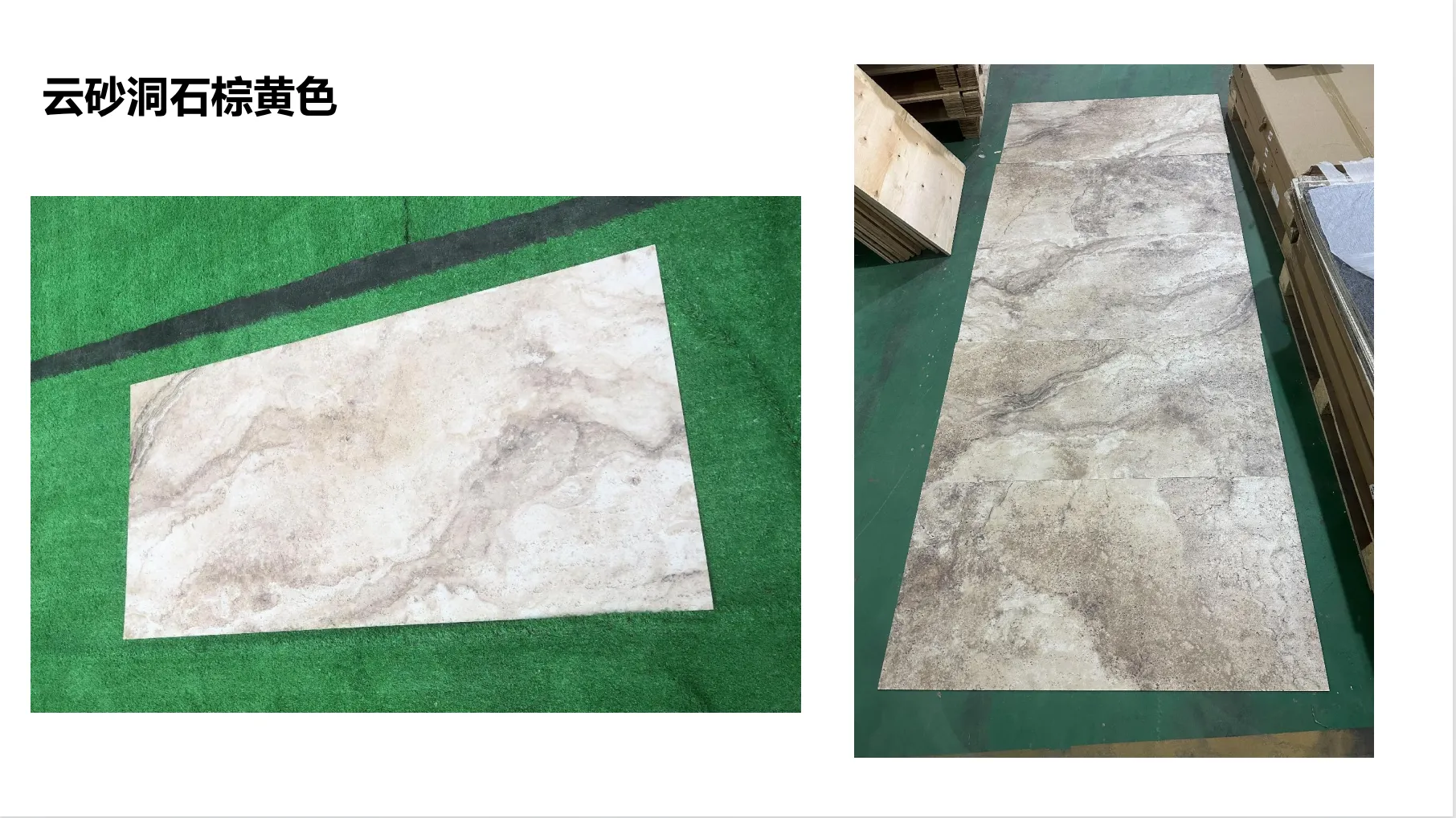
Exploring the timeless connection between earthy stone and spiritual architecture
In the quiet hush of a sacred space—whether a sunlit church, a shaded temple, or a serene mosque—materials speak as loudly as silence. They shape our emotions, guide our focus, and root us in something larger than ourselves. Among the many materials that have graced religious architecture over centuries, few carry the quiet gravitas and warm intimacy of dolomitic travertine (claybank). Its soft, earthy hue, textured surface, and natural resilience make it more than just a building material; it's a bridge between the divine and the terrestrial, a physical manifestation of faith's enduring bond with the natural world. Let's dive into why this stone has become a beloved choice for sacred spaces, exploring its symbolism, aesthetic charm, and how it harmonizes with other materials like travertine (starry green) and lunar peak silvery to create environments that feel both ancient and alive.
At first glance, dolomitic travertine (claybank) strikes a chord with its warm, muted tones—think the soft brown of fertile soil after rain, or the gentle glow of aged parchment. This isn't just a color; it's a story. Claybank, as a shade, is inherently grounding. It evokes the earth itself, a reminder of creation myths that speak of humanity formed from dust, or of spiritual journeys rooted in "returning to the source." In religious contexts, this connection to the earth is profound: it symbolizes humility, stability, and the idea that spirituality isn't found in the ethereal alone, but in the tangible, the everyday, the real .
But the symbolism runs deeper than color. Dolomitic travertine, by nature, is a stone with history written into its pores. Formed over millennia by mineral-rich water slowly depositing layers of calcium carbonate, each slab carries the marks of time—subtle veins, tiny fossilized bubbles, and irregular textures that feel almost like a fingerprint of the earth. In religious spaces, this "imperfection" becomes a virtue. It mirrors the complexity of faith: the journey, not just the destination; the struggles, not just the serenity. A wall of dolomitic travertine (claybank) doesn't shout "perfection"—it whispers "persistence," a quiet nod to the idea that sacredness is found in endurance.
Compare this to the bold drama of travertine (starry green), with its deep, celestial tones that evoke the mystery of the cosmos, or the cool elegance of lunar peak silvery, which shimmers like moonlight on stone. Dolomitic travertine (claybank) doesn't compete with these; instead, it anchors them. It's the earth beneath the stars, the ground beneath the moonlit sky—a reminder that even the most transcendent spiritual experiences are rooted in the physical world we share.
Beyond symbolism, dolomitic travertine (claybank) is a masterclass in understated beauty. Its color, a soft blend of warm beige and gentle taupe, has an almost chameleon-like quality: it softens harsh sunlight, warms cool shadows, and glows subtly under artificial light. In religious buildings, where light is often used to symbolize divine presence—think stained glass in churches or oil lamps in temples—this stone becomes a partner in illumination. Unlike stark white marble or dark granite, which can feel cold or imposing, claybank travertine absorbs and reflects light gently, creating an atmosphere that feels welcoming, not intimidating. It wraps the space in a quiet embrace, inviting worshippers to breathe deeply and let their guard down.
Texture adds another layer of depth. Run a hand over its surface, and you'll feel the slight unevenness—the tiny ridges, the smooth dips, the porous pockets left by ancient water flow. This isn't a flaw; it's a tactile story. In a world that often values polish over personality, this texture grounds us in the sensory experience of the sacred. It reminds us that spirituality isn't just about the mind or the soul, but about the body too—the feel of stone beneath our fingertips, the way light plays on its surface as we move, the quiet sound of footsteps echoing off its walls. In a chapel, for example, a claybank travertine altar might invite a worshipper to rest a hand on it during prayer, creating a physical connection to the space and its purpose.
| Material | Color & Texture | Symbolic Role | Ideal Use in Religious Spaces |
|---|---|---|---|
| Dolomitic Travertine (Claybank) | Warm beige-taupe, porous with subtle veins; soft, earthy texture | Grounding, humility, endurance; connection to the natural world | Walls, floors, altars, and prayer niches where warmth and intimacy are key |
| Travertine (Starry Green) | Deep emerald with flecks of gold/white; bold, cosmic texture | Mystery, transcendence, divine wonder; evokes the "heavens" | Accent walls, domes, or sacred art backdrops to highlight spiritual awe |
| Lunar Peak Silvery | Pale silver-gray with a subtle metallic sheen; smooth, luminous surface | Purity, illumination, divine guidance; mirrors moonlight or "holy light" | Columns, archways, or ceiling details to add a touch of ethereal elegance |
What truly sets dolomitic travertine (claybank) apart, though, is its versatility. It plays well with others—a crucial trait in religious architecture, where spaces often blend traditional and modern elements. Pair it with fair-faced concrete for a minimalist, contemporary mosque, and it softens the concrete's industrial edge, adding warmth to clean lines. Mix it with rust board granite, with its rich, weathered reds and browns, and it creates a palette that feels both ancient and grounded, perfect for a historical temple. Even alongside more ornate materials, like the intricate patterns of mosaic travertine or the shimmer of foamed aluminium alloy board (vintage gold), claybank travertine holds its own, never fading into the background but never overshadowing the sacred details that demand attention.
Nestled in the rolling hills of Tuscany, the Chapel of the Holy Earth stands as a testament to dolomitic travertine (claybank)'s spiritual power. Designed by architect Sofia Lorenzi, the chapel was built to honor the region's agricultural heritage and its deep connection to the land. The exterior walls, clad entirely in claybank travertine, blend seamlessly with the surrounding fields—at dawn, they glow pinkish-gold; at dusk, they fade into the earthy tones of the hills. Inside, the stone continues, covering the floors and curving up the walls to meet a ceiling of lunar peak silvery panels. The effect is striking: the warm, earthy stone grounds visitors, while the silvery ceiling lifts their gaze upward, creating a dialogue between the terrestrial and the divine.
Lorenzi chose dolomitic travertine (claybank) specifically for its ability to age gracefully. "Sacred spaces should feel like they've always been there," she notes. "This stone doesn't fight time—it embraces it. In fifty years, those walls will have more character, more stories in their texture. They'll reflect the prayers, the tears, the quiet moments of those who've visited. That's the beauty of it: it becomes part of the chapel's soul."
Religious buildings are built to last—not just decades, but centuries. They're meant to outlive generations, to be a constant in a changing world. Dolomitic travertine (claybank) rises to this challenge with quiet strength. Its density and resistance to weathering make it ideal for both exteriors and interiors, standing up to rain, wind, and the wear of countless footsteps. Unlike synthetic materials that fade or degrade, this stone grows more beautiful with time, its texture deepening and its color softening into a rich patina that tells the story of the space it inhabits.
In an era where sustainability matters more than ever, dolomitic travertine (claybank) also shines. Quarried responsibly, it's a natural, non-toxic material that requires minimal processing. Unlike polished concrete or synthetic composites, it doesn't release harmful chemicals into the air. For religious communities committed to stewardship of the earth—a value shared by most faiths—this alignment between material and mission is profound. Using dolomitic travertine (claybank) isn't just a design choice; it's an act of reverence for the planet that sustains us.
In the end, dolomitic travertine (claybank) is more than a stone. It's a storyteller, a bridge, a silent companion in sacred spaces. Its earthy color whispers of humility and connection to the land; its textured surface speaks of time and endurance; its warm glow invites us to pause, to reflect, to feel. When paired with complementary materials like travertine (starry green) or lunar peak silvery, it creates spaces that are both grounded and transcendent—spaces that honor the past while embracing the present.
As we walk through these sacred buildings, our feet on claybank travertine, our eyes lifted to silvery ceilings or starry green accents, we're reminded of faith's greatest paradox: it is both deeply personal and universally shared, rooted in the earth yet reaching for the stars. Dolomitic travertine (claybank) doesn't just support these spaces—it embodies them. It is, quite simply, a stone for the soul.
Recommend Products












