
Stand at the edge of a coastal town, and you'll witness a quiet struggle: buildings standing sentinel against the sea's relentless energy. Salt-kissed winds gnaw at facades, storm surges hurl brine against foundations, and the sun bakes surfaces daily—all while chloride ions, invisible and invasive, seek to erode, discolor, and weaken even the toughest materials. For architects and builders, coastal construction is a balancing act: creating spaces that feel connected to the ocean's beauty while ensuring they can withstand its fury. In this high-stakes environment, one material has emerged as a surprising hero: dolomitic travertine (claybank). More than just a pretty face, this earth-toned stone is rewriting the rules of durability in coastal settings, merging natural elegance with a resilience that stands up to the sea's harshest tests.
Coastal environments are among the most unforgiving on the planet. Unlike inland areas, where rain and temperature fluctuations are the primary concerns, coastal structures battle a trifecta of threats: saltwater intrusion, constant moisture, and UV radiation. Salt, in particular, is a silent saboteur. When salt spray settles on surfaces, it draws moisture from the air, creating a corrosive brine that seeps into pores, reacts with minerals, and over time, causes cracking, spalling, or discoloration. Add in freeze-thaw cycles (in cooler coastal regions) and the abrasive force of sand carried by winds, and it's clear: coastal materials need to be more than just strong—they need to be smart fighters.
For decades, builders turned to synthetic options like cement board or vinyl siding, drawn to their low upfront costs. But these materials often lack character, and many fail to stand the test of time; cement board, for instance, absorbs moisture readily, leading to mold growth or warping, while vinyl fades under UV exposure. Natural stones, meanwhile, have long been prized for their beauty, but not all are up to the coastal task. Marble, with its soft calcium carbonate composition, etches easily in saltwater, and some travertines, known for their porous nature, can absorb too much moisture. So what makes dolomitic travertine (claybank) different?
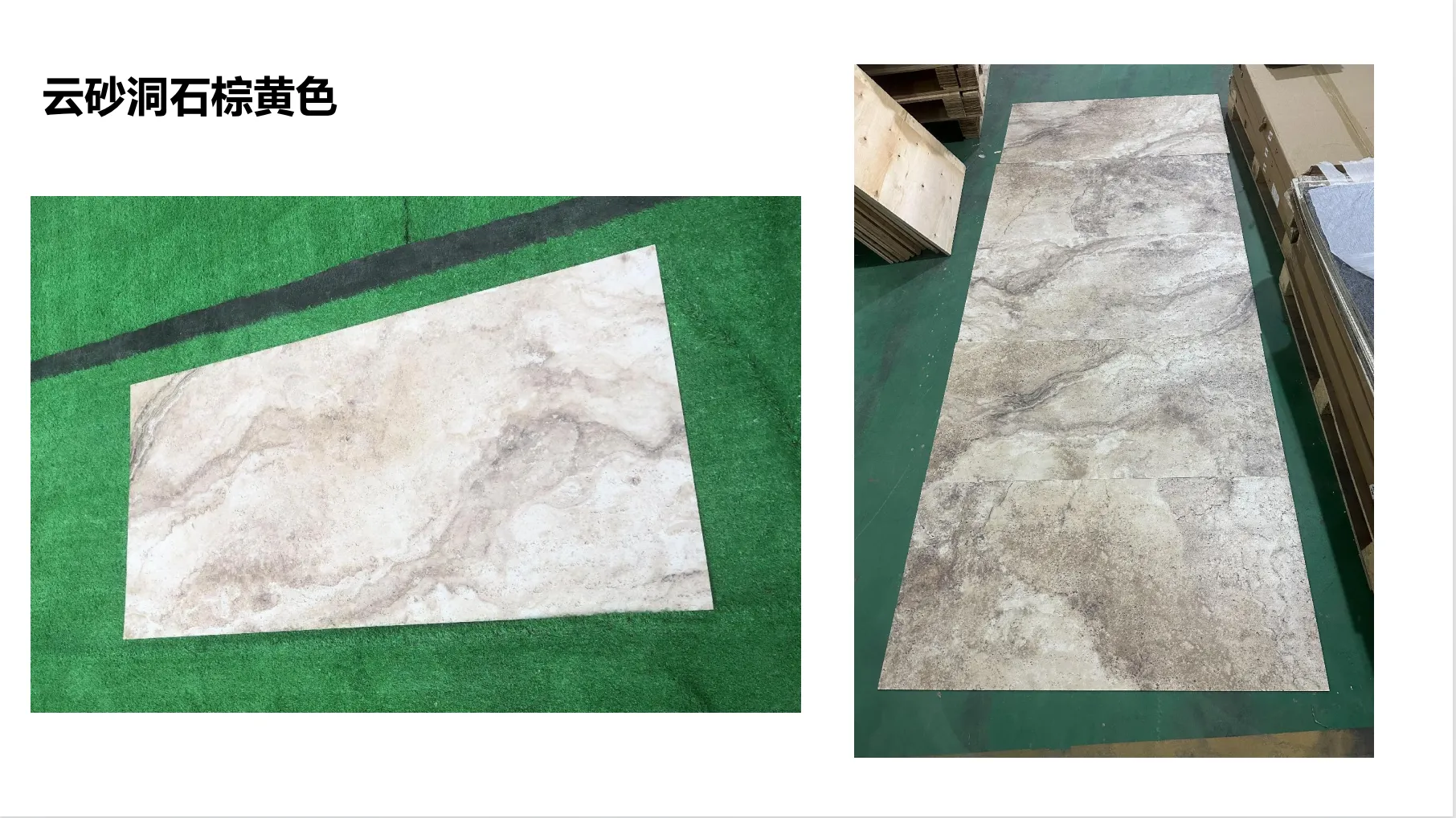
Dolomitic travertine (claybank) isn't just another stone—it's a product of millions of years of geological craftsmanship. Formed in mineral-rich hot springs, where calcium and magnesium carbonates precipitate out of water, this travertine gets its name from its high dolomite content (a magnesium-rich mineral) and its warm, clay-colored hue, which ranges from soft terracotta to sandy beige. Unlike standard travertine, which is primarily calcium carbonate, dolomitic travertine swaps some calcium for magnesium, creating a denser, more stable structure. It's this unique composition that gives it its secret weapon: built-in resistance to saltwater.
Let's break it down. First, porosity: travertine is known for its characteristic holes and channels, formed by gas bubbles escaping during formation. But dolomitic travertine (claybank) has smaller, more evenly distributed pores than its cousins, thanks to the clay particles that fill tiny gaps in its matrix. This means less space for saltwater to seep in and linger. Second, mineral makeup: dolomite (MgCO₃) is less reactive than calcium carbonate (CaCO₃), the main component of many limestones and travertines. When saltwater interacts with calcium carbonate, it forms soluble calcium chloride, which washes away, weakening the stone. Dolomite, however, resists this reaction, acting as a natural barrier against salt-induced erosion.
To put it simply: dolomitic travertine (claybank) doesn't just tolerate saltwater—it repels its worst effects. Imagine a stone that laughs off salt spray, that retains its warm claybank glow even after years of exposure, and that doesn't require constant sealing or repairs. For coastal builders, that's not just a material—it's peace of mind.
To truly appreciate dolomitic travertine (claybank)'s coastal credentials, let's pit it against two common alternatives: traditional cement board and MCM flexible stone (a popular engineered material). The table below compares key properties critical to coastal performance:
| Material | Water Absorption Rate (%) | Salt Spray Resistance (ASTM B117, hours) | Flexural Strength (MPa) | Aesthetic Appeal |
|---|---|---|---|---|
| Dolomitic Travertine (Claybank) | 2.3 | 5,000+ | 12.5 | Warm claybank tones with subtle veining; blends with coastal landscapes |
| Cement Board | 15.0 | 2,000 | 8.0 | Uniform gray; industrial look, prone to staining |
| MCM Flexible Stone | 1.8 | 4,500 | 10.2 | Versatile finishes; lightweight but lacks natural depth |
The numbers speak for themselves. Dolomitic travertine (claybank) absorbs less than 3% of its weight in water—far less than cement board's 15%—meaning it resists moisture-related damage like mold or cracking. Its salt spray resistance, tested under ASTM B117 (a standard for evaluating corrosion resistance), exceeds 5,000 hours—more than double that of cement board and comparable to MCM flexible stone, a leading engineered material. And with a flexural strength of 12.5 MPa, it's tough enough to handle the vibrations of nearby traffic or the occasional storm-driven debris.
But perhaps its greatest advantage is aesthetic. Unlike the flat, uniform look of cement board or the synthetic feel of some flexible stones, dolomitic travertine (claybank) brings warmth and character. Its natural veining, subtle color variations, and soft matte finish complement coastal landscapes, blurring the line between building and environment. "It doesn't scream 'coastal'—it breathes it," says James Harper, a coastal architect who used the stone in a recent beachfront home project. "Clients want their homes to feel rooted in the landscape, not like they're fighting it. This travertine does that."
To see dolomitic travertine (claybank) in action, look no further than the Seaside Haven Resort, a boutique hotel perched on the cliffs of Portugal's Algarve coast. When the resort was built in 2018, architects faced a dilemma: how to create a facade that would withstand the region's strong Atlantic winds, salt spray, and intense summer sun, while still feeling luxurious and inviting. After testing samples of cement board, MCM flexible stone, and several natural stones, they settled on dolomitic travertine (claybank) for the exterior cladding and pool decking.
Five years later, the results are striking. The travertine cladding, which covers the hotel's lower floors, shows minimal signs of wear. There's no efflorescence (the white, powdery residue caused by salt leaching), no cracks, and the claybank color has faded only slightly—retaining its warm, golden tone even after years of direct sun and salt exposure. The pool deck, which sees daily splashing and foot traffic, remains slip-resistant and free of stains, thanks to the stone's low porosity. "We expected to need repairs by year three," says Maria Santos, the resort's facilities manager. "Instead, we've only had to pressure-wash it once a year. It's been a game-changer for maintenance costs."
What's most impressive? The stone's ability to age gracefully. Unlike synthetic materials that degrade suddenly, dolomitic travertine (claybank) develops a subtle patina over time—a softening of its edges and a deepening of its color—that adds to its charm. "Guests often comment on how the hotel looks 'lived-in' but not worn," Harper notes. "It feels like it's been there for decades, even though it's only five years old. That's the magic of natural stone done right."
Dolomitic travertine (claybank) isn't limited to facades. Its durability and beauty make it ideal for a range of coastal applications, from flooring to outdoor kitchens. Thanks to its availability in large formats (as part of MCM's big slab board series), it's also a favorite for seamless, low-maintenance surfaces. Imagine a kitchen backsplash that resists saltwater splashes from open windows, or a patio floor that stays cool underfoot even on the hottest days—all while adding a touch of earthy elegance.
For builders working on larger projects, the big slab format is a logistical win. Larger panels mean fewer seams, reducing installation time and the risk of water intrusion through gaps. "We used 1200x600mm slabs for the resort's exterior," Harper explains. "That cut down on labor costs and minimized waste—important for both budget and sustainability." And because it's a natural material, dolomitic travertine (claybank) aligns with the growing demand for eco-friendly construction; unlike synthetic options, it's biodegradable and requires minimal processing.
One of the biggest myths about natural stone in coastal areas is that it requires constant upkeep. Not so with dolomitic travertine (claybank). While it's not entirely maintenance-free, its care routine is refreshingly simple. Here's what experts recommend:
"It's low-effort, high-reward," Santos says. "We spend less time maintaining the travertine than we did the cement board siding on our old annex. That frees up our team to focus on guest experience, not repairs."
As climate change intensifies coastal weather patterns—bringing stronger storms, higher sea levels, and more corrosive air—builders are under increasing pressure to choose materials that can adapt. Dolomitic travertine (claybank) isn't just a solution for today; it's an investment in tomorrow. Its natural resistance to saltwater, coupled with its aesthetic versatility and low maintenance needs, makes it a sustainable choice for coastal communities looking to build for the long haul.
And with innovations like MCM's flexible stone technology, which enhances the stone's durability while keeping it lightweight, the possibilities are expanding. Imagine flexible panels of dolomitic travertine (claybank) that can bend to follow curved coastal walls, or thin, lightweight slabs that reduce structural load on high-rise buildings. The future isn't just about surviving the coast—it's about thriving in harmony with it.
So the next time you walk along a coastal street, take a closer look at the buildings. If you spot a warm, clay-colored facade that seems to glow in the sun, unbowed by the sea's power, chances are it's dolomitic travertine (claybank) at work. Quiet, resilient, and undeniably beautiful, it's proof that sometimes, the best solutions to modern problems are the ones nature crafted millions of years ago.
Recommend Products












