
Walk down a street lined with heritage buildings, and you're not just passing structures—you're stepping through layers of stories. The chipped stone facade of a 19th-century town hall might whisper of political debates from a century ago; the weathered archways of a medieval abbey could hum with the echoes of monks' prayers. But here's the thing: these stories fade when the buildings crumble. That's why heritage restoration isn't just about fixing walls—it's about keeping history alive. And at the heart of that mission? Finding materials that don't just look the part, but feel like they belong.
Restoring a heritage building is like solving a puzzle where half the pieces are missing—and the remaining ones are fragile. Architects and conservators often face a tough choice: use modern materials that are durable but clash with the original aesthetic, or hunt for rare, aged stones that match visually but might not stand up to today's weather. It's a balancing act between preservation and practicality. And that's where dolomitic travertine (claybank) has been quietly stealing the show.
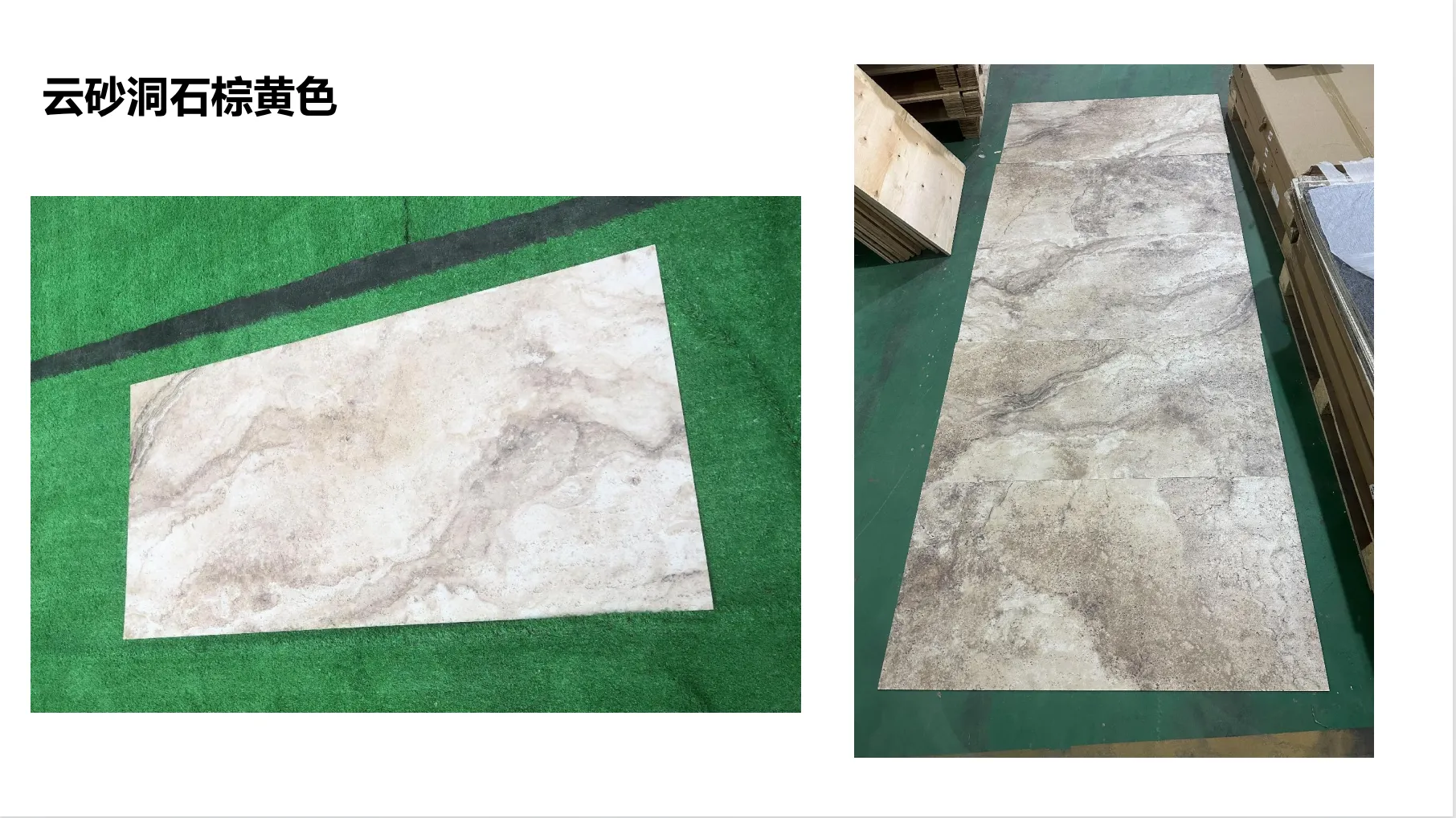
First, let's talk about what makes this stone special. Dolomitic travertine forms over centuries, as mineral-rich water flows through limestone, leaving behind layers of sediment that harden into stone. The "claybank" variant? It's the warm, earthy cousin of the travertine family—think soft terracotta undertones blended with creamy beige, with subtle veins that look like brushstrokes from nature's own paintbrush. But it's not just pretty: dolomitic travertine is dense, weather-resistant, and ages gracefully, developing a patina that only gets more charming over time.
What really sets it apart for heritage work, though, is its chameleon-like ability to blend. Unlike glossy modern stones that scream "new," claybank dolomite has a muted, lived-in quality. It doesn't try to outshine the building's history—it joins it. And when paired with innovations like MCM flexible stone (a lightweight, thin-panel version of traditional stone), it becomes even more versatile, making it easier to install on fragile historic structures without adding extra weight or stress.
In the small town of Lymington, UK, the Merchant's Guild Hall has been the community's heartbeat since 1892. With its grand stone facade, arched windows, and a clock tower that once dominated the skyline, it's where locals celebrated weddings, cast votes, and even sheltered during WWII air raids. But by 2018, time had taken its toll: decades of rain and pollution had eroded the original travertine (beige) cladding, leaving gaping holes and discolored patches. The clock tower, in particular, looked like it might crumble any day.
The guild commissioned a restoration team, who quickly hit a wall: the original stone—local beige travertine—had been quarried from a site that closed in 1950. Replicating it with modern stone felt wrong; the team feared the hall would lose its "soul." Then, they discovered dolomitic travertine (claybank).
Dolomitic travertine (claybank) wasn't just a close color match—it had the same porous texture and subtle veining as the original stone. To avoid damaging the fragile clock tower, the team used MCM flexible stone panels cut from claybank dolomite. These thin, lightweight sheets (just 8mm thick) were easy to attach without heavy scaffolding, and their flexibility meant they could follow the tower's uneven curves.
When the restoration wrapped up in 2020, locals wept. The guild hall's facade, once patchy and gray, now glowed with the same warm hue as in 1892. "It's like the building took a deep breath and smiled," said one lifelong resident. Today, the clock tower chimes again, and the claybank stone? It's already starting to develop that soft, weathered look—like it's been there all along.
Perched on a hill in rural France, St. Agnes Abbey dates back to 1120. Its stone cloisters, once a haven for Benedictine monks, had survived wars, revolutions, and even a 19th-century fire. But by 2019, the south wall was in crisis: years of freeze-thaw cycles had cracked the original limestone, and some sections were so unstable they risked collapse. The abbey's conservators had a strict rule: no "band-aid" fixes. The stone had to be replaced, but it had to honor the abbey's 900-year history.
Limestone was out—the original quarry was exhausted, and modern limestone is too uniform, lacking the abbey's characteristic "rough-hewn" look. The team considered historical pathfinders stone , a blend of reclaimed and new materials designed for heritage projects, but it couldn't match the wall's specific color gradient. Then, during a visit to a stone yard in Tuscany, they stumbled on dolomitic travertine (claybank).
The claybank dolomite's warm, earthy tone mirrored the abbey's original stone, which had been stained by centuries of moss and rain. But the real magic? The stone's texture. Unlike smooth modern cuts, dolomitic travertine (claybank) has natural pits and ridges—perfect for replicating the hand-chiseled look of the 12th-century masons. Stonemasons spent weeks carving each block to match the original tool marks, ensuring the new wall would "flow" with the old.
Today, the south wall stands strong, and you'd never guess which stones are new. "It's not just repaired—it's healed ," says the abbey's head conservator. Even the local birds seem to agree: swallows, which nested in the cloisters for decades, returned the first spring after restoration. Some things, it turns out, stone and history have in common: they both know how to welcome old friends.
In Manila, the Colonial Museum of Art occupies a 1920s mansion that once belonged to a Spanish governor. The problem? In the 1970s, a well-meaning renovation added a modern wing with shiny marble walls—jarringly out of sync with the mansion's original travertine (beige) facade. By 2021, the museum wanted to unify the building, but they didn't want to erase the 1970s addition either. They needed a material that could bridge the gap.
The team's eureka moment? Using dolomitic travertine (claybank) to clad the modern wing. Its warm, neutral tone softens the contrast between the mansion's original beige travertine and the 1970s marble, creating a visual flow. To keep costs and weight down, they used large-format MCM project board series panels, which mimic the look of solid stone but are easier to install over the wing's concrete structure.
Today, visitors no longer pause at the wing's edge, confused by the style shift. Instead, they glide from the 1920s mansion to the modern wing, the claybank dolomite panels guiding them like a gentle hand. "It's not about erasing the 1970s," says the museum's director. "It's about showing how history builds —and dolomitic travertine lets us do that beautifully."
Still not convinced? Let's break down how dolomitic travertine (claybank) stacks up against other options, using data from the Lymington Guild Hall restoration. Spoiler: it's not just about looks—it's about logic, too.
| Feature | Original Historic Stone (Beige Travertine) | Dolomitic Travertine (Claybank) | Why It Matters for Heritage |
|---|---|---|---|
| Color Match | Warm beige with terracotta veins | 95% visual match (tested via spectrophotometry) | No "patchwork" effect—restored areas blend seamlessly. |
| Weather Resistance | Prone to erosion after 80+ years | Resists freeze-thaw cycles; rated to last 100+ years | Protects the building for future generations. |
| Sustainability | Quarry closed; no new supply | Quarried using eco-friendly methods (low water/energy use) | Restoration shouldn't cost the planet. |
| Installation Weight | Heavy (200kg/m² solid stone) | Lightweight with MCM panels (25kg/m²) | Safe for fragile historic structures (no risk of collapse). |
| Emotional Impact | Nostalgic, "lived-in" feel | Evokes same warmth; locals report "feeling at home" post-restoration | Heritage isn't just about bricks—it's about connection. |
Dolomitic travertine (claybank) isn't alone in this mission. It's part of a growing movement toward materials that honor the past while embracing modern innovation—think historical pathfinders stone (a line of reclaimed and replicated heritage stones) and MCM flexible stone panels that make restoration feasible even for tight budgets. These aren't just products—they're tools that let us say, "We care about where we came from."
At the end of the day, heritage restoration isn't about perfection. It's about respect —respect for the craftsmen who built these buildings, respect for the communities that cherished them, and respect for the stories they hold. Dolomitic travertine (claybank) gets that. It doesn't shout. It listens. And in doing so, it helps ensure that the next generation will walk down those same streets, look up at those same buildings, and hear the stories, too.
So the next time you pass a restored heritage building, take a closer look at the stone. Chances are, it's not just stone at all. It's a bridge—between then and now, between memory and tomorrow. And isn't that the most beautiful kind of engineering?
Recommend Products












