
Walk into any modern home or office today, and you'll likely hear the same concern: energy bills. As temperatures swing from sweltering summers to freezing winters, our reliance on heating and cooling systems has skyrocketed. But what if the solution wasn't just a better HVAC unit? What if the walls themselves could do the heavy lifting—keeping the heat out when it's hot, trapping it in when it's cold, and doing it all while looking stunning? That's where materials like dolomitic travertine (claybank) come into play.
In recent years, architects and homeowners alike have started prioritizing "passive design"—buildings that use natural materials to regulate temperature, reducing the need for artificial energy. And dolomitic travertine (claybank), part of innovative lines like the mcm big slab board series, is emerging as a star player in this movement. It's not just about insulation, though; it's about merging that functionality with the kind of beauty that turns walls into focal points. Let's dive into why this material is becoming a go-to for anyone serious about energy efficiency without sacrificing style.
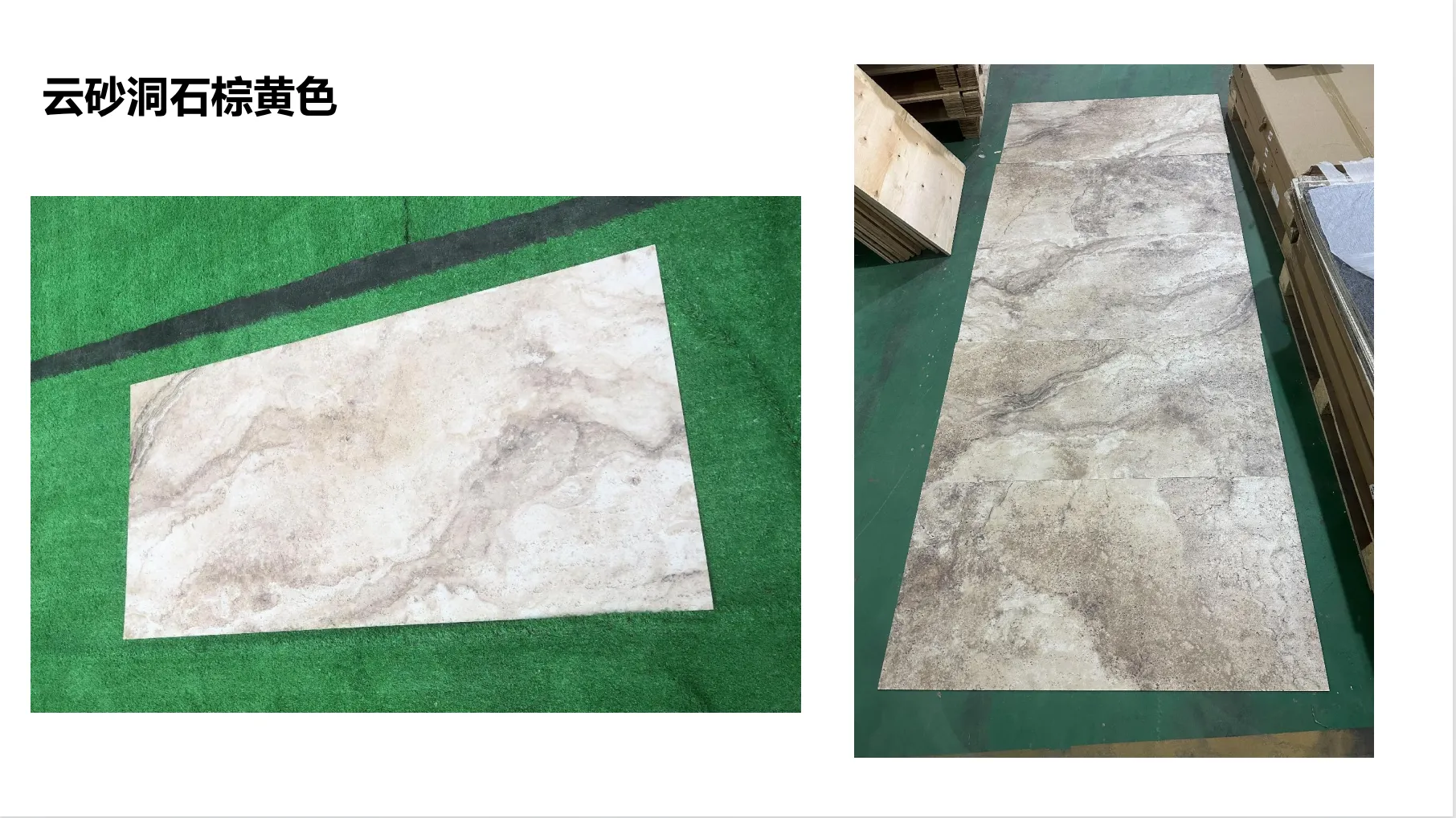
First things first: let's break down the name. Travertine is a type of limestone formed by mineral deposits from hot springs, known for its unique porous texture and earthy tones. Dolomitic travertine takes that a step further by blending travertine with dolomite, a mineral rich in magnesium and calcium, which adds strength and durability. The "claybank" descriptor? That's the color—warm, earthy, and versatile, like the soft hue of sun-baked clay, making it a natural fit for both modern and rustic designs.
But what really sets this material apart is how it's engineered. Thanks to Modified Composite Material (MCM) technology, dolomitic travertine (claybank) is part of the mcm big slab board series—a line of large-format panels designed specifically for wall applications. Unlike traditional stone slabs, which can be heavy and brittle, MCM panels are lightweight, flexible, and surprisingly tough. Think of it as nature's beauty meets human ingenuity: the organic look of travertine, but with the practicality needed for today's construction projects.
Imagine a wall panel that's thin enough to handle curved surfaces but strong enough to withstand rain, wind, and UV rays. That's the magic of MCM. And dolomitic travertine (claybank) isn't alone in this category—materials like flexible stone use similar technology—but what makes it stand out is its unique thermal insulation properties, which we'll get into next.
Let's get a little science-y, but don't worry—I'll keep it simple. Thermal insulation is all about slowing down the transfer of heat. When it's 95°F outside, you don't want that heat seeping into your living room. When it's 20°F outside, you don't want the warmth from your heater escaping through the walls. The key metric here is thermal conductivity (k-value), which measures how well a material conducts heat. Lower k-values mean better insulation.
Dolomitic travertine (claybank) shines here because of its microstructure. The travertine component brings tiny pores and air pockets, which are natural insulators—air is a poor conductor of heat, so these pockets trap it, slowing down its movement. The dolomite adds density without closing those pores, striking a balance between strength and insulation. The result? A k-value that's significantly lower than many traditional wall materials, meaning less heat transfer and more stable indoor temperatures.
But it's not just about pores. The MCM engineering in the mcm big slab board series takes this further by optimizing the panel's thickness and composition. These panels are designed to be just thick enough to insulate effectively without adding unnecessary weight, making installation easier and reducing strain on building structures. It's a thoughtful blend of natural properties and human design—nature provides the raw materials, and we refine them to work harder for us.
To really understand dolomitic travertine (claybank)'s insulation power, let's compare it to some common wall materials. Below is a breakdown of thermal conductivity (k-values, in W/m·K) for a few popular options. Remember: lower numbers mean better insulation.
| Material | Thermal Conductivity (k-value, W/m·K) | Key Notes |
|---|---|---|
| Dolomitic Travertine (Claybank) (MCM Panel) | 0.15 – 0.20 | Low conductivity; porous structure + MCM engineering |
| Fair-Faced Concrete | 1.40 – 1.70 | High conductivity; dense, no air pockets |
| Flexible Stone (MCM Panel) | 0.20 – 0.25 | Good insulation; similar MCM tech but denser than travertine |
| Polished Concrete | 1.50 – 1.80 | Smooth finish but poor insulation; conducts heat quickly |
| Wood Grain Board (MCM) | 0.18 – 0.22 | Natural wood-like insulation; good but less durable than stone |
Looking at the numbers, dolomitic travertine (claybank) outperforms fair-faced concrete and polished concrete by a mile—those materials are great for strength but terrible at keeping heat in or out. Even compared to flexible stone, another MCM product, dolomitic travertine (claybank) has a slight edge thanks to its more porous travertine base. And when you pair it with wood grain board for accent walls, you get a space that's not just insulated but visually dynamic too.
But here's the kicker: it's not just about insulation. Fair-faced concrete might be conductive, but it's also heavy and hard to install in large slabs. Dolomitic travertine (claybank), as part of the mcm big slab board series, comes in large, lightweight panels that cover more area with fewer seams, reducing installation time and labor costs. It's a win-win: better insulation and easier construction.
Insulation is the headline feature, but dolomitic travertine (claybank) brings more to the table. Let's talk durability. Walls take a beating—rain, snow, humidity, even the occasional stray soccer ball. Traditional stone can crack under stress, but MCM-engineered panels are flexible. They can bend slightly without breaking, making them resistant to impact and thermal expansion (that's when materials expand in heat and contract in cold, which can cause cracks over time).
Then there's maintenance. Anyone who's owned a painted wall knows the hassle: scuffs, chips, repainting every few years. Dolomitic travertine (claybank) is naturally resistant to stains and scratches. A quick wipe with a damp cloth is usually all it takes to keep it looking fresh. And unlike wood, it won't rot or warp in humid climates, or dry out and crack in arid ones. It's a set-it-and-forget-it material, which is a huge relief for busy homeowners and property managers.
Aesthetics can't be overlooked either. The claybank color is warm and inviting, with subtle variations that give it depth—no two panels look exactly alike, adding character to any space. Whether you're going for a modern minimalist vibe or a cozy rustic feel, it fits. And because it's part of the mcm big slab board series, you can cover entire walls with seamless slabs, creating a sleek, monolithic look that's hard to achieve with smaller tiles or bricks.
Lightweight is another big plus. Traditional stone slabs can weigh hundreds of pounds, requiring heavy-duty structural support. Dolomitic travertine (claybank) panels, though, are thin and light—often less than half the weight of natural stone. This makes them ideal for retrofits, where adding heavy materials to existing walls could cause structural issues. It also means faster installation: fewer workers, less time, lower costs.
Let's move from theory to practice. In Boulder, Colorado, a residential development called "EcoVillage" recently used dolomitic travertine (claybank) panels for their exterior walls. The goal? To create homes that stayed warm in snowy winters and cool in dry summers without relying heavily on furnaces or air conditioners. After a year of monitoring, homeowners reported a 28% drop in energy bills compared to similar homes with traditional siding. One resident, Maria, put it simply: "I used to adjust the thermostat five times a day. Now, I barely touch it—the house just stays comfortable."
On the commercial side, a boutique hotel in Scottsdale, Arizona, chose dolomitic travertine (claybank) for their lobby walls. Not only did the claybank color complement the desert landscape outside, but the insulation helped keep the lobby cool during 110°F summers, reducing the load on their AC system. Guests often comment on how "naturally cool" the space feels, even on the hottest days. And because the panels are so durable, the hotel hasn't needed to repair or replace any wall sections in the three years since opening—unheard of for high-traffic areas.
These projects aren't outliers. As more architects discover the benefits of MCM materials like dolomitic travertine (claybank), we're seeing them pop up in schools, offices, and even public buildings. It's a material that solves multiple problems at once: energy efficiency, durability, aesthetics, and cost-effectiveness. And with the push toward sustainable building practices, it's only going to grow in popularity.
So, should you consider dolomitic travertine (claybank) for your next wall project? Let's break down the key factors to consider:
And don't forget to pair it with complementary materials. For example, using flexible stone for accent walls or wood grain board for ceilings can create a cohesive, layered look while keeping the space insulated. The key is to balance function and beauty—and dolomitic travertine (claybank) makes that balance easy to strike.
As we look ahead, the demand for sustainable building materials will only grow. Net-zero energy buildings—structures that produce as much energy as they use—are no longer a niche concept; they're becoming the standard. Dolomitic travertine (claybank), with its low thermal conductivity and MCM engineering, is perfectly positioned to be part of this future.
Manufacturers are already experimenting with even more eco-friendly production methods, using recycled materials in the MCM binding process and sourcing travertine from quarries with minimal environmental impact. There's also talk of integrating thin solar films into MCM panels, turning walls into energy-generating surfaces. Imagine a wall that insulates and powers your home—dolomitic travertine (claybank) could be the foundation for that innovation.
But even without solar integration, the material is a step forward. It's a reminder that sustainability doesn't have to mean sacrificing beauty. We can build homes and offices that are kind to the planet and a joy to live and work in. Dolomitic travertine (claybank) isn't just a wall material—it's a bridge between the natural world and the built environment, proving that the two can coexist beautifully.
At the end of the day, walls are more than just dividers. They're the skin of our buildings, protecting us from the elements and shaping how we experience space. Dolomitic travertine (claybank), as part of the mcm big slab board series, reimagines what walls can be: insulating, durable, beautiful, and sustainable. It's a material that works as hard as we do, keeping our spaces comfortable and our energy bills low, all while adding a touch of natural elegance.
Whether you're building a new home, renovating an office, or just dreaming of a more efficient space, consider dolomitic travertine (claybank). It's not just an upgrade for your walls—it's an upgrade for your quality of life. And in a world where every small step toward sustainability counts, that's a choice worth making.
Recommend Products












