
Exploring the Stories, Textures, and Souls of Two Timeless Building Stones
Step into a room where the walls breathe, the floors tell tales, and every surface feels like a handshake from the earth. That's the magic of natural stone—it doesn't just occupy space; it lives in it. Today, we're putting two heavyweights of the stone world under the microscope: dolomitic travertine(claybank) and limestone(beige). These aren't just materials; they're characters. One carries the warmth of sunbaked soil, the other the softness of a foggy morning. Both have been shaping human spaces for centuries, but which one deserves a spot in your next project?
This isn't your average spec-sheet comparison. We're diving into the feel of these stones—the way light dances on their surfaces, how they age like fine wine, and why a single slab can turn a house into a home. Whether you're designing a cozy kitchen, a sleek office, or a backyard oasis, the choice between dolomitic travertine(claybank) and limestone(beige) is about more than durability or cost. It's about choosing a material that speaks to the story you want to tell.
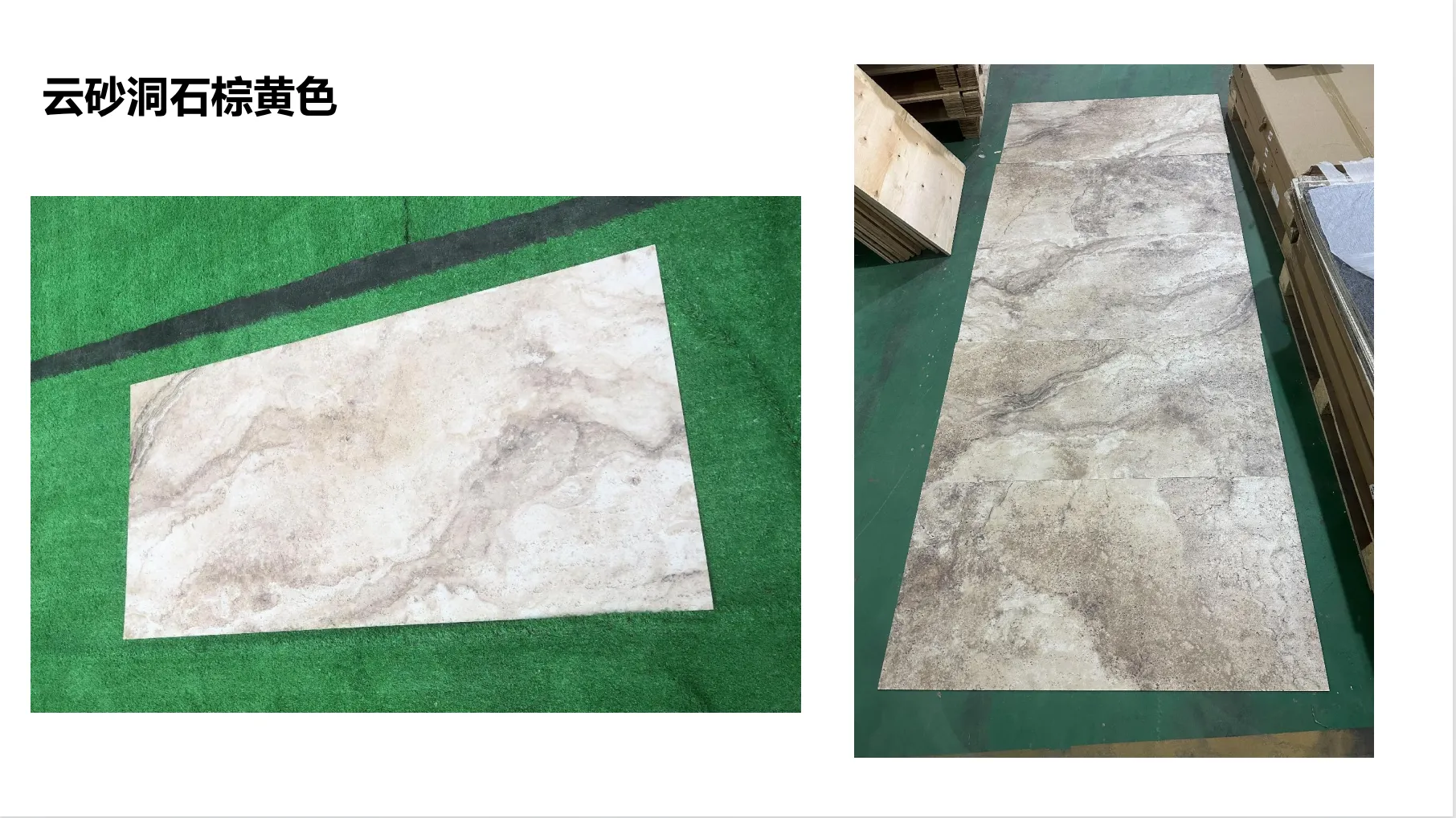
Imagine running your hand over a surface that feels like a well-loved journal—rough around the edges, rich with texture, and brimming with character. That's dolomitic travertine(claybank). Born from mineral-rich hot springs, this stone forms as calcium carbonate and dolomite minerals precipitate over centuries, creating layers of porous, honeycombed texture that hold the memory of the water that shaped them.
Its color? Think of a sunset over farmland—warm, earthy claybank tones with hints of amber and soft brown, like nature's own watercolor. The veins that run through it aren't just lines; they're the fingerprints of time, swirling and branching like rivers on a map. Run your finger along a polished slab, and you'll feel tiny indentations—vugs, geologists call them—each one a little pocket where a bubble of gas once rose to the surface, freezing that moment in stone forever.
What makes dolomitic travertine(claybank) stand out is its duality: it's rugged yet refined, ancient yet adaptable. It's the kind of stone that feels equally at home in a rustic mountain cabin and a minimalist urban loft. And thanks to innovations like MCM flexible stone technology, this once-heavy material can now bend and flex, opening up possibilities for curved walls, custom facades, and designs that were once impossible with traditional stone.
If dolomitic travertine is the storyteller, limestone(beige) is the quiet sage—wise, elegant, and endlessly reassuring. Formed from the compressed remains of marine organisms over millions of years, this sedimentary rock carries the whispers of ancient oceans in its very structure. Its beige hue is soft, like the color of sand at low tide, with subtle variations that range from creamy ivory to warm taupe, often accented by delicate veining in deeper browns or grays.
To touch limestone(beige) is to feel calm. Unlike the porous texture of travertine, limestone often has a smoother, more uniform surface—though it can be honed to a matte finish or polished to a gentle sheen. When light hits it, it doesn't sparkle; it glows, diffusing warmth like a morning sunbeam through a kitchen window. It's the stone of classic architecture, from the Parthenon's columns to the fireplaces of English manors, yet it never feels outdated. In modern spaces, it adds a touch of timelessness, grounding bold colors and sleek lines with its understated grace.
What truly sets limestone(beige) apart is its versatility. It's the chameleon of the stone world, adapting to whatever role you ask of it: a countertop that softens a busy kitchen, a backsplash that adds depth to a bathroom, or an exterior cladding that ages beautifully, developing a patina that only grows more charming with time.
While personality matters, practicality does too. Let's break down how these two stones stack up in the real world—from durability to daily care.
| Dolomitic Travertine (Claybank) | Limestone (Beige) | |
|---|---|---|
| ,, | ,, | |
| ( scale) | 3.5–4 (;,) | 3–3.5 (;,) |
| () | (,) | |
| ;, | ;, | |
| ,, (MCM) | ,,, | |
| 6–12; (,) | 12–18; | |
| "", | ,, |
*:MCM,,.
Materials don't just look good—they set the mood. Let's explore how dolomitic travertine(claybank) and limestone(beige) transform spaces, and how even their bold cousins (like travertine (starry blue)) can add drama when needed.
Picture a living room with walls clad in claybank travertine. The light streams in, catching the stone's porous surface and casting soft shadows that shift throughout the day. It's a space that feels grounded, like being wrapped in a well-loved blanket. This stone thrives in designs that celebrate texture—think industrial lofts with exposed brick, bohemian bedrooms with layered textiles, or coastal homes where earthy tones balance the sea's blues.
For those who crave a twist, consider pairing it with travertine (starry blue)—a bold variant with deep, celestial hues that add a pop of artistry. Imagine a feature wall behind a sofa: claybank travertine as the base, with starry blue accents that draw the eye like constellations. It's rustic meets cosmic, and it works.
Thanks to MCM flexible stone technology, dolomitic travertine(claybank) isn't limited to flat surfaces. Designers are now using it to clad curved staircases, create custom headboards, or even line shower niches—turning once-static stone into a flexible, sculptural element.
Limestone(beige) is the quiet confidence of design. In a kitchen, its creamy surface softens the harsh lines of stainless steel appliances, making early mornings feel less rushed. In a bathroom, it turns a functional space into a spa-like retreat, where the stone's cool touch contrasts with warm towels and flickering candles. It's the kind of material that doesn't demand attention—it earns it, through consistency and grace.
This stone plays well with others, too. Pair it with rich woods for a traditional feel, or with concrete and glass for modern minimalism. It's the ultimate team player, elevating every element around it without overshadowing. And when you want to add depth, consider mixing in darker limestone variants or even a hint of dolomitic travertine(claybank) for texture—proof that these two stones can coexist beautifully.
While dolomitic travertine(claybank) and limestone(beige) are stars in their own right, the world of natural stone is full of siblings that offer even more design possibilities. Let's explore a few:
If claybank travertine is warm and earthy, travertine (starry blue) is its dramatic cousin. With deep indigo hues and flecks of metallic minerals that catch the light like stars, this variant is for spaces that demand attention. Imagine a home bar clad in starry blue travertine, or a feature wall in a hotel lobby that feels like stepping into a night sky. "It's not for everyone," says designer Lisa Chen, "but for clients who want to make a statement, starry blue travertine is unbeatable. It pairs beautifully with brass accents and warm woods, balancing boldness with coziness."
Both dolomitic travertine and limestone have been around for millennia, but modern technology is giving them new life. MCM flexible stone—short for Modified Composite Material—takes the natural beauty of these stones and bonds it to a lightweight, flexible backing. The result? Stone that can bend around corners, adhere to curved surfaces, and even be used in high-rise facades without the weight of traditional slabs.
"MCM has revolutionized how we use stone," says construction engineer Mark Torres. "On a recent project, we used MCM limestone panels to clad a 10-story apartment building. The installation was 30% faster than with traditional stone, and the building's structural load was significantly reduced. Plus, the panels are pre-finished, so there's no on-site cutting or dust." For homeowners, this means more design freedom—think curved shower walls, custom headboards, or even stone accents on furniture—without the cost or hassle of traditional stonework.
At the end of the day, the "best" stone depends on your space, your lifestyle, and the story you want to tell. Here's a quick guide to help you decide:
And remember: the best way to decide is to get your hands on samples. Visit a showroom, run your fingers over the surfaces, and imagine how the stone will look in your space at different times of day. "Stone is a sensory experience," says designer Maria Gonzalez. "You don't just see it—you feel it, you live with it. So take your time. The right stone will feel like it was always meant to be there."
Dolomitic travertine(claybank) and limestone(beige) are more than building materials—they're partners in design, each with its own voice and personality. One whispers of ancient rivers and sunbaked earth; the other speaks of calm oceans and timeless elegance. Whether you choose the rugged charm of travertine or the quiet grace of limestone, you're not just adding stone to a space—you're adding a piece of the planet's history, and a chapter to your own.
So go ahead—let your walls tell a story. Let your floors carry the weight of memories. And when you do, you'll find that the right stone doesn't just fill a room. It makes it feel like home.
Recommend Products












