
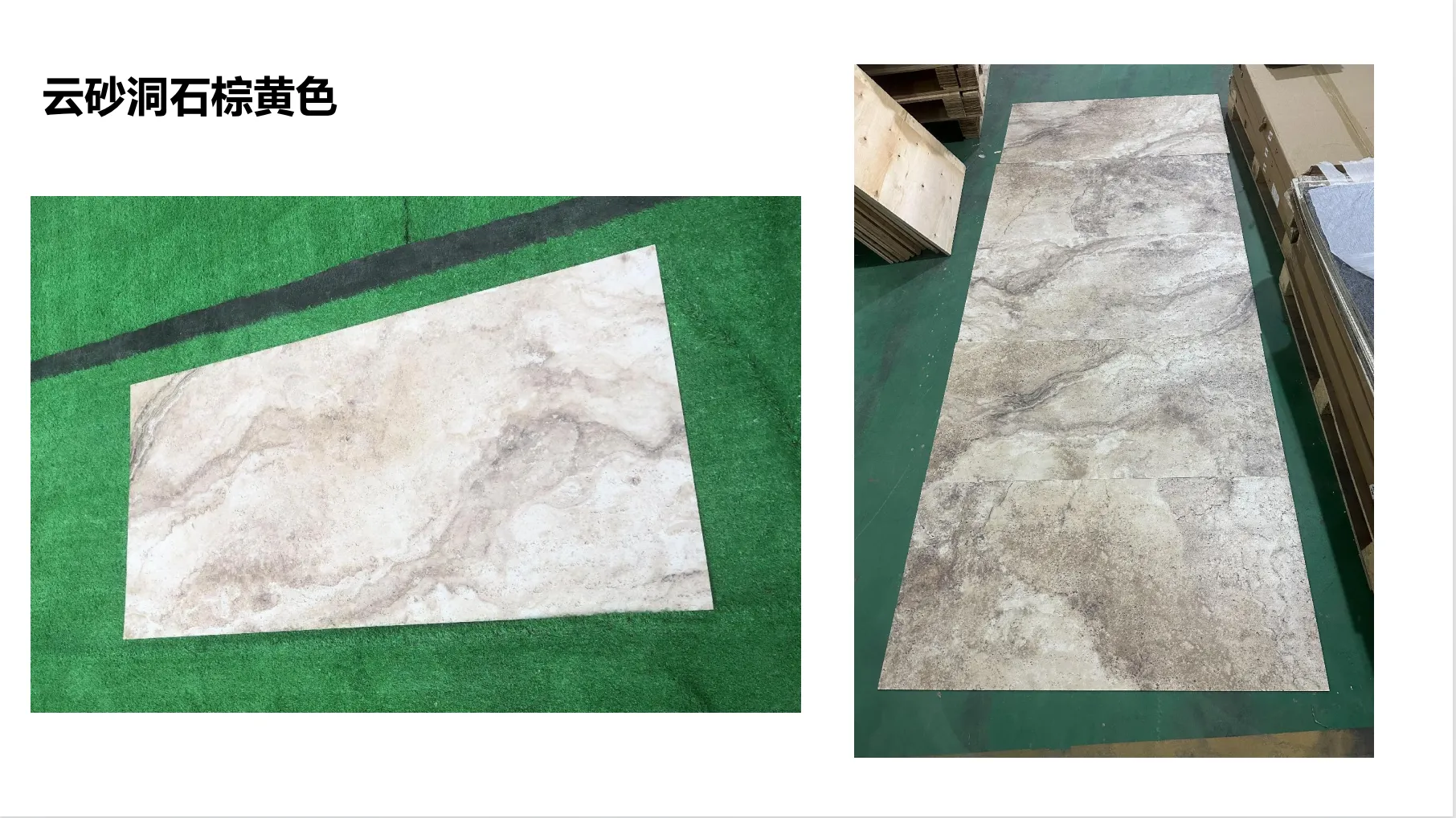
Exterior walls are more than just the "skin" of a building—they're the first chapter of its story. They shield us from the elements, frame our view of the world, and whisper clues about the space within: Is it a cozy countryside retreat? A sleek urban oasis? A nod to history, or a leap into modernity? When it comes to choosing materials for these all-important surfaces, two contenders often rise to the top: the timeless allure of natural stone, like Dolomitic Travertine (Claybank), and the innovative practicality of MCM Flexible Stone. One is rooted in the earth's ancient geology; the other, in cutting-edge material science. But which one truly shines when tasked with dressing the exterior of your home or commercial space? Let's dive in.
Imagine walking through a sun-dappled quarry in Tuscany, where layers of stone have been forming for millennia. That's the world of Dolomitic Travertine (Claybank)—a natural stone born from mineral-rich springs, where calcium carbonate and dolomite minerals crystallize over time, creating layers as unique as a fingerprint. Its name gives away its charm: "dolomitic" refers to its high dolomite content (a carbonate mineral that adds strength), while "claybank" describes its warm, earthy hue—a soft blend of terracotta, sand, and honey that feels like a hug from the landscape itself.
At first glance, Dolomitic Travertine (Claybank) is all about texture. Run your hand over its surface, and you'll feel the gentle pockmarks and subtle ridges left by gas bubbles trapped during formation—nature's own artistry. These pores aren't just aesthetic; they give the stone a tactile, organic quality that modern materials often struggle to replicate. In sunlight, the claybank color glows, shifting from golden-brown to soft amber as the day progresses. In shadow, it deepens, exuding a quiet, rustic elegance that feels both grounded and timeless.
Natural Beauty, Unmatched: No two slabs of Dolomitic Travertine (Claybank) are identical. Each has its own pattern of veins, pits, and color variations, ensuring your exterior wall becomes a one-of-a-kind masterpiece. It's the kind of material that ages like fine wine—developing a gentle patina over time as rain, wind, and sun leave their mark, adding character rather than detracting from its appeal.
Durability with a Caveat: Thanks to its dolomite content, this stone is harder and more resistant to weathering than standard travertine. It can stand up to harsh sunlight, moderate rain, and even light frost, making it a solid choice for exterior use in temperate climates. But here's the catch: like all natural stone, it's porous. Without proper sealing, water can seep into those tiny pores, leading to staining (think: bird droppings, rainwater runoff) or, in freezing climates, cracking as water expands inside the stone.
Installation: A Labor of Love (and Muscle): Installing Dolomitic Travertine (Claybank) isn't for the faint of heart. Each slab can weigh 20–30 pounds per square foot, meaning your building's structure needs to be reinforced to support the load. Contractors will need to carefully cut, shape, and mortar each piece, ensuring a tight fit to prevent water intrusion. It's a time-intensive process, often requiring skilled stonemasons—a labor cost that adds up quickly.
Maintenance: Worth the Effort for Purists: To keep that claybank glow, you'll need to seal the stone every 2–3 years. Regular cleaning with a pH-neutral detergent (no harsh chemicals!) is a must to avoid etching the surface. For some, this upkeep is a small price to pay for the authenticity of natural stone; it's part of the ritual of caring for a material with a story as old as the earth.
If Dolomitic Travertine (Claybank) is the wise elder of exterior materials, MCM Flexible Stone is the innovative newcomer—proof that progress and beauty can walk hand in hand. MCM, or Modified Composite Material, isn't your average synthetic; it's a hybrid of natural stone aggregates (think: crushed marble, granite, or travertine) and high-performance polymers, engineered to be thin, lightweight, and incredibly flexible. Picture a material that looks and feels like stone but bends like a sheet of thick paper—suddenly, curved walls, intricate facades, and even vertical gardens become possible.
Unlike natural stone, MCM Flexible Stone is crafted in controlled factory settings, where color and texture can be fine-tuned to match any design vision. Want the look of weathered travertine? The sleekness of polished marble? Or even bold, modern hues? MCM delivers—all without the weight, porosity, or unpredictability of natural stone. Its flexibility is its superpower: it can be applied to uneven surfaces, wrapped around columns, or cut into custom shapes, making it a dream for architects and designers craving creativity.
Lightweight and Easy to Install: Here's where MCM truly outshines traditional stone. Weighing in at just 3–5 pounds per square foot (compared to travertine's 20–30), it's a breeze to transport and install. No need for structural reinforcements—even existing walls can handle the load. Contractors can apply it with adhesives, reducing installation time by up to 50% compared to natural stone. For commercial projects or tight timelines, this is a game-changer.
Built for the Elements: MCM's polymer matrix acts as a shield, making it water-resistant, stain-proof, and UV-stable. Rain, snow, salt spray, or harsh sunlight? It shrugs them off. Unlike Dolomitic Travertine, it won't absorb moisture or crack in freezing temperatures, and it never needs sealing. A quick rinse with a hose is all it takes to keep it looking fresh—a boon for busy homeowners or commercial properties with large exteriors.
Design Versatility: With MCM, the sky's the limit. Love the look of Dolomitic Travertine (Claybank)? There's an MCM variant that mimics its texture and color, right down to the subtle pits and veins. But you can also branch out: pair it with other MCM series like the foamed aluminium alloy board (vintage silver) for a modern-industrial vibe, or opt for bold hues to make a statement. It's the chameleon of exterior materials—equally at home on a minimalist beach house or a bustling urban café.
Sustainability in Mind: Many MCM products use recycled stone aggregates and low-VOC polymers, reducing their environmental footprint compared to quarrying and transporting heavy natural stone. Plus, its lightweight nature cuts down on fuel use during shipping—a small but meaningful win for eco-conscious builders.
Still on the fence? Let's break down the key factors that matter most when choosing exterior wall materials. Here's how Dolomitic Travertine (Claybank) and MCM Flexible Stone stack up:
| Feature | Dolomitic Travertine (Claybank) | MCM Flexible Stone |
|---|---|---|
| Material Type | Natural stone (dolomite + calcite) | Composite (natural stone aggregates + polymers) |
| Weight | 20–30 lbs/sq ft (requires structural support) | 3–5 lbs/sq ft (no structural reinforcement needed) |
| Installation Time | Slow (requires skilled stonemasons, mortar, cutting) | Fast (adhesive application, easy cutting, lightweight handling) |
| Durability | Good (resistant to sunlight, moderate weather); prone to staining/cracking if unsealed | Excellent (waterproof, UV-stable, frost-resistant; no cracking or staining) |
| Maintenance | High (seal every 2–3 years, pH-neutral cleaning) | Low (hose down occasionally; no sealing needed) |
| Aesthetic | Organic, rustic, timeless; unique veining/pitting (one-of-a-kind look) | Versatile; mimics natural stone or custom designs; consistent texture/color |
| Cost | High (material + labor + long-term maintenance) | Moderate (lower labor costs offset material price; minimal upkeep) |
| Best For | Traditional homes, heritage buildings, rustic/commercial spaces (temperate climates) | Modern designs, curved surfaces, high-rise buildings, coastal/frost-prone areas |
The answer, as with most design dilemmas, hinges on your priorities. Let's break it down by scenario:
You're chasing that "old-world charm" vibe. If your project is a countryside villa, a historic renovation, or a space that aims to feel grounded in nature, nothing beats the organic beauty of natural stone. The claybank color's warmth and the stone's unique texture will make your exterior feel like it's been part of the landscape for centuries. Just be prepared for the investment—both in upfront costs and ongoing care.
You live in a mild climate. If you're in a region with little frost, minimal heavy rain, or low pollution, Dolomitic Travertine (Claybank) will thrive with proper sealing. It's a material that rewards patience, aging gracefully into a surface that tells a story.
You value practicality without sacrificing style. Modern life is busy—you don't want to spend weekends sealing stone or worrying about cracks. MCM lets you have the look of natural stone with the ease of a low-maintenance material. It's perfect for busy families, commercial buildings, or anyone who wants their exterior to look flawless year-round with minimal effort.
Your design is bold or unconventional. If your vision includes curved walls, intricate patterns, or a mix of materials (say, pairing stone-look panels with foamed aluminium alloy board (vintage silver) for a contemporary contrast), MCM's flexibility and versatility make it the clear choice. It turns "impossible" designs into "let's do it."
You're building in a challenging climate. Coastal areas with salt spray, regions with harsh winters (freeze-thaw cycles), or cities with high pollution? MCM laughs in the face of these elements. Its impermeable surface and durability mean it will look as good in 10 years as it did on day one.
At the end of the day, Dolomitic Travertine (Claybank) and MCM Flexible Stone aren't rivals—they're different tools for different stories. Dolomitic Travertine speaks to tradition, to the beauty of imperfection, and to a deep connection with the natural world. It's for those who want their exterior to feel like a living, breathing part of the earth. MCM Flexible Stone, on the other hand, is a love letter to progress—to innovation, practicality, and the freedom to design without limits. It's for those who want their building to look forward, not just backward.
So, which suits exterior walls better? If your heart beats for the warmth of natural stone and you're willing to invest in its care, Dolomitic Travertine (Claybank) will reward you with a lifetime of character. But if you crave versatility, durability, and ease, MCM Flexible Stone is the modern solution that doesn't compromise on beauty. Either way, your exterior wall will tell a story—one that starts with the material you choose.
Recommend Products












