
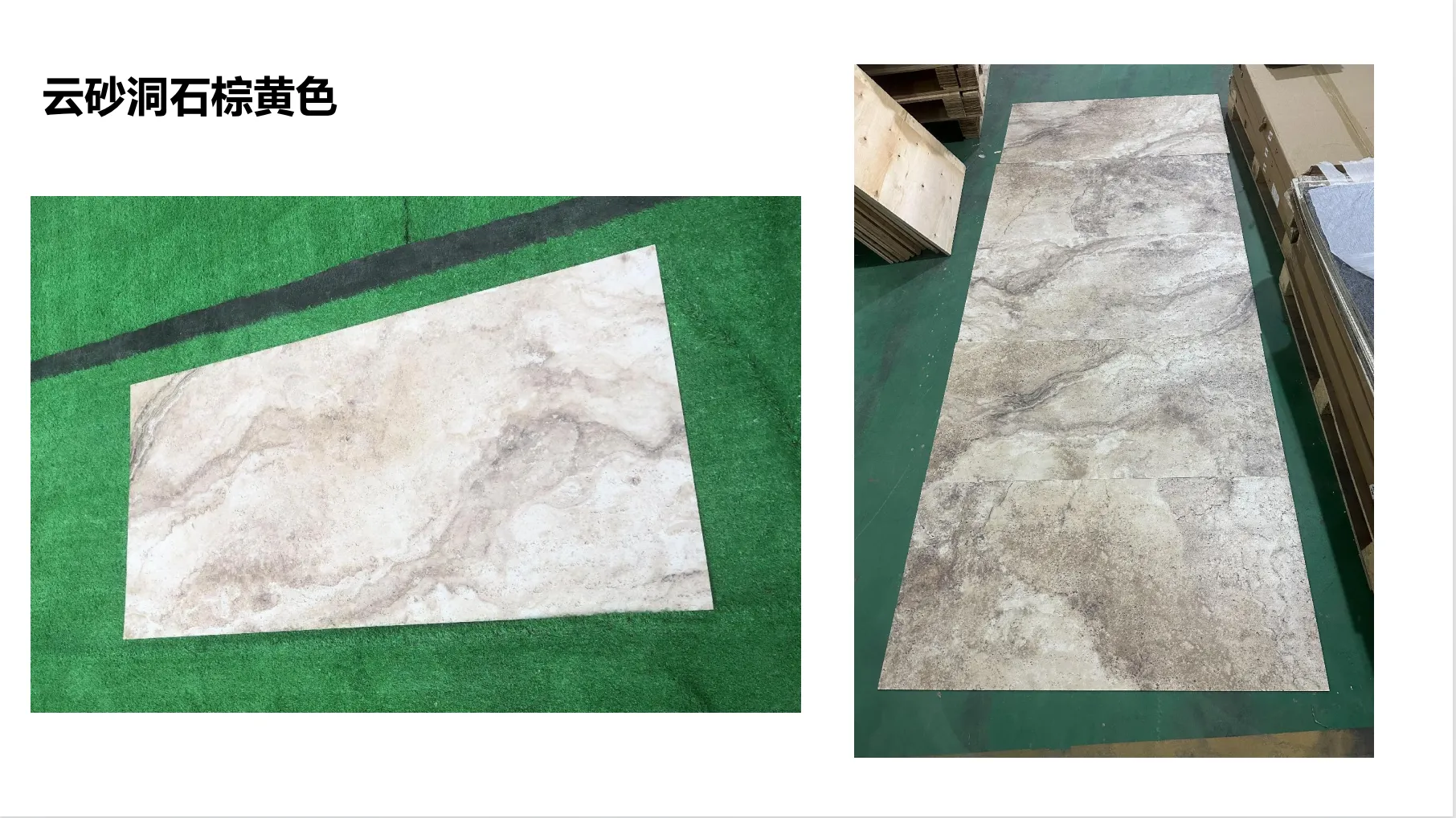
Choosing the right material for your space is more than just a practical decision—it's about crafting a story. The walls, floors, and surfaces around us don't just fill a room; they shape how we feel, how we interact, and even how we remember a place. Today, we're diving into two materials that often top the list for designers and homeowners alike: the warm, earthy dolomitic travertine (claybank) and the sleek, versatile porcelain tile. One is a product of time and nature, the other a marvel of modern engineering. Let's explore how they stack up in cost, durability, and the intangible magic of aesthetics.
First, let's get to know our two stars. Dolomitic travertine (claybank) isn't just a stone—it's a piece of Earth's history. Formed over centuries by mineral-rich hot springs, travertine carries the texture of time: tiny pores, subtle veining, and a color palette that feels like a hug from the earth. The "claybank" variety leans into warm, sandy beige tones, with hints of terracotta and soft gray that shift in different lights. Thanks to innovations like MCM flexible stone technology, this natural beauty now comes with added versatility, making it easier to install on curved surfaces or large walls without losing its organic charm.
Porcelain tiles, on the other hand, are the new kid on the block—though "new" might be a stretch. Engineered from fine clay and minerals fired at ultra-high temperatures, they're designed to mimic everything from marble to wood, all while packing a punch of durability. Porcelain tiles are the chameleons of the design world: they can look like stone, act like stone, but skip some of the quirks that come with nature's unpredictability.
Let's start with the numbers—because budget often sets the starting line for any project. When comparing these two, it's not just about the upfront price tag; it's about long-term value, installation costs, and even maintenance over time. Here's a breakdown:
| Cost Factor | Dolomitic Travertine (Claybank) | Porcelain Tiles |
|---|---|---|
| Material Cost (per sq. ft.) | $8–$15 (natural stone; higher for MCM big slab board series ) | $3–$8 (varies by design; luxury styles up to $12) |
| Installation Cost | $5–$10/sq. ft. (requires skilled labor for cutting natural stone) | $3–$7/sq. ft. (easier to cut; uniform size simplifies installation) |
| Maintenance Over 10 Years | $150–$300 (sealing every 2–3 years; occasional polishing) | $50–$100 (minimal; occasional grout cleaning) |
| Total Estimated Cost (100 sq. ft.) | $1,450–$2,800 (material + install + 10yrs maintenance) | $650–$1,670 (material + install + 10yrs maintenance) |
At first glance, porcelain seems like the budget-friendly choice—and it often is, especially for large projects. But dolomitic travertine (claybank) has a trick up its sleeve: timelessness. Natural stone tends to hold or increase in value over time, while trends in porcelain (think: overly or marble) might feel dated in a decade. And with MCM flexible stone options, travertine becomes more adaptable, potentially reducing waste during installation and extending its lifespan—making that initial investment feel wiser in the long run.
Durability isn't just about not breaking—it's about how a material ages. Does it wear gracefully, or does it show every scratch and stain like a battle scar?
Dolomitic Travertine (Claybank): Nature built this stone to last. Travertine is formed under pressure, giving it inherent strength, but its porous surface is both a blessing and a curse. Those tiny holes (called "vugs") are part of its charm, but they also mean it can absorb liquids if not sealed. Spill red wine on unsealed travertine, and you might end up with a permanent reminder. But seal it properly, and it holds up surprisingly well in low-moisture areas like living rooms or accent walls. The MCM big slab board series takes this a step further: larger, more uniform panels reduce grout lines (a common weak spot) and add structural stability, making it suitable for vertical applications like fireplace surrounds or feature walls.
Porcelain Tiles: Porcelain is the definition of "tough as nails." Fired at temperatures over 2,200°F, it's non-porous (0.5%), scratch-resistant, and virtually stain-proof. drop a pot on porcelain, and it might chip, but it won't absorb the impact like stone. It's a champion in high-traffic areas—kitchens, bathrooms, entryways—where spills and scuffs are daily occurrences. The downside? Its uniformity means that when it does get damaged, the repair is obvious; there's no "natural variation" to hide a chip.
Here's where the real magic happens. Aesthetics aren't just about "looking good"—they're about evoking emotion. Let's talk about how these materials make a space feel .
Dolomitic Travertine (Claybank): If warmth had a texture, it would be travertine. The claybank hue is soft and inviting, like sunlight on sandstone. Its surface isn't perfectly smooth; it has a gentle, tactile quality that invites touch. Run a hand over it, and you'll feel the subtle ridges of mineral deposits, the tiny pits left by gas bubbles long ago. No two pieces are identical—one slab might have a bold vein of terracotta, another a whisper of gray—and that uniqueness makes a room feel alive, like it has a history. It pairs beautifully with natural woods, woven textiles, and earthy tones, creating spaces that feel grounded and welcoming. Think of a cozy reading nook with travertine floors, where the stone seems to glow softly in the afternoon light—it's not just a floor; it's a companion.
Porcelain Tiles: Porcelain is the minimalist's dream. It's sleek, clean, and endlessly customizable. Want the look of marble without the maintenance? Porcelain can do that. Crave the warmth of wood but need something waterproof? Porcelain has you covered. Its uniformity creates a sense of calm and order—no surprises, just a smooth, consistent surface that lets other elements (art, furniture, lighting) take center stage. In modern spaces, this can be incredibly powerful: a all-white kitchen with large-format porcelain tiles feels bright and expansive, while a concrete-look porcelain floor adds industrial edge to a loft. But here's the catch: that uniformity can sometimes feel… cold. Without the organic variations of stone, a room clad in porcelain might lack the "soul" that makes it feel like home.
Even the most beautiful material falls flat if it can't handle the job. Let's match each contender to the spaces where they shine brightest.
Best for Dolomitic Travertine (Claybank): Stick to low-moisture, low-traffic areas where its beauty can be appreciated up close. Think: bedroom floors, accent walls, fireplace surrounds, or a formal dining room. Thanks to MCM flexible stone , it's also becoming popular for curved surfaces like archways or custom furniture, adding a touch of nature to unexpected places. Just avoid bathrooms or kitchens unless you're willing to seal it religiously.
Best for Porcelain Tiles: High-traffic, high-moisture zones are porcelain's playground. Kitchen floors, bathroom walls, mudrooms, and even outdoor patios (look for frost-resistant options) thrive with porcelain. Its versatility also makes it great for open-concept spaces, where you can carry a single design from the living room to the kitchen for a cohesive look.
At the end of the day, there's no "winner" here—only what works for your story. If you crave warmth, history, and a material that ages like fine wine, dolomitic travertine (claybank) is your match. It's not perfect, but its flaws are part of its charm—like a well-loved book with dog-eared pages. And with MCM flexible stone and big slab board series , it's more adaptable than ever, blending the best of nature and innovation.
Porcelain tiles, on the other hand, are the practical dreamers. They let you chase bold designs without sacrificing durability, making them ideal for busy homes or modern spaces where function meets style. They won't tell the same ancient stories as travertine, but they'll write new ones—clean, bright, and built to keep up with your life.
So, what's it going to be? The earthy embrace of dolomitic travertine, or the sleek reliability of porcelain? Whichever you choose, remember: great design isn't just about materials. It's about how those materials make you feel every time you walk through the door. And that? That's priceless.
Recommend Products












