
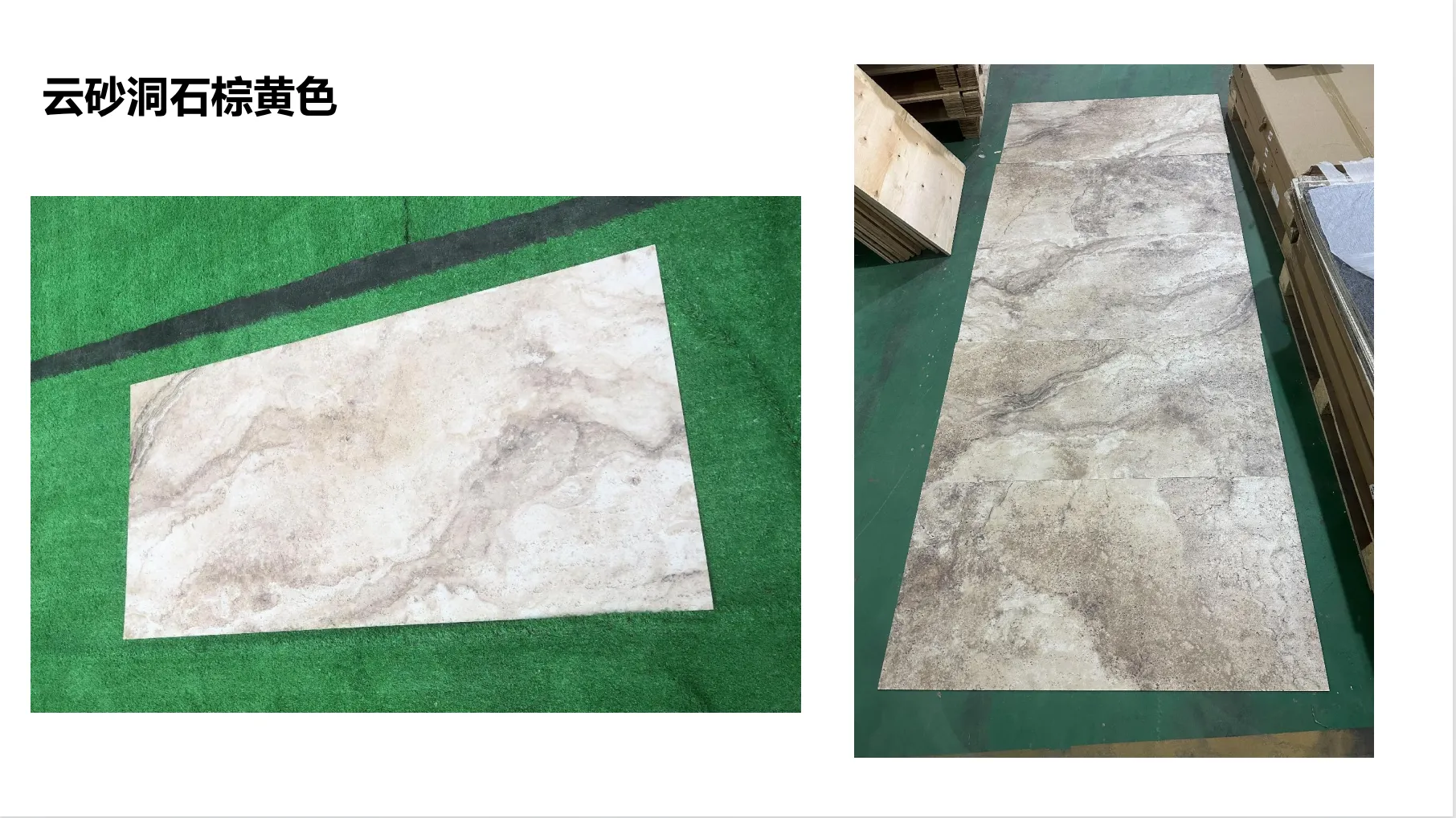
Welcome to the world of natural stone, where each slab tells a story written by millions of years of Earth's history. Today, we're zeroing in on a crowd favorite among architects and designers alike: dolomitic travertine, specifically the moody, sophisticated dark grey variety. If you've ever walked into a sleek modern lobby or a cozy industrial-chic home and paused to admire the textured wall panels, chances are you were looking at dolomitic travertine (dark grey) in all its glory. But have you ever wondered what gives this stone its unique, almost mystical dark hue? Let's dig in—literally and figuratively—to uncover the secrets behind its color, compare it with its lighter counterparts like dolomitic travertine (claybank), and explore why it's become a staple in contemporary design.
To understand dolomitic travertine (dark grey), we first need to backtrack to how travertine forms. Travertine is a type of limestone, born from the slow dance of mineral-rich water. Imagine hot springs or mineral-laden streams cooling over time—each drop leaves behind a tiny deposit of calcium carbonate, the same compound in chalk or antacids. Over centuries, these deposits build up, layer upon layer, creating the porous, banded stone we know as travertine. But dolomitic travertine? It's travertine with a twist.
Enter dolomitization: a geological process where magnesium ions sneak into the stone's crystal structure and replace some of the calcium ions. Think of it like swapping out a few ingredients in a recipe—the base stays the same, but the final product gets a new texture, hardness, and yes, color. This transformation isn't quick; it can take millions of years, with groundwater carrying magnesium-rich solutions seeping through the stone, altering it from the inside out. The result? A stone that's denser, more resistant to weathering, and—most importantly for our story—capable of stunning color variations, from the warm terracotta of dolomitic travertine (claybank) to the deep, stormy grey we're focusing on.
So, what turns dolomitic travertine from a generic off-white to that rich, dark grey? It's a team effort of minerals, impurities, and environmental conditions. Let's break it down:
Magnesium isn't just a mineral here—it's the color director. While pure calcium carbonate (standard travertine) is often white or cream, adding magnesium during dolomitization darkens the stone. The more magnesium ions replace calcium, the deeper the grey tends to get. But magnesium alone isn't enough to create the inky, moody tones of dolomitic travertine (dark grey). That's where impurities come in.
Think of impurities as nature's paintbrushes. Even tiny amounts of other minerals can tint the stone dramatically:
The conditions where the travertine forms play a huge role too. Stagnant water, like in a still mineral pool, traps more organic matter and impurities—no flowing current to wash them away. This creates a darker stone. On the flip side, fast-moving streams or waterfalls churn up the deposits, rinsing away excess minerals and leaving lighter, cleaner layers (hello, dolomitic travertine (claybank)). Even the amount of oxygen in the water matters: low-oxygen environments preserve more organic material, while oxygen-rich water breaks it down, resulting in paler tones.
Put it all together—high magnesium content, a dash of iron oxides, trapped organic matter, and a stagnant, low-oxygen formation environment—and you get the star of the show: dolomitic travertine (dark grey), with its unique blend of depth and texture.
Dolomitic travertine isn't a one-trick pony. Let's compare dark grey with its warm, earthy sibling, dolomitic travertine (claybank), to see how their colors shape their roles in design.
| Feature | Dolomitic Travertine (Dark Grey) | Dolomitic Travertine (Claybank) |
|---|---|---|
| Color Profile | Deep charcoal to slate grey, often with subtle blue or green undertones; porous surface with light veining. | Warm terracotta to soft beige, with orange or pinkish hues; smoother texture with cream or tan veins. |
| Key Color Drivers | High magnesium, iron oxides, and organic matter; low-oxygen formation. | Lower magnesium, higher iron oxides (rust), and oxygen-rich, fast-flowing water formation. |
| Design Vibe | Modern, industrial, minimalist; adds drama and sophistication. | Rustic, bohemian, warm; evokes nature and coziness. |
| Best Paired With | Metals (brass, chrome), fair-faced concrete, wood grain board, black or white accents. | Natural woods, woven textiles, warm lighting, terracotta or sage green decor. |
| Common Uses | Accent walls, kitchen backsplashes, modern fireplaces, commercial lobbies. | Flooring, bathroom walls, outdoor patios, rustic dining spaces. |
Designers often talk about "color psychology," and these two stones are perfect examples. Dark grey dolomitic travertine feels grounded and intentional—like a well-tailored suit for a space. It's bold without being loud, making it ideal for statement walls in restaurants or home offices where you want to convey professionalism with a touch of edge. Claybank, on the other hand, is like a cozy sweater: it invites warmth and relaxation, making it a hit in bedrooms, sunrooms, or cafes aiming for that "home away from home" feel.
Dark grey dolomitic travertine isn't just a pretty face—it's surprisingly versatile. Its durability (thanks to dolomitization) and unique texture make it suitable for both indoor and outdoor use. Let's explore some of its most popular applications:
Walk into any high-end boutique hotel or modern home, and you'll likely spot a wall clad in dolomitic travertine (dark grey). Its porous surface and irregular veining add visual interest without overwhelming the space. In a living room, it can serve as a backdrop for a sleek TV or a gallery of black-and-white photos; in a bathroom, it pairs beautifully with matte black fixtures and white marble countertops for a spa-like feel. One designer I spoke to recently used it in a home theater, noting, "The dark grey absorbs sound subtly and creates this intimate, cocoon-like atmosphere—perfect for movie nights."
While travertine is often porous, dolomitic travertine (dark grey) is denser than standard travertine, making it a solid choice for flooring. Its dark color also hides dust and minor scratches, a win for busy households or commercial spaces like restaurants. Imagine a restaurant with dark grey dolomitic travertine floors, paired with wood grain board tables and woven (khaki) seat cushions—the contrast of textures creates a space that feels both polished and inviting.
Outdoors, dolomitic travertine (dark grey) holds its own against rain, snow, and UV rays. It's a favorite for facade cladding on modern homes or office buildings, where its natural texture softens the building's lines. In urban settings, it stands out against glass and steel, adding a touch of nature to concrete jungles. One architect described it as "a bridge between the built environment and the natural world—tough enough for the city, but with the soul of a mountain."
Think beyond walls and floors: dark grey dolomitic travertine is also used for custom coffee tables, fireplace surrounds, and even backsplashes. Its unique veining means no two pieces are alike, making each item a one-of-a-kind (artwork). A friend who recently renovated her kitchen opted for a dolomitic travertine (dark grey) backsplash, saying, "It's like having a piece of the earth in my home—every time I look at it, I notice a new vein or texture I hadn't seen before."
In a world of all-white interiors and Scandinavian minimalism, dark grey dolomitic travertine offers a refreshing alternative. Designers are drawn to its ability to add depth and warmth without relying on bold colors. "Clients are craving texture and authenticity," says a leading interior designer. "They want materials that tell a story, and dark grey dolomitic travertine does that—it's not perfect, it has flaws, and that's what makes it beautiful."
It also pairs seamlessly with other popular materials, from foamed aluminium alloy board (vintage silver) to fair-faced concrete, making it easy to incorporate into existing design trends. Whether you're going for industrial chic, modern minimalist, or rustic elegance, dark grey dolomitic travertine has a place.
Dolomitic travertine (dark grey) is a testament to nature's creativity. Its dark hue, born from millions of years of geological processes—magnesium-rich waters, trapped organic matter, and the slow dance of dolomitization—tells a story of Earth's history. But it's also a story of human ingenuity: designers and architects who saw its potential to transform spaces, to add depth where there was flatness, and warmth where there was coldness.
Whether you're considering it for your next home renovation or just appreciate the beauty of natural stone, remember: every slab of dolomitic travertine (dark grey) is a unique masterpiece, shaped by time, minerals, and a little geological magic. And in a world of mass-produced materials, that's something worth celebrating.
Recommend Products












