
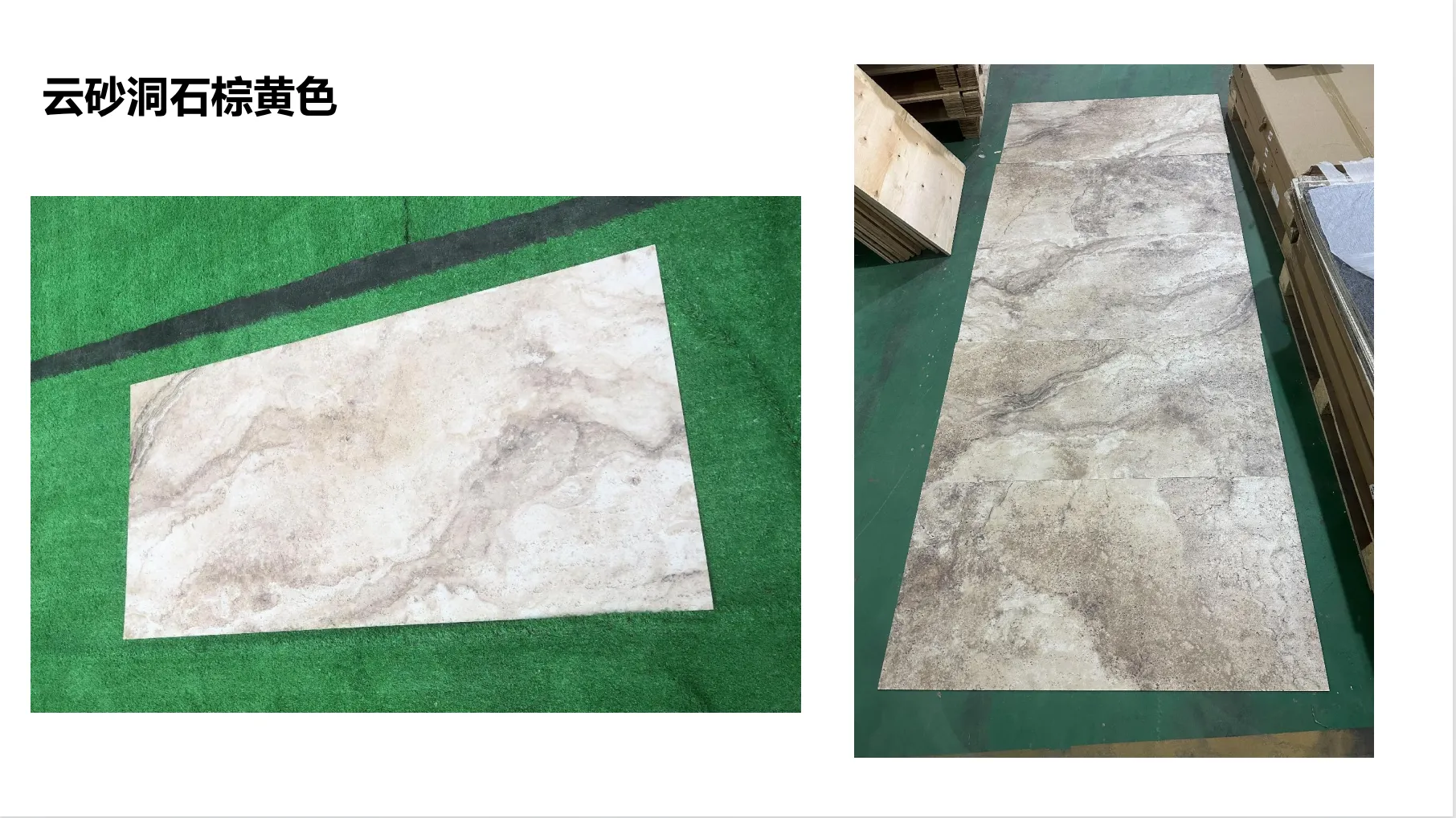
Step into a modern office lobby, and you might find yourself pausing, drawn to the walls—not by flashy art, but by something quieter, more grounding. The surface is a deep, moody grey, with subtle veins that twist like ancient rivers frozen in time. Run a hand over it, and you'll feel the texture: not perfectly smooth, but warm, alive, as if the stone itself holds stories. That's dolomitic travertine (dark grey), a material that doesn't just build spaces—it breathes life into them. But beyond its beauty lies a deeper purpose: it's a cornerstone of sustainable construction, helping buildings earn LEED certification and leaving a lighter footprint on our planet. Let's explore how this natural wonder bridges aesthetics, durability, and eco-conscious design.
To understand dolomitic travertine (dark grey), we have to start with time—eons of it. Travertine forms in hot springs and limestone caves, where mineral-rich water cools and deposits layers of calcium carbonate. Dolomitic travertine, a variation, swaps some calcium for magnesium, giving it extra strength and a distinct, earthy palette. The "dark grey" variety, in particular, is a study in contrasts: its base is a deep, storm-cloud grey, streaked with whispers of white, taupe, or even charcoal, like shadows dancing across a mountain at dusk.
Unlike synthetic materials churned out in factories, dolomitic travertine is a product of nature's slow, intentional craftsmanship. Quarried from select sites where it has formed over thousands of years, it requires minimal processing—no harsh chemicals, no energy-heavy manufacturing. What you see is what the earth created: a stone that carries the weight of time in every inch, yet feels surprisingly light in spirit.
Why does this matter? In a world of quick fixes and disposable design, materials with history matter. Dolomitic travertine (dark grey) isn't just a "surface"—it's a connection to the planet's past, a reminder that the most enduring things are often the ones nature takes its time to build.
Sustainability in construction isn't just a buzzword; it's a promise to future generations. Green building materials like dolomitic travertine (dark grey) deliver on that promise in three key ways: low environmental impact, longevity, and healthfulness.
First, its carbon footprint is tiny compared to alternatives. Synthetic cladding or engineered stones often require high heat, toxic binders, and long transportation routes. Dolomitic travertine, by contrast, is quarried, cut, and finished with minimal energy. Many quarries now use solar-powered equipment or water recycling systems, further slashing emissions. And because it's a natural resource, it doesn't rely on non-renewable fossil fuels to create—unlike plastics or some composite materials.
Then there's durability. A well-installed dolomitic travertine wall or floor can last 50 years or more, outliving vinyl, laminate, or even concrete in high-traffic areas. Think about it: if a material doesn't need replacement every decade, that's less waste in landfills, fewer resources spent on manufacturing new products, and lower maintenance costs for building owners. It's sustainability that pays off—literally and environmentally.
Finally, it's healthy. Unlike some paints or sealants that off-gas VOCs (volatile organic compounds), dolomitic travertine is inert. It doesn't release harmful chemicals into the air, making indoor spaces safer for occupants. Its porous surface even has natural humidity-regulating properties, absorbing moisture in damp months and releasing it when the air is dry—like a built-in air purifier, courtesy of nature.
LEED (Leadership in Energy and Environmental Design) certification is the gold standard for green buildings, rewarding projects that prioritize energy efficiency, water conservation, and sustainable materials. Dolomitic travertine (dark grey) isn't just a "nice-to-have" here—it's a strategic choice that can earn points in multiple LEED categories.
Take Materials and Resources (MR) credits : LEED rewards using materials with recycled content or those sourced locally. Many dolomitic travertine quarries are located near urban centers, cutting down on transportation miles (and emissions). Some suppliers even offer "salvaged" travertine from old buildings, giving new life to stone that might otherwise be discarded—earning extra points for waste reduction.
Then there's Indoor Environmental Quality (EQ) . LEED values spaces that promote occupant health, and dolomitic travertine delivers. Its natural porosity resists mold and mildew, and since it doesn't off-gas, it helps maintain low VOC levels—critical for people with allergies or asthma. Studies have even shown that natural stone surfaces can reduce stress, making offices or schools feel more calming and productive. Happy, healthy occupants? That's an EQ credit waiting to be claimed.
Finally, Sustainable Sites (SS) credits might apply if the stone is used in outdoor applications. Its natural slip resistance makes it ideal for walkways or patios, reducing the need for energy-heavy lighting (since it's durable enough to withstand weather without cracking). And because it blends with natural landscapes, it minimizes disruption to local ecosystems—unlike harsh, reflective materials that can harm wildlife.
To truly see dolomitic travertine (dark grey)'s value, let's stack it against two popular alternatives: fair-faced concrete and MCM flexible stone (a type of lightweight composite cladding).
| Material | Sustainability Features | LEED Contribution | Aesthetic & Emotional Appeal |
|---|---|---|---|
| Dolomitic Travertine (Dark Grey) | Low carbon footprint, 50+ year lifespan, natural humidity regulation, minimal processing. | MR credits (local sourcing), EQ credits (low VOCs), SS credits (slip resistance). | Warm, organic texture; unique veining tells a "story"; connects occupants to nature. |
| Fair-Faced Concrete | Durable but high embodied carbon (cement production is emissions-heavy); limited recyclability. | Can earn points for thermal mass but struggles with VOCs from sealants. | Industrial, sleek look but can feel cold or sterile without added design elements. |
| MCM Flexible Stone (mcm flexible stone) | Lightweight (reduces transportation emissions) but often contains plastic binders; shorter lifespan (15–20 years). | MR credits for recycled content but may lose points for non-biodegradable components. | Versatile designs but lacks the depth and "authenticity" of natural stone. |
The takeaway? Fair-faced concrete is tough but comes with a heavy environmental cost. MCM flexible stone is innovative but can't match travertine's longevity or emotional resonance. Dolomitic travertine (dark grey) balances it all: sustainability, durability, and a soulful aesthetic that synthetic materials just can't replicate.
In 2023, the Riverbank Community Center in Portland, Oregon, set out to earn LEED Platinum—the highest certification. Their design team chose dolomitic travertine (dark grey) for the main lobby walls and outdoor terrace. Why? "We wanted a material that felt welcoming, not clinical," says architect Maria Gonzalez. "Travertine's texture invites people to touch it, to slow down. And knowing it was locally quarried (from a site 120 miles away) and required almost no processing helped us hit our sustainability goals."
The result? The center earned 17 MR credits alone, thanks to the travertine's local sourcing and low embodied carbon. Parents at the on-site daycare note that the lobby's warm grey walls "feel calm, like being in a forest," and the outdoor terrace, with travertine pavers, has become a favorite spot for community gatherings. "It's not just a building," Gonzalez adds. "It's a space that heals—for people and the planet."
LEED points are measurable, but some of dolomitic travertine (dark grey)'s greatest benefits are felt, not counted. Walk into a room clad in this stone, and you'll notice it immediately: a sense of calm, a feeling of rootedness. Unlike glossy, uniform surfaces that scream "new," travertine's imperfections—its pockmarks, its uneven veins—make it relatable. It feels human, because it's imperfect, just like we are.
This matters in spaces where people live, work, or heal. Hospitals using natural stone report lower patient anxiety; schools note better focus in classrooms with earthy materials. There's a reason ancient civilizations built temples and public squares with travertine: they understood that stone isn't just structural—it's spiritual. It connects us to something bigger than ourselves.
Dolomitic travertine (dark grey) isn't just a material for today's buildings—it's a legacy for tomorrow. It proves that sustainability and beauty don't have to compete; they can dance together. Whether you're designing a LEED-certified office, a community center, or a home, choosing this stone is a choice to honor the planet, respect the past, and nurture the people who will use the space for decades to come.
So the next time you see a wall of deep grey stone, take a moment to appreciate it. It's not just rock. It's a promise: that we can build better, live lighter, and leave the earth a little more beautiful than we found it. And in a world that often feels rushed, that's a promise worth keeping.
Recommend Products












