
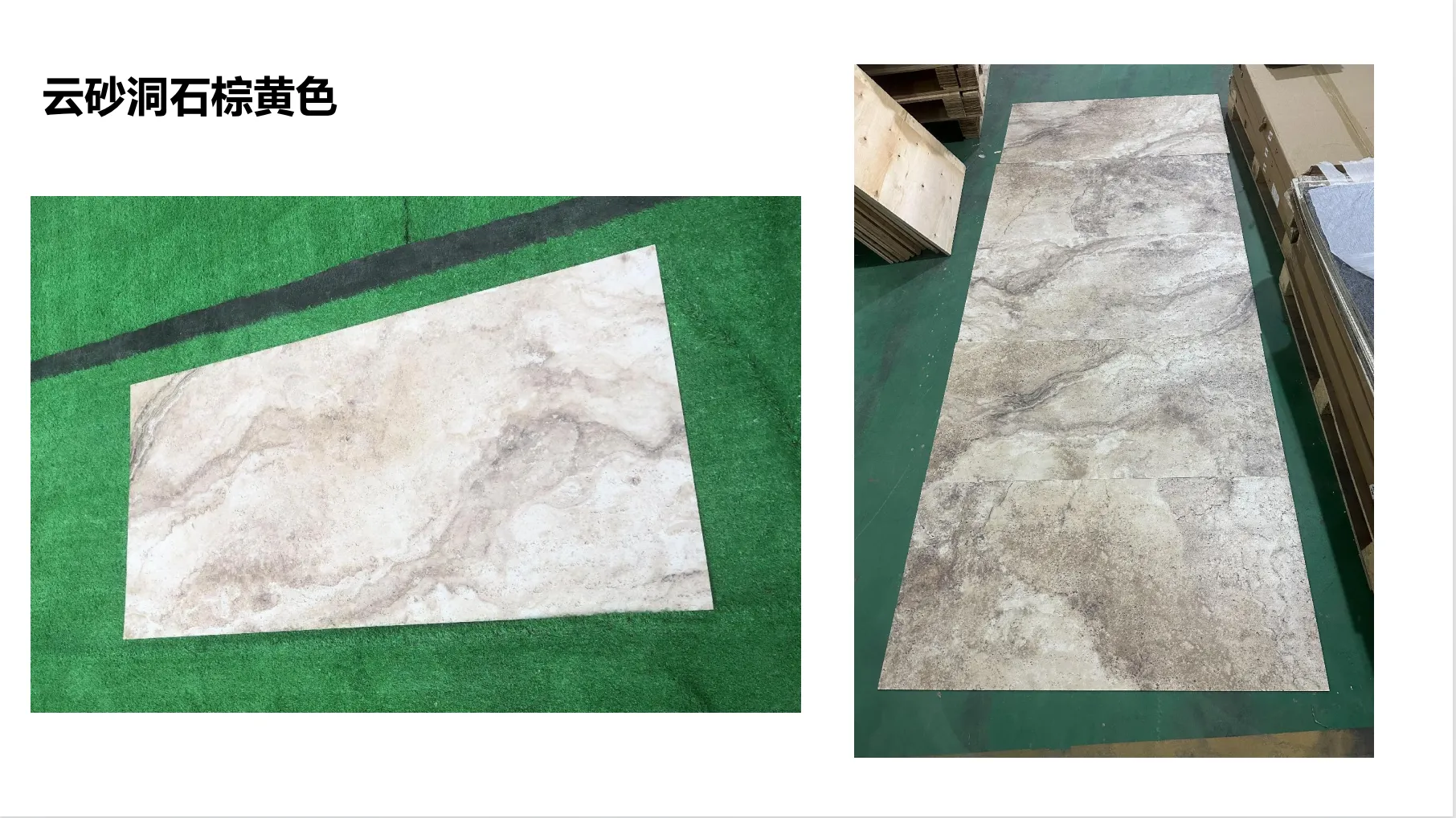
Heritage buildings are more than bricks and mortar—they are living museums, their facades etched with the stories of generations. Walk through the cobblestone streets of a historic district, and you'll feel it: the weight of time in every weathered arch, every chiseled cornice, every stone that has stood guard through storms, wars, and the quiet passing of years. But time is a relentless sculptor. Wind, rain, pollution, and even the hands of well-meaning renovators can blur those stories, turning sharp details into soft edges, vibrant hues into muted shadows. Restoring these structures isn't just about fixing what's broken; it's about rekindling their voice. It's about choosing materials that don't just fill gaps but remember —materials that honor the original stone's texture, color, and character so faithfully, you'd swear they were quarried from the same earth centuries ago. For many restorers, that material is dolomitic travertine—specifically, the modified composite versions like dolomitic travertine (dark grey) and dolomitic travertine (claybank) —and it's changing how we bridge the past and present.
Ask any heritage architect, and they'll tell you: the hardest part of restoration isn't the construction—it's the matching. Original stones, hewn from local quarries long since depleted, often have unique mineral compositions, color variations, and textures that modern natural stones can't replicate. Quarrying new blocks from the same site might be impossible (many historic quarries are protected or exhausted), and even if you could, transporting heavy stone to delicate, aging structures risks further damage. Worse, natural stone is porous; over time, it absorbs water, salts, and pollutants, leading to cracks, efflorescence, and discoloration—the very issues restoration aims to fix. So, what's the solution? Enter Modified Composite Materials (MCM), a category that includes innovations like mcm flexible stone and mcm big slab board series . These materials aren't just imitations; they're interpretations —crafted to capture the essence of natural stone while offering the durability and workability modern restoration demands. And among them, dolomitic travertine stands out as a master of mimicry.
To understand why dolomitic travertine is a favorite for heritage work, let's start with the basics. Natural travertine forms in hot springs, where mineral-rich water cools and deposits layers of calcium carbonate. Dolomitic travertine, a variant, includes dolomite (a magnesium-rich mineral), giving it a denser structure and subtler color palette—think soft greys, warm clay tones, and earthy beiges. These hues are a perfect match for historic buildings, which often feature stone quarried from local deposits with similar mineral compositions. But natural dolomitic travertine, like all natural stone, has limitations: it's heavy, prone to chipping, and varies widely in color from block to block. MCM versions, however, solve these issues. Take dolomitic travertine (dark grey) : it replicates the deep, moody tone of aged stone, with the same subtle veining and pockmarked texture that comes from centuries of mineral deposits. Dolomitic travertine (claybank) , on the other hand, leans into warmth—think the color of sun-baked earth, with hints of terracotta and sand that mirror the soft glow of original travertine facades in Mediterranean or colonial-style buildings.
| Characteristic | Original Historic Dolomitic Travertine | MCM Dolomitic Travertine (Dark Grey/Claybank) |
|---|---|---|
| Color Consistency | Highly variable; natural mineral deposits create unique "patches" and veining | Engineered to match historic color ranges, with controlled veining for authenticity |
| Texture | Porous, with visible pits, grooves, and fossilized plant/animal remains | 3D-printed surface (via mcm 3d printing series ) replicates pits, grooves, and even micro-fossil patterns |
| Weight | Heavy (20-30 kg/m² for 20mm thickness) | Lightweight (4-6 kg/m²), reducing structural stress on aging buildings |
| Durability | Prone to water absorption, staining, and freeze-thaw damage | Sealed surface resists water, pollutants, and UV rays; flexible core prevents cracking |
What truly sets MCM dolomitic travertine apart is its attention to the "small stuff"—the details that make a stone feel "real." Take texture: run your hand over a piece of dolomitic travertine (claybank) , and you'll feel the same slight roughness as the original, the result of mcm 3d printing series technology that maps and replicates even the tiniest indentations. It's not just about looking like stone; it's about feeling like stone—cool to the touch, with a slight give that comes from millions of years of mineral compression. And because MCM panels are thin and flexible (thanks to mcm flexible stone technology), they can be curved, cut, and shaped to fit irregular surfaces—think the rounded arches of a Romanesque church or the intricate moldings of a Baroque palace—without breaking or losing their texture.
In the rolling hills of Tuscany, a 1780s villa stood half-forgotten. Its once-grand travertine facade, quarried from nearby Bagni di Tivoli, had suffered decades of neglect: vines had grown into cracks, rain had eroded the surface, and a botched 1970s renovation had replaced damaged stones with mismatched marble, creating a jarring patchwork of light and dark. When restoration began in 2023, the team faced a dilemma: the original travertine quarry was long closed, and modern natural travertine was either too light (losing the villa's warm, aged look) or too porous (risking future damage). The solution? dolomitic travertine (claybank) from the mcm big slab board series . The large-format panels (up to 1200x2400mm) minimized visible seams, while the claybank hue matched the villa's original earthy tone. The mcm flexible stone panels were lightweight enough to install without reinforcing the villa's delicate wooden substructure, and their 3D-printed texture replicated the original stone's pockmarks and fossil traces. Today, the villa looks as it did in 1780—only now, its "new" stones are built to withstand another 200 years of Tuscan sun and rain.
While dolomitic travertine often takes center stage in heritage restorations, no building is a one-note symphony. Many historic structures feature a mix of materials: travertine for facades, slate for roofs, limestone for trim, and even metal accents for railings or cornices. MCM's range of products ensures that every element can sing in harmony. For example, if a heritage building has original rust-colored metal details, rust square line stone or rust mosaic stone can replicate that weathered, industrial charm without the weight of real rusted metal. For interiors, where warmth is key, wood grain board (with its authentically grained surface) or bamboo mat board (evoking traditional craftsmanship) can complement dolomitic travertine floors or walls. And for structures in coastal areas, where salt air is a constant threat, foamed aluminium alloy board (vintage silver) offers the look of aged metal with corrosion resistance that outlasts the real thing.
Sustainability is another silent partner in heritage restoration. Historic preservation and environmental stewardship go hand in hand, and MCM aligns with both. Unlike natural stone quarrying, which can disrupt ecosystems and deplete resources, MCM products like dolomitic travertine use recycled materials (up to 80% in some cases) and require less energy to produce. They're also lightweight, reducing carbon emissions during transportation—a critical factor when restoring buildings in remote or urban areas with limited access. For organizations prioritizing green practices, MCM's green building materials certification is more than a label; it's proof that you can honor the past without compromising the future.
Heritage restoration isn't about freezing time—it's about giving history the tools to endure. Dolomitic travertine, with its ability to bridge natural beauty and modern resilience, is more than a material; it's a bridge between eras. When a restorer chooses dolomitic travertine (dark grey) for a Gothic cathedral or dolomitic travertine (claybank) for a colonial courthouse, they're not just fixing a wall—they're ensuring that the next generation will look up at that same facade and feel the same awe, the same connection to those who came before. And with MCM's ongoing innovations—from mcm 3d printing series that can replicate even the most intricate carvings to mcm flexible stone that bends to the curves of historic arches—we're not just preserving history. We're making sure it has a voice strong enough to be heard for centuries to come.
So, the next time you walk past a restored heritage building, take a closer look at the stones. If they seem to glow with the same warmth as the originals, if their texture feels like a handshake from the past, chances are, you're looking at dolomitic travertine. And in that moment, you'll realize: restoration isn't about bringing a building back to life. It's about letting it keep living.
Recommend Products












