
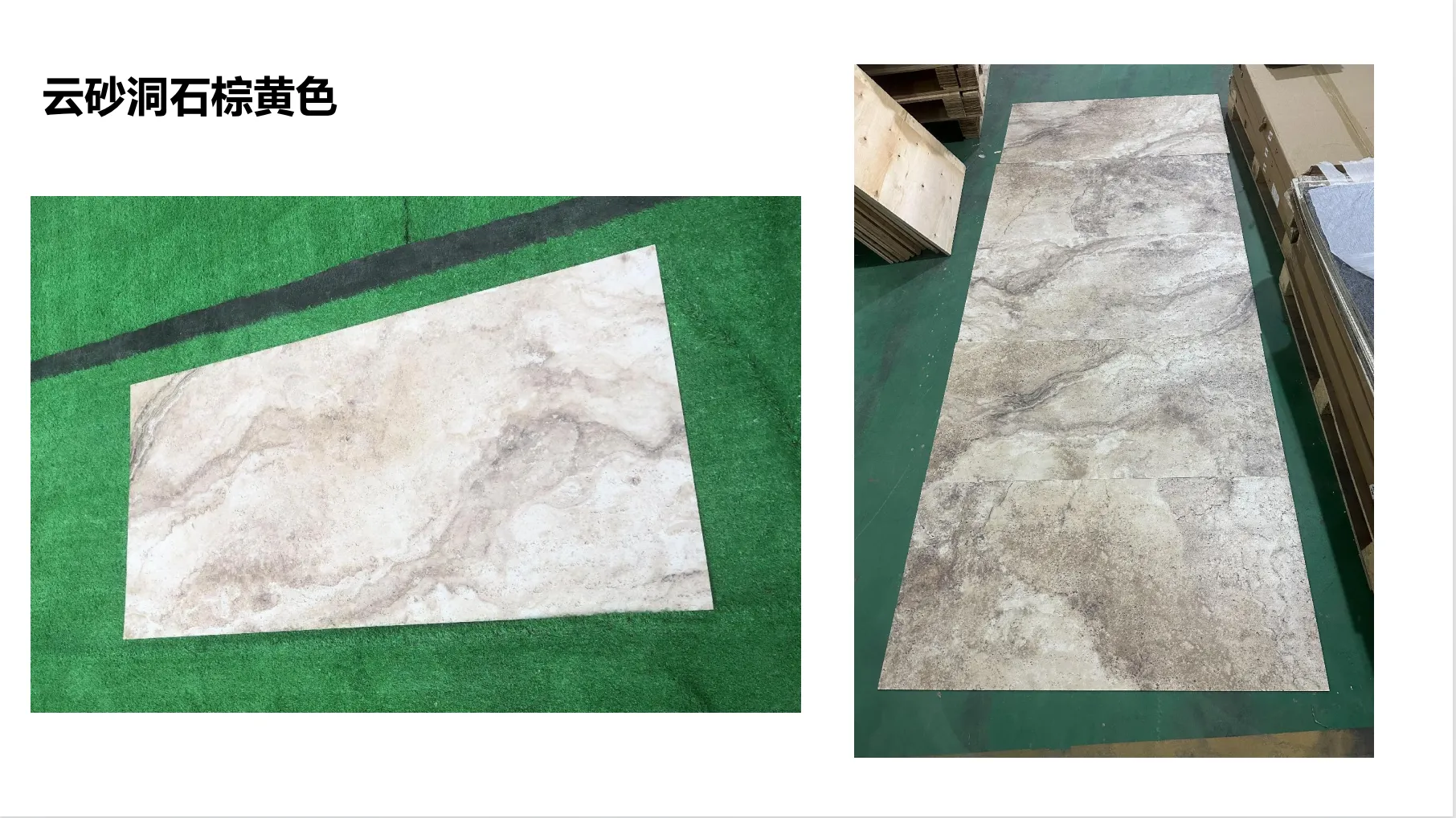
To understand dolomitic travertine's role in high-rise construction, we first need to peel back the layers of what makes this stone unique. Travertine itself is a form of limestone, born from mineral-rich hot springs and rivers that deposit calcium carbonate over centuries. But dolomitic travertine takes this process a step further: it's infused with dolomite, a mineral composed of calcium magnesium carbonate, which alters its structure at a molecular level. This isn't just a minor variation—it's a transformation that changes everything from weight to durability.
Unlike regular travertine, which is porous and soft (think of the pitted, honeycombed texture of classic Roman travertine), dolomitic travertine is denser and less permeable. The dolomite crystals fill in microscopic gaps, creating a stone that's both stronger and lighter. It's a happy accident of geology: formed in environments where magnesium-rich water interacts with calcium deposits, resulting in a material that marries the best of both minerals. For high-rise applications, this means a stone that retains travertine's characteristic warmth—those subtle veining patterns, the earthy color palette—but with a structural backbone that can withstand the demands of vertical construction.
Not all dolomitic travertine is created equal, though. While some is quarried directly from natural deposits (found in regions like Italy, Turkey, and Iran), the version making waves in high-rises is often engineered. Companies like those behind the MCM project board series have refined the process, cutting and treating dolomitic travertine to enhance its performance. These engineered slabs are precision-cut to uniform thicknesses, reinforced with mesh backings, or even combined with lightweight cores—all without losing the stone's natural character. It's a marriage of nature and technology, and it's this hybrid approach that makes dolomitic travertine so versatile for high-rises.
Take, for example, dolomitic travertine in dark grey and claybank—the two most popular variants for facades. Dark grey dolomitic travertine has a moody, contemporary edge, with deep charcoal hues shot through with lighter veins that catch the light. Claybank, by contrast, is warm and earthy, ranging from soft terracotta to rich sienna, evoking the texture of sun-baked soil. Both offer something traditional stone can't: consistency. In natural quarries, stone varies widely in color and density, but engineered dolomitic travertine is sorted and processed to ensure uniformity—critical for large-scale high-rise projects where a single facade might span thousands of square meters.
Imagine standing at the base of a 50-story building. Now, imagine that every square meter of its facade weighs 25 kilograms. For a building with a facade area of 10,000 square meters, that's 250,000 kilograms—250 tons—of material clinging to the exterior. That weight doesn't just sit there; it pulls downward, stressing steel beams, concrete slabs, and foundation piles. In high-rise construction, where every additional ton requires stronger structural support, the cost of excess weight adds up fast. Steel beams get thicker, foundations deeper, and construction timelines longer. It's a domino effect that can inflate budgets by millions.
Traditional stone facades have long been the culprit here. Granite, for instance, can weigh 28–32 kg per square meter; marble, though slightly lighter, still clocks in at 22–26 kg/sq m. Even regular travertine, at 20–24 kg/sq m, is hardly a lightweight. When multiplied across a high-rise, these numbers become unmanageable. A 60-story tower with a granite facade might add 300 tons to the building's load—requiring engineers to beef up the entire structure, from the basement to the roof. It's no wonder that many architects have turned to alternatives like aluminum composite panels (ACP) or fiber cement, which weigh as little as 8–12 kg/sq m. But these materials often feel synthetic, lacking the depth and organic texture that natural stone provides.
Dolomitic travertine changes this equation. Thanks to its dolomite-infused structure and engineered processing, it typically weighs between 14–18 kg/sq m—up to 40% lighter than traditional granite and 20% lighter than regular travertine. Let's put that in perspective: on a 10,000 sq m facade, switching from granite to dolomitic travertine would shave off 100–140 tons of weight. That's the equivalent of removing 20 African elephants from the building's load. For structural engineers, this isn't just a relief—it's a revolution. Suddenly, the facade stops being a liability and starts being an asset, allowing for more flexible design choices and reducing the need for overbuilt support systems.
But weight savings aren't just about construction costs. They also impact a building's long-term performance. Lighter facades reduce stress on joints and connections, lowering the risk of cracks or detachment over time. They also make buildings more resilient to seismic activity; in earthquake-prone regions, every ton removed from the upper floors translates to less force exerted on the structure during a tremor. For architects in cities like San Francisco or Tokyo, where seismic codes are stringent, dolomitic travertine isn't just a design choice—it's a safety consideration.
A lightweight material is only as good as its ability to attach to a building. High-rise facades don't just hang passively—they're subjected to wind loads, thermal expansion, and even the subtle sway of the building itself. For dolomitic travertine to work, it needs support systems that can handle these forces without adding unnecessary weight or complexity. Let's break down the key considerations.
Dolomitic travertine's compressive strength is another feather in its cap. While traditional travertine has a compressive strength of around 100–150 MPa (megapascals), dolomitic travertine often exceeds 200 MPa—putting it on par with many engineered stones and even some concretes. This means it can withstand the vertical loads of multi-story facades without cracking or deforming. For context, a typical high-rise facade exerts a compressive load of 5–10 MPa on its support structure; dolomitic travertine's 200+ MPa rating leaves plenty of room for safety margins.
This strength also matters for installation. When workers hoist slabs into place hundreds of feet above the ground, the stone needs to resist the bending and twisting that comes with being lifted by cranes or secured to brackets. Dolomitic travertine's density prevents it from flexing excessively, reducing the risk of breakage during construction—a common issue with more brittle stones like marble.
How you attach dolomitic travertine to a high-rise matters almost as much as the stone itself. The goal is to secure the slabs firmly while allowing for minor movement (due to thermal expansion or building sway). Three systems dominate modern installations:
Dry Hanging: This method uses metal brackets (typically aluminum or stainless steel) to suspend slabs from horizontal rails attached to the building's frame. The brackets allow vertical and horizontal movement, preventing stress buildup. Dry hanging is popular for dolomitic travertine because it minimizes weight—no mortar or adhesive is needed—and makes repairs easier (slabs can be removed and replaced individually). For high-rises, this is critical: imagine having to redo an entire section of facade because one slab cracked. Dry hanging eliminates that risk.
Mechanical Fixing: Here, metal pins or bolts are drilled directly into the stone, anchoring it to the support structure. This is often used for larger slabs (over 1.5m in length) where additional stability is needed. Dolomitic travertine's density makes it ideal for mechanical fixing; the stone doesn't crumble around the drill holes, ensuring a secure hold.
Adhesive Bonding: For smaller panels or areas with complex geometries, adhesives can be used to bond dolomitic travertine to a substrate (like a cement board or metal backing). Modern structural adhesives are strong enough to handle facade loads, but they're often paired with mechanical fixing for redundancy. The key here is compatibility: dolomitic travertine's low porosity ensures adhesives bond effectively, unlike regular travertine, which can absorb moisture and weaken the bond over time.
High-rises are built with a range of structural systems—steel frames, concrete shear walls, or hybrid designs. Dolomitic travertine plays well with all of them, but the support structure must be tailored to the building's frame. For steel-framed buildings, lightweight aluminum rails are often used to reduce additional load. For concrete structures, brackets can be embedded directly into the facade, leveraging the concrete's inherent strength. In both cases, the goal is to distribute the facade's weight evenly across the building's existing load-bearing elements, avoiding concentrated stress points.
One example of this synergy is the use of MCM flexible stone systems alongside dolomitic travertine. MCM (Modified Composite Material) panels are ultra-lightweight (as low as 7 kg/sq m) and flexible, making them ideal for curved or irregular surfaces. Architects sometimes combine MCM panels with dolomitic travertine slabs, using MCM for accents or dynamic shapes and dolomitic travertine for the main facade. The result is a facade that's both lightweight and texturally rich—proving that dolomitic travertine doesn't have to stand alone to shine.
At the end of the day, even the most structurally sound material won't make it onto a high-rise if it doesn't look good. Dolomitic travertine excels here, offering a range of aesthetic options that cater to everything from sleek modernism to warm minimalism. Let's dive into its two most popular variants: dark grey and claybank.
Dark grey dolomitic travertine is the darling of contemporary architecture. Its deep, uniform color—ranging from charcoal to slate—exudes sophistication, making it a favorite for corporate headquarters and luxury residential towers. Unlike black granite, which can appear flat and lifeless, dark grey dolomitic travertine has subtle veining: thin threads of lighter grey or even gold that catch the light, adding depth without overwhelming the design. When polished, it takes on a soft sheen that reflects the sky, creating a facade that changes with the time of day—cool and moody at dawn, warm and reflective at sunset.
Texturally, dark grey dolomitic travertine is surprisingly versatile. A honed finish (matte, smooth) gives a understated, industrial edge—perfect for buildings aiming for that "raw yet refined" look. A brushed finish adds subtle texture, with fine lines that break up light and reduce glare—a practical choice for high-rises in sunny climates. For a more dramatic effect, a chiseled finish creates a rough, stone-hewn surface that contrasts beautifully with glass, adding tactile interest to an otherwise sleek facade.
If dark grey is the color of modernity, claybank dolomitic travertine is the color of connection—to nature, to history, to warmth. Ranging from soft terracotta to rich amber, it brings an earthy, organic quality to high-rises, softening their imposing scale. Imagine a 40-story residential tower clad in claybank slabs: from the street, it reads as a beacon of warmth, standing out against a skyline of steel and glass. Up close, the stone's natural veining—swirls of cream, gold, and even faint red—tells a story of its geological origins, grounding the building in the natural world.
Claybank dolomitic travertine is particularly popular in cities with harsh winters. Its warm tones counteract the bleakness of snow and grey skies, creating a facade that feels inviting year-round. It also pairs beautifully with wood accents or greenery (like vertical gardens), blurring the line between natural and built environments. For architects designing "biophilic" buildings—structures that connect occupants to nature—claybank dolomitic travertine is a secret weapon.
Both dark grey and claybank can be mixed and matched to create patterns. Imagine alternating horizontal bands of dark grey and claybank, or using claybank for the lower floors (to anchor the building) and dark grey for the upper floors (to emphasize height). The possibilities are endless, and dolomitic travertine's uniformity ensures these patterns remain crisp and consistent across the entire facade.
A high-rise facade doesn't just have to look good on day one—it has to stand up to decades of punishment: UV radiation, rain, snow, pollution, and temperature swings. Dolomitic travertine's unique composition makes it surprisingly resilient, outperforming many traditional stones and even some engineered alternatives.
One of dolomitic travertine's greatest strengths is its low porosity. Thanks to the dolomite crystals filling in microscopic gaps, it absorbs far less water than regular travertine (typically less than 1% water absorption, compared to 3–5% for standard travertine). This is critical for high-rises, where water absorption can lead to freeze-thaw damage: water seeps into pores, freezes, expands, and cracks the stone. In cold climates, this cycle repeats annually, turning a beautiful facade into a patchwork of repairs. Dolomitic travertine's low porosity stops this process in its tracks, ensuring the stone remains intact for decades.
UV resistance is another plus. The sun's rays can fade or discolor many natural stones, but dolomitic travertine's dense structure and mineral composition make it highly resistant to UV damage. A claybank facade installed today will still have that warm glow 20 years from now; a dark grey slab won't turn chalky or lose its depth. This longevity reduces maintenance costs and ensures the building's aesthetic integrity over time.
High-rise buildings lose a significant amount of energy through their facades. Dolomitic travertine, with its natural thermal mass, helps mitigate this. Thermal mass is the ability to absorb, store, and release heat slowly, reducing temperature fluctuations inside the building. In summer, the stone absorbs heat during the day and releases it at night, keeping interiors cooler. In winter, it retains warmth, reducing reliance on heating systems. While it's no substitute for dedicated insulation, dolomitic travertine adds a layer of thermal efficiency that lightweight materials like ACP can't match.
This thermal performance also reduces thermal stress on the facade itself. Materials that expand and contract rapidly with temperature changes (like metal panels) can develop cracks or loose fasteners over time. Dolomitic travertine's density and low thermal conductivity mean it expands and contracts minimally, preserving the integrity of both the stone and its attachment systems.
For busy building managers, low maintenance is non-negotiable. Dolomitic travertine delivers here, too. Unlike marble, which etches easily with acidic substances (like rainwater or pollution), or limestone, which stains readily, dolomitic travertine is relatively low-maintenance. A yearly power wash with mild detergent is usually enough to keep it looking fresh. Sealing is recommended every 3–5 years to enhance stain resistance, but even without sealing, the stone's low porosity means spills (like bird droppings or pollution) are less likely to penetrate deeply.
Compare this to granite, which often requires specialized cleaning products, or concrete panels, which can develop efflorescence (white salt deposits) if not properly maintained. Dolomitic travertine's durability translates to lower long-term costs, making it a smart investment for building owners.
To truly appreciate dolomitic travertine's value, it helps to see how it compares to other popular facade materials. Below is a detailed comparison of dolomitic travertine (dark grey and claybank) with three alternatives: MCM flexible stone, foamed aluminium alloy board, and fair-faced concrete.
| Material | Weight (kg/sq m) | Compressive Strength (MPa) | Aesthetic Options | Installation Complexity | Maintenance Needs | Cost (Relative) |
|---|---|---|---|---|---|---|
| Dolomitic Travertine (Dark Grey) | 15–17 | 200–250 | Polished, honed, brushed, chiseled; uniform dark grey with subtle veining | Moderate (dry hanging/mechanical fixing) | Low (yearly cleaning, seal every 3–5 years) | Medium-High |
| Dolomitic Travertine (Claybank) | 14–16 | 200–250 | Polished, honed, brushed, chiseled; warm claybank with earthy veining | Moderate (dry hanging/mechanical fixing) | Low (yearly cleaning, seal every 3–5 years) | Medium-High |
| MCM Flexible Stone | 7–10 | 150–180 | Wide range of colors/patterns; mimics stone, wood, or metal; flexible for curves | Low (lightweight, easy to cut/shape) | Low (resistant to fading/staining) | Medium |
| Foamed Aluminium Alloy Board (Vintage Silver) | 8–12 | 180–220 | Metallic finish; limited color range (silver, gold, black); sleek, modern look | Low (lightweight, can be bent/formed) | Low (resistant to corrosion, minimal cleaning) | High |
| Fair-Faced Concrete | 22–25 | 300–400 | Raw, industrial look; can be colored or stamped with patterns; uniform texture | High (requires precise formwork, heavy installation) | Moderate (prone to staining, may need sealing) | Low-Medium |
As the table shows, dolomitic travertine strikes a unique balance. It's lighter than fair-faced concrete but offers natural stone aesthetics that MCM and aluminium can only mimic. Its compressive strength is competitive with aluminium and exceeds MCM, ensuring long-term durability. While it costs more than concrete or MCM, its aesthetic value and low maintenance often justify the investment for projects where design is a priority.
Theory is one thing; real-world application is another. Let's look at two high-rise projects that turned to dolomitic travertine to solve their facade challenges.
The Azure Tower, a 52-story luxury residential building in downtown Chicago, faced a classic dilemma: the developer wanted a facade that felt premium but didn't overload the building's steel frame. Initial plans called for granite, but structural engineers raised concerns: the facade would add 280 tons to the building's load, requiring thicker steel beams and increasing construction costs by $2.4 million.
Enter dolomitic travertine. The architect, inspired by the stone's dark grey variant, proposed cladding the tower in 1.2m x 2.4m honed slabs. The switch reduced the facade weight by 35% (to 190 tons), eliminating the need for reinforced steel. The result? A sleek, modern facade that shimmers in Chicago's skyline, with the dark grey stone reflecting the city's famous lake views. Residents praise the building's "warm modernism," noting how the stone's subtle veining adds depth without feeling busy. Today, the Azure Tower is a case study in how dolomitic travertine can turn a structural challenge into a design triumph.
In Dubai, where temperatures soar to 50°C in summer, the Terraces at Riverside—a 38-story residential complex—needed a facade that could withstand extreme heat while feeling inviting. The developer wanted to avoid the cold, sterile look of glass and steel common in the city, opting instead for a material that evoked the region's desert landscape.
Claybank dolomitic travertine emerged as the solution. Its warm, earthy tones complement the desert surroundings, while its low porosity resists heat absorption (keeping interiors cooler). The architects paired 1.5m x 3m claybank slabs with vertical glass fins, creating a facade that balances privacy with natural light. The stone's thermal mass helps regulate interior temperatures, reducing reliance on air conditioning—a critical factor in energy-conscious Dubai. Today, the Terraces at Riverside stands out as a "building with soul," proving that high-rises can be both sustainable and beautiful.
As cities grow taller and design expectations rise, dolomitic travertine is poised to become a staple of high-rise construction. Its unique combination of weight efficiency, structural strength, aesthetic versatility, and durability addresses the core challenges of modern facade design. But its future isn't just about iteration—it's about innovation.
Engineers are already exploring ways to enhance dolomitic travertine further: adding recycled materials to reduce environmental impact, integrating photovoltaic cells into slabs to generate energy, or developing ultra-thin (3–5mm) panels for even greater weight savings. Meanwhile, architects are pushing the boundaries of what's possible, using large-format dolomitic travertine slabs (up to 4m in length) for seamless facades, or combining the stone with digital fabrication techniques (like 3D scanning) to create custom textures and patterns.
Sustainability is another driver. Dolomitic travertine is a natural material, and when sourced from responsible quarries, it has a lower carbon footprint than many engineered alternatives (like aluminium, which requires massive energy to produce). As the construction industry shifts toward net-zero goals, materials like dolomitic travertine—natural, durable, and recyclable—will only grow in appeal.
High-rise facades are more than just skin—they're statements of intent, expressions of creativity, and testaments to engineering ingenuity. Dolomitic travertine, with its unique blend of light weight, strength, and natural beauty, is redefining what these statements can be. It's a material that respects the laws of physics while refusing to compromise on aesthetics, proving that the skyline of the future doesn't have to choose between form and function.
Whether clad in dark grey for a sleek, modern tower or claybank for a warm, earthy high-rise, dolomitic travertine isn't just building facades—it's building legacies. As architects and engineers continue to push the limits of height and design, one thing is clear: this remarkable stone will be there, rising with them, a silent partner in the quest to touch the clouds.
Recommend Products












