
In the world of construction, every choice we make leaves a footprint—on the planet, on our communities, and on the spaces we inhabit. As architects, builders, and homeowners increasingly lean into sustainability, the debate over materials has never been more critical. Today, we're diving into a material that's quietly gaining traction for its blend of natural beauty and eco-consciousness: dolomitic travertine. But how does it stack up against the synthetic alternatives we've grown so accustomed to? Let's explore not just the specs, but the stories behind these materials—because sustainability, at its core, is about people and the planet we share.
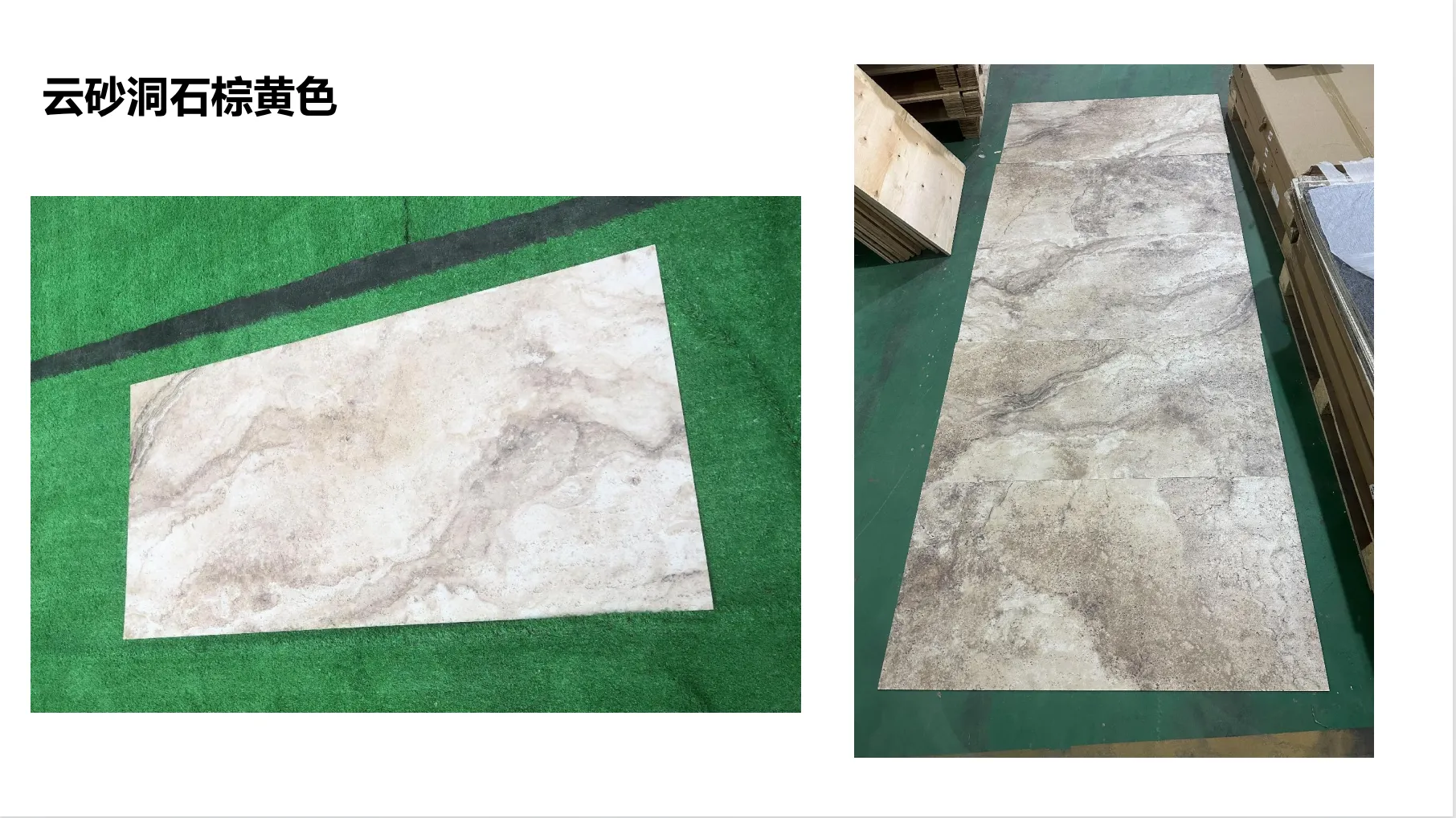
If you've ever run your hand over a stone wall and felt a texture that seems to tell a story—pockmarks like tiny fossils, veins of color that shift in the light—you might have been touching travertine. Dolomitic travertine is a specific type of this sedimentary rock, formed over millennia by mineral-rich water cooling and depositing calcium carbonate, with a dash of dolomite (a magnesium-rich mineral) that gives it extra durability. It comes in earthy hues: think claybank, a warm, sun-baked tone, or dark grey, sleek and moody, like storm clouds settling over a mountain range.
Unlike some natural stones that require aggressive quarrying, dolomitic travertine often forms in layers, making extraction less disruptive. Miners can carefully slice thin slabs without blasting entire rock faces, preserving the surrounding ecosystem. And because it's a natural material, no harsh chemicals are needed to "create" it—unlike synthetic options that rely on industrial processes. It's nature's building block, refined by time, not factories.
Sustainability isn't just a buzzword; it's about reducing harm at every step. Let's break down how dolomitic travertine holds up in key areas:
Embodied carbon—the total greenhouse gas emissions from a material's birth to its installation— is a big deal. Synthetic materials often rack up high numbers here. Dolomitic travertine? It's a lightweight contender. Since it's mined, not manufactured, the main emissions come from transportation (getting it from quarry to site) and minimal processing (cutting and finishing). Compare that to, say, fair-faced concrete, which requires burning limestone at high temperatures to make cement—a process that releases massive amounts of CO2. One study found that dolomitic travertine can have up to 60% lower embodied carbon than standard concrete slabs of the same size. That's a huge difference for projects aiming to hit net-zero goals.
Ever walked through an old European town and marveled at buildings that have stood for centuries? Many of those structures use travertine or similar stones. Dolomitic travertine isn't just strong—it's resilient. It resists cracks, fading, and weathering, meaning a building clad in it might not need a facelift for 50+ years. Synthetic materials, by contrast, often have shorter lifespans. Foamed aluminium alloy boards, for example, can start to corrode in humid climates after 15–20 years, requiring replacement. When you factor in the emissions from manufacturing and installing new materials, dolomitic travertine's longevity becomes a sustainability win.
At the end of its life, what happens to a building material? Dolomitic travertine doesn't end up in a landfill. Old slabs can be crushed into gravel for roads or repurposed as decorative stone. Even broken pieces find new life in gardens or as aggregate. Synthetic materials? Fair-faced concrete is notoriously hard to recycle; it often ends up in landfills, where it doesn't biodegrade. Foamed aluminium alloy boards can be recycled, but the process is energy-intensive, eating into their sustainability claims.
Synthetic materials have their perks—they're often cheaper upfront, come in uniform colors, and can be mass-produced. But let's pull back the curtain on two common options:
Fair-faced concrete is the "it" material for modern, minimalist designs. It's smooth, sleek, and affordable. But here's the catch: making cement, its main ingredient, is responsible for about 8% of global CO2 emissions. That's more than all the planes, trains, and cars in the world combined. Plus, concrete is heavy, so transporting it guzzles fuel. And while it's strong, it's prone to cracking in extreme temperatures, leading to frequent repairs—each requiring more concrete, more emissions, and more waste.
Foamed aluminium alloy boards (think vintage silver or gold finishes) are trendy for their metallic sheen and lightweight feel. But producing aluminium involves mining bauxite, a process that strips landscapes and pollutes water. Then, the ore is smelted at 960°C, using massive amounts of energy—mostly from coal in many countries. The result? A material with high embodied carbon and a lifespan that's a fraction of dolomitic travertine's. In coastal areas, salt air can corrode the finish in as little as 10 years, turning that "vintage silver" into a patchy, worn eyesore.
Numbers tell a clearer story. Let's compare dolomitic travertine (claybank) with fair-faced concrete and foamed aluminium alloy board (vintage silver) across key sustainability metrics:
| Material | Embodied Carbon (kg CO2/m²) | Lifespan (Years) | Recyclability | Sustainability Score (1-10) |
|---|---|---|---|---|
| Dolomitic Travertine (Claybank) | 35–45 | 50–80 | High (100% recyclable as aggregate/stone) | 8.5 |
| Fair-Faced Concrete | 120–150 | 20–30 (before major repairs) | Low (rarely recycled; mostly landfilled) | 4.0 |
| Foamed Aluminium Alloy Board (Vintage Silver) | 90–110 | 10–15 (in humid/coastal areas) | Medium (recyclable, but energy-heavy process) | 5.2 |
*Sustainability score based on embodied carbon, lifespan, recyclability, and water/energy use. Data sourced from industry lifecycle assessments and construction material studies (2023).
Numbers are one thing—stories are another. Let's look at a project that swapped synthetics for dolomitic travertine and never looked back.
In Lisbon, Portugal, a 2022 renovation of a historic market hall faced a dilemma: the original stone facade was crumbling, and the contractors proposed replacing it with fair-faced concrete to "save costs." But the local community pushed back, arguing the market's character was tied to its natural stone exterior. The architects compromised by using dolomitic travertine (dark grey) from a quarry 120km away, paired with mcm flexible stone for the intricate cornices. The result? A facade that honors the building's past while cutting embodied carbon by 45% compared to the concrete plan. Today, vendors rave about how the travertine keeps the hall cooler in summer (reducing AC use) and how customers comment on the "warmth" of the space—something concrete could never replicate.
Then there's the MCM project board series, a line of building panels designed for modern commercial spaces. Many of these boards blend dolomitic travertine with mcm flexible stone, creating lightweight, easy-to-install sheets that reduce waste. A recent office complex in Berlin used these boards for its lobby walls, replacing traditional marble (a high-emission material). The project manager noted, "We expected pushback on cost, but when we showed the team the lifecycle savings—less maintenance, lower energy use, and the fact that the travertine would still look great in 50 years—they were sold. Plus, the flexible stone meant we could curve the walls, adding a design element we never thought possible with natural stone."
Dolomitic travertine isn't a magic bullet. Sourcing can be tricky; not all quarries prioritize ethical mining, and over-extraction can harm local ecosystems. That's why choosing suppliers with certifications like the Global Stone Council's "Responsible Stone" label matters—it ensures the stone is mined without destroying habitats or exploiting workers. Cost is another hurdle: upfront, dolomitic travertine can be 20–30% pricier than concrete. But when you factor in its 50+ year lifespan, the long-term savings (fewer repairs, lower energy bills) often make it cheaper.
And let's talk weight. While mcm flexible stone helps reduce heaviness, dolomitic travertine is still denser than aluminium or concrete panels. This means structural support needs careful planning. But architects are adapting—using thinner slabs, pairing travertine with lightweight backings, or limiting it to feature walls rather than entire facades. It's about balance, not all-or-nothing.
At the end of the day, construction isn't just about putting up walls—it's about creating spaces that last, that feel good, and that don't cost the Earth. Dolomitic travertine, with its low embodied carbon, durability, and natural beauty, offers a path forward. It's not the only sustainable option, but it's a strong one—especially when paired with innovations like mcm flexible stone or the MCM project board series, which make it easier to integrate into modern designs.
Synthetic materials have their place, but we need to ask: at what cost? When we choose a material that lasts twice as long and emits half the carbon, we're not just building better—we're living better. So the next time you walk into a space, take a moment to touch the walls. If they feel like they've got a story to tell, chances are they're built with something real. And in a world of quick fixes, real matters.
Dolomitic travertine isn't just stone. It's a choice—to honor the planet, to value longevity over speed, and to build spaces that don't just stand tall, but stand responsibly. And that's a legacy worth leaving.
Recommend Products












