
Walk into any modern industrial space today—whether it's a converted factory-turned-creative hub, a cutting-edge manufacturing facility, or a sleek logistics warehouse—and you'll quickly sense a shift. The days of industrial design being defined solely by cold steel, monotonous concrete, and "function over form" mentalities are fading. Today's industrial projects demand more: materials that don't just endure the rigors of heavy machinery, constant foot traffic, and harsh weather, but also elevate the space, tell a story, and even boost employee morale. Enter dolomitic travertine—a material that's quietly revolutionizing how we think about industrial aesthetics and durability. But it's not alone. Paired with innovations like MCM flexible stone and complemented by classics like fair-faced concrete, dolomitic travertine is proving that industrial spaces can be both tough as nails and visually striking.
Industrial design has always been a balancing act. For decades, the priority was clear: durability. Factories needed floors that could handle forklifts, walls that resisted chemical spills, and exteriors that stood up to rain, snow, and sun. Aesthetics? They were an afterthought, if they were considered at all. But as industries evolve—with manufacturing becoming more automated, warehouses doubling as e-commerce hubs, and old industrial zones transforming into mixed-use districts—the rules have changed. Today, an industrial space might house a robotics lab by day and a community event by night. It might need to impress clients, attract top talent, and even serve as a marketing tool for brands that value sustainability and design.
This shift has given rise to what architects and designers are calling "industrial elegance"—a design philosophy that marries the rugged reliability of traditional industrial materials with the visual warmth and character of natural stone, wood, and artisanal finishes. And at the heart of this movement is dolomitic travertine. Unlike its more delicate cousins (we're looking at you, marble), dolomitic travertine is built for the grind. But what exactly makes it so special?
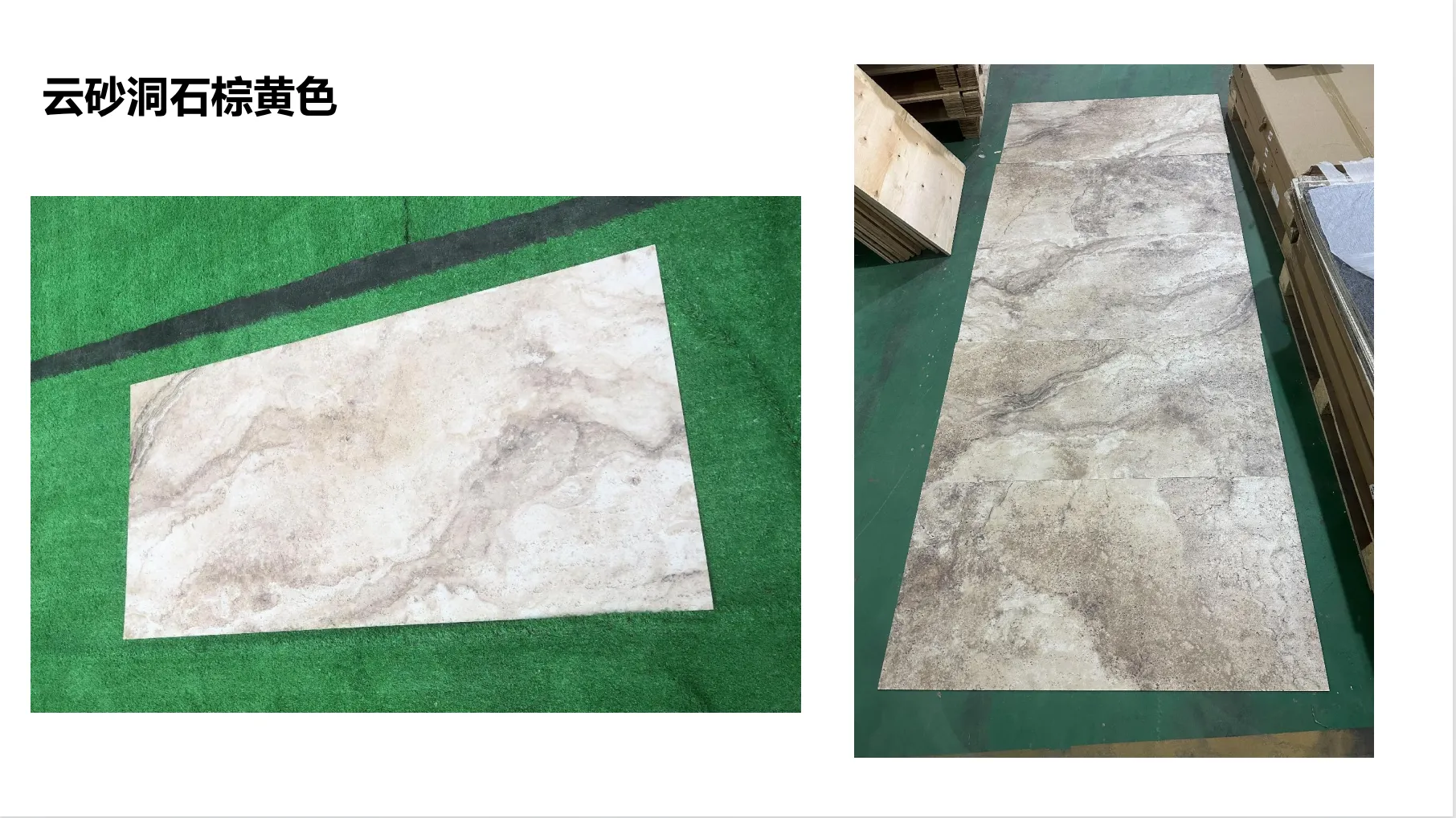
First, let's break it down. Travertine itself is a type of sedimentary rock formed over thousands of years by mineral-rich hot springs. It's known for its porous surface, unique veining, and earthy color palette—think warm beiges, soft grays, and even hints of gold. But dolomitic travertine is a step up. It contains higher levels of dolomite, a mineral that adds density and hardness, making it more resistant to chipping, scratching, and wear than standard travertine. This extra durability is why it's become a go-to for industrial projects, where "low maintenance" and "longevity" are non-negotiable.
But dolomitic travertine isn't just tough—it's versatile. Its natural texture, with its signature pits and veins, adds depth that plain concrete or metal can't match. And unlike some industrial materials that feel cold and impersonal, dolomitic travertine has a warmth to it, a sense of history, as if each slab carries the of the earth's own processes. It's a material that feels both grounded and refined, which is why designers are using it everywhere from factory floors to office lobbies in industrial settings.
Let's talk numbers—because in industrial projects, "durability" isn't just a buzzword. It's about ROI. Dolomitic travertine delivers here in spades. Thanks to its dolomite content, it boasts a compressive strength of around 25-30 MPa, which means it can handle the weight of heavy machinery, pallet jacks, and even occasional vehicle traffic without cracking. Its porosity, often seen as a weakness in other stones, is actually a strength when treated properly: sealed with industrial-grade sealants, it becomes highly resistant to moisture, oil, and chemical spills—common hazards in manufacturing and logistics spaces.
Take, for example, a food processing plant in Cincinnati that replaced its 20-year-old concrete floors with dolomitic travertine five years ago. The plant manager noted, "We used to resurface the concrete every 3-4 years because of stains and cracks from constant cleaning and equipment movement. With dolomitic travertine, we've only needed a fresh sealant once, and the floors still look new. The staff even comments on how much brighter and cleaner the space feels." That's the durability dividend: less time and money spent on maintenance, and a space that stays functional and attractive for decades.
Compare that to traditional options like untreated concrete, which often develops cracks within 5-7 years in high-traffic industrial settings, or even some engineered stones that lack the natural resilience of dolomitic travertine. It's no wonder that project managers are increasingly seeing dolomitic travertine as a long-term investment rather than an expense.
But durability is only half the equation. Today's industrial spaces need to inspire. Whether it's a tech company converting a warehouse into offices or a brewery using its production facility as a tourist attraction, aesthetics matter. Dolomitic travertine shines here, too, thanks to its natural variation and adaptability.
Consider finishes: dolomitic travertine can be polished to a smooth, almost marble-like sheen for lobbies or client-facing areas, where a touch of elegance is key. It can be honed for a matte, understated look in manufacturing zones, where glare from overhead lights might be a hazard. Or it can be brushed to enhance its texture, creating a rugged, tactile surface that feels grounded and industrial—perfect for exterior cladding or accent walls.
Then there's color. While dolomitic travertine is best known for its neutral tones—think claybank, dark grey, and soft beige (hello, dolomitic travertine (claybank) and dolomitic travertine (dark grey))—it's surprisingly versatile. Some quarries even offer variations with subtle hints of gold or rust, adding warmth without feeling out of place in industrial settings. And when paired with bold accents, like the starry patterns of travertine (starry green) or the sleekness of boulder slab, it creates visual interest that transforms "boring" into "bold."
Take the exterior of a renewable energy factory in Austin, Texas. The architects chose dolomitic travertine (claybank) for the main cladding, then added vertical strips of MCM flexible stone in a deep charcoal. The result? A facade that's both weather-resistant (thanks to the travertine's durability) and dynamic, with the MCM panels adding depth and modernity. "We wanted the building to reflect our mission—sustainable, forward-thinking, but rooted in the earth," said the project lead. "Dolomitic travertine gave us that connection to nature, while the MCM flexible stone added the contemporary edge we needed."
Great materials don't exist in a vacuum, especially in industrial design. Dolomitic travertine's real magic often lies in how it pairs with other materials, creating layered, cohesive spaces. Let's look at two common collaborators: fair-faced concrete and MCM flexible stone.
Fair-faced concrete—with its raw, unpolished finish and subtle texture—has long been an industrial staple. It's durable, affordable, and has that "authentic industrial" vibe. But on its own, it can feel flat. Enter dolomitic travertine. When used together, they create a striking contrast: the smooth, uniform gray of fair-faced concrete plays off the warm, veined texture of dolomitic travertine, adding depth without overwhelming the space.
A logistics center in Chicago exemplifies this. The interior features fair-faced concrete walls paired with dolomitic travertine floors and accent columns. "We wanted the space to feel open and efficient, but not sterile," explained the designer. "The concrete keeps it industrial and low-maintenance, while the travertine adds warmth underfoot and breaks up the monotony. Employees say the space feels less 'factory-like' and more 'intentional'—and that's boosted productivity, believe it or not."
MCM flexible stone is a game-changer for industrial exteriors and interiors alike. Made from modified composite materials, it's lightweight, flexible, and customizable—perfect for cladding walls, ceilings, or even curved surfaces that traditional stone can't handle. When paired with dolomitic travertine, it extends the design possibilities even further.
Imagine an industrial office space where the main lobby features a feature wall: half dolomitic travertine (honed, for texture) and half MCM flexible stone in a matching claybank tone, but with a 3D-printed geometric pattern. The travertine adds weight and authenticity, while the MCM panels add movement and modernity. Or an exterior facade where dolomitic travertine forms the base (for durability at ground level) and MCM flexible stone clads the upper floors (reducing structural load while maintaining visual consistency). It's a partnership that marries old-world resilience with new-world innovation.
To truly understand dolomitic travertine's value, let's dive into a few real-world projects that showcase its versatility.
A family-owned brewery in Portland wanted to expand its production facility while preserving its "rustic industrial" brand identity. The challenge? The new space needed to handle heavy brewing equipment, frequent cleaning with caustic solutions, and foot traffic from tours and employees—all while feeling warm and inviting. The solution: dolomitic travertine floors (honed finish, sealed for moisture resistance) paired with fair-faced concrete walls and MCM flexible stone accents on the tasting room bar front.
"The travertine was a no-brainer for the floors," said the brewery owner. "We've had spills—beer, cleaning chemicals, even the occasional dropped keg—and it wipes right up. But what surprised us was how much it changed the vibe. Tourists often comment on how 'upscale yet approachable' the space feels, which aligns perfectly with our brand. And the MCM stone on the bar? It's lightweight, so we didn't need extra structural support, and it matches the travertine's color so well you can barely tell they're different materials."
A major logistics company in Atlanta was tired of its aging warehouse facility, which suffered from cracked concrete floors, faded paint, and high turnover due to a "dreary" work environment. The goal: upgrade the space to improve durability, reduce maintenance costs, and boost employee satisfaction. The plan: replace concrete floors with dolomitic travertine (brushed finish, for slip resistance), add fair-faced concrete ceiling panels for sound absorption, and use boulder slab (vintage silver) for loading dock walls to resist impact from trucks.
Three years later, the results are clear. "Maintenance costs are down 40%—we no longer patch cracks every quarter," reported the facility manager. "Employee turnover has dropped by 15%, and feedback surveys mention the 'brighter, more modern' space as a key factor. Even our clients, who visit the hub occasionally, comment on how professional it looks. For a logistics company, that's a big win."
To put dolomitic travertine's value in context, let's compare it to two other popular industrial materials: boulder slab (a rugged, block-like stone series) and fair-faced concrete. The table below breaks down key factors like durability, aesthetics, maintenance, and cost.
| Material | Durability (Resistance to Wear/Spills) | Aesthetic Versatility (Finishes/Colors) | Maintenance Needs | Best For |
|---|---|---|---|---|
| Dolomitic Travertine | High (25-30 MPa compressive strength; sealed for moisture/oil resistance) | Excellent (polished, honed, brushed; neutral tones with natural veining/pits) | Low (seal every 3-5 years; easy to clean with mild detergents) | Interior floors, exteriors, client-facing areas, high-traffic zones |
| Boulder Slab | Very High (30-35 MPa compressive strength; impact-resistant) | Good (rugged, block-like texture; limited finishes: vintage silver/gold/black) | Low (minimal sealing needed; resistant to staining) | Loading docks, exterior walls, high-impact zones (e.g., manufacturing floors) |
| Fair-Faced Concrete | Moderate (15-20 MPa compressive strength; prone to cracking over time) | Limited (matte finish; gray/white; can be stained but lacks natural variation) | High (resurfacing every 5-7 years; stains difficult to remove) | Walls, ceilings, budget-friendly projects, minimalist aesthetics |
As the table shows, dolomitic travertine strikes a rare balance: it's nearly as durable as boulder slab but far more aesthetically versatile, and it requires less maintenance than fair-faced concrete while offering more visual interest. For projects that need both "workhorse" reliability and design flair, it's hard to beat.
So, what's next for dolomitic travertine in industrial projects? As sustainability becomes a bigger priority, its natural origins are a boon—unlike synthetic materials, it's biodegradable and requires minimal processing. Innovations like MCM 3D printing series are also opening new doors: imagine 3D-printed molds that embed dolomitic travertine chips into lightweight panels, combining the stone's texture with the flexibility of engineered materials.
Architects are also pushing boundaries with how dolomitic travertine is used. We're seeing it in unexpected places: as ceiling tiles (paired with foamed aluminium alloy board for lightweight support), as stair treads (brushed finish for slip resistance), and even as furniture—think conference tables in industrial offices, made from single slabs of dolomitic travertine for a bold, organic statement.
And let's not forget its role in adaptive reuse. As more cities repurpose old industrial buildings into apartments, offices, or retail spaces, dolomitic travertine is becoming a bridge between past and present. It can mimic the look of the building's original stone (if there was any) while adding modern durability, helping preserve architectural history without sacrificing functionality.
Industrial spaces are the backbone of our economy—they build our products, store our goods, and drive innovation. For too long, they've been overlooked as "ugly necessities." But dolomitic travertine, paired with materials like MCM flexible stone and fair-faced concrete, is changing that narrative. It's proving that industrial design doesn't have to choose between durability and beauty; it can have both.
Whether you're designing a new manufacturing plant, revamping a warehouse, or converting an old factory into something new, dolomitic travertine offers a simple promise: it will work as hard as your team does, and it will look good doing it. In a world where even industrial spaces need to inspire, that's not just a material—it's a partner in progress.
Recommend Products












