
Step into any sacred space—a sun-dappled cathedral, a serene mosque, or an ancient temple—and you'll likely find yourself drawn not just to the architecture or art, but to the very materials that shape the air around you. Cool stone underfoot, walls that seem to breathe with age, surfaces that catch light like whispered prayers—these elements don't just fill a room; they elevate it. Among the many materials that have whispered to the faithful across centuries, dolomitic travertine stands out as a quiet yet profound storyteller. A variant of travertine infused with dolomite, this stone carries the weight of history in its layers, the warmth of the earth in its hues, and a symbolism that transcends mere construction. In religious buildings, dolomitic travertine isn't just a choice of cladding or flooring; it's a bridge between the divine and the mortal, a tangible expression of faith's enduring nature.
From the weathered facades of medieval churches to the sleek lines of modern chapels, dolomitic travertine has woven itself into the fabric of sacred architecture. Its appeal lies not only in its physical durability—though it has stood the test of time in structures millennia old—but in its ability to evoke emotion. The pitted, porous surface, formed by mineral-rich water cooling and depositing sediments over eons, feels almost alive, as if the stone itself holds the memory of the earth's slow, steady pulse. When paired with light—whether filtered through stained glass or streaming through open skies—it transforms, shifting from somber grey to warm beige, from matte to subtly luminous. This chameleon-like quality makes it a favorite for designers seeking to craft spaces that feel both grounded and transcendent. To walk on dolomitic travertine is to walk on a material that has witnessed prayers, rituals, and moments of profound human connection for centuries—and in that shared history, it becomes more than stone. It becomes a companion to faith.
The story of dolomitic travertine in religious architecture is as old as civilization itself. Quarried from regions like Italy's Tivoli, where mineral springs have birthed travertine deposits for millennia, this stone was prized by ancient builders for its workability and resilience. The Romans, masters of sacred space, used travertine (including early dolomitic variants) in temples dedicated to Jupiter and Venus, recognizing that its neutral palette and natural texture didn't compete with religious iconography but rather framed it. In the Byzantine era, artisans in Constantinople (modern-day Istanbul) chose dolomitic travertine for church walls, valuing its ability to reflect candlelight and create an otherworldly glow during evening services. Even in non-Western traditions, the stone found a home: in Persian zoroastrian fire temples, dolomitic travertine (often in its darker, more austere forms) lined prayer halls, symbolizing the earth's stability amid the chaos of the mortal world.
What made dolomitic travertine particularly suited to sacred spaces was its duality: it was humble yet grand, durable yet delicate. Unlike polished marble, which can feel cold or ostentatious, dolomitic travertine has a tactile warmth. Its surface, often left unpolished to preserve its natural pits and ridges, invites touch—a rarity in spaces where many materials feel untouchable. In medieval monasteries, for example, monks would trace their fingers along dolomitic travertine walls during long prayers, the stone's texture grounding them in the present moment. This sensory connection wasn't accidental; builders understood that faith is felt as much as it is seen. Dolomitic travertine, with its earthy roots and timeless appearance, became a physical reminder that the divine isn't distant—it's in the very ground we walk on, the walls that shelter us, the stone that outlives us.
In religious contexts, every material choice carries meaning, and dolomitic travertine speaks a language rich with symbolism. At its core, the stone embodies endurance . Formed over thousands of years as mineral-rich water drips, deposits, and solidifies, dolomitic travertine is a testament to patience—a virtue sacred in nearly every faith tradition. In Christianity, this endurance mirrors the "rock of the church," a metaphor for faith's unshakable foundation. In Buddhism, where impermanence is a central tenet, the stone's slow transformation from water to rock symbolizes the gradual path to enlightenment. Even in modern spiritual spaces, where symbolism is often subtler, architects choose dolomitic travertine to convey that faith isn't fleeting; it's built, layer by layer, like the stone itself.
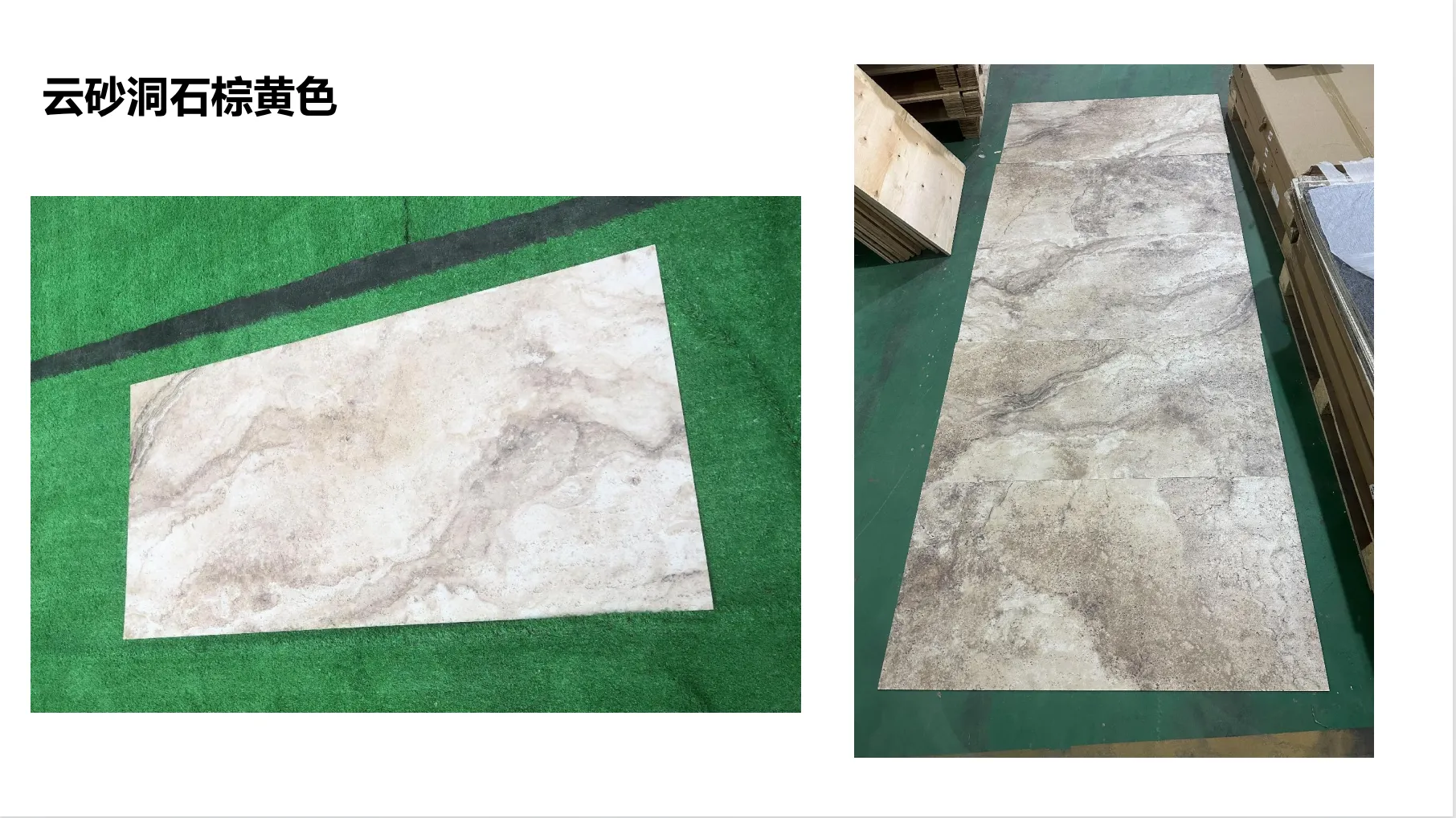
The color variations of dolomitic travertine further deepen its symbolic resonance. Take dolomitic travertine(dark grey) : its moody, slate-like hue evokes introspection and reverence. In Catholic churches, it's often used in chapels dedicated to quiet prayer or penance, where its somber tone encourages reflection. In contrast, dolomitic travertine(claybank) —with its warm, earthy beige—feels nurturing, like the embrace of the divine. This variant graces the floors of many mosques, where worshippers kneel in prayer; its soft color doesn't strain the eyes during long prostrations, and its texture provides gentle grip, a quiet reassurance that one is supported. Together, these two hues—dark and light—mirror the duality of faith: the struggle and the peace, the doubt and the certainty, the mortal and the eternal.
Beyond color, the stone's porosity holds symbolic weight. Those tiny holes and ridges, formed by gas bubbles escaping as the travertine solidified, are often interpreted as "windows" to the sacred. In some traditions, they're seen as spaces where prayers are trapped, held, and carried upward. In others, they represent the imperfections inherent in humanity—reminders that even in our brokenness, we are part of something greater. A rabbi once described dolomitic travertine in a synagogue as "a stone that breathes," noting that its pores allow the building to "exhale" the prayers of the faithful, releasing them into the world. It's a beautiful metaphor: the stone, in its imperfection, becomes a vessel for the divine.
If symbolism is the "why" of dolomitic travertine in religious spaces, aesthetics is the "how." This stone doesn't just mean something—it feels something, and that feeling is crucial to creating a sacred atmosphere. One of its most striking aesthetic qualities is its ability to interact with light. Unlike glossy marble or smooth granite, dolomitic travertine has a matte, almost velvety finish that diffuses light rather than reflecting it harshly. In a cathedral, this means sunlight streaming through rose windows doesn't glare but glows, casting soft, colored patterns across the stone floor that dance and shift with the day. In a temple, moonlight filtering through open-air colonnades turns the stone silver, making the space feel both intimate and vast.
Texture is another key player. Run a hand over dolomitic travertine, and you'll feel a surface that's neither entirely smooth nor rough—something in between, like the palm of a well-loved hand. This tactile quality invites engagement. In Hindu temples, devotees often press their foreheads to travertine pillars as a sign of respect, the stone's texture grounding them in the moment. In Buddhist stupas, pilgrims circumambulate travertine-clad structures, their fingers brushing the walls as they chant, the stone's slight resistance becoming a rhythm that matches their prayers. Even in spaces where physical touch is minimal, the texture of dolomitic travertine creates a visual rhythm; the play of light and shadow on its surface draws the eye upward, toward domes or spires, subtly guiding the worshipper's gaze toward the divine.
When paired with other materials, dolomitic travertine truly shines. In modern sacred architecture, it's often combined with marble interstellar gray —a sleek, contemporary stone with a hint of metallic shimmer—to bridge tradition and innovation. For example, a 21st-century mosque in Dubai uses dolomitic travertine(claybank) for its prayer hall walls, grounding the space in warmth, while marble interstellar gray accents the mihrab (prayer niche), adding a touch of celestial elegance. The contrast feels intentional: the earthy travertine represents the worshipper's connection to the ground, the marble their aspiration to the heavens. Similarly, in a small chapel in Tuscany, dolomitic travertine(dark grey) clads the exterior, blending with the region's historic stone buildings, while interior walls of masonry stone (a traditional, rough-hewn material) create a cozy, cave-like intimacy. Together, these materials tell a story of continuity—rooted in the past, open to the future.
| Travertine Type | Symbolic Meaning | Aesthetic Role in Sacred Spaces | Historical Example |
|---|---|---|---|
| Dolomitic Travertine(dark grey) | Introspection, penance, the "weight" of faith | Creates somber, reflective atmospheres; ideal for chapels or meditation rooms | 12th-century Cistercian abbeys in France, where it lined monastic cells |
| Dolomitic Travertine(claybank) | Nurturing, community, the "warmth" of the divine | Invites congregation; softens harsh light; comfortable for prolonged prayer | Ottoman mosques of the 16th century, where it covered prayer hall floors |
| Travertine (starry blue) | Divine mystery, celestial connection | Adds subtle iridescence; used in modern sacred art or accent walls | Contemporary "Starry Night Chapel" in South Korea, featuring starry blue travertine mosaics |
Tucked away in Rome's Trastevere neighborhood, San Giovanni Battista is a baroque gem that showcases dolomitic travertine's timeless appeal. The church's facade, crafted from dolomitic travertine(dark grey), has weathered centuries of Roman rain and sun, its surface now a tapestry of cracks and patina that tell the story of the faithful who've passed through its doors. Inside, the nave is lined with claybank dolomitic travertine columns, their warm hue offsetting the gilded altarpiece. Sunlight streams through side windows, casting golden streaks across the stone, and the air carries the faint scent of incense mingled with the earthy aroma of the travertine. For parishioners, the stone isn't just part of the church—it's part of their faith. "When I was a child, I'd run my fingers along the columns during Mass," says Maria, a lifelong parishioner. "They felt like the arms of the church, strong and gentle. Even now, when I'm stressed, I touch them, and it's like coming home."
Completed in 2019, Al-Rahman Mosque is a masterclass in blending tradition and innovation. Designed by a local architect, the mosque features an exterior of dolomitic travertine(dark grey) quarried from Qatar's own deserts, a nod to the country's geological heritage. The stone's rough texture echoes the wind-carved rocks of the Qatari landscape, grounding the mosque in its environment. Inside, the prayer hall is a symphony of light and warmth, thanks to claybank dolomitic travertine floors that stretch toward a mihrab accented with marble interstellar gray . The imam, Sheikh Ahmed, notes, "We chose dolomitic travertine because it feels alive . In summer, when the mosque is hot, the stone stays cool underfoot, a mercy for worshippers during long prayers. In winter, it holds the warmth of the sun, making the space feel like a blanket. It's not just stone—it's care for the faithful."
In the end, dolomitic travertine's role in religious buildings is simple yet profound: it makes the divine tangible. It's the stone that a child touches during their first communion, the surface that a pilgrim kneels on after a long journey, the wall that absorbs the tears of the grieving and the laughter of the joyful. Its durability ensures that it will outlive us, carrying our prayers and rituals into the future, just as it has carried those of the past. Its symbolism—of endurance, duality, and connection to the earth—speaks to something universal in the human spirit: the longing to believe in something greater than ourselves.
As sacred architecture evolves, dolomitic travertine will undoubtedly evolve with it. We may see it paired with cutting-edge materials like 3D-printed elements or sustainable composites, but its essence will remain the same: a stone that feels like home. For in the end, sacred spaces aren't just about grand design or ornate art. They're about feeling —feeling connected, feeling safe, feeling that we're part of a story larger than our own. And in that story, dolomitic travertine is more than a supporting character. It's a voice, soft but steady, whispering across the ages: You are here. You are part of something enduring. Have faith.
Recommend Products












