
Walk through any major city today, and you'll notice a striking trend: buildings are no longer just static structures—they're living, breathing entities. From skyscrapers with glass facades that adjust tint based on sunlight to homes that learn your habits and optimize energy use, "smart buildings" are redefining how we interact with our built environment. But here's the thing: amid all the sensors, AI, and sleek metal finishes, there's a growing longing for something more… human . A connection to the natural world that feels grounding, timeless, and authentic.
That's where materials like dolomitic travertine come into play. Imagine a building that can regulate its temperature, alert you to maintenance needs, and even greet you by name—and yet, its walls feel like they were carved from the earth itself, with the warmth and texture of stone that's been forming for millennia. It's not a contradiction; it's the future of architecture: blending cutting-edge technology with the raw beauty of natural materials. And dolomitic travertine, especially when reimagined through innovations like MCM flexible stone, is leading the charge.
In this article, we'll dive into why dolomitic travertine is becoming a darling of smart building designers, how MCM technology is transforming it from a heavy, traditional material into a lightweight, adaptable solution, and how it integrates seamlessly with the tech systems that make modern buildings "smart." Whether you're an architect, a builder, or just someone who appreciates the intersection of nature and innovation, this is a story about how the old and new are coming together to create spaces that are not just functional, but deeply alive .
First things first: let's get to know dolomitic travertine. If you're familiar with travertine, you might be thinking, "Isn't that the porous, earthy stone often used in bathrooms or outdoor patios?" You're not wrong—but dolomitic travertine is a bit of a sibling with a twist. Both are sedimentary rocks formed in mineral-rich hot springs, where calcium carbonate precipitates out of the water and builds up layer by layer. But dolomitic travertine has a secret ingredient: dolomite, a mineral that forms when magnesium replaces some of the calcium in the stone's structure. This small change makes a big difference.
Think of it like comparing regular bread to sourdough—same basic idea, but the added element (magnesium, in this case) changes the texture, durability, and character. Traditional travertine is known for its softness and distinctive pitting (those little holes formed by gas bubbles), which gives it a rustic charm. Dolomitic travertine, on the other hand, tends to be denser, harder, and less porous, thanks to that dolomite content. It's like nature's upgrade: retaining the warm, organic look of travertine but with a sturdier backbone.
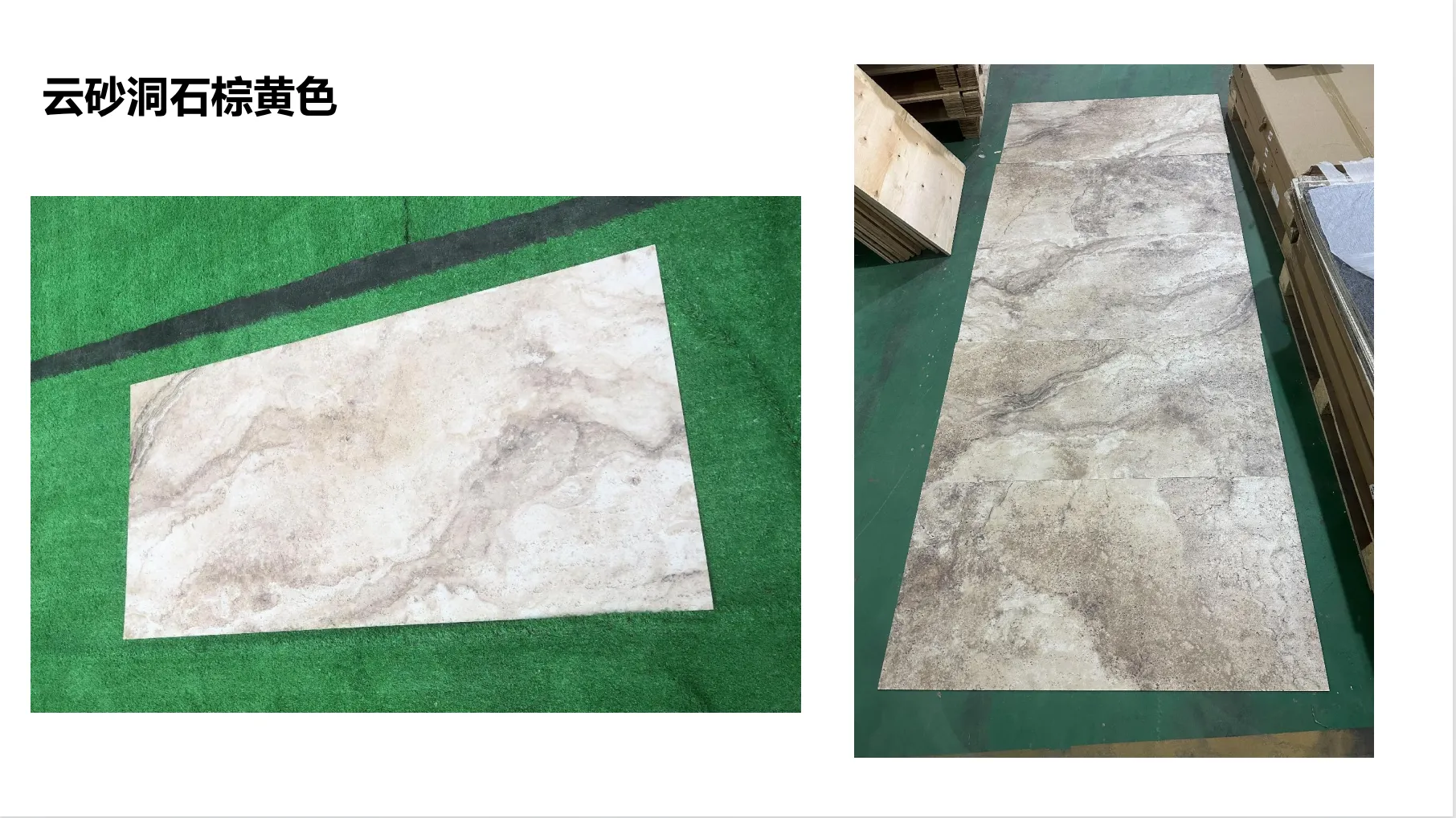
And let's talk about color. Dolomitic travertine isn't a one-note stone. From the deep, moody dark grey that feels like a storm cloud frozen in stone to the warm, earthy claybank that evokes sun-baked plains, it offers a palette that's both versatile and deeply connected to the natural world. Run your hand over a slab, and you'll feel the subtle ridges and veins—each one a fingerprint of the geological forces that shaped it over centuries. It's not just a material; it's a storyteller, carrying the history of the earth in every inch.
But here's the catch: traditional natural stone, including dolomitic travertine, has always come with a set of challenges. It's heavy—really heavy. A single slab can weigh hundreds of pounds, making installation a logistical nightmare. It's brittle, too; drop it, or even stress it with a slight curve in a building's design, and it might crack. And let's not forget maintenance: porous or not, natural stone needs sealing, cleaning, and care to keep it looking its best. For smart buildings, which demand flexibility, efficiency, and minimal upkeep, these issues have long made traditional stone a tough sell.
Enter MCM flexible stone. Short for Modified Composite Material, MCM is a game-changer that takes the beauty of natural stone—like dolomitic travertine—and wraps it in a lightweight, durable, and surprisingly flexible package. Suddenly, that centuries-old stone can bend, curve, and adapt to the most innovative building designs. And that's where the magic happens: when dolomitic travertine meets MCM, it stops being just a pretty face and becomes a smart material ready to integrate with the tech that powers modern buildings.
Let's back up a bit. What exactly is MCM flexible stone, and why does it matter for dolomitic travertine? Imagine taking the finest particles of dolomitic travertine—ground down to capture every nuance of its color and texture—and bonding them with a high-performance polymer matrix. The result is a thin, lightweight panel (usually just 3-5mm thick) that looks and feels exactly like natural stone but behaves like a much more adaptable material. It's like having the best of both worlds: the authenticity of natural stone and the practicality of a modern composite.
To put it in perspective: a traditional dolomitic travertine slab might weigh 15-20 pounds per square foot. An MCM flexible stone panel? Try 1-2 pounds per square foot. That's a 90% reduction in weight. For architects and builders, that's a revolution. Suddenly, you can clad a high-rise with dolomitic travertine without worrying about overloading the structure. You can curve the panels to follow the organic lines of a building's facade, turning a flat wall into a work of art. You can even install them vertically, horizontally, or even on ceilings—places where traditional stone would be impossible to mount.
But flexibility isn't just about shape. MCM flexible dolomitic travertine is also incredibly durable. The polymer matrix acts as a shield, protecting the stone particles from moisture, UV rays, and everyday wear and tear. Spills? No problem—just wipe them off. Scratches? The tough surface resists them. And unlike traditional stone, which can fade or discolor over time, MCM panels retain their color and texture for decades. For smart buildings, which are designed to last and require minimal maintenance, this is a huge win.
Let's talk about installation, too. Traditional stone installation involves heavy machinery, teams of workers, and weeks of labor. MCM flexible panels? They're so light and easy to handle that a small crew can install them in a fraction of the time. They cut with standard tools, adhere to most surfaces with simple adhesives, and even come in large format sizes to minimize seams. It's not just about saving time and money (though that's a big plus); it's about opening up new possibilities. If you want to clad a smart home's interior with dolomitic travertine panels that curve around a home theater or wrap a smart office's reception desk in claybank stone, MCM makes it possible—without the hassle.
And here's where it gets really interesting for smart buildings: MCM flexible stone panels are compatible with technology in ways traditional stone never could be. Think about it: traditional stone is dense and solid, making it hard to integrate sensors or wiring. MCM panels, being thin and lightweight, can have channels or layers built in to house the tech that makes buildings smart. Want to install a temperature sensor behind a dolomitic travertine wall? No problem. Need to run wiring for LED lighting that highlights the stone's texture? The MCM matrix can accommodate that. It's like the stone itself becomes a canvas for technology, rather than a barrier to it.
Take flexible stone cladding panels, for example. These are large-format MCM panels designed specifically for exterior and interior cladding. A smart building's facade, clad in dolomitic travertine MCM panels, isn't just a pretty exterior—it's a functional part of the building's ecosystem. The panels can be engineered to reflect heat, reducing the need for air conditioning in summer. They can be paired with insulation layers to boost energy efficiency. And because they're lightweight, they reduce the building's overall carbon footprint during construction (less fuel needed for transportation and installation) and over time (lower energy use).
In short, MCM flexible stone doesn't just make dolomitic travertine easier to use—it transforms it into a material that can keep up with the demands of smart buildings. It's no longer about choosing between nature and technology; with MCM, you get both.
Now, let's get to the heart of the matter: how does dolomitic travertine MCM integrate with the technology that makes a building "smart"? Smart buildings rely on a network of sensors, actuators, and systems that work together to optimize everything from energy use to occupant comfort. For a material to be part of that ecosystem, it needs to play nice with these technologies—and dolomitic travertine MCM panels do more than that; they enhance them.
Let's start with energy efficiency. One of the biggest goals of smart buildings is to reduce energy consumption, and the building envelope (the walls, roof, and windows) plays a huge role in that. Dolomitic travertine MCM panels, with their thin profile and polymer core, offer excellent thermal insulation. The natural stone particles help regulate temperature by absorbing and releasing heat slowly, while the polymer layer adds an extra barrier against heat transfer. Pair that with smart thermostats and zone-based heating/cooling systems, and you've got a wall that doesn't just look good—it actively helps the building save energy.
But it gets better. Imagine a facade clad in dolomitic travertine MCM panels that's also embedded with IoT sensors. These sensors could monitor temperature, humidity, and even air quality, feeding data back to the building's management system. If a section of the wall gets too hot, the system could adjust the HVAC or deploy shading. If moisture levels rise (a sign of potential mold), it could alert maintenance. And because the MCM panels are thin and lightweight, installing these sensors is a breeze—no need to drill into solid stone or compromise the material's integrity.
Lighting is another area where dolomitic travertine MCM shines. The stone's natural texture and color respond beautifully to light, whether it's natural sunlight streaming through windows or LED strips embedded in the walls. Smart lighting systems can adjust brightness and color temperature throughout the day to complement the stone's appearance—warm golden light in the morning to highlight claybank tones, cooler blue light in the afternoon to make dark grey panels pop. It's not just about aesthetics; studies show that natural materials and dynamic lighting can boost mood and productivity, making spaces healthier for occupants.
And let's not forget acoustics. Smart buildings aren't just about gadgets—they're about creating comfortable, functional spaces. Dolomitic travertine MCM panels have natural sound-dampening properties, thanks to the combination of stone particles and polymer. Add in smart acoustic systems that use microphones and speakers to cancel out noise, and you've got a room that feels both open and peaceful. Imagine a smart office where the walls—clad in dolomitic travertine—absorb background chatter, while sensors adjust the sound system to ensure meetings are clear and distractions are minimized. It's the kind of harmony between material and tech that makes smart buildings truly livable.
Durability and low maintenance are also key for smart buildings, which aim to reduce operational costs over time. As we mentioned earlier, MCM flexible dolomitic travertine is highly resistant to scratches, stains, and fading. Unlike traditional stone, it doesn't need regular sealing or special cleaning products. A quick wipe with a damp cloth is usually all it takes to keep it looking fresh. For busy building managers, this means less time spent on upkeep and more time focusing on the systems that make the building smart. And because the panels are so lightweight, replacing a damaged section (if it ever comes to that) is quick and easy—no need to shut down a whole area for repairs.
Perhaps the most exciting integration, though, is with adaptive facades. Smart buildings are increasingly using facades that can change based on external conditions—think panels that open to let in fresh air or adjust their opacity to block sunlight. Dolomitic travertine MCM panels, being lightweight and flexible, are perfect for these dynamic systems. Imagine a building with a facade made of movable MCM panels that pivot to follow the sun, maximizing natural light in winter and minimizing heat gain in summer. The stone's texture and color would create a ever-changing pattern as the panels move, turning the building into a kinetic work of art. It's nature and technology dancing together, and dolomitic travertine is the perfect partner.
In today's world, no discussion of building materials is complete without talking about sustainability. Smart buildings aren't just about efficiency and technology—they're also about reducing environmental impact, and dolomitic travertine MCM panels deliver here, too. Let's break down why they're considered a green building material and how they align with the goals of eco-conscious architects and developers.
First, there's the manufacturing process. Traditional stone quarrying and processing are resource-intensive, requiring heavy machinery, large amounts of water, and producing significant waste. MCM flexible stone, on the other hand, uses a fraction of the natural stone. By grinding down stone particles and bonding them with polymers, MCM reduces the need for large quarry blocks, minimizing the environmental footprint of extraction. What's more, many MCM manufacturers use recycled stone particles from waste generated by traditional stone processing, giving new life to material that would otherwise end up in landfills.
Then there's transportation. As we mentioned earlier, MCM panels are up to 90% lighter than traditional stone. That means fewer trucks on the road to transport them, lower fuel consumption, and reduced carbon emissions. For a global supply chain, this is a huge win. A shipment of dolomitic travertine MCM panels can cover 10 times the area of a shipment of traditional stone, cutting transportation-related emissions drastically.
Installation is another sustainability win. Because MCM panels are lightweight and easy to install, they require less labor and fewer heavy tools. This reduces on-site energy use and minimizes disruption to the surrounding area—important for urban construction projects where minimizing noise and pollution is key. And since the panels are so thin, they take up less space, reducing the overall amount of material needed to clad a building.
Over the building's lifetime, dolomitic travertine MCM panels continue to contribute to sustainability. Their thermal insulation properties reduce the need for heating and cooling, lowering energy use and carbon emissions. Their durability means they won't need to be replaced for decades, reducing the demand for new materials. And when they do reach the end of their life, many MCM panels are recyclable, with the polymer matrix and stone particles able to be separated and reused.
It's no wonder that green building certifications like LEED (Leadership in Energy and Environmental Design) are increasingly recognizing MCM flexible stone as a sustainable choice. By choosing dolomitic travertine MCM panels, builders can earn points toward certification, which not only benefits the environment but also adds value to the building. In a market where sustainability is becoming a top priority for tenants and investors, this is a significant advantage.
To really understand the impact of MCM technology on dolomitic travertine, let's put traditional stone and MCM flexible stone head-to-head. The table below compares key properties that matter most for smart buildings:
| Property | Traditional Dolomitic Travertine | MCM Flexible Dolomitic Travertine |
|---|---|---|
| Weight | 15-20 lbs per sq ft | 1-2 lbs per sq ft (90% lighter) |
| Thickness | 2-3 inches typical | 3-5mm (as thin as a credit card) |
| Flexibility | Brittle; cannot bend without cracking | Can bend up to 90 degrees without damage |
| Installation Time | Requires heavy machinery and 2-3 workers per slab | Lightweight; 1-2 workers can install 50+ sq ft per hour |
| Durability | Prone to scratches, stains, and chipping; needs sealing every 1-2 years | Resistant to scratches, stains, and UV fading; no sealing required |
| Thermal Insulation | Poor; conducts heat/cold easily | Excellent; polymer core reduces heat transfer |
| Tech Integration | Difficult to embed sensors/wiring; dense material blocks signals | Easy to integrate sensors/wiring; thin profile allows for seamless tech placement |
| Sustainability | High embodied carbon (quarrying, transportation, waste) | Low embodied carbon (recycled materials, reduced transport emissions) |
| Design Versatility | Limited to flat or slightly curved surfaces | Can be used on curved walls, ceilings, furniture, and even 3D-printed structures |
As you can see, MCM flexible dolomitic travertine outperforms traditional stone in nearly every category that matters for smart buildings. It's lighter, more durable, easier to install, and better suited for integration with technology. And yet, it doesn't sacrifice the one thing that makes natural stone special: its beauty. Run your hand over an MCM panel, and you'll swear it's the real deal—the texture, the color, the depth are all there. It's a testament to how technology can enhance nature without replacing it.
Enough theory—let's look at some real-world examples of how dolomitic travertine MCM panels are being used in smart buildings today. These projects showcase the material's versatility, beauty, and ability to integrate with cutting-edge technology.
In Dubai's Business Bay, a 30-story office tower stands out not just for its height, but for its exterior: a dynamic facade clad in dark grey dolomitic travertine MCM panels that shift in appearance as the sun moves. Designed by award-winning firm Zaha Hadid Architects, the building features a double-skin facade with movable MCM panels that pivot to control sunlight and ventilation. Each panel is embedded with tiny sensors that measure light intensity and temperature, feeding data to the building's AI system. When the sun is at its peak, the panels rotate to create shade, reducing the need for air conditioning by 35%. At night, they align to reflect city lights, turning the tower into a glowing beacon.
Inside, the lobby features a sweeping curved wall of claybank dolomitic travertine MCM panels that wrap around a smart reception desk. Embedded behind the panels are LED strips that change color based on the building's occupancy—warm amber when busy, cool blue when quiet. Sensors in the wall also monitor air quality, adjusting the HVAC system to ensure optimal oxygen levels. For employees, the result is a space that feels both high-tech and deeply connected to nature—a place where the stone walls seem to "breathe" with the building.
In the rolling hills of Tuscany, a luxury villa blends traditional Italian architecture with smart home technology, and at its heart is dolomitic travertine MCM. The villa's exterior uses claybank dolomitic travertine MCM panels to mimic the look of local stone, ensuring it fits seamlessly with the surrounding countryside. But unlike traditional stone, the MCM panels are lightweight enough to be installed on the villa's curved turrets and arched windows.
Inside, the walls and floors feature the same claybank panels, but with a twist: they're integrated with underfloor heating and smart lighting. The stone's thermal properties help retain heat, reducing energy use, while embedded sensors detect when rooms are occupied, adjusting lighting and temperature automatically. The villa's owner, a tech entrepreneur, wanted a home that felt "old-world" but functioned like a modern smart home—and dolomitic travertine MCM made that possible. "It's like living in a Renaissance villa with a built-in personal assistant," he says. "The stone walls make it feel timeless, but the tech makes it effortless."
Berlin's latest community center, designed to be a hub for locals and a model of sustainability, uses dark grey dolomitic travertine MCM panels on its exterior and interior walls. The building features a green roof, solar panels, and a rainwater harvesting system—and the MCM panels play a key role in its energy efficiency. Their thermal insulation properties reduce heating costs by 40%, while their durability means they'll withstand Berlin's harsh winters without fading or damage.
Inside, the community hall has a soaring ceiling clad in MCM panels that curve overhead like a wave. Embedded in the panels are acoustic sensors that adjust the sound system to ensure concerts, lectures, and meetings all have perfect acoustics. The stone's natural texture also helps absorb echo, creating a warm, intimate atmosphere even in a large space. For the architects, dolomitic travertine MCM was the obvious choice: "We wanted a material that felt natural and welcoming, but could keep up with the building's smart systems," says lead architect Maria Schmidt. "This stone does both. It's the soul of the building."
So, what's next for dolomitic travertine MCM in smart buildings? The possibilities are as exciting as they are endless. As technology advances, we're likely to see even deeper integration between the material and the systems that power smart buildings. Here are a few trends to watch:
Researchers are already experimenting with adding photocatalytic coatings to MCM panels. These coatings use sunlight to break down dirt and pollutants, keeping the panels clean with minimal effort. Imagine a dolomitic travertine facade that never needs washing—it cleans itself using the power of the sun. Even more futuristic: self-healing polymers that can repair small scratches or cracks automatically. Over time, the polymer matrix would "flow" to fill in damage, ensuring the panels look flawless for decades.
What if the dolomitic travertine MCM panels on a building's facade could generate electricity? Scientists are working on integrating thin-film solar cells into MCM panels, turning them into solar collectors that blend seamlessly with the stone's appearance. The result? A building that not only looks beautiful but also produces its own energy. For smart buildings aiming for net-zero energy, this could be a game-changer.
Biophilic design—the practice of connecting building occupants with nature—is a growing trend in smart buildings, and dolomitic travertine MCM is perfectly positioned to lead the way. Imagine panels that incorporate living moss or lichen, creating a "living wall" that improves air quality and mental health. The MCM matrix could provide a stable base for these plants, while sensors monitor their health, alerting building managers if they need water or sunlight. It's nature and technology in perfect harmony.
Digital twins—virtual replicas of buildings that update in real-time—are becoming essential for smart building management. In the future, dolomitic travertine MCM panels could have embedded RFID tags or QR codes that link to the building's digital twin. This would allow managers to track each panel's history, maintenance needs, and performance data with a simple scan. Need to replace a panel? The digital twin would know exactly which batch it came from and how to install it—ensuring consistency and efficiency.
With 3D printing technology advancing, we may soon see MCM panels printed on-site in custom shapes and designs. Imagine a building where every dolomitic travertine MCM panel is unique, printed to order to create a one-of-a-kind facade. 3D printing would also reduce waste, as panels are printed exactly to size, and allow for even more complex curves and patterns. For architects, this would mean unlimited creative freedom—turning any design dream into reality.
Dolomitic travertine has been around for centuries, but in the form of MCM flexible stone, it's ready to shape the future of smart buildings. It's a material that bridges the gap between the past and the present—a connection to the earth's history that can keep up with the fastest-paced technological innovations. As we've explored, it's not just about beauty (though it has that in spades); it's about functionality, sustainability, and the ability to create spaces that feel both high-tech and deeply human.
For architects, builders, and designers, dolomitic travertine MCM offers a new kind of freedom: the freedom to design buildings that are smart without sacrificing soul, efficient without losing warmth, and innovative without forgetting their roots. For occupants, it means spaces that are not just places to work or live, but places to thrive —where the walls tell a story of the earth, and the technology makes life easier, healthier, and more connected.
So, the next time you walk past a smart building, take a closer look. If the walls have the warm, textured look of natural stone but seem to bend and adapt in ways that traditional stone never could, chances are you're looking at dolomitic travertine MCM. It's a material that proves the future of architecture isn't about choosing between nature and technology—it's about celebrating both. And in that celebration, we just might build a world that's smarter, more sustainable, and infinitely more beautiful.
Recommend Products












