
Sports facilities are a world of extremes. Think about a college gymnasium: one minute, it's hosting a packed volleyball tournament with players diving for every ball; the next, it's a practice space for track athletes doing sprint drills. Then there's the local community center, where yoga classes on Monday mornings give way to high-intensity interval training (HIIT) sessions in the afternoon, all on the same floor. Each activity demands something different: volleyball needs a surface with give to reduce joint impact; track requires grip to prevent slips during sprints; yoga calls for texture that keeps mats from sliding without irritating bare skin.
For years, facility managers often had to compromise. Rubber flooring offered cushioning but lacked durability. Polished concrete was tough but slippery when wet. Natural stone looked beautiful but felt too hard underfoot. That's where dolomitic travertine steps in—a material that checks all the boxes, thanks to its unique composition and versatility. But before we get into why it works, let's take a closer look at what dolomitic travertine actually is.
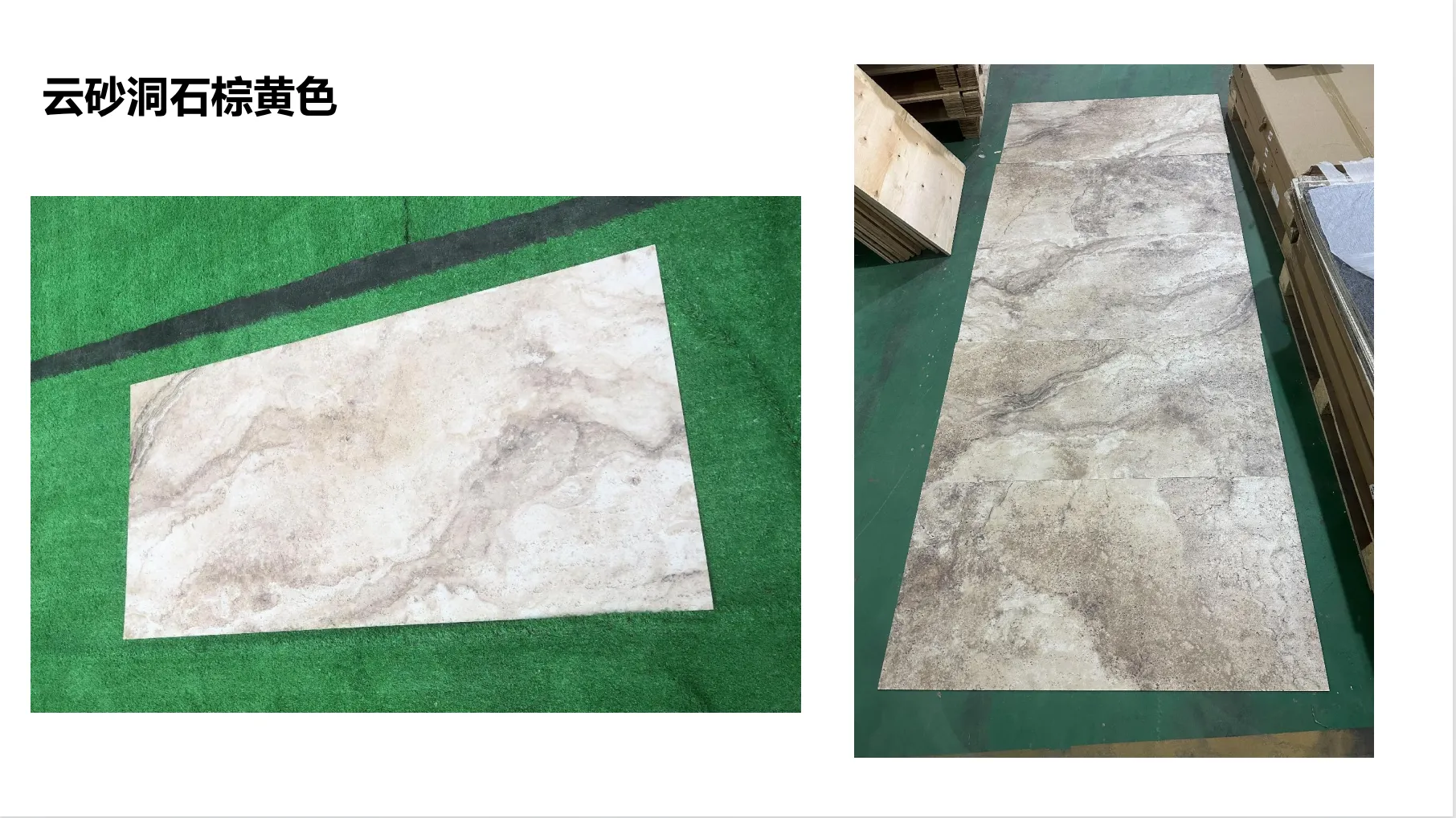
Travertine is a type of limestone formed by mineral-rich water flowing through geological deposits, creating layers of sediment that harden over time. What makes dolomitic travertine different is its high dolomite content—a mineral that adds extra strength and resistance to wear. Unlike regular travertine, which can be porous and soft, dolomitic travertine is denser, making it better suited for high-traffic areas. And when it comes to sports facilities, two variants stand out: dolomitic travertine (dark grey) and dolomitic travertine (claybank) .
Dark grey dolomitic travertine has a moody, industrial vibe—think storm clouds meeting stone. Its deep color hides scuffs and stains, making it ideal for spaces like basketball courts or weight rooms where spills and marks are inevitable. Claybank, on the other hand, is warm and earthy, with tones ranging from soft terracotta to rich sand. It adds a touch of warmth to indoor tracks or fitness studios, where aesthetics matter as much as function. But how do these two stack up when it comes to the nitty-gritty of sports surface performance? Let's break it down.
| Feature | Dolomitic Travertine (Dark Grey) | Dolomitic Travertine (Claybank) |
|---|---|---|
|
Compressive Strength
(How much weight it can handle) |
Up to 120 MPa—handles heavy equipment and crowd pressure with ease | Up to 110 MPa—slightly less dense but still more than enough for most sports activities |
|
Coefficient of Friction
(Grip/slip resistance) |
0.8 (dry), 0.6 (wet)—excellent for indoor courts where spills are common | 0.75 (dry), 0.55 (wet)—great for outdoor tracks or yoga studios where moisture is less frequent |
|
Water Absorption
(How well it resists moisture damage) |
Low (≤1.5%)—resists mold and mildew in humid locker rooms | Low (≤1.8%)—still moisture-resistant, ideal for covered outdoor areas |
| Aesthetic Appeal | Sleek, modern look—complements industrial or minimalist facility designs | Warm, organic tone—blends with natural or earthy color schemes |
| Ideal Use Cases | Basketball courts, weight rooms, indoor tracks | Yoga studios, outdoor fitness areas, walking paths |
Numbers on a chart tell part of the story, but let's get real—what does this mean for someone using the space? Take a basketball player: when they pivot hard during a game, they need the floor to grip their sneakers without sticking, reducing the risk of ankle twists. Dolomitic travertine's natural texture—those tiny, irregular pits and ridges—provides just the right amount of friction. Unlike polished concrete, which can become a slip hazard when sweat or water hits it, travertine's surface stays grippy even when damp. That's a game-changer for facilities where spills are par for the course.
Then there's durability. Imagine a high school gym that hosts daily assemblies, PE classes, and weekend tournaments. Over time, most floors would start to show signs of wear—scratches from chairs, dents from dropped equipment, fading from UV light. Dolomitic travertine, though, is built to last. Its dense structure resists chipping, and its color runs all the way through, so even if it does get scratched, the damage is less noticeable. Facility managers love this because it means less time and money spent on repairs or replacements.
Comfort is another big win. Unlike hard surfaces like fair-faced concrete, which can leave athletes with sore joints after long practices, dolomitic travertine has a slight "give" to it. It's not as soft as rubber, but it absorbs impact better than you might expect, reducing fatigue during long training sessions. Yoga instructors, in particular, rave about the claybank variant—its warm, matte finish feels gentle on bare feet, and the natural texture keeps yoga mats from sliding mid-downward dog.
While dolomitic travertine shines in high-traffic, flat areas, sports facilities aren't one-size-fits-all. Think about curved walls in a climbing gym, or the stepped seating around a track and field oval—these spaces need materials that can bend and conform to irregular shapes. That's where MCM flexible stone comes into play. MCM (Modified Composite Material) flexible stone is a lightweight, thin material that mimics the look of natural stone but with the flexibility to wrap around curves, corners, and even overhead surfaces.
Here's why it works: MCM flexible stone is made by bonding layers of natural stone particles with a polymer resin, creating a sheet that's just 3-5mm thick but surprisingly strong. It's easy to install, too—no heavy machinery required, which cuts down on construction time. For example, a climbing gym might use dark grey dolomitic travertine for the main floor (where climbers lace up their shoes and gear up) and MCM flexible stone in a matching dark grey shade for the curved climbing walls. The result? A cohesive look with zero compromise on functionality.
Another great use case is indoor pools or aquatic centers. Traditional stone can be heavy and prone to water damage if not sealed properly, but MCM flexible stone is water-resistant and lightweight, making it ideal for pool surrounds or changing room walls. Pair it with dolomitic travertine (claybank) on the pool deck, and you've got a space that feels natural, slip-resistant, and visually consistent—no more jarring transitions between materials.
Talk is cheap—let's look at a real example. The Riverton Sports Complex in Colorado, which opened in 2023, decided to go all-in on dolomitic travertine and MCM flexible stone. Their main basketball arena uses dark grey dolomitic travertine for the court surface, citing its "unbeatable grip and durability" after a year of hosting everything from youth leagues to college showcases. The adjacent fitness center opted for claybank dolomitic travertine in the yoga studio, with MCM flexible stone (matching claybank) on the curved walls of the spin room. "Athletes and instructors keep commenting on how 'natural' the space feels," says facility manager Lisa Chen. "And maintenance? We've only had to seal the travertine once, and the MCM walls still look brand new—even with all the sweat and chalk from the spin bikes!"
Then there's the outdoor track at Lincoln High School in Oregon. They chose dark grey dolomitic travertine for the running lanes, paired with MCM flexible stone in a complementary charcoal shade for the spectator seating. "We needed something that could handle Oregon's rain but still look good for graduation ceremonies," explains head coach Mark Torres. "The travertine drains so well—no puddles after a storm—and the MCM seating doesn't fade in the sun. Plus, the kids love that it feels like running on a track that's 'alive'—not just a cold, hard slab."
Any facility manager will tell you: the best material is one that doesn't require constant babysitting. Dolomitic travertine and MCM flexible stone score high here, too. For travertine, basic care is straightforward: sweep or vacuum regularly to remove dirt (which can scratch the surface if ground in), and mop with a pH-neutral cleaner (avoid harsh chemicals like bleach, which can eat away at the sealant). Every 3-5 years, a fresh coat of sealant will keep moisture out and stains at bay. That's it—no special equipment, no expensive treatments.
MCM flexible stone is even easier. Its resin coating resists stains, so a quick wipe with a damp cloth is usually enough to clean up spills. Unlike natural stone, it doesn't need sealing, and it's resistant to UV rays, so it won't fade even in sunny outdoor areas. For busy facilities, this translates to lower maintenance costs and less downtime—meaning more time focusing on athletes, not upkeep.
Sports facilities are more than just buildings—they're spaces where athletes push limits, communities come together, and memories are made. The materials we choose shape those experiences, whether we notice them or not. Dolomitic travertine, with its blend of durability, comfort, and natural beauty, offers a solution that doesn't force facility managers to choose between function and aesthetics. Add in MCM flexible stone for those tricky, curved spaces, and you've got a toolkit that can handle just about anything a sports facility throws at it.
So the next time you step into a gym, take a moment to look down. If the floor feels solid yet forgiving, grippy but not abrasive, and looks like it belongs there—chances are, you're standing on dolomitic travertine. And that's the magic of it: it works so well, you might not even realize it's there. But the athletes? They'll notice. And that's what really counts.
Recommend Products












