
There's something magical about starting a new building project or giving your space a fresh renovation. The excitement of picking out colors, envisioning how each room will feel, and dreaming of the final result— it's a journey filled with possibility. But amid all that excitement, there's a practical side that often feels like a buzzkill: the budget. Choosing materials isn't just about what looks good; it's about what makes sense for your wallet today and tomorrow. We've all been there—tempted by the allure of a cheaper option upfront, only to realize later that those "savings" turn into endless repair bills. Today, let's talk about a material that's been turning heads in architecture and design circles for years: dolomitic travertine. Specifically, we'll dive into how its maintenance costs stack up when you weigh short-term expenses against long-term savings. Spoiler: This natural stone might just be the smart compromise between beauty and budget you've been looking for.
Before we get into dollars and cents, let's make sure we're all on the same page about what dolomitic travertine is. If you've ever walked through a historic European villa or a high-end modern café, you've probably seen travertine in action—those warm, earthy stones with unique voids and veins that tell a story of millions of years of formation. But dolomitic travertine? It's a special variety that's infused with dolomite, a mineral that adds extra durability and a distinct texture compared to regular travertine. Think of it as travertine with a superhero upgrade.
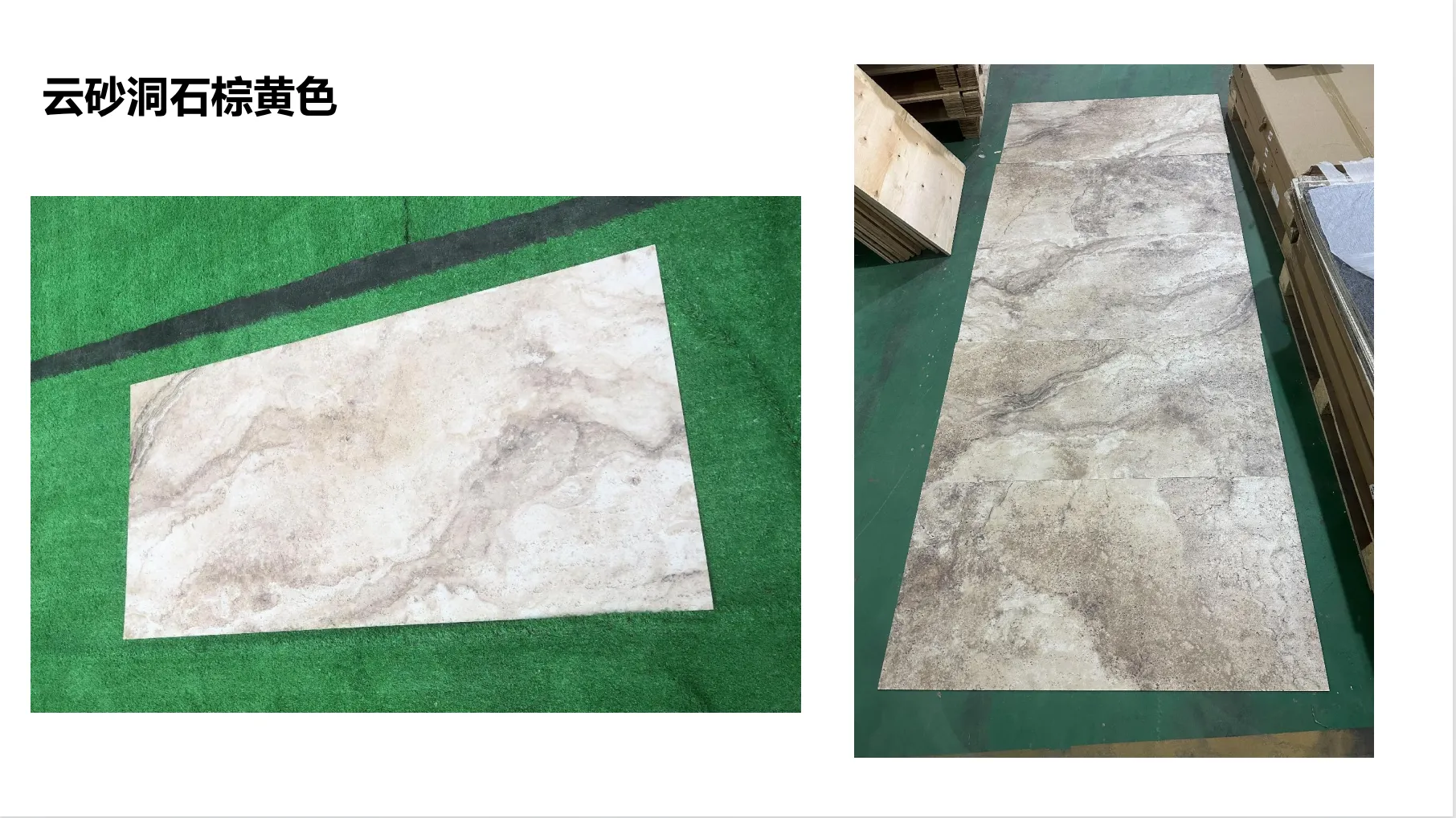
Two of the most popular variants in the market right now are dolomitic travertine(dark grey) and dolomitic travertine(claybank) . The dark grey variety exudes sophistication—imagine deep, moody tones that pair perfectly with modern, minimalist spaces or add contrast to lighter interiors. The claybank, on the other hand, is all about warmth. Its soft, earthy hues (think sandy beiges with hints of terracotta) bring a cozy, inviting feel to any room, making it a favorite for living areas and outdoor patios. Both types retain that signature travertine charm—those tiny, natural pits and grooves that give the stone character—while the dolomite content makes them harder and more resistant to wear than standard travertine .
But here's the thing about natural stone: it's not just a building material. It's a piece of nature, refined for your home. Each slab has its own unique pattern, its own set of "imperfections" that make it one-of-a-kind. That's part of the appeal, but it also means that caring for it requires a bit more attention than, say, a synthetic tile. The question is: does that extra attention translate to higher costs over time? Let's break it down.
Let's start with the part that might make you wince a little: the initial costs. There's no sugarcoating it—dolomitic travertine isn't the cheapest option on the shelf. If you're comparing it to, say, laminate flooring or basic ceramic tiles, you'll likely see a higher price tag per square foot. But here's why that matters: you're not just paying for a surface; you're paying for a material that's built to last. Let's break down the short-term expenses you'll face when choosing dolomitic travertine.
First, the stone itself. Depending on where you source it and the thickness of the slabs, dolomitic travertine(dark grey) and dolomitic travertine(claybank) typically range from $12 to $25 per square foot. Compare that to something like polish concrete , which might cost $8 to $15 per square foot, and it's clear: dolomitic travertine asks for more upfront. But here's the catch: that price includes the uniqueness of natural stone. You won't find two identical slabs of dolomitic travertine, whereas polished concrete, while sleek, is more uniform (read: less character). If you value individuality, that premium starts to feel justified.
Next, installation. Natural stone isn't a DIY project for beginners. Those slabs are heavy, and cutting them to fit requires precision tools and expertise. A skilled installer will know how to handle the stone's natural variations, ensuring that seams are tight and the surface is level. Installation costs for dolomitic travertine usually run between $8 and $15 per square foot, which is higher than the $5 to $10 per square foot you might pay for polished concrete installation. Why? Because working with natural stone is more labor-intensive. Installers have to be careful not to crack the slabs, and they often need to seal the stone on-site after cutting to prevent staining during the process. It's an extra step, but one that prevents headaches later.
Speaking of sealing—this is non-negotiable. Dolomitic travertine is porous, which means it can absorb liquids if left untreated. That first seal after installation is crucial, and it adds to the upfront cost. A good quality stone sealer for dolomitic travertine costs around $0.50 to $1.50 per square foot, plus labor if you hire a pro to apply it (which we recommend). So, for a 500-square-foot floor, that's an extra $250 to $750 upfront. Compare that to polished concrete, which might need a sealer too, but often at a lower cost ($0.30 to $1 per square foot). Again, dolomitic travertine is asking for more here.
So, adding it all up: material ($12–$25/sq ft) + installation ($8–$15/sq ft) + initial sealing ($0.50–$1.50/sq ft) = a total upfront cost of roughly $20.50 to $41.50 per square foot. For a 500-square-foot space, that's $10,250 to $20,750. Ouch, right? It's a significant investment, and we won't pretend otherwise. But here's where the story shifts from "expense" to "investment": the long-term savings.
Short-term costs can make your budget tighten, but let's zoom out. A home renovation or building project isn't just about today—it's about the next 10, 20, even 30 years. When you look at dolomitic travertine through that lens, the numbers start to make sense. Here's how this stone saves you money over time.
Dolomitic travertine's dolomite content isn't just for show—it makes the stone harder and more resistant to scratches and chips than regular travertine. Think about high-traffic areas like entryways or kitchen floors. A lesser material might start showing wear after a few years: scuffs, cracks, or faded color. Dolomitic travertine? It holds up. We've seen homes with dolomitic travertine floors that are 20 years old and still look stunning, with only minor signs of aging. Compare that to polished concrete, which, while durable, can develop hairline cracks over time (especially in areas with temperature fluctuations) and may need resurfacing every 5 to 10 years. Resurfacing polished concrete costs $3 to $8 per square foot—so, for that 500-square-foot floor, that's $1,500 to $4,000 every decade. Dolomitic travertine? No resurfacing needed. Just occasional sealing, and it keeps going.
Maintenance is where dolomitic travertine really shines. Once it's sealed, day-to-day care is a breeze. A quick sweep with a soft broom and a mop with mild, pH-neutral soap is all it takes to keep it clean. No harsh chemicals, no special tools. And sealing? Unlike some natural stones that need sealing every year, dolomitic travertine only needs a fresh coat every 3 to 5 years. Let's do the math: if sealing costs $0.50 to $1.50 per square foot, and you do it every 4 years on average, that's $0.125 to $0.375 per square foot per year. For 500 square feet, that's $62.50 to $187.50 annually. Polished concrete, on the other hand, needs resealing every 2 to 3 years (since its sealant wears down faster under foot traffic), costing $0.30 to $1 per square foot each time. That's $0.10 to $0.33 per square foot per year—similar, but remember: polished concrete may still need resurfacing, which dolomitic travertine avoids. Over 20 years, that resurfacing cost adds up fast.
Here's a hidden cost many people forget: replacing materials that look dated or worn. Synthetic materials often go out of style, or they fade and discolor over time, forcing you to renovate sooner. Dolomitic travertine? It ages gracefully. That dolomitic travertine(dark grey) floor? The more you walk on it, the more its natural patina develops, adding depth and character. The dolomitic travertine(claybank) patio? Sunlight softens its hues, making it look even more inviting as the years pass. Natural stone doesn't "go out of style"—it's timeless. So, instead of replacing your floors every 15 years because they look tired, you can enjoy dolomitic travertine for decades, saving on renovation costs down the line.
Let's talk about home value. Potential buyers notice quality materials, and dolomitic travertine is a mark of craftsmanship. A home with natural stone floors often sells for more than one with basic flooring, and it can attract buyers faster. Real estate agents often cite natural stone as a "premium feature" that adds 5% to 10% to a home's resale value. So, that initial investment isn't just about your enjoyment—it's about building equity. Polished concrete is nice, but it doesn't carry the same prestige as natural stone. When you factor in resale value, dolomitic travertine's long-term savings become even clearer.
Numbers speak louder than words, so let's put this all together in a table. We'll compare the total costs over 10 years for a 500-square-foot floor using dolomitic travertine(dark grey) , dolomitic travertine(claybank) , and polish concrete . We'll include initial material and installation costs, sealing, and any necessary repairs or resurfacing.
| Material | Initial Material Cost (500 sq ft) | Installation Cost (500 sq ft) | Sealing Frequency | 10-Year Sealing Cost | 10-Year Repair/Resurfacing Cost | Total 10-Year Cost |
|---|---|---|---|---|---|---|
| Dolomitic Travertine (Dark Grey) | $7,500 (avg. $15/sq ft) | $5,500 (avg. $11/sq ft) | Every 4 years | $375 (3 sealings, $0.25/sq ft/year) | $0 (no resurfacing needed) | $13,375 |
| Dolomitic Travertine (Claybank) | $7,000 (avg. $14/sq ft) | $5,500 (avg. $11/sq ft) | Every 4 years | $375 (3 sealings, $0.25/sq ft/year) | $0 (no resurfacing needed) | $12,875 |
| Polish Concrete | $5,500 (avg. $11/sq ft) | $3,500 (avg. $7/sq ft) | Every 2.5 years | $500 (4 sealings, $0.20/sq ft/year) | $2,500 (1 resurfacing at year 7) | $12,000 |
Wait a minute—polished concrete still comes out slightly cheaper over 10 years? That's true, but remember: this table doesn't include resale value or aesthetic longevity. If we factor in that dolomitic travertine could add $10,000 or more to your home's resale value (while polished concrete adds little to none), the scales tip dramatically. Plus, dolomitic travertine will still look great at year 10, while polished concrete may already be showing signs of wear that make you want to replace it. Over 20 years, the gap widens even more—dolomitic travertine might need 5 sealings ($750 total) and no resurfacing, while polished concrete could need 2 resurfacings ($5,000) and 8 sealings ($1,000), pushing its 20-year cost to over $20,000. Dolomitic travertine? Still under $15,000.
Numbers are helpful, but let's hear from people who've lived with dolomitic travertine. Take Sarah, a homeowner in Arizona who renovated her kitchen 12 years ago with dolomitic travertine(claybank) countertops and backsplash. "At first, I was nervous about the cost," she says. "But now? I'm so glad I splurged. Those countertops have seen it all—spilled wine, lemon juice, even a dropped cast-iron pan. They've got a few nicks, sure, but they look even better now than they did when we first installed them. The patina makes the kitchen feel lived-in and warm. I've had friends redo their kitchens twice since then because their synthetic countertops started peeling or staining. I just seal mine every 4 years and call it a day."
Then there's Mike, a restaurant owner in Colorado who chose dolomitic travertine(dark grey) for his dining room floors 15 years ago. "Restaurants are tough on floors—spills, heavy foot traffic, chairs scraping. I wanted something that could handle the chaos but still look upscale. Dolomitic travertine was the answer. We seal it every 3 years, and it still looks brand new. I've had to replace a few tiles here and there, but that's it. If I'd gone with polished concrete, I'd probably have resurfaced twice by now, and it would never have had that rich, natural look that keeps customers coming back. It was worth every penny."
These stories highlight a common theme: dolomitic travertine isn't just a material—it's a long-term partner. It adapts to your life, ages with grace, and saves you money by not needing constant replacement.
So, should you choose dolomitic travertine? It depends on your priorities. If you're working with an extremely tight budget and plan to move in 5 years, polished concrete might make sense. But if you're building or renovating a home you plan to love for decades, and you value beauty, durability, and long-term savings, dolomitic travertine is hard to beat.
Remember, the cheapest option upfront is rarely the cheapest in the long run. Dolomitic travertine asks for more at the start, but it gives back in spades: fewer repairs, less maintenance, timeless beauty, and increased home value. It's an investment in your daily life—every time you walk across those floors or run your hand over that countertop, you'll be reminded that quality matters.
So, the next time you're staring at a list of material options, ask yourself: "What do I want to live with for the next 20 years?" If the answer is something that's as unique as you are, that gets better with time, and that won't break the bank down the line, dolomitic travertine(dark grey) or dolomitic travertine(claybank) might just be your perfect match. After all, home isn't just a place—it's a story. And what better way to tell yours than with a material that's been telling stories for millions of years?
Recommend Products












