
Behind every striking stone facade or custom-built interior wall lies a blend of artistry and engineering. Let's dive into how modern techniques are transforming dolomitic travertine into the architectural stars of today's buildings.
Walk into a contemporary art gallery, a boutique hotel, or even a sleek office lobby, and you might find your hand drifting toward a wall that feels both solid and surprisingly warm. Chances are, you're touching dolomitic travertine —a material that's redefining how architects think about texture, durability, and design flexibility. Unlike traditional travertine, which is primarily calcium carbonate, dolomitic travertine gets its name from its higher dolomite content (magnesium carbonate), giving it enhanced strength and a unique range of earthy hues.
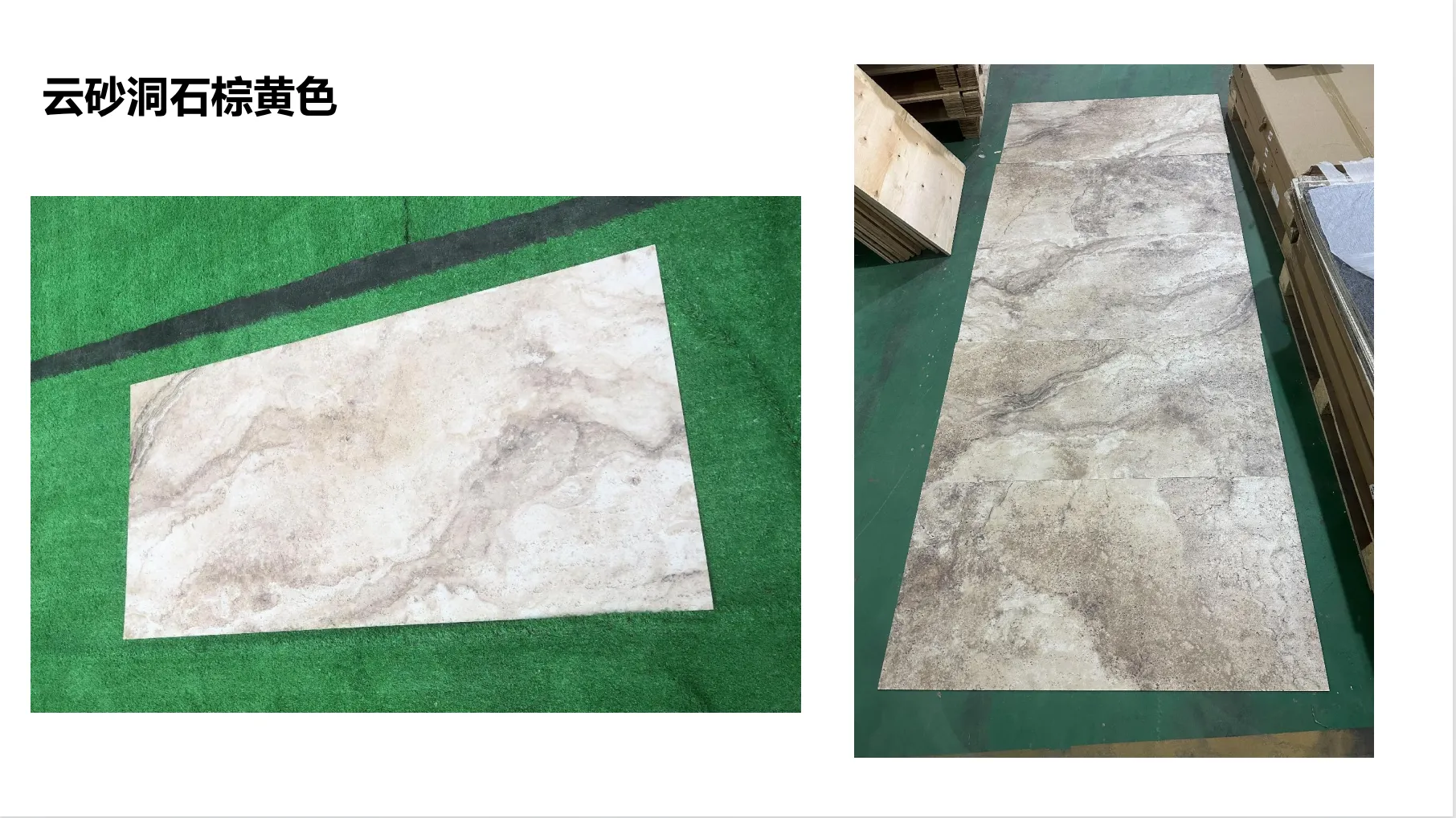
Architects and designers often rave about its versatility, especially when it comes to color. Take dolomitic travertine (dark grey) —a moody, sophisticated shade that adds depth to minimalist spaces, perfect for creating a focal point in a monochrome room. Then there's dolomitic travertine (claybank) , with its soft, sandy undertones that evoke warmth, making it a favorite for residential projects or hospitality venues aiming for a cozy yet upscale vibe. But what truly sets dolomitic travertine apart isn't just its looks—it's how it can be manipulated to fit almost any vision, thanks to advancements in cutting and shaping technology.
Of course, natural stone alone can be heavy and brittle, which is where innovations like MCM flexible stone come into play. Short for Modified Composite Material, MCM flexible stone takes the aesthetic of dolomitic travertine and pairs it with a lightweight, bendable backing. This game-changer allows architects to use the stone in ways that were once impossible—think curved walls, overhead installations, or even custom-shaped facades on high-rise buildings. Suddenly, that "solid" wall you touched earlier might not be as heavy as it feels, opening up a world of design possibilities.
Cutting stone used to be a labor-intensive dance between man and machine. Picture 20th-century quarries: teams of workers wielding diamond-tipped saws, water hoses spraying constantly to cool the blades, and slabs emerging in rough, rectangular shapes. While effective, these traditional methods had limits—precision was hard to come by, and creating anything beyond standard sizes often meant excessive waste. Fast forward to today, and the cutting process has become a symphony of technology, where lasers, CNC machines, and even 3D printers work in harmony to turn raw dolomitic travertine into tailored pieces.
| Technique | Tools of the Trade | Precision Level | Best For |
|---|---|---|---|
| Traditional Diamond Sawing | Handheld diamond blades, large-frame saws | Moderate (±2mm tolerance) | Standard slabs, low-budget projects |
| Water Jet Cutting | High-pressure water mixed with abrasives | High (±0.1mm tolerance) | Intricate patterns, curved edges |
| CNC Milling | Computer-controlled rotary cutters | Very High (±0.05mm tolerance) | Custom sizes, repetitive designs |
| 3D Printing Series | Layered extrusion of MCM composite | High (±0.2mm tolerance) | Organic shapes, prototyping |
Water jet cutting, for example, has revolutionized how we handle delicate cuts. Imagine needing a dolomitic travertine panel with a lace-like pattern for a museum's entrance. A high-pressure water jet, mixed with tiny abrasive particles, can slice through the stone with the precision of a scalpel, leaving edges so smooth they barely need polishing. This technique is especially useful for dolomitic travertine (dark grey) , where clean lines are critical to maintaining its sleek appearance.
Then there's CNC (Computer Numerical Control) milling, which turns cutting into a digital process. Designers upload a blueprint into a computer, and the CNC machine—equipped with rotating diamond cutters—carves the stone exactly to spec. Need a 10-foot slab with a custom groove for LED lighting? No problem. Want to replicate a pattern across 50 panels with zero variation? CNC has you covered. This level of consistency is a lifesaver for large-scale projects, where even a 1mm difference can throw off an entire design.
But perhaps the most exciting development is the integration of 3D printing series technology. While 3D printing stone directly is still in its early stages, companies are using it to create molds for shaping MCM flexible stone composites. For example, if an architect dreams up a wall with undulating, wave-like forms, a 3D printer can first create a negative mold, into which the MCM dolomitic travertine mixture is poured. The result? A lightweight, durable panel that fits the exact curve of the design—no heavy machinery or excessive waste required.
Once the stone is cut, the real artistry begins: shaping. Architects don't just want "stone walls"—they want walls that tell a story, guide movement, or frame a view. This is where custom sizing and shaping become crucial, and dolomitic travertine, with its blend of strength and workability, is the perfect canvas.
Take architectural big slab solutions —a term that might sound technical, but translates to something we've all experienced: those massive, seamless stone panels that make a lobby feel grand and cohesive. Imagine walking into a luxury hotel where the reception desk is wrapped in a single 16-foot slab of dolomitic travertine (claybank) . The lack of visible seams makes the space feel larger, more intentional, and undeniably luxurious. But creating such a slab isn't easy. Traditional stone slabs max out around 10 feet due to weight and transportation limits, but MCM flexible stone changes the game. By laminating thin layers of dolomitic travertine onto a lightweight core, manufacturers can produce slabs up to 20 feet long and 8 feet wide—all while keeping the weight manageable for installation.
Then there are the smaller, more intricate shapes that add personality to a space. Think of a restaurant with a feature wall made of irregularly shaped dolomitic travertine (dark grey) panels, each cut to mimic the look of natural stone formations. Or a residential bathroom where the shower walls are curved, clad in MCM flexible stone that bends gently to follow the contour of the space. These details might seem small, but they transform a generic room into something memorable.
Shaping also plays a role in functionality. For example, dolomitic travertine (claybank) is often used for flooring in high-traffic areas, but to prevent slips, manufacturers can shape the surface with a subtle texture—tiny ridges or dimples that add grip without sacrificing the stone's smooth appearance. In outdoor spaces, like a hotel terrace, custom-shaped dolomitic travertine pavers can be designed to channel rainwater away from seating areas, combining beauty with practicality.
Of course, every custom shape comes with its own set of challenges. A 20-foot slab might require specialized transportation (think flatbed trucks with air-ride suspension to avoid cracking), while a curved wall needs precise measurements to ensure the panels fit together like puzzle pieces. That's where collaboration between manufacturers, architects, and installers becomes key. "We once worked on a project where the architect wanted a spiral staircase clad in dolomitic travertine (dark grey) ," recalls Maria Gonzalez, a project manager at a leading stone fabrication company. "The treads had to be curved, with beveled edges, and each one slightly different in size. We used 3D scanning to map the staircase first, then CNC-cut each tread to match. It took weeks of back-and-forth, but when the first tread was installed, and the client ran their hand along the curve—you could see it was worth it."
In downtown Chicago, a new boutique hotel, "The Ember," wanted its lobby to feel like a modern cave—warm, inviting, and wrapped in texture. The design called for a curved feature wall spanning 30 feet, clad in dolomitic travertine (claybank) , with integrated niches for art installations. The challenge? The wall needed to curve both horizontally and vertically, and traditional stone was too heavy to hang from the building's steel frame.
The solution? MCM flexible stone panels, cut and shaped using CNC technology. The fabrication team started by 3D scanning the lobby's dimensions to create a digital model of the curved wall. Then, they cut 4x8-foot MCM panels with the claybank dolomitic travertine finish, each with a custom groove along the edges to allow them to interlock like a jigsaw puzzle. The panels were so lightweight that installers could mount them using a simple adhesive system, eliminating the need for heavy steel brackets.
The result? A lobby that feels both grand and intimate, with the claybank travertine's warm tones softening the industrial steel and glass of the space. "Guests often comment on how the wall 'flows'—like it was carved from a single piece of stone," says the hotel's interior designer. "Little do they know it's actually 24 separate panels, each shaped to fit the curve perfectly. That's the magic of modern cutting and shaping techniques."
For all its advancements, working with custom-sized dolomitic travertine isn't without hurdles. One of the biggest is waste reduction. Traditional cutting methods can leave behind up to 30% of the stone as scrap, but newer techniques are closing that gap. Water jet cutting, for example, uses computer algorithms to nest shapes tightly together on a slab, minimizing unused material. CNC machines, too, produce finer, more consistent cuts, meaning less stone is lost to rough edges.
Transportation is another challenge, especially for architectural big slab solutions . A 20-foot MCM panel might be lightweight, but it's still unwieldy. Companies are now using specialized shipping crates with foam padding and climate control to protect slabs from temperature changes and vibrations during transit. Some even partner with local fabricators to cut slabs on-site, reducing the need for long-distance shipping altogether.
Looking ahead, the future of dolomitic travertine cutting and shaping is all about integration—blending stone with technology to create even more innovative designs. Imagine 3D printers that can extrude MCM dolomitic travertine composite directly onto a building's facade, layer by layer, allowing for truly organic, one-of-a-kind shapes. Or AI-powered design tools that suggest the most efficient way to cut a slab based on the project's needs, reducing waste and cost.
Sustainability is also taking center stage. As the construction industry moves toward greener practices, manufacturers are exploring ways to recycle stone scraps into new MCM panels, or use renewable energy to power cutting and shaping machinery. Even the adhesives used to install MCM flexible stone are getting an eco-friendly upgrade, with low-VOC (volatile organic compound) options that are safer for both installers and building occupants.
At the end of the day, the techniques we've explored aren't just about "cutting stone"—they're about creating spaces that connect with people. A wall clad in dolomitic travertine (dark grey) might make a conference room feel more authoritative, boosting confidence during a big presentation. A curved staircase wrapped in dolomitic travertine (claybank) could turn a daily commute into a moment of calm. These aren't just "materials"—they're tools that shape how we feel, work, and live.
So the next time you find yourself admiring a unique stone feature in a building, take a moment to appreciate the craftsmanship behind it. From the quarry workers who first extract the stone, to the engineers programming CNC machines, to the architects who dream up the designs—each plays a role in turning raw dolomitic travertine into something extraordinary. And as technology continues to evolve, one thing's for sure: the future of architectural stone is going to be a lot more flexible, a lot more creative, and infinitely more human.
Recommend Products












