
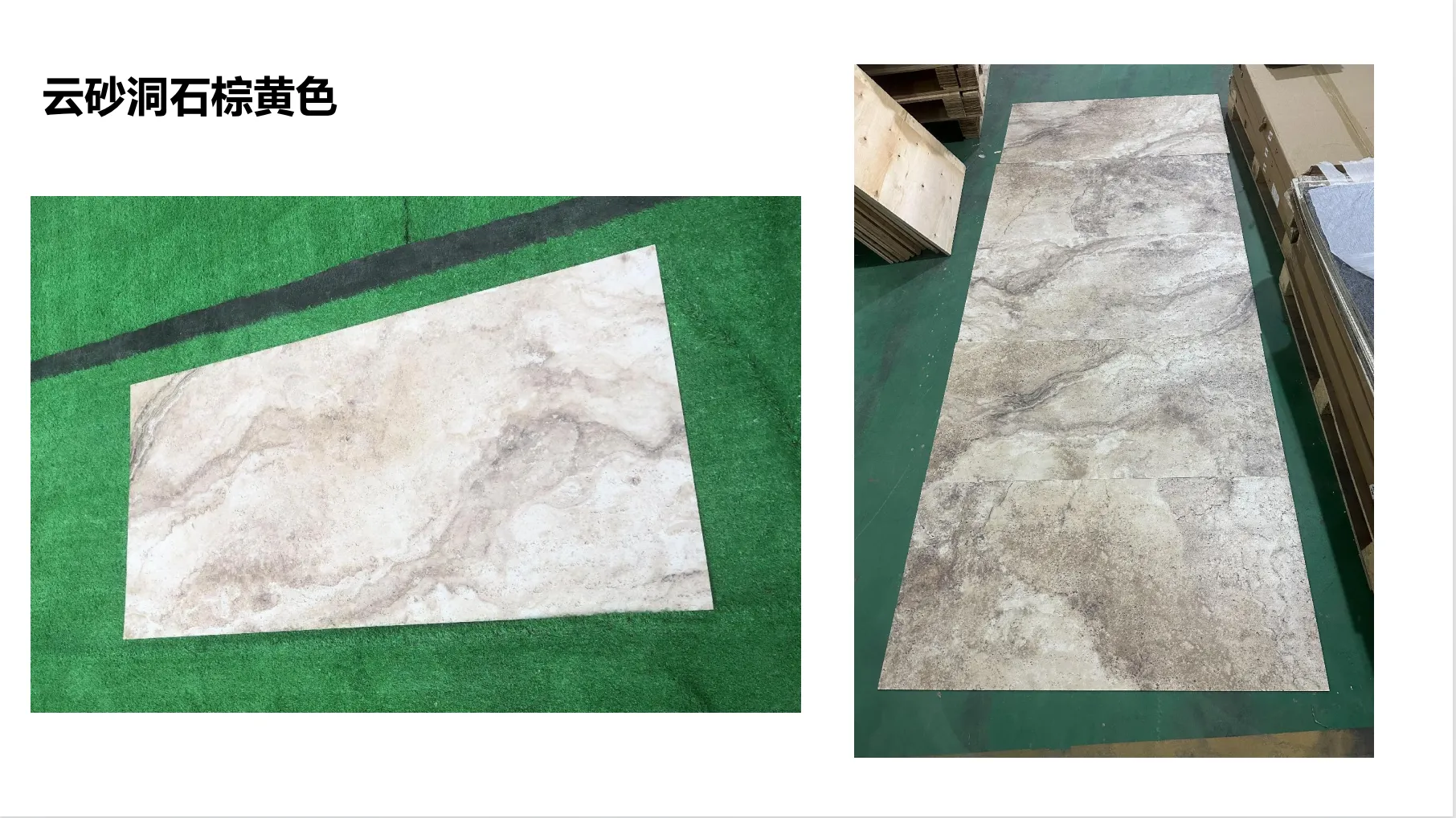
Walk through any upscale neighborhood, and you'll notice something subtle but powerful: the materials that clothe a home or commercial building aren't just about function—they're storytellers. They whisper of taste, durability, and intentionality, and in the world of real estate, those whispers can turn into shouts when it comes time to sell. Today, we're diving into a material that's been quietly elevating property values for decades, yet still feels fresh and timeless: dolomitic travertine. Not just any stone, but a versatile, earthy gem that comes in hues like dark grey and claybank, offering a rare blend of rugged charm and refined elegance. Let's unpack why this natural stone isn't just a design choice, but a smart financial investment.
First things first: if you're not a geologist or a design nerd, the term "dolomitic travertine" might sound like something out of a science textbook. But let's simplify. Travertine itself is a form of limestone, formed by mineral-rich water flowing through caves or hot springs, leaving behind layers of calcium carbonate. It's the stuff of ancient Roman baths and historic European villas—think the Colosseum's weathered grandeur or the steps of the Trevi Fountain. Now, "dolomitic" travertine is a variation that includes dolomite, a mineral that adds and a unique color palette, ranging from deep, moody dark grey to warm, sunlit claybank. It's like nature's paintbrush, but for stone.
What makes dolomitic travertine stand out from other natural stones? For starters, its texture. Run your hand over a slab, and you'll feel tiny pits and grooves—remnants of the water that formed it. These aren't flaws; they're character. They catch light in ways smooth stones can't, creating depth that shifts with the time of day. A dark grey dolomitic travertine wall might look almost charcoal in the morning, then soften to a warm graphite as the sun sets. Claybank, on the other hand, brings the earth indoors—think the color of sunbaked soil or aged terracotta, but with a subtle sheen that feels luxurious, not rustic.
But it's not just about looks. Dolomitic travertine is surprisingly tough. Thanks to that dolomite content, it's more resistant to scratches and stains than standard travertine, making it ideal for high-traffic areas like kitchen floors, entryways, or outdoor patios. And unlike synthetic materials that fade or warp over time, this stone ages gracefully. Those tiny pits might collect a bit of dust, but a quick wipe with a damp cloth brings back its luster. It's the kind of material that looks better with a little wear, like a favorite leather jacket—each scuff tells a story.
Here's the thing about real estate: buyers and appraisers notice details. A 2023 study by the National Association of Realtors (NAR) found that homes with natural stone exteriors or high-end stone features sold for an average of 7.4% more than comparable homes using synthetic materials like vinyl or fiber cement. Another report from Remodeling Magazine's Cost vs. Value survey echoed this, noting that stone veneer siding recouped 92.8% of its cost at resale—far higher than the 67.2% average for other exterior upgrades. But why? What is it about natural stone that makes it such a strong investment?
Part of it is psychology. Humans are hardwired to respond to natural materials. Studies in environmental psychology show that spaces with stone, wood, or plants reduce stress and increase feelings of well-being. When a potential buyer walks into a home with dolomitic travertine floors, they're not just seeing a surface—they're feeling a sense of calm and permanence. That emotional connection translates to perceived value. "Buyers often can't put their finger on it, but homes with natural stone feel 'solid,' like they're built to last," says Maria Gonzalez, a luxury real estate agent in Beverly Hills with over 15 years of experience. "I've had clients choose a $2.5M home over a $2.3M one simply because the master bathroom had travertine countertops instead of quartz. They saw it as a sign of quality."
Then there's durability. Unlike wood grain board, which can warp in humidity, or even polished concrete, which might crack under heavy weight, dolomitic travertine stands the test of time. A well-maintained travertine floor can last 50 years or more, with minimal upkeep. For homeowners, that means fewer replacement costs. For buyers, it means peace of mind. "I always tell my clients: 'You're not just buying a floor—you're buying a floor that your grandkids might walk on,'" says Gonzalez. "That kind of longevity is priceless in a market where people want to invest in homes, not just live in them."
To really understand dolomitic travertine's value, let's put it head-to-head with some popular alternatives. We'll focus on three materials often considered in high-end construction: fair-faced concrete, wood grain board, and standard limestone. The table below breaks down key factors that matter to homeowners and appraisers alike.
| Material | Aesthetic Appeal | Durability (Lifespan) | Maintenance Needs | Reported Impact on Resale Value |
|---|---|---|---|---|
| Dolomitic Travertine (Dark Grey) | Rich, moody texture with natural pits; complements modern and industrial designs. | 50+ years (indoor); 30+ years (outdoor with sealing). | Seal yearly; wipe spills promptly; avoid harsh cleaners. | 7-9% higher resale value vs. synthetic materials (per NAR data). |
| Dolomitic Travertine (Claybank) | Warm, earthy tone with soft veining; pairs well with bohemian or rustic styles. | 50+ years (indoor); 30+ years (outdoor with sealing). | Same as dark grey; may show dust more visibly but ages to a soft patina. | 6-8% higher resale value; popular in markets like Austin and Asheville. |
| Fair-Faced Concrete | Sleek, minimalist look; industrial vibe but can feel cold. | 40-50 years (indoor); prone to cracking outdoors in freeze-thaw climates. | Seal every 2-3 years; stains easily if not sealed. | 3-5% higher resale value; niche appeal. |
| Wood Grain Board | Warm, homey feel; mimics hardwood but less expensive. | 15-20 years (indoor); not recommended for outdoor use. | Avoid moisture; refinish every 5-7 years; prone to scratches. | 2-4% higher resale value; seen as a "budget-friendly upgrade." |
The takeaway? Dolomitic travertine outperforms these alternatives in both longevity and resale impact, especially when you factor in its versatility. It works in modern lofts, beachfront villas, and mountain cabins alike, whereas fair-faced concrete leans industrial and wood grain board feels more suburban. "I had a client in Denver who used dark grey dolomitic travertine on their home's exterior," says Gonzalez. "It was a contemporary build, and the stone added warmth that concrete would have lacked. When they sold last year, the buyer specifically mentioned the exterior stone as a 'wow factor'—and paid $120k over asking."
To truly appreciate dolomitic travertine, it helps to know where it comes from. Most high-quality dolomitic travertine is quarried in regions with rich mineral deposits, like Italy's Tuscany, Turkey's Denizli Province, or Iran's Yazd County. These quarries aren't just holes in the ground—they're places where generations of stonecutters have honed their craft. Take the quarries outside Siena, Italy, where some dolomitic travertine has been extracted for over 200 years. Today, many of these operations prioritize sustainability, using water recycling systems and limiting blasting to minimize environmental impact. "Sustainability is a big selling point for modern buyers," notes environmental architect James Chen, founder of Chen Design Studio in Portland. "They want to know their materials are ethically sourced. Dolomitic travertine quarries that follow green practices add another layer of value—buyers will pay more for a home that aligns with their values."
Once extracted, the stone is cut into slabs, honed or polished (depending on the desired finish), and shipped worldwide. But it's the unique color variations within each batch that make it special. A single quarry might produce dark grey dolomitic travertine with hints of blue in one section and claybank with golden undertones in another. This means no two projects using dolomitic travertine are exactly alike. "That uniqueness is a huge draw," says Chen. "In a world of mass-produced materials, homeowners crave one-of-a-kind spaces. A kitchen with claybank dolomitic travertine countertops isn't just a kitchen—it's a conversation piece. And conversation pieces sell homes."
Installation is another area where dolomitic travertine shines, though it does require skilled professionals. Unlike wood grain board, which can be installed by a handy homeowner, travertine needs precise cutting and sealing to prevent water damage. But that extra effort pays off. "A properly installed travertine floor will outlast the home's HVAC system, its roof, even its appliances," says Mike Torres, a master stonemason with 30 years of experience. "I installed travertine in a client's foyer in 1998, and when they sold the house in 2022, the new owners called me to say the floor looked as good as the day it was laid. That's the kind of quality that makes people willing to invest."
Let's get concrete (pun intended) with a real-world example. In 2020, homeowners Sarah and David Miller purchased a 3,200-square-foot home in Boulder, Colorado, for $1.2M. The house was in good shape, but the exterior was clad in stucco, and the kitchen had outdated laminate countertops. Their goal? To renovate with materials that would both their quality of life and the home's resale value. After consulting with architect James Chen, they settled on two key upgrades: replacing the stucco with dark grey dolomitic travertine siding and updating the kitchen with claybank dolomitic travertine countertops and backsplash.
The total renovation cost was $185,000—$120,000 for the exterior stone and $65,000 for the kitchen. At the time, Sarah was hesitant. "$185k felt like a lot," she admits. "We wondered if we should just paint the stucco and put in quartz countertops instead. But James showed us the data on stone's ROI, and we trusted his vision." The results were striking. The dark grey travertine exterior gave the home a rugged, mountain-modern look that stood out in the neighborhood, while the claybank kitchen felt warm and inviting. "Friends would walk in and say, 'This doesn't even feel like the same house,'" David recalls. "The stone made everything feel more expensive, somehow."
In 2023, the Millers decided to sell. They listed the home for $1.55M, expecting some negotiation. To their surprise, they received three offers within a week, and the home sold for $1.52M—$320k more than their purchase price, and $135k more than the $1.385M their realtor had initially appraised it for pre-renovation. "The appraiser specifically noted the travertine upgrades as a 'significant value driver,'" Sarah says. "He told us similar homes in the area without stone exteriors were selling for $1.35M-$1.4M. We basically made back the entire renovation cost and then some. Best decision we ever made."
Let's be honest: dolomitic travertine isn't cheap. Depending on the color (dark grey vs. claybank), finish, and location, it can cost $15-$30 per square foot for materials alone, plus installation. Compare that to fair-faced concrete at $8-$12 per square foot or wood grain board at $3-$7 per square foot, and it's easy to see why some homeowners hesitate. But as the Millers' story shows, the upfront cost is often offset by the long-term gain. Let's crunch the numbers.
Suppose you're building a new home with 2,000 square feet of flooring. Using wood grain board at $5 per square foot would cost $10,000. Using dolomitic travertine at $20 per square foot would cost $40,000—a $30,000 difference. But if the travertine increases your home's resale value by 7% (per NAR data), and your home is worth $500,000, that's a $35,000 increase. Suddenly, the $30,000 investment yields a $5,000 profit. And that's not counting the years of enjoyment you get from living in a space with natural stone.
"I tell clients to think of it as a 20-year investment," says Gonzalez. "If you plan to stay in your home for 10+ years, the monthly cost of that $30k upgrade is around $250—less than most cable bills. And when you sell, you'll likely get that money back, plus more." For those on a tighter budget, there are ways to incorporate travertine strategically. "You don't have to cover every surface," Chen advises. "Use it as an accent: a fireplace surround, a bathroom backsplash, or an entryway floor. Those focal points still the home's perceived value without breaking the bank."
As design trends shift toward sustainability and biophilia (the human connection to nature), dolomitic travertine's star is only rising. "I've seen a 30% increase in requests for natural stone in the last five years," says Chen. "Post-pandemic, people are spending more time at home and want spaces that feel healthy and grounded. Travertine checks both boxes." Builders are taking notice, too. Luxury home developers like Toll Brothers and Taylor Morrison now offer dolomitic travertine as a premium upgrade in many of their communities, citing high demand from buyers.
Another trend boosting travertine's popularity? The rise of "forever homes." More buyers are looking for properties they can grow old in, rather than flipping every 5-7 years. For these buyers, durability is key—and dolomitic travertine delivers. "Young couples today don't want to replace their floors in 10 years," Gonzalez explains. "They want materials that will last through kids, pets, and life's little messes. Travertine isn't just beautiful—it's practical. That combination is unbeatable."
At the end of the day, choosing building materials is about more than aesthetics or even ROI. It's about creating spaces that tell a story—about who you are, what you value, and the life you want to live. Dolomitic travertine, with its rich history, natural beauty, and enduring strength, does more than increase property value. It adds soul. It turns a house into a home, a commercial space into a destination, and a simple investment into a legacy.
So whether you're building a new home, renovating an old one, or just dreaming about your future space, consider dolomitic travertine. It's not the cheapest option, but it's one that pays dividends—in beauty, in durability, and in the kind of value that can't be measured in dollars alone. After all, some investments aren't just about what you gain when you sell—they're about what you gain every day you spend living there. And that, in the end, is priceless.
Recommend Products












