
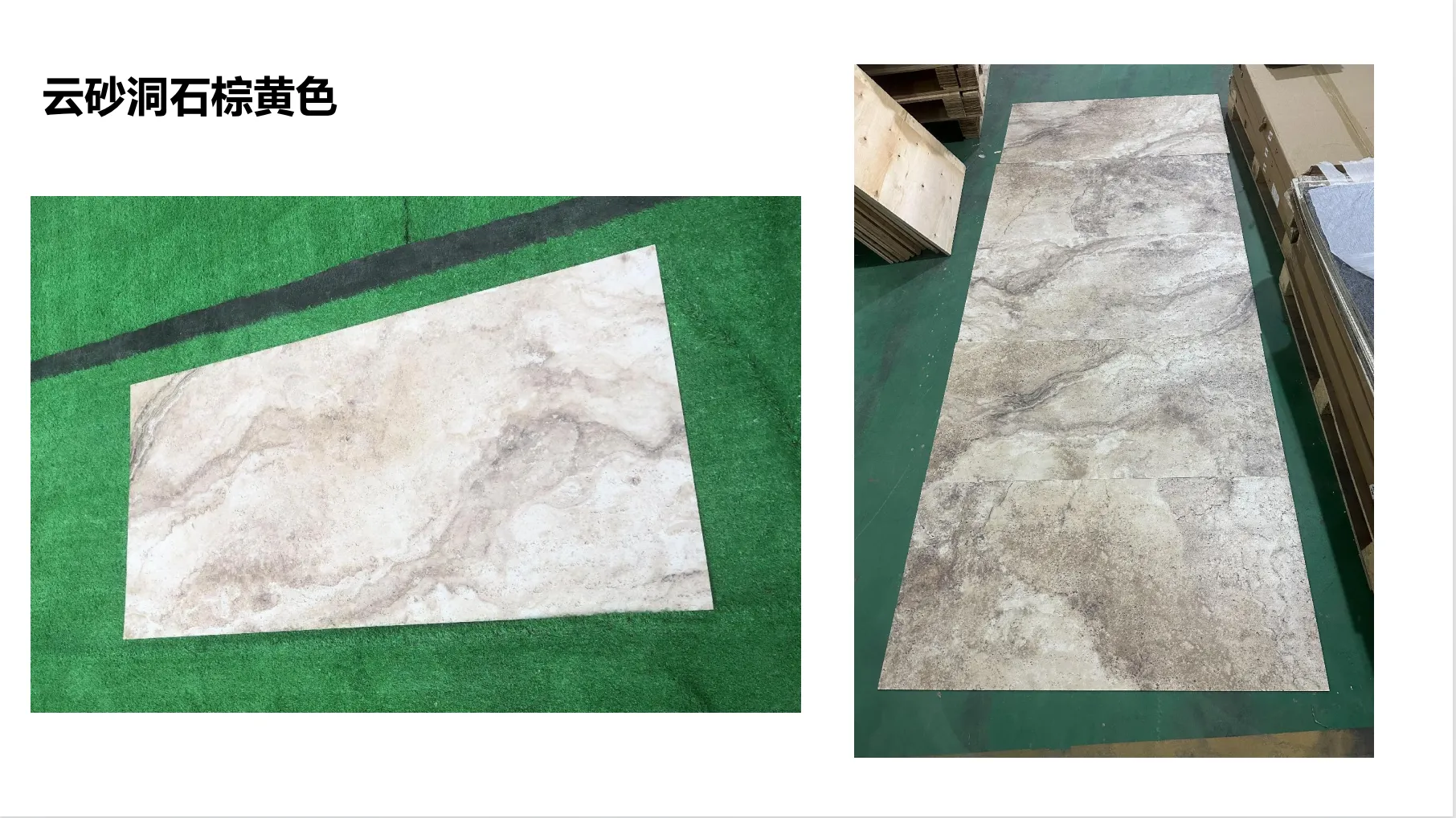
It was a gray winter morning when I first walked into Elena's studio apartment in downtown Portland. The space was charming—high ceilings, exposed brick, a tiny balcony with a view of the city—but there was something off. Despite the large windows, the room felt dim, almost heavy. Elena, an artist who paints with light and shadow, sighed as she gestured to the walls. "I've tried every trick," she said. "Lighter paint, more lamps… but it still feels like the light just dies here." That's when I noticed the samples spread across her coffee table: swatches of paint, fabric swatches, and a small slab of stone that seemed to catch the faint morning light differently. It was dolomitic travertine, its surface rippled with tiny pores and soft, earthy tones. As I picked it up, I realized something—this stone wasn't just reflecting light. It was holding it, breathing it back out like a quiet secret. That day, Elena's studio began a transformation, and I began to understand the magic of natural stone's ability to turn "dim" into "delight."
Before we dive into the glow, let's get to know the star of the show. Dolomitic travertine is a type of natural stone that forms in mineral-rich hot springs, where calcium carbonate and dolomite minerals crystallize over centuries. Unlike regular travertine, which is primarily calcium carbonate, dolomitic travertine has a higher dolomite content—think of it as travertine with a mineral sidekick. This gives it a unique texture: slightly harder than standard travertine, with a more muted, velvety surface that ranges from claybank (a warm, sandy beige) to dark grey (deep and moody, like a storm cloud just before rain). But what really sets it apart? Those tiny pores and veins we mentioned earlier. They're not flaws—they're light-catching superpowers.
I once visited a quarry in Tuscany where dolomitic travertine is mined, and the geologist there, Marco, explained it like this: "Imagine water flowing over rock for a million years, leaving behind layers of minerals like a slow-motion waterfall. Each layer traps tiny air bubbles, creating pockets. When light hits those pockets, it doesn't just bounce off—it dances. It scatters, softens, and comes out the other side with a glow that's impossible to replicate with man-made materials." That image stuck with me. Dolomitic travertine isn't just a surface; it's a conversation between light and time.
Let's talk about texture—because when it comes to light reflectivity, texture is everything. Polished marble, for example, is smooth and shiny, reflecting light in a harsh, mirror-like way that can feel cold in a room. Matte surfaces, like fair-faced concrete (a popular industrial-chic choice), absorb light, which can make spaces feel flat. Dolomitic travertine? It's the happy medium. Its surface is porous but not rough, with a slight irregularity that scatters light rather than bouncing it directly back. Think of it as a thousand tiny prisms, each catching a fraction of the light and turning it into a soft, diffused glow.
Take travertine (starry blue), a variant that's become a favorite among designers. Its surface is dotted with small, iridescent flecks that look like someone sprinkled stardust across the stone. In a room with natural light, those flecks catch the sun's rays and twinkle subtly—not like a disco ball, but like distant stars on a clear night. I installed this in a client's bathroom once, and she later told me, "I used to hate getting up early, but now I look forward to brushing my teeth. The light through the window hits the walls, and suddenly it feels like I'm getting ready under a sky full of stars." That's the power of texture and light working together.
But it's not just about the "sparkle." The color of dolomitic travertine matters too. Lighter shades, like dolomitic travertine (claybank), reflect more light overall, making them perfect for small rooms or spaces with limited windows. Darker variants, like dolomitic travertine (dark grey), absorb some light but reflect the warmer tones—think how a dark wooden table glows when a lamp is nearby. They add depth without making a room feel cave-like. It's all about balance, and dolomitic travertine has mastered the art.
Curious how dolomitic travertine holds up against other popular materials? Let's break it down. We'll look at light reflectivity (measured as a percentage, where 100% is a perfect mirror), texture, and the "vibe" each material brings to a space. I've included a few favorites from the MCM series to give you a sense of the options.
| Material | Light Reflectivity (%) | Texture | Best For |
|---|---|---|---|
| Dolomitic Travertine (Claybank) | 45-50% | Porous, velvety, with subtle veining | Small rooms, north-facing spaces, bedrooms |
| Fair-Faced Concrete | 20-25% | Smooth, matte, industrial | Lofts, modern kitchens, accent walls (paired with bright art) |
| Lunar Peak Silvery | 60-65% | Metallic sheen, crystalline surface | Statement walls, high-traffic areas, modern living rooms |
| Travertine (Starry Blue) | 40-45% | Porous with iridescent "star" flecks | Bathrooms, accent walls, creative spaces (studios, home offices) |
| Polished Marble | 70-75% | Smooth, mirror-like | Foyers, formal dining rooms (where drama is key) |
Notice the numbers? Dolomitic travertine (claybank) sits right in the sweet spot—high enough to brighten a room, but not so high that it feels harsh. Lunar peak silvery, with its metallic finish, reflects more light, making it great for spaces where you want to make a bold, modern statement (think a penthouse living room with floor-to-ceiling windows). Fair-faced concrete, on the other hand, is lower on the scale, which is why it's often paired with lots of artificial light or bright accents. But here's the thing: numbers don't tell the whole story. It's the quality of the light that matters. Dolomitic travertine's reflectivity feels natural, like sunlight filtering through leaves, whereas polished marble can feel cold, almost clinical.
Sarah, a freelance writer in Seattle, was struggling with her home office. "I work evenings a lot, and the room has no overhead light—just a desk lamp and a floor lamp," she told me. "The walls were painted a light gray, but the light felt flat, and I was getting headaches from straining my eyes." Her designer suggested dolomitic travertine (dark grey) for the accent wall behind her desk. "I was skeptical at first—dark stone in a dark room? But when they installed it, I couldn't believe the difference. The lamp light hits the stone, and instead of bouncing straight back, it softens. The whole wall glows, like a warm, quiet fire. I don't get headaches anymore, and I actually look forward to working late now."
"It's not just a wall anymore," Sarah said. "It's like having a piece of nature in my office—something that feels alive, that changes with the light. In the morning, when the sun comes through the window, the stone turns a soft gold. In the evening, with the lamp, it's deep and moody. It's never the same, and that keeps me inspired."
Over in Chicago, chef Marcus wanted his new restaurant, Luna , to feel "intimate but not cramped." The space was long and narrow, with limited natural light. His designer, Priya, recommended a mix of lunar peak silvery and travertine (starry blue). "Lunar peak silvery has this subtle metallic sheen, like moonlight on water," Priya explained. "We used it for the bar top, so when the pendant lights hit it, the light reflects upward, brightening the ceiling without harshness. Then we added travertine (starry blue) to the accent walls—those starry flecks catch the bar light and make the room feel like it's dotted with constellations. Marcus was worried about the space feeling small, but now guests say it feels 'cosy and magical.'"
I visited Luna recently, and Priya was right. The light wasn't just "on"—it was present . It wrapped around the tables, highlighted the textures of the food, and made even the back corner feel welcoming. As Marcus put it, "Food tastes better in good light. This stone doesn't just look good—it makes the whole experience better."
Ready to bring that subtle glow into your own space? Here are a few tips to keep in mind:
1. Play with light sources. Dolomitic travertine loves indirect light. Try placing floor lamps or table lamps near the stone—their soft, diffused light will make the stone's texture pop. Avoid harsh overhead spotlights, which can create harsh shadows and wash out the glow.
2. Pair with warm tones. The stone's earthy hues (claybank, dark grey) pair beautifully with warm woods, mustard yellows, or terracotta. These colors enhance the stone's natural warmth, making the glow feel even cozier.
3. Don't fear dark shades. Dark dolomitic travertine (like dark grey) can actually make a room feel larger by reflecting light in a soft, uniform way. Just balance it with lighter furniture or textiles to keep the space from feeling heavy.
4. Mix and match (but keep it cohesive). Want to experiment? Try pairing dolomitic travertine with lunar peak silvery for a modern, celestial vibe, or with fair-faced concrete for an industrial-meets-natural look. The key is to stick to a consistent color palette—warm beiges and silvers, or deep greys and blacks—to avoid clashing.
At the end of the day, dolomitic travertine isn't just a building material. It's a collaborator—a partner in creating spaces that feel alive, that change with the light, that welcome us in. Whether you're looking to brighten a dim room, add warmth to a modern space, or create a magical atmosphere, this stone has a secret to share: light isn't just something we switch on. It's something we can feel .
Elena's studio, by the way? The dolomitic travertine (claybank) now covers one wall, and she's never been happier. "I paint with light," she told me, "and now I have a wall that paints with me. In the morning, it's soft pink. At noon, gold. At sunset, amber. It's like having a new canvas every day." And isn't that what we all want from our spaces? To feel like they're growing with us, changing with us, and glowing—quietly, beautifully—right alongside us.
Recommend Products












