
Run your fingers over the surface of a dolomitic travertine slab, and you'll feel more than just stone. There's the cool whisper of mountain air, the patient hum of craftsmen who've spent decades perfecting their trade, and the quiet pride of a global network that turns raw earth into something extraordinary. For COLORIA GROUP, this isn't just about supplying materials—it's about nurturing relationships that span continents, cultures, and generations. Today, we're pulling back the curtain on how their commitment to partnership has made them a leader in premium dolomitic travertine and beyond.
Dolomitic travertine, with its unique blend of dolomite and calcium carbonate, isn't just mined—it's curated . COLORIA's journey starts in the heart of the Dolomite Mountains, where quarries have been family-run for over a century. "We don't just buy stone here," says Marco Rossi, COLORIA's European Sourcing Director, gesturing to a sunlit quarry in northern Italy. "We work side-by-side with the Conti family, who've been extracting dolomitic travertine since 1923. They know which veins hold the claybank hues that designers crave, and which yield the deep, moody dark grey that's become a signature for luxury hotels."
It's a partnership built on trust. Each spring, Marco joins the Contis for their annual "vein mapping" ritual, hiking up steep slopes to mark new extraction sites. "Last year, we found a pocket of dolomitic travertine (claybank) with these subtle golden flecks—like sunlight through autumn leaves," he recalls. "We could've rushed to extract it, but the Contis said, 'Wait until the rains pass; the stone will be stronger.' We listened, and that batch became the star of a high-end residential project in Paris. That's the difference between a supplier and a partner."
Once the stone is extracted, it travels to Turkey, where COLORIA partners with Atelier Gümüş, a workshop in Izmir where artisans transform rough blocks into finished slabs. Walk through their open-air studio, and you'll hear the rhythmic tap of chisels against stone, a sound that's echoed here since the Ottoman Empire. "Our master craftsman, Hasan, can look at a slab and tell you exactly how to cut it to bring out the best texture," says Zeynep Kaya, COLORIA's Middle East Product Manager. "He once spent three days hand-finishing a dolomitic travertine (dark grey) slab for a museum in Dubai—carving tiny, wave-like indentations that mimic desert sand dunes. Clients don't just pay for the stone; they pay for his story."
Hasan, now 68, learned the trade from his father, who taught him to "listen to the stone." "COLORIA doesn't treat us like a factory," he says through a translator, wiping his hands on a well-worn apron. "They ask for our ideas. Last year, they wanted a travertine with a more dramatic pattern—so we experimented with acid washing and came up with Travertine (starry blue), which has these deep, celestial veins. Now it's one of their top sellers. That's the magic of working together."
COLORIA's network isn't limited to stone. They've expanded their partnerships to include materials that complement dolomitic travertine, creating palettes that blend tradition and modernity. Take Lunar peak silvery, a metallic composite developed with a family-owned foundry in Germany. "We wanted something that would pair with dolomitic travertine's earthiness but add a futuristic edge," explains Lena Schmidt, COLORIA's Material Innovation Lead. "The Müller family, who run the foundry, spent two years testing alloys until they got that perfect silvery sheen—like moonlight on water. Now it's used alongside dolomitic travertine (claybank) in a tech campus in San Francisco, and the contrast is stunning."
Then there's Foamed aluminium alloy board (vintage silver), a lightweight, durable material sourced from a sustainable facility in South Korea. "Their process uses 80% recycled aluminum," Lena notes, "and they power their factory with solar panels. For clients who want eco-conscious luxury, that's a game-changer. We recently paired it with Travertine (starry blue) for a boutique hotel in Bali, and the result? A lobby that feels both grounded and otherworldly."
What sets COLORIA apart isn't just where they source—it's how they ensure quality. Each batch of dolomitic travertine undergoes 12 rounds of testing, from compressive strength to water absorption, overseen by a team of geologists and engineers. "We once rejected an entire shipment of dolomitic travertine (dark grey) because the water absorption was 0.5% over our standard," says Elena Torres, COLORIA's Quality Control Head. "The supplier was confused—'No one else checks this closely!' But for us, it's non-negotiable. A hotel lobby floor shouldn't stain after the first rainstorm."
This dedication has earned them loyalty from designers worldwide. "When I specify COLORIA's dolomitic travertine, I know what I'm getting," says Priya Patel, an award-winning architect in Mumbai. "Last year, I used their claybank variant for a spa in the Himalayas. The slabs arrived with these handwritten notes from the Turkish craftsmen—little stories about where the stone came from. My client cried when she read them. That's the emotional layer COLORIA adds. It's not just a material; it's a narrative."
| Variant | Origin | Texture & Color | Best For | Designer Favorite |
|---|---|---|---|---|
| Dolomitic Travertine (Dark Grey) | Dolomite Mountains, Italy | Dense, with charcoal veins and subtle metallic flecks; smooth to the touch with a matte finish. | Luxury hotel lobbies, high-end retail spaces, statement walls. | "It's like bringing the night sky indoors," says Parisian designer Claude Dubois. |
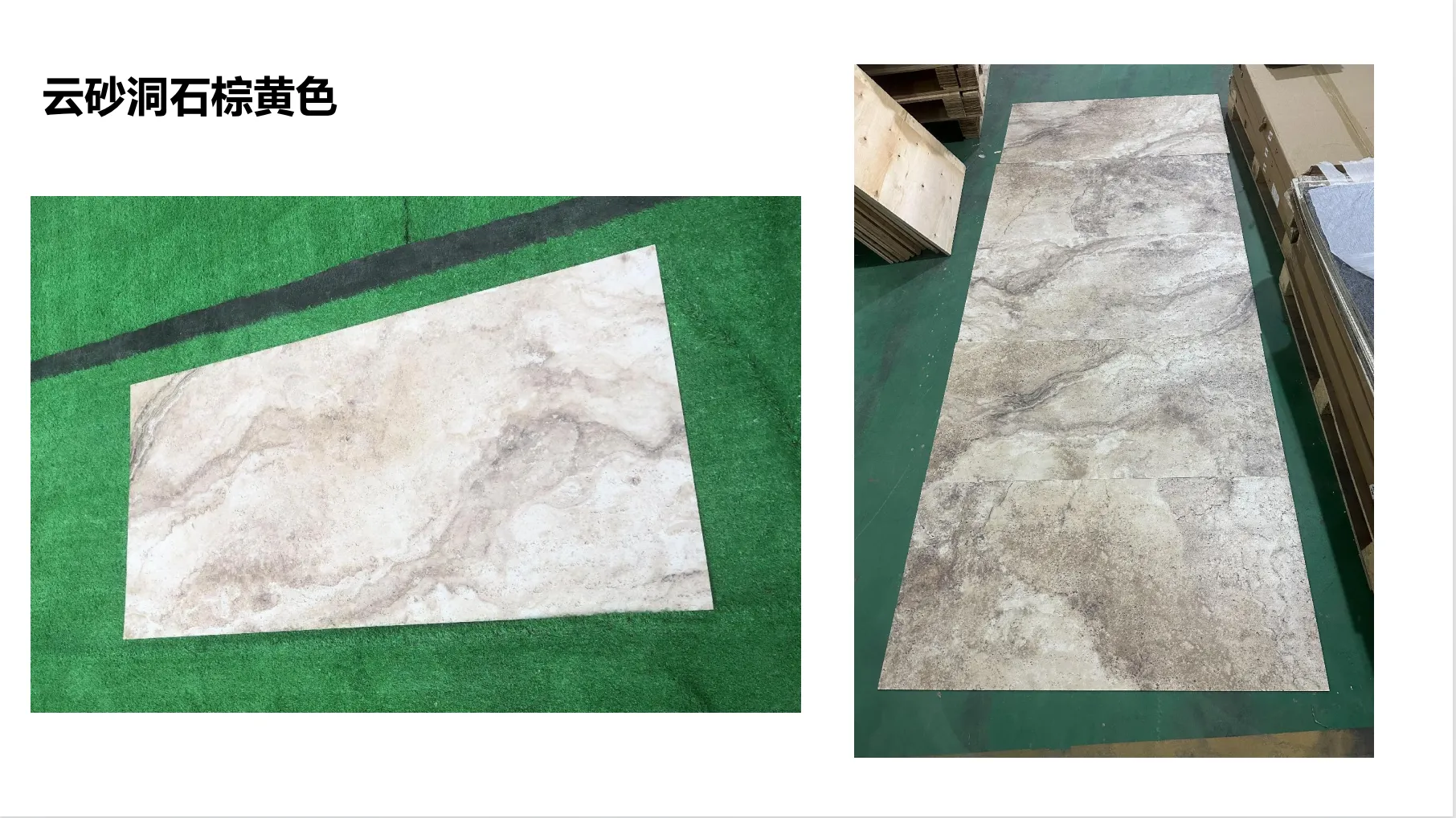
| Dolomitic Travertine (Claybank) | Anatolia, Turkey | Warm, earthy tones ranging from terracotta to soft sand; porous surface that ages beautifully, developing a rich patina. | Residential fireplaces, outdoor patios, wellness centers. | "It feels alive—like walking on ancient soil," notes New York designer Maya Chen. |
COLORIA's partnerships extend beyond people—they're committed to protecting the planet, too. In the Dolomites, they fund a reforestation project with the Conti family, planting 10 trees for every ton of stone extracted. "We're not just taking from the earth; we're giving back," Marco Rossi says. "Last year, we helped restore 50 acres of pine forest that was damaged by wildfires. The Contis' kids now lead school groups there to learn about sustainability. It's become part of their legacy."
In Turkey, Atelier Gümüş uses solar-powered machinery and recycles 95% of their water. "Hasan's son, Mehmet, studied environmental engineering and convinced us to switch to low-emission kilns," Zeynep Kaya explains. "Now, their workshop is carbon-neutral. Clients love that—they want materials that align with their values."
As COLORIA looks ahead, they're doubling down on what works: relationships. "We're exploring new partnerships in Morocco, where we've found a quarry with travertine that has these incredible rust-red hues," Lena Schmidt says. "And we're collaborating with a 3D printing studio in Japan to create custom textures for our dolomitic travertine—blending ancient stone with cutting-edge tech."
But at the end of the day, it's the human element that endures. "Last month, I visited the Conti family's quarry, and Signora Conti, now 82, handed me a slab of dolomitic travertine (claybank) she'd kept since 1978," Marco says, smiling. "She said, 'This is for your daughter, when she's old enough to appreciate it.' That's the heart of what we do. These aren't just transactions—they're friendships. And that's how we ensure every piece of stone that leaves our network carries a little piece of the world with it."
So the next time you see a wall clad in dolomitic travertine, or a countertop gleaming with Lunar peak silvery, remember: it's more than a material. It's a story—woven from mountains, hands, and hearts, all brought together by COLORIA GROUP's unwavering belief in the power of partnership.
Recommend Products












