
Architectural details are the quiet storytellers of a building. They're the textures that catch the afternoon light, the patterns that draw the eye, and the materials that make a space feel intimate, grand, or uniquely alive. In the world of design, choosing the right material isn't just about durability or cost—it's about selecting a "voice" that speaks to the building's purpose, history, and the people who will inhabit it. Today, two distinct yet equally compelling options stand out for their ability to transform ordinary details into extraordinary statements: the timeless elegance of Dolomitic Travertine and the cutting-edge innovation of the MCM 3D Printing Series. Let's dive into their customization possibilities, exploring how each material bends, shapes, and breathes life into architectural visions.
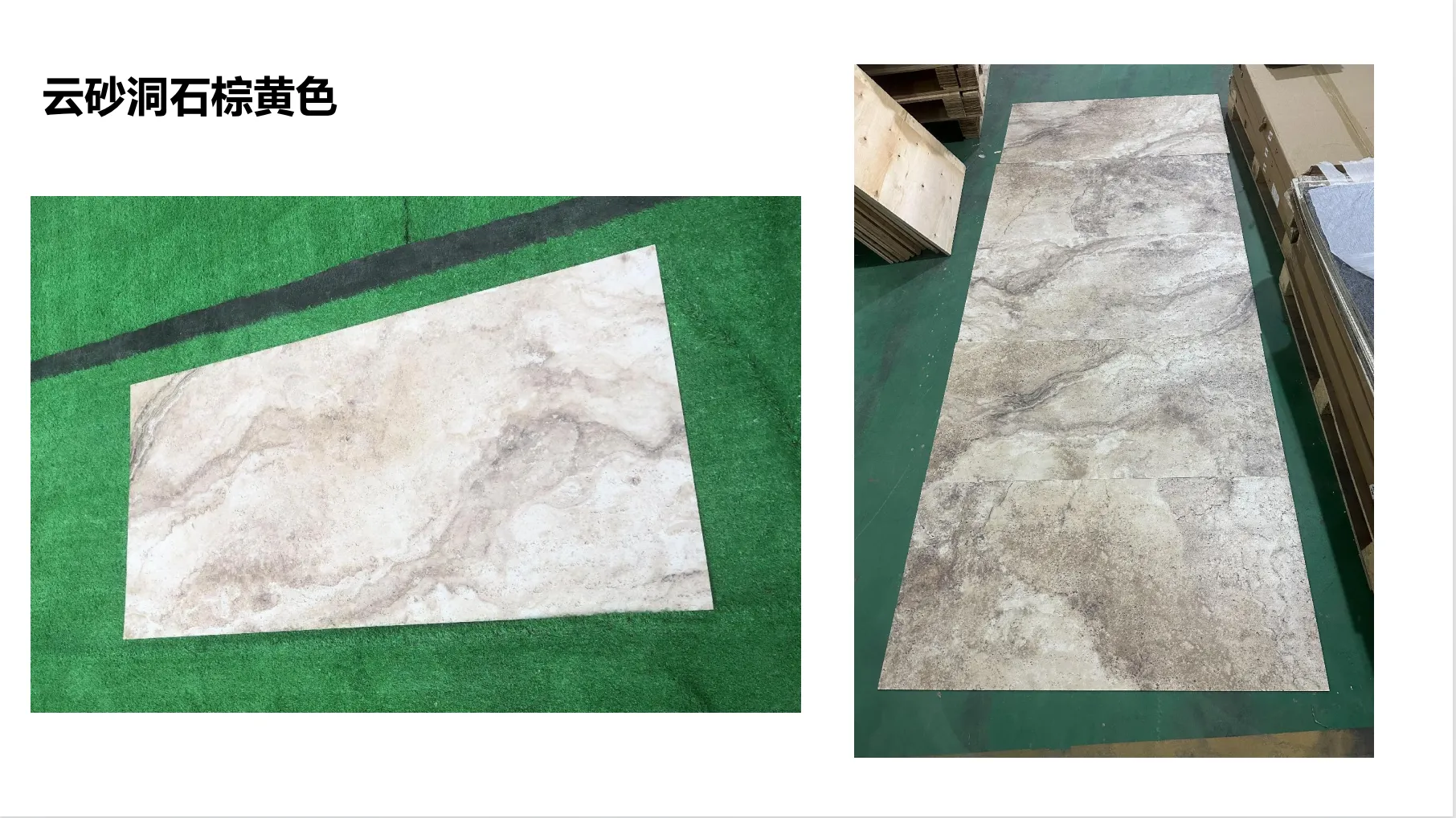
Dolomitic Travertine isn't just a stone—it's a piece of Earth's history. Formed over millennia in mineral-rich hot springs, this sedimentary rock gets its unique character from layers of calcium carbonate and dolomite, which crystallize into soft, porous textures and subtle veining. Unlike standard travertine, its higher dolomite content adds density, making it slightly harder and more resistant to wear, without losing the organic warmth that makes travertine a beloved classic. What truly sets it apart, though, is its color palette: Dolomitic Travertine (dark grey) offers deep, moody tones with charcoal undertones, while Dolomitic Travertine (claybank) leans into earthy, terracotta-inspired hues that evoke sunbaked landscapes. These natural variations aren't flaws—they're the stone's fingerprint, ensuring no two pieces are ever identical.
While Dolomitic Travertine is born from nature, its beauty is refined through human hands. Traditional craftsmanship unlocks a surprising range of customization options, turning raw stone into tailored design elements. Take cutting techniques, for example: precision sawing can create sleek, uniform slabs for modern facades, while hand-chiseling adds rugged, tactile edges that nod to ancient masonry. Finishes further expand the possibilities: a honed surface softens the stone's texture, ideal for flooring that feels warm underfoot; a polished finish brings out the veining in bold relief, perfect for a statement wall; and a brushed finish adds subtle grip, making it practical for outdoor pathways without sacrificing style.
Size matters too. Dolomitic Travertine adapts to both grand and intimate scales: massive slabs (up to 120x240cm) make a bold statement on commercial facades, while smaller, irregularly shaped tiles can mimic the look of a cobblestone path in a residential courtyard. Even the edges—beveled, bullnose, or rough-hewn—add layers of detail, turning a simple countertop or fireplace surround into a focal point. For designers craving consistency, quarrying from the same vein minimizes color variation; for those embracing chaos, mixing dark grey and claybank pieces creates a dynamic, patchwork effect that feels alive with movement.
Beyond its physical properties, Dolomitic Travertine connects with people on an emotional level. There's a warmth to its texture—porous yet solid—that feels grounding, as if the stone itself holds the weight of time. In a world of mass-produced materials, its natural imperfections tell a story: a fleck of iron oxide here, a swirl of mineral deposit there, each marking a moment in its formation. Installed in a home, it adds a sense of permanence, a quiet reassurance that this space will age gracefully, developing a patina that only grows more beautiful with use. In commercial settings, it bridges the gap between modernity and tradition, making sleek offices or boutique hotels feel approachable rather than cold. It's not just a material—it's a reminder of nature's artistry, and our role as stewards of that beauty.
Enter the MCM 3D Printing Series—a game-changer for architects and designers who refuse to be limited by nature's rules. MCM, short for Modified Composite Material, is a lightweight, high-performance material engineered to combine the best of durability and flexibility. At its core, it's a blend of mineral aggregates, polymers, and reinforcing fibers, but what makes it revolutionary is how it's shaped: 3D printing technology allows for precision manufacturing, turning digital designs into physical objects with minimal waste. Unlike traditional stone or concrete, MCM isn't bound by mold constraints or material weight—it can be printed into complex geometries, from sweeping curves to intricate latticework, that would be impossible (or prohibitively expensive) with natural materials.
And let's not overlook MCM Flexible Stone, a star feature of the 3D Printing Series. As the name suggests, this variant bends without breaking, making it ideal for curved surfaces like dome ceilings or rounded columns. Imagine wrapping a facade in a wave-like pattern that undulates with the wind—MCM Flexible Stone makes that possible, weighing a fraction of natural stone (just 4-6kg/m²) and adhering easily to most substrates, reducing installation time and structural load. It's a material that thinks like a designer, not a rock.
The MCM 3D Printing Series doesn't just offer customization—it redefines it. Let's start with shape: traditional materials require expensive molds or manual carving for complex forms, but 3D printing turns CAD files into reality with pinpoint accuracy. Want a facade panel that mimics the texture of Lunar Peak Silvery, with its crater-like indentations? The printer can replicate that texture down to the millimeter. Dreaming of a ceiling installation that looks like a forest of inverted stalactites? Layer-by-layer printing builds those organic shapes without the need for scaffolding or risky handwork. Even small details—like integrating Thread patterns or Linear Travertine (claybank) textures into a panel—are effortless, as the printer switches between designs mid-run, creating seamless, multi-texture elements.
Color customization is equally impressive. MCM's base material accepts pigments uniformly, so you're not limited to nature's palette. Want a rusty red accent wall that matches the sunset? A custom blend delivers consistent color across hundreds of panels. Prefer the look of Travertine (Starry Blue) but need it in a lightweight, weather-resistant form? The 3D printer can mimic the stone's veining and add metallic flecks for that "starry" effect. And because it's digital, iterations are fast: tweak a color swatch or adjust a curve in the design file, and the next print is ready in hours, not weeks. For large-scale projects, this means faster prototyping, fewer mistakes, and the freedom to refine a design until it's perfect.
Sustainability is another hidden superpower. Traditional stone quarrying generates tons of waste; 3D printing uses only the material needed for the design, cutting waste by up to 70%. MCM is also recyclable, and its lightweight nature reduces transportation emissions—a win for both the planet and the project budget. It's customization with a conscience.
| Customization Aspect | Dolomitic Travertine | MCM 3D Printing Series |
|---|---|---|
| Material Origin | Natural sedimentary rock; variations from mineral deposits and quarry location | Engineered composite; consistent base with customizable additives (pigments, fibers) |
| Texture Range | Organic (veining, pits, fossil inclusions); enhanced by finishes (honed, polished, brushed) | Digital precision (replicates natural textures like Lunar Peak or custom patterns like Thread); uniform or variable per design |
| Color Options | Natural palette: Dolomitic Travertine (dark grey), Dolomitic Travertine (claybank), plus subtle variations from veining | Unlimited custom colors (including metallic, pastels, or matches to Rona Yellow, Rusty Red, etc.); consistent across batches |
| Shape Flexibility | Limited by stone strength; best for flat/slightly curved surfaces; irregular shapes via hand-carving | Unlimited: 3D-printed curves, lattices, undercuts, and complex geometries (e.g., Wave Panel, SemiCircle Board) |
| Installation Ease | Heavy (20-30kg/m²); requires skilled masons and structural support | Lightweight (4-6kg/m²); easy to cut, drill, and adhere; MCM Flexible Stone bends to curved surfaces |
| Durability | High (resistant to heat, scratches); porous, requiring sealing for moisture resistance | Exceptional (waterproof, fire-retardant, impact-resistant); no sealing needed |
| Ideal For | Historic renovations, rustic interiors, outdoor spaces seeking natural warmth | Modern facades, complex geometries, lightweight structures, and color-matched branding elements |
When the team at Preservation Architects set out to restore a 1920s library in Chicago, they faced a challenge: update the building for modern use while preserving its historic charm. The original facade, once clad in limestone, had deteriorated beyond repair, and the client wanted a material that felt "time-worn" yet durable. Dolomitic Travertine (claybank) emerged as the solution. Its warm, terracotta hues echoed the library's original brick accents, while its natural porosity mimicked the weathered look of the old limestone. The design team opted for hand-chiseled edges on the facade panels, adding texture that catches the light differently throughout the day, and paired them with smaller, honed claybank tiles for the entryway floor, creating a seamless transition from exterior to interior.
Customization didn't stop there. To honor the library's literary heritage, the architects commissioned a local artist to carve quotes into select travertine panels, their letters deep and tactile, inviting visitors to run their fingers over the words. The result? A building that feels both ancient and alive, its claybank walls telling stories of the past while supporting the books of the future.
A Silicon Valley tech firm wanted its new headquarters to reflect its mission: "Innovation that feels human." The design brief called for a facade that was bold, dynamic, and unlike anything else in the area. The MCM 3D Printing Series delivered with a custom Wave Panel design, printed in a gradient of Lunar Peak Golden to Lunar Peak Black. Each panel undulates in a unique pattern, creating a facade that shimmers like a digital sunset as the light shifts. Inside, MCM Flexible Stone wraps the atrium walls, printed with a Thread texture that mimics the flow of data through a network, turning a blank canvas into a visual metaphor for connectivity.
The real showstopper? A 3D-printed staircase with risers shaped like overlapping scales, each one printed in a slightly different shade of Rusty Red. Because MCM is lightweight, the staircase required minimal structural support, freeing up space for a glass-bottomed landing that overlooks the lobby. It's a space that doesn't just house innovation—it embodies it, proving that technology and humanity can coexist beautifully.
As design evolves, the line between traditional and technological materials is blurring—and that's a good thing. Imagine a hotel lobby where Dolomitic Travertine (dark grey) floors flow into MCM 3D-printed reception desks, their surfaces printed to mimic the stone's veining but shaped into a futuristic, curved form. Or a residential exterior where claybank travertine accents frame MCM panels printed with the texture of aged wood, combining nature's warmth with modern durability. These hybrid designs leverage the strengths of each material: travertine's emotional resonance and MCM's design freedom.
Digital tools will only deepen this collaboration. 3D scanning can replicate the unique veining of a prized dolomitic travertine slab, then MCM 3D printing can scale that pattern across a facade, ensuring consistency while preserving the stone's organic feel. AI-driven color matching will let designers sample a shade from a historic building's claybank walls and reproduce it exactly in MCM, making restoration projects faster and more accurate. And as sustainability becomes non-negotiable, both materials will adapt: travertine quarries will adopt more eco-friendly mining practices, while MCM will incorporate recycled aggregates, closing the loop on waste.
Dolomitic Travertine and the MCM 3D Printing Series aren't rivals—they're partners in design, each offering a different path to creating memorable architectural details. Dolomitic Travertine speaks to those who crave connection: to nature, to history, to the imperfect beauty of the world as it is. Its dark grey and claybank hues, its handcrafted finishes, and its centuries of durability make it a material with soul.
The MCM 3D Printing Series, on the other hand, speaks to the dreamers: those who see a building not as a structure, but as a canvas. It's for designers who want to push boundaries, to create forms that were once impossible, and to do it sustainably. With its flexible stone, its limitless colors, and its digital precision, it's a material that thinks ahead.
At the end of the day, the best choice depends on the story you want your space to tell. Will it be a tale of timelessness, rooted in the earth? Or a story of innovation, reaching for the future? Whichever you choose, remember: great architecture isn't just built—it's felt. And with materials this versatile, the possibilities are endless.
Recommend Products












