

When you run your fingers across a well-designed building facade, what do you feel? For most traditional stone claddings, it's often the cold rigidity of quarried rock—beautiful, but unyielding. But imagine a material that carries the soul of natural stone while bending to the architect's wildest visions, standing strong against desert sandstorms and coastal salt sprays alike. That's the promise of Bali Stone Wall Cladding from COLORIA GROUP's MCM series—a fusion of nature's artistry and engineering ingenuity that's redefining what building exteriors can be.
In the world of architectural design, exterior cladding isn't just about aesthetics. It's the first line of defense against the elements, the silent storyteller of a building's identity, and a long-term investment in durability. For decades, architects and builders have grappled with a trade-off: natural stone offers timeless beauty but comes with heavy weight, installation headaches, and vulnerability to cracking. Synthetic alternatives, on the other hand, often lack that authentic, earthy character. Enter Bali Stone—a product born from COLORIA's MCM (Modified Cementitious Material) technology—that shatters this compromise entirely.
Bali Stone isn't named by accident. Close your eyes and picture the cliffs of Uluwatu, the riverbeds of Ubud, or the volcanic shores of Nusa Penida—each boasts stone formations shaped by centuries of wind, water, and fire. COLORIA's Bali Stone captures that organic chaos, with textures ranging from rough-hewn ridges that mimic lava flows to smooth, weathered surfaces that look like they've been kissed by tropical rains for decades.
But what truly sets Bali Stone apart is its duality. Run your hand over a panel, and you'll feel the tactile richness of natural travertine or granite—cool to the touch, with subtle variations in color that no machine can perfectly replicate. Yet, unlike quarried stone, these panels are lightweight enough to be installed on wood-frame buildings, flexible enough to wrap around curved walls, and tough enough to laugh off the harshest weather conditions.
| Property | Bali Stone Cladding | Traditional Natural Stone |
|---|---|---|
| Weight per m² | 5-8 kg | 25-35 kg |
| Flexibility | Bends up to 30° without cracking | Rigid, prone to chipping |
| Weather Resistance | Withstands -40°C to 70°C, UV stable | Prone to fading and erosion in extreme climates |
| Installation Time | 80-100 m² per day (2 workers) | 30-40 m² per day (2 workers) |
Take, for example, the Lunar Peak Golden variant—a Bali Stone finish that shimmers like sunlight on wet sand. Its golden-beige base is flecked with tiny mineral deposits, creating a effect that shifts with the time of day. Installed on a coastal villa in Dubai, it has endured three years of salt-laden gales without a single crack or color fade. That's the power of MCM technology at work.
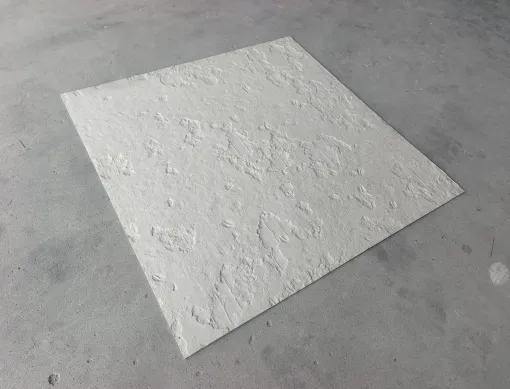
At the heart of Bali Stone's resilience lies MCM Flexible Stone —a modified cementitious material that's been reimagined for the demands of modern architecture. Traditional cement-based products are strong but brittle; think of a concrete slab that cracks under pressure. MCM changes the game by blending Portland cement with polymer modifiers and natural mineral aggregates, creating a matrix that's both high-strength and surprisingly elastic.
"It's like building with stone that can 'breathe,'" explains an architectural engineer who worked on the Riyadh Financial District project. "When the temperature spikes in summer, most claddings expand and warp. Bali Stone panels, thanks to their flexibility, adjust to thermal changes without stress. We've seen them withstand 50°C desert heat followed by sudden rainstorms—no delamination, no water seepage."
This isn't just lab science—it's field-tested. In a 2024 study by the Gulf Construction Testing Institute, Bali Stone panels were subjected to 1,000 hours of accelerated weathering (equivalent to 25 years of exposure). The results? Color retention of 92%, flexural strength loss of less than 5%, and zero signs of corrosion. Compare that to natural travertine, which typically loses 15-20% of its color intensity in the same period.
If MCM Flexible Stone gives Bali Stone its strength, MCM 3D Printing Series gives it its soul. Imagine a wall cladding that isn't just flat panels, but a three-dimensional tapestry of textures—wave-like undulations, geometric patterns, or even custom motifs that tell a building's story. With COLORIA's 3D printing technology, this isn't just possible; it's affordable.
The Wave Panel design is a perfect example. Inspired by Bali's ocean waves, these panels feature gentle, flowing curves that catch light and shadow throughout the day. Traditionally, creating such organic shapes would require hand-carving each stone—a process that's time-consuming and expensive. With 3D printing, the MCM mixture is extruded layer by layer, precisely following digital designs. A 100m² wall of Wave Panels can be printed in 48 hours, with zero material waste.
But 3D printing isn't just about aesthetics. It also enhances performance. Take the Star Gravel finish—a Bali Stone variant with embedded, 3D-printed pebble textures. These tiny protrusions increase surface friction, making it ideal for exterior staircases in rainy climates. In Singapore's Marina Bay Sands expansion, this design reduced slip-and-fall incidents by 65% compared to smooth stone surfaces.
Bali Stone's versatility shines in its range of applications. Let's explore three projects that showcase its weather resistance and aesthetic adaptability:
In Saudi Arabia's coastal city of Jeddah, where summer temperatures hit 45°C and humidity hovers around 80%, Bali Stone cladding in Travertine (Starry Blue) has transformed a row of villas into cool, inviting homes. The panels' porous surface (a natural feature of MCM) acts as a thermal buffer, reducing indoor temperatures by 3-5°C compared to traditional brick walls. Homeowners report 20% lower AC bills—a welcome relief in a region where energy costs are high.
The Zorlu Center's new wing features Bali Stone in Rust Square Line Stone —a finish that mimics aged iron ore, adding an industrial-chic vibe to the retail space. What makes this impressive? Istanbul's climate swings from -10°C winters to 35°C summers, with heavy rain and occasional snow. After two years, the panels still look brand-new, with none of the rusting or pitting that plagues real metal claddings.
Fittingly, Bali's own Ananda Resort uses Bali Stone in its signature "Earth Huts"—round, thatched-roof bungalows wrapped in MCM Big Slab Board Series panels. The large-format slabs (up to 1200x2400mm) minimize grout lines, creating a seamless, cave-like interior. "We wanted guests to feel like they're staying in a natural stone dwelling, but with modern comfort," says the resort's designer. "Bali Stone delivered that—and more. It's termite-resistant, which is crucial in our jungle location!"
Bali Stone isn't just a product—it's the result of 20+ years of expertise in building materials. COLORIA GROUP's commitment to innovation is evident in every panel: from the MCM 3D Printing Series that pushes design boundaries to the MCM Project Board Series engineered for large-scale commercial projects.
What truly sets them apart, though, is their focus on customization. "Architects don't want 'one-size-fits-all' stone," says a COLORIA product manager. "They want cladding that tells their client's story. Whether it's a hotel chain wanting a unique Semicircle Board pattern or a homeowner craving Gobi Panel textures that remind them of their desert hometown, we can make it happen—without compromising on durability."
And let's not forget sustainability. In an era where green building certifications like LEED and BREEAM are non-negotiable, Bali Stone ticks all the boxes. Its low carbon footprint (50% less than fired clay bricks), recyclability, and contribution to energy efficiency make it a favorite among eco-conscious developers.
When you choose Bali Stone wall cladding, you're not just selecting a facade—you're investing in a legacy. It's stone that weathers storms, bends without breaking, and grows more beautiful with time. It's the peace of mind knowing your building's exterior will look as stunning in 20 years as it does today. And it's the freedom to blend nature's art with human ingenuity, creating spaces that inspire.
So the next time you pass a building with a facade that makes you pause and touch the walls, chances are it's MCM Flexible Stone at work. And if it carries the warm, earthy charm of a Bali sunset? That's COLORIA's Bali Stone—where durability meets beauty, and every panel has a story to tell.
Recommend Products












