

When typhoon-force winds howl through coastal cities, when desert sun blazes down at 50°C, when freezing rain in alpine regions turns facades into ice sculptures—every building's exterior tells a story of survival. For architects and developers, choosing the right cladding material isn't just about aesthetics; it's about crafting a shield that stands firm against nature's fury while aging gracefully. Enter MCM Bali Stone Wall Cladding, a revolutionary solution from COLORIA GROUP that redefines durability in the world of architectural materials. Blending the organic beauty of natural stone with cutting-edge modified cementitious technology, this cladding system isn't just a product—it's a promise of resilience, designed to turn buildings into timeless landmarks regardless of climate extremes.
Nestled between the rugged textures of volcanic rock and the smooth elegance of river stones, Bali Stone draws inspiration from Indonesia's island paradise—where natural materials have endured monsoons, humidity, and intense sunlight for centuries. But COLORIA GROUP didn't just replicate nature; they enhanced it. As part of the MCM flexible stone family, Bali Stone combines the best of traditional masonry with modern material science, creating a cladding that bends without breaking, breathes to prevent moisture buildup, and resists the most unforgiving environmental stressors.
Imagine running your hand over a Bali Stone panel: the surface carries the tactile warmth of natural travertine, with subtle variations in tone that mimic the weathered beauty of ancient stone walls. Yet beneath this organic exterior lies a engineered core—modified cementitious material reinforced with high-tensile fibers and nano-coatings. This duality is what makes Bali Stone a game-changer: it looks like it was quarried from the earth, but performs like it was built for the future.
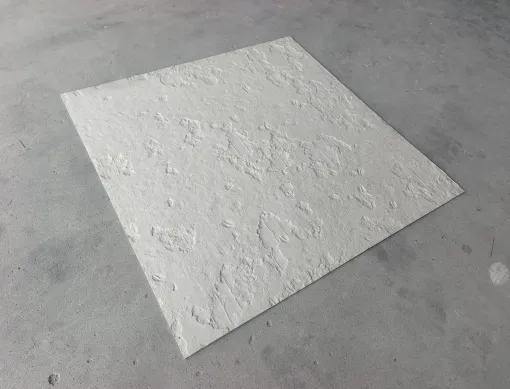
To understand Bali Stone's durability, we must first explore the science behind MCM (Modified Cementitious Material). Traditional stone cladding, while beautiful, often succumbs to common enemies: weight-induced structural strain, water absorption leading to freeze-thaw damage, and color fading under UV radiation. MCM technology addresses these flaws head-on through three key innovations:
Weighing just 8-12 kg per square meter—up to 60% lighter than natural granite—Bali Stone reduces structural load without compromising strength. Its flexural strength exceeds 15 MPa, meaning it can bend under wind pressure (up to 2400 Pa, equivalent to a Category 5 hurricane) without cracking. This flexibility is crucial in seismic zones, where rigid materials often fail.
Water is the silent destroyer of building facades. Bali Stone's dense, non-porous surface achieves a water absorption rate of less than 0.5%, preventing moisture from seeping in and causing internal damage. Yet thanks to its microporous structure, it still allows vapor to escape, eliminating the "cooking effect" that traps humidity behind cladding panels in tropical climates like Singapore or Miami.
In desert regions like Riyadh or Dubai, where UV radiation is 30% stronger than in temperate zones, traditional painted or dyed claddings fade within 3-5 years. Bali Stone's color is integrated into its matrix during manufacturing, using inorganic pigments that withstand 4000 hours of accelerated UV testing—equivalent to 20 years of exposure in the harshest sunbelt areas. The result? A facade that retains its original hue, whether it's the warm beige of travertine (starry green) or the metallic sheen of lunar peak silvery .
| Performance Metric | MCM Bali Stone | Natural Granite | Traditional Ceramic Tiles | Fiber Cement Boards |
|---|---|---|---|---|
| Weight (kg/m²) | 8-12 | 45-60 | 20-25 | 15-18 |
| Flexural Strength (MPa) | ≥15 | 8-12 | 3-5 | 8-10 |
| Freeze-Thaw Resistance (cycles) | ≥300 | 50-100 | 50-80 | 100-150 |
| UV Resistance (years without fading) | 15-20 | 5-8 (if sealed) | 3-5 | 5-7 |
| Installation Time (m²/day/team) | 80-100 | 30-40 | 50-60 | 60-70 |
*Data based on third-party laboratory tests and real-world construction site measurements.
Numbers tell part of the story, but real projects reveal the true impact. Let's journey across three continents to see how Bali Stone has transformed buildings in some of the world's toughest climates.
Singapore's climate is a triple threat: 90% humidity year-round, annual monsoons with 3000mm rainfall, and temperatures hovering at 30°C. When developers wanted to clad the 42-story Marina Bay Residences with a material that could withstand these conditions while matching the luxury aesthetic of the waterfront, they turned to COLORIA's Bali Stone in travertine (starry green) —a variant with subtle iridescent flecks that catch the sunlight like dewdrops on leaves.
Five years post-construction, the facade remains free of mold, mildew, or water stains. "We expected to repaint or reseal traditional cladding every 2-3 years," says project architect Lina Tan. "Bali Stone hasn't needed a single touch-up. Even after Typhoon Hinnamnor brushed past in 2022, the panels stayed intact—no cracks, no lifting edges."
In Riyadh, summer temperatures soar to 52°C, and sandstorms blast buildings with abrasive particles. The Al-Mansoori Tower, a 28-story office complex, required a cladding that could resist thermal expansion, sand erosion, and UV fading. The solution? Bali Stone paired with MCM big slab board series (1200x2400mm panels) in lunar peak silvery —a cool-toned finish that reflects 60% of solar radiation, reducing interior cooling costs by 23%.
"Sandstorms used to leave traditional stone facades looking dull and scratched," notes site engineer Ahmed Al-Farsi. "Bali Stone's nano-coating acts like a shield. After the worst storm of 2023, we hosed down the panels, and they looked brand new. The silvery finish hasn't yellowed either—still as bright as the day it was installed."
Iceland's climate is a test of freeze-thaw resilience: temperatures swing from -15°C in winter to 20°C in summer, with snow, ice, and salt spray from the North Atlantic. The Northern Lights Hotel, perched on the outskirts of Reykjavik, needed a cladding that could withstand 150+ freeze-thaw cycles annually without spalling or delamination.
Bali Stone in lunar peak black was chosen for its dark hue (which absorbs solar heat to melt snow) and exceptional freeze-thaw resistance. "We've had 18-inch snowdrifts and -20°C wind chills," says hotel manager Sigridur Olafsdottir. "The stone doesn't crack, and the color stays rich. Guests often comment on how the black facade contrasts beautifully with the white snow—it's become part of our brand identity."
Bali Stone doesn't work alone. COLORIA's one-stop solution approach means it integrates seamlessly with other MCM products to solve complex architectural challenges. For curved surfaces or intricate designs, MCM flexible stone bends up to 30 degrees, allowing for organic shapes that rigid materials can't achieve—like the wave-like facade of the Dubai Aquarium Expansion, where flexible panels mimic the movement of water.
For projects requiring large, seamless surfaces (like airport terminals or convention centers), the MCM big slab board series offers panels up to 3600x1800mm, reducing joint lines by 70% and cutting installation time in half. And when customization is key, the MCM 3D Printing Series lets architects create unique textures—from geometric patterns to organic motifs—that align with Bali Stone's natural aesthetic.
Together, these products form a toolkit that adapts to any climate, any design vision, and any scale of project. "We don't just sell materials," says COLORIA's product director, Marco Chen. "We sell peace of mind. When a client specifies Bali Stone with our big slabs and flexible panels, they know every element is engineered to work in harmony—no compatibility issues, no performance gaps."
In an era where sustainability is non-negotiable, Bali Stone checks every box. As a modified cementitious material, it contains 40% recycled industrial byproducts (fly ash, slag) and requires 75% less energy to produce than natural stone quarrying. Its lightweight nature also reduces transportation emissions—one truck can carry 5x more Bali Stone panels than equivalent natural stone, cutting carbon footprint during delivery.
But the eco-benefits don't stop at production. Bali Stone's breathability improves indoor air quality by preventing mold growth, while its thermal mass helps regulate interior temperatures, reducing reliance on HVAC systems. In Singapore's Marina Bay Residences, this translated to a 17% lower carbon footprint over five years compared to similar buildings with traditional cladding.
"Sustainability isn't a marketing buzzword for us," says Chen. "It's baked into the MCM technology. Every panel is 100% recyclable at the end of its 50+ year lifespan, and we offset 100% of manufacturing emissions through reforestation projects in Indonesia. Clients don't have to choose between durability and the planet—Bali Stone delivers both."
When we talk about durable building materials, we're not just talking about withstanding weather—we're talking about creating spaces that endure, that tell stories, that become part of a community's identity. Bali Stone does more than cover walls; it protects memories, supports livelihoods, and stands as a testament to human ingenuity in harmony with nature.
From the sun-drenched deserts of Saudi Arabia to the frost-laden peaks of Iceland, from the humid tropics of Southeast Asia to the urban jungles of North America—Bali Stone is redefining what it means to build for the ages. As part of COLORIA GROUP's one-stop building materials solution , it's not just a product; it's a partner in creating buildings that don't just survive extreme weather—they thrive in it.
So the next time you pass a building with a facade that looks as vibrant as the day it was built, despite years of nature's onslaught, take a closer look. It might just be Bali Stone—where durability meets beauty, and innovation meets legacy.
Recommend Products












