
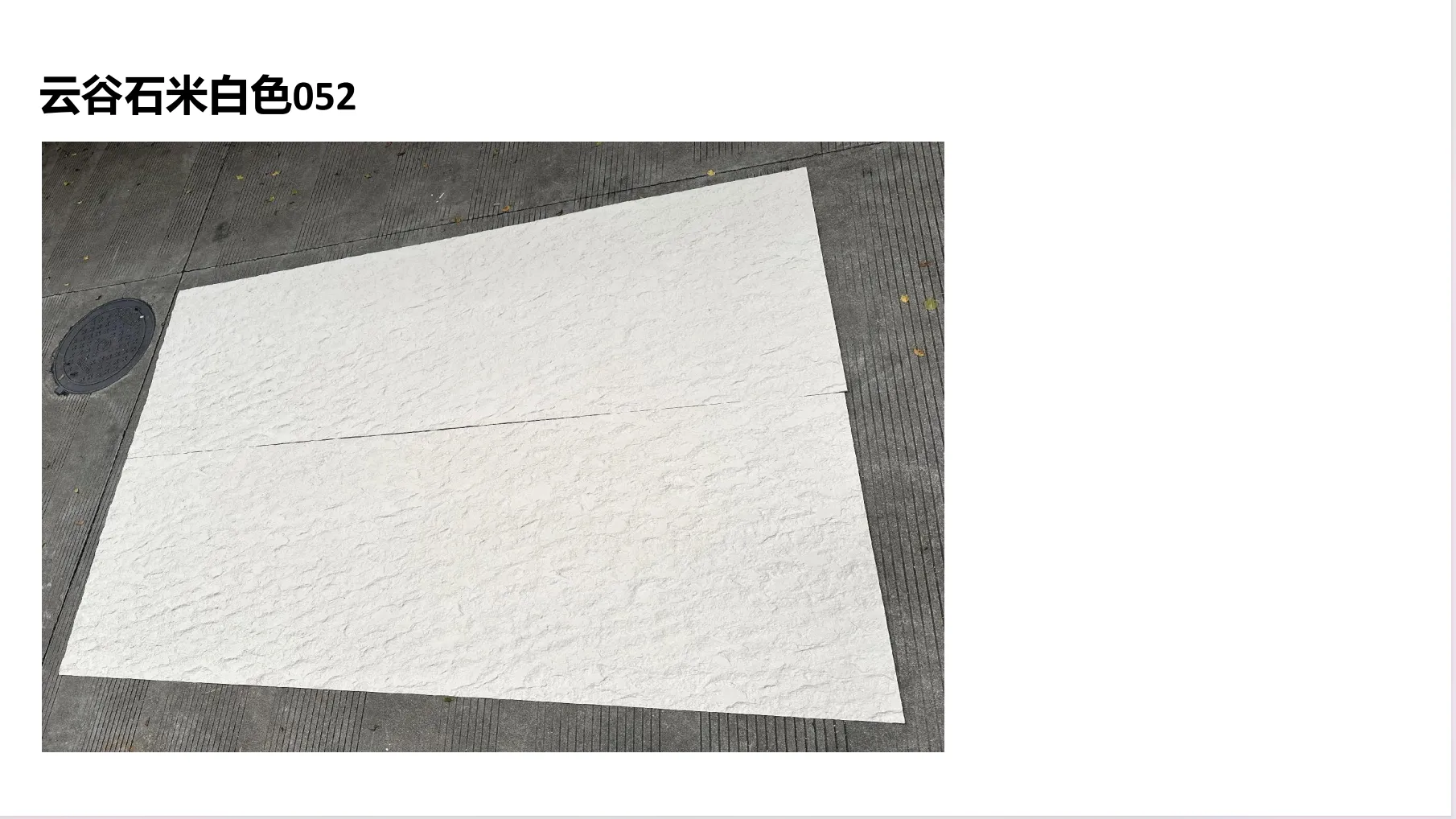
In the quiet hum of a construction site, where the clang of metal and the rumble of machinery usually dominate, there's a new sound emerging—the soft scrape of a trowel against a material that feels like stone but carries the lightness of a promise. It's the sound of cloud stone , a material that's not just reshaping buildings, but redefining what it means to build responsibly. As architects and builders increasingly turn to sustainable solutions, eco-certified cloud stone has stepped into the spotlight, blending the timeless beauty of natural stone with a commitment to the planet. Let's dive into how this innovative material is meeting—and exceeding—modern green building standards, and why it might just be the key to a more sustainable future in architecture.
First things first: What makes cloud stone different from the marble countertops in your kitchen or the limestone facades of old cathedrals? At its core, cloud stone is a type of modified composite material (MCM), a category that includes products like mcm flexible stone . Unlike traditional stone, which is quarried, cut, and transported in heavy slabs, cloud stone is engineered to mimic the look and feel of natural stone while being lighter, more durable, and far gentler on the environment. Think of it as nature's beauty, reimagined through sustainable technology.
So, how is it made? Cloud stone starts with a base of recycled minerals and polymers, mixed with natural pigments to replicate the veining, texture, and color variations of stones like travertine or slate. The result is a panel that's thin (often less than 10mm thick), lightweight (around 3-5 kg per square meter), and surprisingly strong. But what truly sets it apart is its flexibility—a trait shared with flexible stone cladding panels —which allows it to bend slightly without cracking, making it ideal for curved surfaces or buildings in earthquake-prone areas. It's a material that bends, but doesn't break—much like the balance we're trying to strike between progress and preservation.
When we talk about "eco-certified" cloud stone, we're not just throwing around buzzwords. These certifications are rigorous, third-party stamps of approval that verify a material's environmental impact—from production to disposal. For cloud stone, the most common certifications include LEED (Leadership in Energy and Environmental Design), GREENGUARD, and the EU's CE marking for construction products. Let's break down what these mean for builders, homeowners, and the planet.
LEED certification, administered by the U.S. Green Building Council, is perhaps the most well-known. To earn LEED points, cloud stone must meet criteria like low volatile organic compound (VOC) emissions, high recycled content, and energy-efficient production. GREENGUARD, on the other hand, focuses on indoor air quality, ensuring that the material doesn't release harmful chemicals into the air we breathe—critical for spaces like schools, hospitals, and homes where occupants spend most of their time. For architects, these certifications aren't just checkboxes; they're a way to prove that their designs prioritize people and the planet equally.
But here's the human side: Imagine walking into a building clad in eco-certified cloud stone. You might not notice the LEED plaque in the lobby, but you'll feel it—in the fresh air, in the natural light bouncing off the stone-like surfaces, in the quiet confidence that the space around you isn't harming the world outside. That's the power of certification: it turns abstract sustainability goals into tangible, everyday experiences.
So, what makes eco-certified cloud stone a better choice than traditional building materials? Let's start with the obvious: its environmental footprint. Quarrying natural stone is a resource-intensive process, often involving deforestation, habitat destruction, and massive carbon emissions from transportation. Cloud stone, by contrast, uses recycled materials (up to 60% in some formulations) and requires less energy to produce. Its lightweight nature also reduces transportation costs and emissions—trucks can carry more panels per trip, cutting down on the number of journeys needed.
Then there's durability. Traditional stone is prone to cracking, staining, and weathering, especially in harsh climates. Cloud stone, with its composite structure, resists moisture, UV rays, and temperature fluctuations. It doesn't require sealing or frequent maintenance, which means less water, chemicals, and labor over the lifetime of a building. For a homeowner in a rainy coastal area or a business owner in a desert climate, that translates to peace of mind—and lower long-term costs.
Flexibility is another game-changer. Unlike rigid natural stone slabs, flexible stone cladding panels (including cloud stone) can be installed quickly and with minimal waste. They're often applied using a dry adhesive system, eliminating the need for messy mortar or grout. This not only speeds up construction but also reduces the amount of material that ends up in landfills. For builders, time is money; for the planet, less waste is everything.
To truly understand the impact of cloud stone, let's compare it to two common traditional materials: natural marble and standard concrete. The table below highlights key differences in environmental impact, durability, and practicality—because when it comes to building green, numbers matter.
| Material | Environmental Impact | Durability | Flexibility | Installation & Maintenance |
|---|---|---|---|---|
| Natural Marble | High: Quarrying destroys habitats; high transport emissions due to weight. | Medium: Prone to staining, etching, and cracking in cold climates. | Low: Rigid, cannot bend without breaking. | Complex: Requires heavy machinery for installation; needs annual sealing. |
| Standard Concrete | Very High: Produces CO2 emissions during cement production; non-recyclable. | High: Strong but prone to cracking over time; absorbs moisture. | Low: Brittle, limited flexibility. | Time-consuming: Requires formwork; may need repairs for cracks. |
| Eco-Certified Cloud Stone | Low: Uses recycled materials; lightweight reduces transport emissions; recyclable at end of life. | High: Resists moisture, UV rays, and temperature changes; minimal staining. | High: Can bend up to 5 degrees without damage (flexible cladding panels). | Simple: Lightweight, can be installed by hand; no sealing required. |
The numbers speak for themselves: cloud stone outperforms traditional materials in nearly every category, especially when it comes to sustainability. But beyond the data, there's a human story here. Architects who've switched to cloud stone talk about the freedom it gives them—designing curved facades, experimenting with textures, and knowing their projects are leaving a smaller footprint. Builders rave about faster installation times and happier clients. And homeowners? They love that their walls look like natural stone but don't require constant upkeep. It's a win-win-win.
Eco-certified cloud stone isn't just for skyscrapers or commercial projects—it's versatile enough to enhance any space, big or small. Let's explore some of its most exciting applications:
Commercial Buildings: From office lobbies to retail storefronts, cloud stone adds a touch of elegance without the environmental cost. Its lightweight nature is a boon for high-rises, where reducing structural load can lower construction costs. Imagine a hotel facade clad in cloud stone panels that shift color with the sun, mimicking the look of travertine (starry blue) or lunar peak silvery —all while staying cool in the heat and reducing energy use for air conditioning.
Residential Spaces: In homes, cloud stone works wonders for accent walls, backsplashes, or outdoor patios. Its resistance to moisture makes it perfect for bathrooms or kitchens, and its flexibility allows it to follow the curves of a custom-built fireplace. One homeowner in Portland, Oregon, described her cloud stone kitchen backsplash as "the best decision I ever made—no more scrubbing grout, and it still looks like the day it was installed."
Public Spaces: Parks, museums, and community centers are embracing cloud stone for its durability and accessibility. In Singapore, a new community library features flexible stone cladding panels in warm beige tones, creating a welcoming atmosphere that feels both modern and rooted in nature. Kids run their hands along the smooth surface, and seniors sit comfortably on benches made from the same material—proof that sustainable design can bring people together.
As the demand for green building materials grows, cloud stone is just the beginning. Manufacturers are already experimenting with even more sustainable formulations, incorporating agricultural waste or carbon-capturing technologies into production. Imagine a cloud stone panel that not only looks like stone but actively removes CO2 from the air—that's the kind of innovation on the horizon.
But perhaps the most exciting trend is the rise of "circular" building practices, where materials are designed to be reused or recycled at the end of their lifecycle. Cloud stone, with its composite structure, is already easier to recycle than traditional stone, and companies are developing take-back programs to ensure old panels don't end up in landfills. It's a shift from "build and discard" to "build, reuse, repeat"—a philosophy that aligns with the way nature itself operates.
For young architects just starting their careers, materials like cloud stone represent a chance to design buildings that don't just stand tall, but stand for something. As one recent graduate put it: "I don't want to look back in 20 years and see my projects as part of the problem. Cloud stone lets me be part of the solution." That's the power of sustainable design—it's not just about buildings; it's about legacy.
Eco-certified cloud stone isn't just a material—it's a statement. It says that beauty and sustainability don't have to be opposites, that we can build structures that inspire without depleting the planet. Whether it's a home, an office, or a public square, every building tells a story. With cloud stone, that story is one of progress, responsibility, and hope.
So, the next time you walk past a building with a stone-like facade, take a closer look. It might just be cloud stone—quietly working to make the world a little greener, one panel at a time. And as we continue to build the future, let's choose materials that don't just last, but leave a legacy worth celebrating.
Recommend Products












