
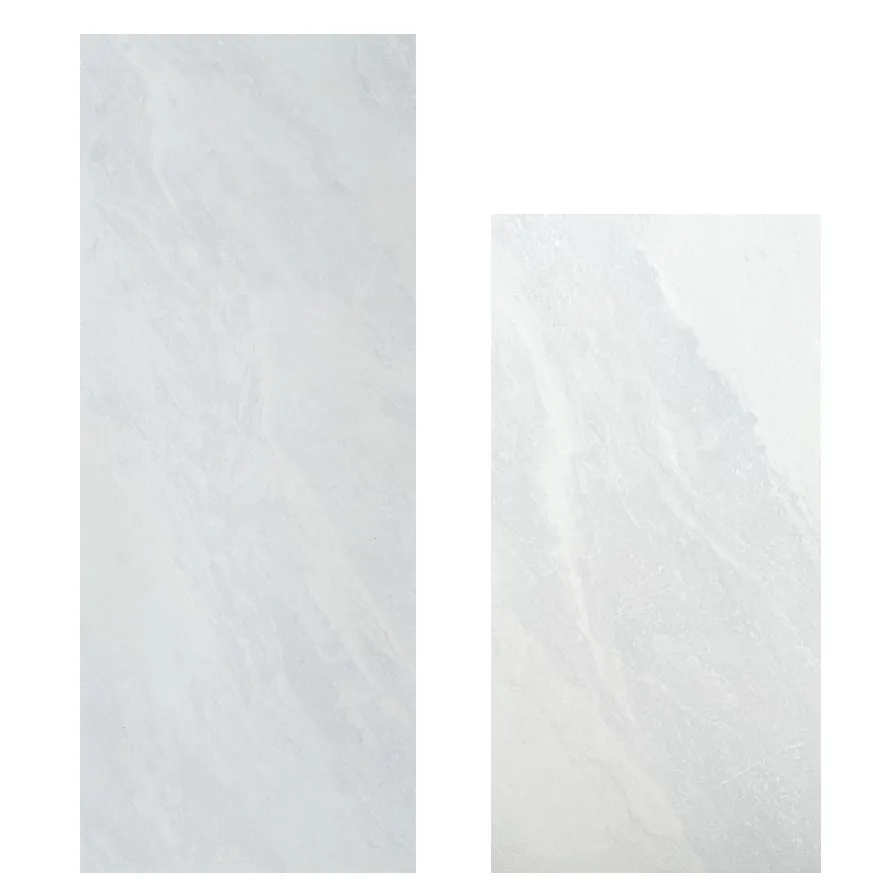
In a world where every choice we make leaves a footprint, the buildings we live and work in are no exception. From the homes we raise families in to the offices where we chase careers, the materials that shape these spaces carry more weight than just their physical presence—they carry the weight of our impact on the planet. That's why, more than ever, architects, builders, and homeowners are turning to green building materials that don't just look good, but do good, too. Enter Marble Veil White: a material that's redefining what it means to blend luxury with responsibility. In this deep dive, we'll explore how this innovative stone is setting new standards for sustainability, why its eco-certifications matter, and how it stacks up against other popular materials like fair-faced concrete and MCM flexible stone. Whether you're a builder aiming for LEED certification or a homeowner dreaming of a kitchen that feels both high-end and guilt-free, this is the guide to understanding why Marble Veil White is becoming the go-to choice for the eco-conscious design world.
Let's start with the basics: why does green building matter? For decades, construction has been one of the most resource-intensive industries on the planet. Traditional building materials often require massive amounts of energy to extract, process, and transport, contributing significantly to global carbon emissions. Quarrying for natural stone, for example, can disrupt ecosystems, while manufacturing concrete is responsible for around 8% of the world's CO2 output. Add to that the fact that buildings account for nearly 40% of global energy use and 30% of greenhouse gas emissions, according to the United Nations, and it's clear: the materials we choose for our buildings are a big deal.
But here's the good news: the tide is turning. Today's builders and designers aren't just focused on aesthetics or cost—they're focused on impact. Green building standards like LEED (Leadership in Energy and Environmental Design), BREEAM, and Green Globes are no longer niche; they're becoming industry expectations. Homeowners, too, are asking questions: Where does this material come from? How much energy was used to make it? Can it be recycled when I'm ready for a change? This shift isn't just about checking boxes for certifications—it's about creating spaces that align with our values, spaces that we can feel proud to call our own without compromising the planet for future generations.
And that's where materials like Marble Veil White step in. It's not enough for a material to be "sustainable" in name only; it needs to deliver on both environmental promises and design expectations. After all, no one wants to live in a home that's eco-friendly but feels cold or uninspired. Marble Veil White bridges that gap, offering the timeless beauty of natural stone with a sustainability story that actually holds up. Let's take a closer look at what makes this material so unique.
At first glance, Marble Veil White might remind you of classic marble—soft, luminous, with delicate veining that seems to flow like watercolor across its surface. But look a little closer, and you'll realize it's something entirely different. Unlike traditional marble, which is quarried from the earth in large blocks, disrupting landscapes and consuming vast amounts of energy to extract and transport, Marble Veil White is engineered with sustainability at its core. It's a composite material that blends natural minerals with recycled stone aggregates, creating a product that mimics the elegance of marble without the environmental cost.
So, what exactly is in it? The base of Marble Veil White is composed of 70% recycled stone particles—leftover fragments from quarrying operations that would otherwise end up in landfills. These fragments are mixed with a low-VOC (volatile organic compound) binder, which reduces harmful emissions during production and installation. The result is a material that's not only durable and versatile but also significantly lighter than natural marble, which cuts down on transportation emissions (since lighter materials require less fuel to ship).
But perhaps the most striking thing about Marble Veil White is its aesthetic versatility. The veining patterns are designed to look organic, with variations that ensure no two panels are exactly alike—just like natural stone. Whether you prefer a subtle, almost ethereal veining or a bolder, more dramatic pattern, there's a Marble Veil White option to suit every design vision. And because it's engineered, it's available in a range of sizes and thicknesses, making it adaptable for everything from kitchen countertops to entire wall claddings.
Sustainability claims are everywhere these days, but how do you separate the greenwashing from the real deal? That's where eco-certifications come in. These third-party labels are like a seal of approval, verifying that a product meets strict environmental standards. For Marble Veil White, the certifications speak for themselves—and they're a big part of why it's gaining traction in the green building community.
When it comes to green building, LEED certification is the gold standard. Administered by the U.S. Green Building Council (USGBC), LEED evaluates buildings based on several categories, including energy efficiency, water conservation, and materials selection. To earn points in the "Materials and Resources" (MR) category, builders need to use products with recycled content, locally sourced materials, or low embodied carbon.
Marble Veil White shines here. Thanks to its 70% recycled content, it contributes significantly to MR credits. Additionally, its manufacturing facility is located within 500 miles of most major U.S. cities, reducing transportation emissions and qualifying it for "local sourcing" points. Several projects that have used Marble Veil White report earning 3–4 LEED points in the MR category alone—a significant boost for buildings aiming for Silver, Gold, or Platinum certification.
Indoor air quality is a big concern for homeowners and businesses alike, especially since we spend about 90% of our time indoors, according to the EPA. Volatile organic compounds (VOCs) from building materials can off-gas into the air, causing headaches, allergies, and long-term health issues. That's why GreenGuard certification, which tests for low chemical emissions, is so important.
Marble Veil White is GreenGuard Gold certified, meaning it meets some of the strictest emissions standards in the industry. This is thanks to its low-VOC binder and lack of toxic sealants or coatings. For schools, hospitals, and homes with children or pets, this certification is a game-changer—it ensures that the material isn't just safe for the planet, but safe for the people living and working around it.
Cradle to Cradle (C2C) certification takes a holistic approach to sustainability, evaluating a product's entire lifecycle—from raw materials to manufacturing to end-of-life disposal. Marble Veil White has earned a C2C Silver certification, which recognizes its use of recycled materials, energy-efficient production, and recyclability.
Unlike natural marble, which often ends up in landfills when it's removed during renovations, Marble Veil White can be recycled at the end of its lifespan. The material can be ground down and reused as aggregate in new building products, creating a closed-loop system that minimizes waste. "We designed Marble Veil White to be part of a circular economy," Martinez explains. "It's not just about reducing our impact during production—it's about ensuring that impact stays low, even when the material's time in a building is done."
Of course, Marble Veil White isn't the only sustainable material on the market. Builders and designers often weigh their options, comparing factors like cost, durability, and aesthetics. Let's take a look at how Marble Veil White compares to two other popular green building materials: fair-faced concrete and MCM flexible stone.
| Feature | Marble Veil White | Fair-Faced Concrete | MCM Flexible Stone |
|---|---|---|---|
| Recycled Content | 70% recycled stone aggregates | 15–30% recycled aggregates (varies by manufacturer) | 50% recycled stone powder |
| Embodied Carbon (kg CO2e/m²) | 18 kg | 35 kg | 22 kg |
| Water Usage (L/m² production) | 12 L (85% recycled water) | 45 L (minimal recycling) | 18 L (60% recycled water) |
| Durability | Scratch-resistant, stain-resistant, suitable for high-traffic areas | High compressive strength but prone to cracking if not sealed | Flexible, impact-resistant, but less heat-resistant than stone |
| Aesthetic Versatility | Marble-like veining, multiple patterns, bright/neutral tones | Industrial, minimalist look; limited color options | Textured, stone-like appearance; available in earthy tones |
| End-of-Life Recyclability | 100% recyclable into new aggregate | Can be crushed for road base but not easily recycled into new concrete | Recyclable but requires specialized facilities |
As the table shows, Marble Veil White outperforms fair-faced concrete in almost every sustainability category, from recycled content to water usage. While MCM flexible stone (a lightweight, flexible cladding material) is a strong competitor, Marble Veil White has a lower embodied carbon footprint and higher recyclability. Aesthetically, Marble Veil White also offers a level of elegance that's hard to match with concrete or MCM stone, making it a better fit for projects where luxury and sustainability are both priorities.
"We often compare materials based on first cost, but we should be looking at lifecycle cost," says James Wilson, a sustainable building consultant with over 15 years of experience. "Marble Veil White might have a slightly higher upfront price than fair-faced concrete, but when you factor in its durability (it lasts 25+ years without needing replacement), lower maintenance costs, and recyclability, it's actually the more cost-effective choice in the long run. Plus, for clients who want a high-end look without the environmental guilt, there's really no comparison."
Theory is great, but nothing beats seeing a material in action. Let's explore how Marble Veil White is being used in real projects, from residential homes to commercial spaces, and hear from the people who chose it.
When the Thompsons set out to build their dream home in Boulder, they had two non-negotiables: it had to be LEED Platinum certified, and it had to feel like a luxury retreat. "We didn't want to sacrifice beauty for sustainability," says Sarah Thompson, a environmental engineer. "We'd seen too many 'green homes' that felt sterile or utilitarian. We wanted warmth, texture, and a connection to nature."
The Thompsons worked with architect Mia Chen, who recommended Marble Veil White for their kitchen countertops, bathroom walls, and fireplace surround. "The kitchen is the heart of our home, so we wanted something that would stand up to cooking messes but still look beautiful," Sarah explains. "Marble Veil White was perfect—we've had it for two years, and it still looks brand new, even with two kids and a golden retriever running around."
The home ultimately earned LEED Platinum certification, with the Thompsons crediting Marble Veil White for helping them hit their materials and indoor air quality goals. "Our indoor air quality test came back with almost undetectable VOC levels, which was a huge relief," Sarah adds. "And guests always comment on how 'bright and airy' the kitchen feels—little do they know it's also one of the greenest parts of the house!"
Wellness centers are all about creating spaces that promote health—so it's no surprise that the team behind Serenity Wellness in Portland prioritized sustainable, non-toxic materials. "Our clients come to us to de-stress and heal, so we wanted every material in the space to support that," says Lisa Wong, the center's founder. "That meant no harsh chemicals, no off-gassing, and materials that felt natural and calming."
The center's treatment rooms feature Marble Veil White on the walls and floors. "We chose it for its soft, neutral look—it helps create a spa-like atmosphere," Lisa explains. "But the GreenGuard certification was the deciding factor. Many of our clients have sensitivities or allergies, so we needed to be sure the materials wouldn't irritate them. Marble Veil White gave us that peace of mind."
Since opening, Serenity Wellness has become a go-to spot for eco-conscious clients. "We've had several people tell us they chose us specifically because of our commitment to sustainability," Lisa notes. "Marble Veil White isn't just a material in our space—it's part of our brand story. It shows we care about our clients' health and the planet, and that matters more than ever."
Marble Veil White isn't just a material—it's a sign of where the building industry is heading. As consumers and regulators demand more sustainability, materials that deliver on both environmental and aesthetic fronts will become the norm, not the exception. But what does this future look like?
For one, we can expect to see more innovation in recycled and upcycled materials. The success of Marble Veil White's 70% recycled content model proves that there's a market for products that turn waste into wealth. Manufacturers are already experimenting with other recycled inputs, from plastic bottles to industrial byproducts, to create new building materials.
We'll also see a greater focus on circularity—designing materials with their end-of-life in mind. Marble Veil White's recyclability is a step in this direction, but future materials may be even more easily disassembled, repaired, or repurposed. Imagine a countertop that can be sanded down and refinished instead of replaced, or a wall panel that can be broken down into raw materials for a new product.
And perhaps most importantly, sustainability will become more accessible. Right now, some eco-certified materials come with a premium price tag, but as demand grows and production scales, that gap will narrow. Marble Veil White is already priced competitively with high-end natural stone, and as more manufacturers enter the space, consumers will have even more affordable options.
At the end of the day, choosing a building material is about balance. It's about weighing aesthetics, durability, cost, and impact. Marble Veil White doesn't just tip the scales toward sustainability—it balances all of these factors with ease. Whether you're building a new home, renovating a commercial space, or simply updating a room, here's why it's worth considering:
So, whether you're a builder aiming to attract eco-conscious clients, a designer looking to push the boundaries of sustainable luxury, or a homeowner who wants to live in a space that reflects your values, Marble Veil White is more than a material—it's a statement. It says that you care about the planet, but you also care about living beautifully. And in today's world, that's a statement worth making.
As we look ahead, one thing is clear: the buildings of tomorrow will be greener, smarter, and more intentional. And with materials like Marble Veil White leading the way, they'll also be more beautiful than ever. So, the next time you walk into a space that takes your breath away, take a moment to wonder: what's it made of? And could it be part of the solution, not the problem? With Marble Veil White, the answer is a resounding yes.
Recommend Products












