
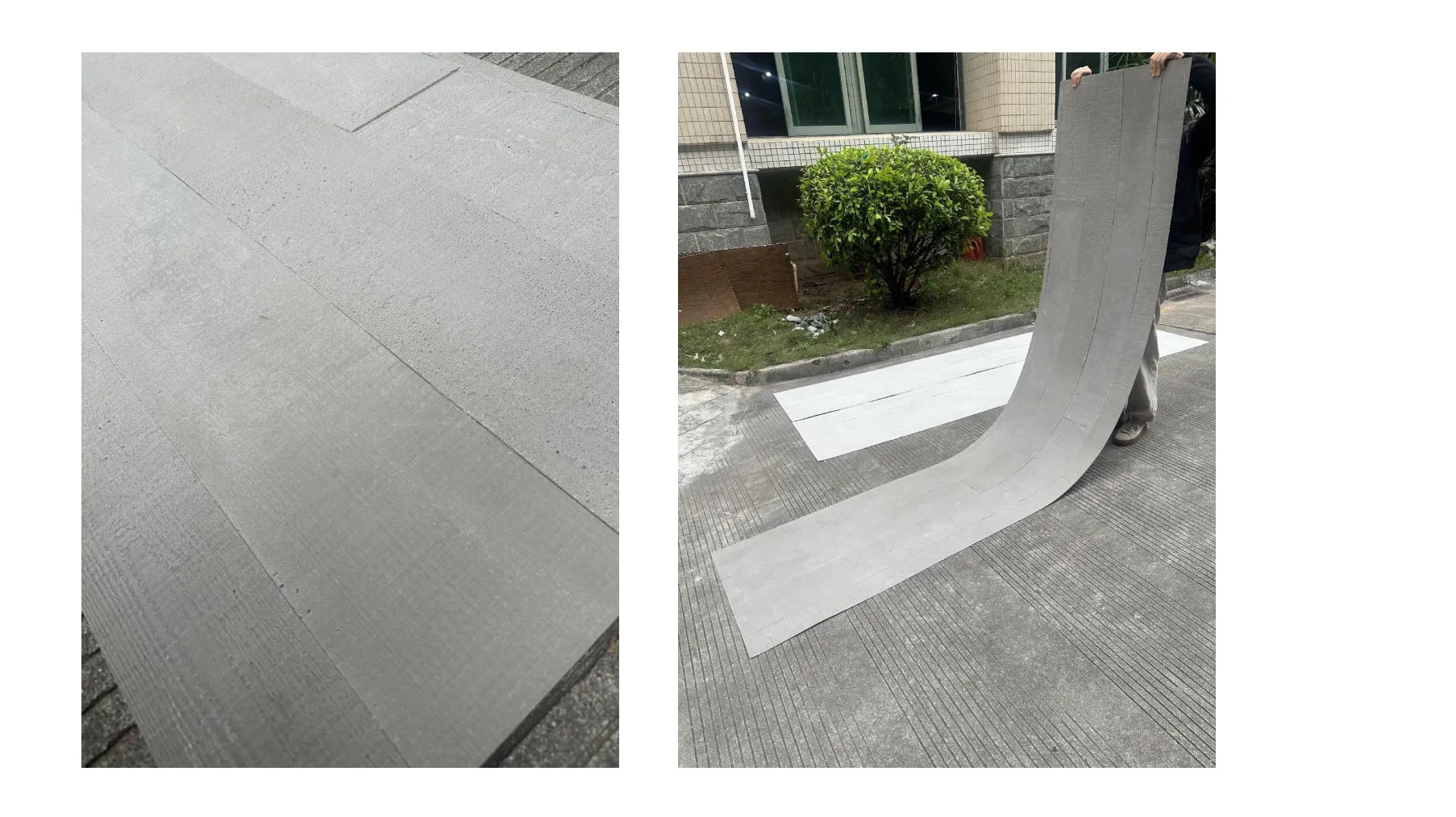
Walk into any newly built space—whether it's a sleek office, a cozy café, or a modern home—and chances are, you're breathing in more than just air. For decades, construction materials have quietly released volatile organic compounds (VOCs) into our environments, contributing to poor indoor air quality, headaches, and long-term health risks. But here's the good news: the construction industry is waking up to a better way. Eco-conscious building isn't just a trend anymore; it's a necessity. And at the heart of this shift? Materials that prioritize both people and the planet—materials like wood-cement board, with its stunning visuals (just take a look at those real photos) and impressively low VOC emissions.
Let's start with the basics: VOCs are chemicals found in everything from paints to carpets to traditional building panels. They off-gas over time, and while some are harmless, others can react with air pollutants to form harmful compounds. The EPA estimates that indoor air can be 2–5 times more polluted than outdoor air, and much of that comes down to the materials we build with. So when architects, designers, and builders talk about "eco-conscious construction," they're not just talking about reducing carbon footprints—they're talking about creating spaces that actively support human health. And that's where wood-cement board steps in, proving that sustainability and beauty don't have to be enemies.
So, what exactly is wood-cement board? Think of it as the perfect marriage of nature and science. It's made by blending wood fibers (often recycled or sustainably sourced) with cement, creating a material that's strong, durable, and surprisingly versatile. Unlike solid wood, it resists rot, mold, and pests—no need for harsh chemical treatments. Unlike traditional concrete, it's lightweight, making installation easier and reducing transportation emissions. But the real star feature? Its low VOC emissions. From production to installation to everyday use, wood-cement board keeps those harmful chemicals to a minimum, making it a top pick for spaces where air quality matters: schools, hospitals, homes, and beyond.
But let's talk about the elephant in the room: aesthetics. Sustainability is great, but if a material looks like a cardboard box, it's not going to win over designers. That's where wood-cement board truly shines—and why those real photos matter so much. Take a glance at wood-cement board real photos, and you'll see textures that mimic natural wood grain, soft earthy tones, and a warmth that's hard to replicate with synthetic materials. Whether it's used as an accent wall in a living room, a ceiling panel in a restaurant, or exterior cladding on a beach house, it brings a organic, grounded feel to spaces. And because each panel has slight variations (just like real wood), no two installations look exactly alike—adding that "handcrafted" charm clients love.
One of the best things about wood-cement board is its adaptability. It can be painted, stained, or left in its natural state. It works indoors and out, standing up to rain, humidity, and even extreme temperatures. And because it's dimensionally stable (meaning it doesn't warp or shrink like solid wood), it's a dream for large-scale projects. Imagine a commercial lobby with a 20-foot wood-cement board feature wall—no gaps, no warping, just a seamless, warm backdrop that makes visitors feel welcome. Now, think about those real photos again: they don't just show a product; they show a vision. They let designers see how the material interacts with light, how it pairs with other elements like metal or glass, and how it transforms a blank space into something memorable.
Let's pause for a second and talk about why "real photos" are such a big deal here. In the world of design, words can only go so far. A client might hear "wood-cement board" and picture something cold or industrial—but show them a real photo of a residential kitchen backsplash, with sunlight filtering through a window and highlighting the subtle wood grain texture, and suddenly, they get it. Real photos turn abstract concepts into tangible possibilities. They help designers sell ideas, clients visualize outcomes, and contractors understand installation nuances.
Take, for example, a recent project I heard about: a boutique hotel in Portland wanted to create a "rustic-modern" vibe without using traditional wood (which would require constant maintenance in the Pacific Northwest's rainy climate). The designer suggested wood-cement board, but the client was skeptical. Then the designer pulled up real photos: a similar hotel's exterior cladding, weathered to a soft gray but still showing the wood fiber patterns; a lobby accent wall paired with fair-faced concrete floors, creating a balanced, earthy palette. The client was sold. Why? Because the photos didn't just show the material—they showed the feeling of the space. They proved that wood-cement board could capture the warmth of wood without the upkeep, and that it could play well with other eco-friendly materials like fair-faced concrete (another low-VOC star, by the way) to create a cohesive look.
Fair-faced concrete, for those unfamiliar, is a material that celebrates the raw, unpolished beauty of concrete. It's poured and finished in a way that leaves its natural texture and color intact, requiring minimal treatment (and thus, minimal VOCs). When paired with wood-cement board, it creates a stunning contrast: the smooth, industrial edge of concrete balanced by the organic warmth of the board. And again, real photos make this pairing come alive. You can see how the two materials reflect light differently, how their textures complement rather than compete, and how together, they set a tone that's both modern and inviting.
Low VOC emissions are a huge win for wood-cement board, but they're just one part of its sustainability story. Let's dig deeper. First, the wood fibers used are often sourced from FSC-certified forests or recycled wood waste, reducing the need for new tree harvesting. The cement binder is typically mixed with minimal additives, and many manufacturers use energy-efficient production processes, cutting down on carbon emissions during manufacturing.
Then there's longevity. A well-installed wood-cement board can last 50+ years, which means fewer replacements and less waste over time. Compare that to traditional drywall, which might need repairs every decade, or vinyl panels, which can degrade in sunlight. When a material lasts longer, it reduces the overall environmental impact of a building—something that's becoming increasingly important as we aim for net-zero construction goals.
And let's not forget about end-of-life. Unlike some composite materials that end up in landfills, wood-cement board is often recyclable or biodegradable, depending on its composition. Even if it's not, its long lifespan means it won't contribute to the 600 million tons of construction waste generated globally each year anytime soon. When you add it all up—low VOCs, sustainable sourcing, durability, recyclability—wood-cement board starts to look less like a "green alternative" and more like the future of building.
Wood-cement board isn't the only eco-star in the construction world, of course. It plays nicely with other low-VOC, sustainable materials, creating spaces that are greater than the sum of their parts. Take fair-faced concrete, for example. Like wood-cement board, it's prized for its raw, unadorned look—no paint, no coatings, just the natural texture of the concrete itself. It's low in VOCs because it requires minimal treatment, and its thermal mass helps regulate indoor temperatures, reducing energy use. Pair it with wood-cement board on walls, and you get a space that feels both grounded and airy, with zero off-gassing concerns.
Then there's MCM flexible stone—a material that's been turning heads in commercial design. MCM (Modified Composite Material) flexible stone is lightweight, thin, and incredibly versatile, mimicking the look of natural stone without the heavy environmental cost of quarrying. It's made with recycled minerals and polymers, and like wood-cement board, it boasts low VOC emissions. Imagine a retail space with MCM flexible stone cladding on the exterior, wood-cement board accents on the interior walls, and fair-faced concrete floors—all working together to create a cohesive, sustainable design that's easy on the eyes and the planet.
The key here is that eco-conscious construction isn't about picking one "perfect" material—it's about curating a palette of options that align with both aesthetic goals and environmental values. Wood-cement board stands out because it's so adaptable; it can complement stone, concrete, metal, or even glass, making it a go-to for designers who want flexibility without sacrificing sustainability.
Let's get personal for a second: we spend 90% of our lives indoors. That means the air we breathe at home, at work, at school— that air directly impacts our health. High VOC levels have been linked to headaches, dizziness, allergies, and even long-term issues like liver damage. For vulnerable populations—children, the elderly, people with asthma—this is a big deal. Wood-cement board's low VOC emissions mean that once it's installed, it stops off-gassing quickly, leaving indoor air cleaner and safer. It's not just about "being green"; it's about building spaces that actively protect the people who use them. When you choose materials like this, you're not just building walls—you're building health.
Let's walk through a hypothetical (but totally realistic) scenario to see how wood-cement board might play out in a real project. Say a school district in Colorado wants to build a new elementary school, with a priority on "healthy classrooms." The design team's checklist includes: low VOCs, durability (kids are tough on walls!), easy maintenance, and a warm, inviting atmosphere (no sterile, institutional vibes allowed).
Traditional drywall is out (high VOC primers and paints), and solid wood paneling is too expensive and hard to maintain. Enter wood-cement board. The team orders samples and reviews real photos: classroom walls with soft beige wood-cement panels, accented with pops of color from low-VOC paint; a cafeteria ceiling with tongue-and-groove wood-cement boards, absorbing sound and creating a cozy, restaurant-like feel. The panels are installed quickly (they're lightweight and easy to cut), and because they're moisture-resistant, they stand up to spills, crayon marks, and the occasional food fight. Best of all, air quality tests six months later show VOC levels well below EPA limits, giving parents and teachers peace of mind.
Another example: a home renovation in Arizona, where the homeowners want to replace their outdated, VOC-heavy kitchen cabinets. They're drawn to the look of wood but worry about termites and the water damage that comes with monsoon season. Their contractor suggests wood-cement board cabinet fronts, paired with a polished concrete countertop (another low-VOC option). They look at real photos of similar kitchens—warm, wood-like cabinets with a matte finish, complemented by the sleek concrete—and decide to go for it. A year later, the cabinets still look brand-new, and the homeowners swear their kitchen "smells cleaner" than before. Coincidence? Probably not.
So, what does the future hold for eco-conscious construction? If trends are any indication, materials like wood-cement board are here to stay. As more people become aware of the link between building materials and health, demand for low-VOC, sustainable options will only grow. And as manufacturers continue to innovate—improving textures, expanding color options, and reducing production costs—these materials will become even more accessible.
Real photos will play a crucial role in this growth. In an age of Instagram and Pinterest, visual inspiration is everything. A designer in Tokyo can see a wood-cement board project in Copenhagen via real photos, adapt the idea for a local client, and suddenly, a global network of sustainable design is born. These photos don't just showcase materials—they build a community of creators who care about both beauty and the planet.
At the end of the day, eco-conscious construction is about reimagining what's possible. It's about saying, "We can have spaces that take our breath away and protect our lungs." Wood-cement board, with its low VOC emissions, stunning real photos, and chameleon-like versatility, is leading that charge. It's not just a building material—it's a statement. A statement that says, "We care about the spaces we build, the people who use them, and the world we leave behind."
So the next time you walk into a space and think, "This feels good," take a closer look. Maybe it's the light, maybe it's the layout—but chances are, it's also the materials. And if you see a wall panel with a warm, wood-like texture that looks too good to be true? It just might be wood-cement board. And if you ask to see the real photos? Well, that's how the revolution spreads—one beautiful, sustainable space at a time.
Recommend Products












