
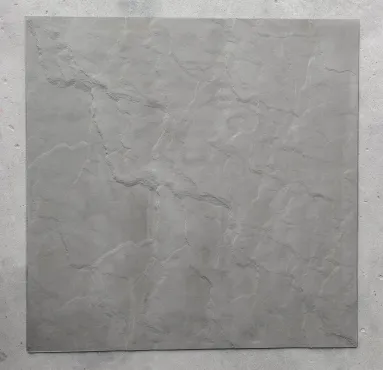
We stand at a pivotal moment in design and construction. The silent, stoic materials that build our world are finding a new voice—a voice that speaks of sustainability, responsibility, and breathtaking innovation. This is the story of a new epoch, defined not by what we take from the earth, but by how cleverly we can partner with it.
For generations, the language of luxury and durability in architecture has been spoken in quarried stone, fired clay, and hewn wood. We've built monuments, homes, and cities from the raw bounty of the planet. But as our awareness grows, we're beginning to understand the true cost. The majestic marble slab carries the echo of a scarred mountain. The perfectly uniform ceramic tile holds the heat of a thousand-degree kiln. The polished hardwood floor whispers of a diminished forest. The world of architecture is crying out for a new vocabulary, one that balances our aesthetic ambitions with our ecological obligations.
What if we could have it all? What if we could create surfaces with the timeless beauty of natural stone, but without the environmental toll? What if we could design with the flexibility of fabric, the durability of rock, and the creative freedom of a painter's canvas? This isn't a far-off dream; it's the reality being forged by pioneers in material science. Leading this charge is COLORIA GROUP, a company that has spent decades perfecting a revolutionary answer to these questions. They aren't just selling building materials; they are offering a new philosophy, a one-stop solution for a greener, more beautiful future, built on the foundation of a remarkable material.
Before we can truly appreciate the revolution, we must first confront the status quo. For far too long, our design choices have been constrained by a limited palette of materials, each with its own significant drawbacks that we've simply learned to accept.
Consider natural stone—granite, marble, travertine. Its beauty is undeniable, a direct connection to geological time. But this connection comes at a price. Quarrying is an incredibly invasive process. It involves blasting, cutting, and hauling massive chunks of earth, leaving behind permanent scars on the landscape, disrupting ecosystems, and consuming vast amounts of energy and water. The stone then needs to be transported—and its immense weight means a colossal carbon footprint from trucks, trains, and ships. Once on site, it's unforgiving. It's heavy, difficult to handle, and brittle. A dropped slab isn't just a loss of material; it's the loss of a unique, irreplaceable piece of the planet.
Then there are ceramic and porcelain tiles. They seem like a more manufactured, controlled option. Yet, their production is anything but gentle. The process requires firing clay and minerals in industrial kilns at scorching temperatures, often exceeding 1,200°C (2,200°F). This is an energy-guzzling process, releasing significant amounts of CO2 into the atmosphere. The end product is heavy, rigid, and prone to chipping or cracking. Installation means wrestling with thick mortar beds and messy grout lines, which themselves can stain and degrade over time. And when it's time for a renovation? Those old tiles are notoriously difficult to remove and almost impossible to recycle, typically ending up as rubble in a landfill.
Other common options for wall decoration are no better. Traditional paints can release Volatile Organic Compounds (VOCs) into the air for weeks after application, impacting indoor air quality. Exterior paints and stuccos require frequent reapplication, leading to a cycle of consumption and waste. We've been trapped in a cycle of compromise, choosing between beauty, durability, and sustainability, but rarely achieving all three.
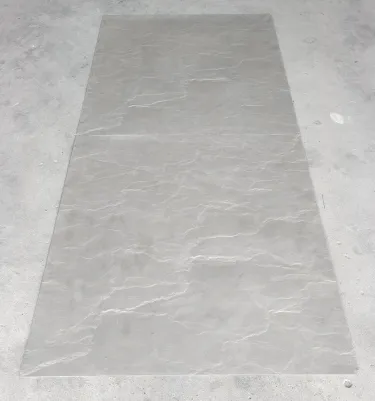
Out of this need for a better way, a true material science breakthrough was born: **Modified Cementitious Material**, or MCM. This is the "Epoch Stone" that our title heralds. It's not a synthetic plastic trying to imitate stone, nor is it a simple concrete derivative. It is a category of material all its own, and COLORIA GROUP has become its foremost interpreter.
So, what exactly is this stuff? At its heart, MCM is a remarkable alchemy of natural elements. The primary ingredients are often simple, unmodified inorganic materials like common soil, mineral powders, stone powder, and sand—the very building blocks of the earth. These raw materials are mixed with a small amount of water-based binders. The real magic, the "modified" part of the name, lies in the proprietary technology that transforms this humble mixture. Through a process of low-temperature curing, the material undergoes a molecular-level change. The particles crosslink and bond, forming a new, incredibly resilient yet flexible material.
Think of it as accelerating a geological process. Instead of needing millions of years of pressure and heat to form stone, COLORIA GROUP's technology creates a material with stone-like properties in a matter of hours, using a tiny fraction of the energy. There are no high-temperature kilns, no toxic fumes, and no industrial wastewater. The production process is clean, quiet, and astonishingly efficient.
The sustainability of MCM isn't just a talking point; it's embedded in its very composition and creation:
While the green credentials of MCM are reason enough to celebrate, they would mean little if the material didn't also inspire. For architects, interior designers, and homeowners, COLORIA GROUP's MCM series isn't just a sustainable alternative; it's a massive expansion of the creative toolkit. It shatters old limitations and opens up a world of new design possibilities. Let's explore the stunning versatility offered through their core product lines.
This is perhaps the most mind-bending and iconic form of the material. Imagine a stone that you can bend. That's the reality of **MCM Flexible Stone**. For centuries, architects have been forced to think in straight lines and sharp angles when working with stone. Creating curves meant painstakingly cutting and shaping small pieces, resulting in a mosaic of grout lines. With MCM Flexible Stone, that constraint is gone.
This material arrives on-site in thin, lightweight sheets that can be easily wrapped around curved walls, columns, archways, and even furniture. Picture a grand, circular reception desk in a hotel lobby, clad in a seamless sheet of material that looks and feels exactly like ancient travertine. Imagine a winding feature wall in a retail space that flows like a river of sandstone. This is the kind of organic, fluid architecture that was once impossibly expensive or structurally impractical, now made simple.
The aesthetic fidelity is staggering. Using advanced molding and digital texturing, COLORIA GROUP can replicate the intricate patterns, subtle color variations, and unique feel of virtually any natural surface—from rough-hewn slate to split-face granite, from delicate wood grains to even supple leather. It offers the visual and tactile richness of the real thing, but with a superhuman flexibility that unleashes a whole new dimension of design. This is more than just wall decoration; it's architectural sculpture.
If flexible stone is about conquering curves, the **MCM Big Slab Board Series** is about mastering scale. In modern and minimalist design, the enemy is often visual clutter. Grout lines, seams, and joints break up surfaces and distract the eye. The goal is to achieve a clean, monolithic look that feels both luxurious and serene. This is where large-format slabs come in.
Traditionally, achieving this look with natural stone meant sourcing, transporting, and installing colossal, multi-ton slabs—a logistical and financial nightmare reserved for only the most high-end projects. The MCM Big Slab Board Series delivers that same monumental aesthetic without the monumental challenges. These boards are large, yet remain relatively lightweight and manageable. They can be used to create entire feature walls with minimal to no visible seams, providing an uninterrupted canvas of texture and color.
Think of a soaring atrium wall in a corporate headquarters, a sleek and sophisticated bathroom clad from floor to ceiling, or a dramatic, modern fireplace surround. The Big Slab Board Series makes these grand gestures accessible. The effect is powerful, lending a sense of permanence, quality, and expansive calm to any space. It allows the material itself to be the art, uninterrupted and bold.
This is where technology and artistry collide. The MCM 3D Printing Series takes customization to its ultimate conclusion. If you can design it in a computer, COLORIA GROUP can likely render it as a tangible, three-dimensional surface. This technology moves beyond simple textures into the realm of bespoke relief and parametric design.
Architects and designers are no longer limited to the patterns found in a catalog. They can create unique, site-specific art. Imagine a restaurant wall with the company's logo subtly integrated into a wave-like pattern. Picture a museum facade that features a bas-relief mural depicting a historical scene, all created as a single, cohesive material surface. Or consider an office space where data visualizations are translated into a physical, tactile pattern on the walls.
The MCM 3D Printing Series empowers designers to leave a unique signature on their projects. It's the ultimate tool for branding, storytelling, and creating spaces that are not just built, but authored. It represents a fundamental shift from choosing a material to creating one.
While flexibility and 3D printing represent the more exotic applications, the MCM Project Board Series is the backbone of many large-scale constructions. This series is engineered to be the pragmatic, high-performance solution for residential and commercial projects where budget, efficiency, and durability are paramount.
This series provides all the core benefits of MCM—it's lightweight, eco-friendly, weather-resistant, and fire-retardant—in a range of standard sizes and popular finishes. It's the intelligent choice for cladding apartment buildings, decorating office interiors, or outfitting public institutions. For developers and contractors, it offers a reliable, consistent, and cost-effective way to achieve a high-end look without the high-end price tag or the environmental guilt. It proves that sustainable and beautiful design can and should be the standard, not the exception, for projects of any scale.
When you place MCM side-by-side with traditional materials, the advantages become starkly clear. It's not just a marginal improvement; it's a leap forward across nearly every metric that matters in modern construction.
| Feature | COLORIA GROUP MCM | Natural Stone | Ceramic / Porcelain Tile |
|---|---|---|---|
| Environmental Impact | Low energy, low CO2, no pollution | High-impact quarrying, habitat loss | Very high energy use (kilns), high CO2 |
| Recyclability | 100% recyclable back into new product | Difficult to reuse, becomes rubble | Ends up in landfill as construction waste |
| Weight | Extremely lightweight (avg. 4-8 kg/m²) | Extremely heavy (50-80 kg/m²) | Heavy (15-25 kg/m²) |
| Flexibility | Can be bent to fit curved surfaces | Completely rigid and brittle | Completely rigid and brittle |
| Installation | Fast, easy, less adhesive, low labor cost | Slow, complex, requires heavy machinery | Time-consuming, requires thick mortar bed |
| Design Versatility | Limitless textures, colors, 3D printing | Limited to what can be quarried | Limited to surface prints and glazes |
| Durability | High impact resistance, weatherproof | Good, but can crack or chip | Good, but can chip or crack under impact |
The era of compromising between our aesthetic aspirations and our environmental responsibilities is over. The advent of Eco-Conscious Epoch Stone, perfected and championed by visionary companies like COLORIA GROUP, has fundamentally changed the equation. This isn't just about a new product; it's about a new paradigm for the built environment.
We now have a material that is born from the earth in the most gentle way imaginable, that can be shaped to our wildest creative impulses, and that can be returned to the earth or reborn as a new product at the end of its life. It's a material that is lighter on our buildings, lighter on our budgets, and, most importantly, lighter on our planet.
From the sun-scorched facades of ambitious projects in Saudi Arabia to the intimate, curved walls of a boutique hotel, COLORIA GROUP's MCM materials are proving their mettle on a global stage. They are enabling architects and designers to build not just structures, but legacies—legacies of beauty, innovation, and profound respect for the world we inhabit. The choice is no longer just about what looks good; it's about doing good. And with this new generation of materials, we can finally, and beautifully, do both.
Recommend Products












