
In an era where sustainability is not just a buzzword but a fundamental necessity, the world of architecture and design is undergoing a profound transformation. We are moving beyond aesthetics alone, seeking materials that tell a story of responsibility, innovation, and respect for our planet.
For centuries, natural stone like travertine has been the epitome of luxury and timeless beauty. Its warm, earthy tones and unique porous texture have graced the walls of ancient Roman structures and modern minimalist villas alike. The dream for many architects and homeowners is to capture this classic elegance, perhaps in intricate mosaic patterns or grand, sweeping surfaces. But as our awareness of environmental impact grows, a critical question arises: how can we achieve this beloved aesthetic without the heavy ecological price tag? This is the central challenge for today's sustainable projects , and the answer lies not in looking back, but in forging ahead with groundbreaking technology. This is where a new generation of smart, eco-friendly materials enters the stage, completely redefining what's possible in design and construction. Leading this charge is COLORIA GROUP, a visionary company dedicated to providing one-stop solutions with innovative, green building materials that don't compromise on beauty or performance.
To truly appreciate the revolution in building materials, we must first understand the problem it solves. Natural travertine is undeniably beautiful. Each slab is a unique piece of geological history, formed over thousands of years by mineral springs. Its appeal is visceral. However, this natural origin story has a darker side when scaled up for the global construction industry.
The journey of a single travertine tile from a mountain quarry to a building façade is fraught with environmental consequences. The process begins with quarrying, an intensive operation that involves explosives and heavy machinery. This scarring of landscapes leads to irreversible habitat destruction, soil erosion, and disruption of local ecosystems. The sheer amount of energy consumed in extracting and cutting massive stone blocks is staggering.
Then comes transportation. Stone is, by its very nature, incredibly heavy. Transporting tons of travertine across continents, whether by sea or land, generates a colossal carbon footprint. It's an energy-inefficient process that contributes significantly to global greenhouse gas emissions. Furthermore, a substantial percentage of quarried stone is wasted. Due to natural cracks, impurities, or breakage during extraction and processing, much of the raw material never becomes a finished product, ending up as landfill. This is a linear, wasteful model of "take-make-dispose" that is simply unsustainable in the long run.
The issues don't end with the environmental impact. For architects and builders, natural stone presents a host of practical hurdles.
Faced with these significant drawbacks, the design community has been searching for an alternative—a material that could deliver the aesthetic splendor of travertine without the ecological and practical baggage. That search has led to a remarkable innovation: Modified Cementitious Material.
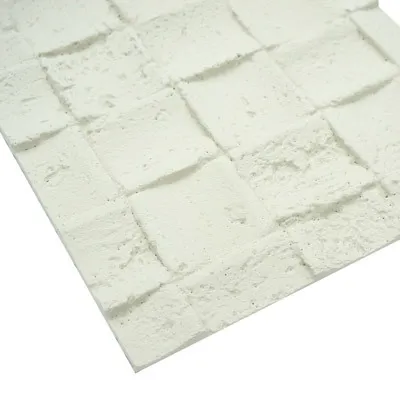
Imagine a material that has the visual depth and texture of natural stone but is as light as ceramic and as flexible as leather. This isn't science fiction; it's the reality of Modified Cementitious Material (MCM), a class of green building materials that is setting a new standard for the industry. COLORIA GROUP has mastered this technology, developing a comprehensive range of MCM products that offer a superior alternative to traditional materials.
So, what exactly is MCM? At its core, it's a composite material born from a clever blend of natural elements. The primary ingredients are often natural soil, stone powder, sand, and other inorganic materials, bound together by a modified cementitious matrix. The "modified" part is key; it refers to the innovative process that transforms these humble, readily available raw materials into a high-performance architectural product.
The true genius of MCM lies in its production. Unlike the high-temperature firing required for ceramics (over 1200°C) or the brute force of stone quarrying, COLORIA GROUP's MCM is created through a low-temperature curing process, typically below 100°C. This has profound environmental benefits:
The result is a product that is not just beautiful and functional, but inherently sustainable. It's a material that allows architects and builders to specify high-end finishes while contributing positively to the project's overall green credentials, potentially helping to achieve certifications like LEED (Leadership in Energy and Environmental Design). This commitment to sustainable innovation is what positions COLORIA GROUP at the vanguard of modern construction.
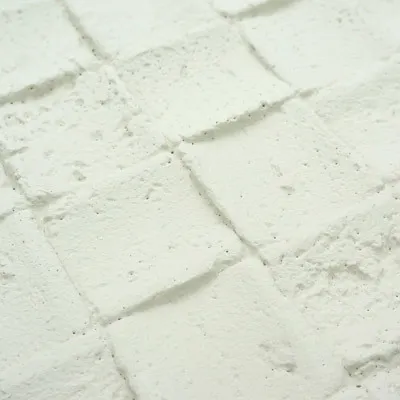
While MCM's ability to replicate the look of travertine is impressive, its true value lies in the properties that natural stone can never offer. COLORIA GROUP has harnessed this potential to create a diverse product lineup, providing architects with an expansive toolbox for creativity. These aren't just surface coverings; they are sophisticated architectural finishes that empower design freedom.
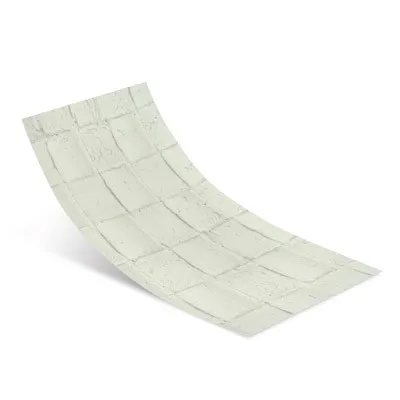
Perhaps the most revolutionary product in the MCM family is the MCM Flexible Stone . This material is incredibly thin (typically 2-4mm) and lightweight, yet it possesses the stunning, authentic appearance of cut stone, from travertine to slate to granite. Its defining characteristic, however, is its flexibility. It can be easily bent to wrap around curved walls, cylindrical columns, and undulating architectural forms without cracking or breaking.
This flexibility shatters the design constraints imposed by rigid materials. Imagine a seamless travertine finish flowing from a flat wall onto a curved reception desk, or an entire building façade clad in a lightweight stone finish that follows its organic contours. This was once an architectural fantasy, but the MCM Flexible Stone makes it a practical reality. Installation is simple, often likened to hanging a thick wallpaper, which dramatically reduces labor costs and construction timelines. It can be cut on-site with a simple utility knife, eliminating the dust, noise, and waste associated with cutting stone.
For projects that demand a sense of scale and grandeur, the MCM Big Slab Board Series offers the perfect solution. These large-format panels provide the monolithic, seamless look of massive stone slabs but without the associated weight and handling challenges. A single panel from the MCM Big Slab Board Series can cover a large area, minimizing grout lines and creating a clean, expansive, and luxurious aesthetic.
This makes them ideal for high-impact applications such as hotel lobbies, corporate headquarters, airport terminals, and premium residential exteriors. Because they are so much lighter than natural stone slabs, they can be installed on standard wall systems without requiring costly structural reinforcement. This opens up a world of possibilities for creating imposing, high-end stone looks in places where it was previously impractical or prohibitively expensive.
COLORIA GROUP understands that many large-scale projects have unique requirements. The MCM Project Board Series is specifically engineered to meet these demands, offering tailored solutions in terms of size, thickness, color, and performance characteristics for specific architectural applications. This ensures consistency and optimal performance across vast surfaces.
Taking customization to the next level is the MCM 3D Printing Series. This cutting-edge technology allows for the creation of completely bespoke textures, patterns, and even bas-relief sculptures. Architects can design unique surfaces that are then "printed" onto the MCM material. This is where the concept of "mosaic travertine tiles" from the title is reimagined for the 21st century. Instead of being limited to pre-cut shapes, designers can create any pattern imaginable—from intricate geometric mosaics to flowing organic forms or even corporate logos embossed directly into the wall finish. This technology offers an unparalleled level of personalization, transforming walls from simple partitions into works of art.
| Feature | Natural Travertine | COLORIA GROUP MCM Products |
|---|---|---|
| Weight | Extremely heavy (approx. 50-80 kg/m²) | Extremely lightweight (approx. 4-8 kg/m²) |
| Flexibility | None. Rigid and brittle. | Excellent. Can be bent to fit curved surfaces and columns. |
| Ecological Impact | High. Quarrying, high-carbon transport, significant waste. | Low. Low-temperature production, recycled content, low transport emissions. |
| Installation | Complex, slow, requires heavy machinery and specialized labor. High cost. | Simple, fast, can be cut with a utility knife. Lowers labor costs significantly. |
| Customization | Limited to what can be quarried and cut. Textures are natural. | Virtually limitless. Custom colors, textures, patterns, and 3D printed designs. |
| Thickness | Thick (typically >20mm) | Ultra-thin (typically 2-5mm) |
| Safety | Heavy slabs pose risk of falling on high-rises. Brittle upon impact. | Lightweight and flexible, reducing fall risk. Durable and impact-resistant. |
| Application Areas | Limited by weight and rigidity, mainly flat surfaces and floors. | Interior, exterior, ceilings, columns, curved walls, furniture surfaces. |
The adoption of COLORIA GROUP's MCM products creates a virtuous cycle of benefits that extends to every stakeholder in a building project, from the initial blueprint to long-term occupancy.
The primary benefit is the liberation of creativity. No longer constrained by the physical limitations of stone, architects can design with unprecedented freedom. The ability to clad a towering skyscraper in a lightweight stone-like finish or to design a fluid, curving interior space without seams or compromises is a powerful creative tool. The vast library of available textures and the potential for full customization through 3D printing mean that the only limit is the imagination. They can confidently specify materials that not only look stunning but also contribute to the sustainability goals of their sustainable projects .
On the construction site, time is money, and safety is paramount. MCM excels in both areas. The lightweight nature of the material makes it far easier, faster, and safer to transport, handle, and install. A small team can apply MCM panels quickly using simple adhesive, compared to the large crews and heavy lifting equipment needed for natural stone. There is less dust, less noise, and significantly less on-site waste from breakage or cutting. This translates directly into reduced labor costs, shorter project timelines, and a safer, more efficient work environment.
The advantages for the end-user are both immediate and long-term. The lower material and installation costs make high-end finishes more accessible. Over the building's lifespan, MCM proves its worth through durability and low maintenance. It is resistant to water, fire, fading, and impact, and it doesn't have the porosity issues of natural travertine, so it resists staining. Furthermore, MCM products can contribute to better thermal insulation, potentially lowering heating and cooling costs and enhancing occupant comfort. Most importantly, owners can take pride in a property that is not only beautiful but also built with a conscience, reflecting a modern commitment to environmental stewardship.
The conversation around building materials has fundamentally shifted. It's no longer enough for a material to be beautiful or durable; it must also be responsible. The challenge of creating aesthetically pleasing, high-performance, and genuinely eco-conscious buildings is the defining task of our time.
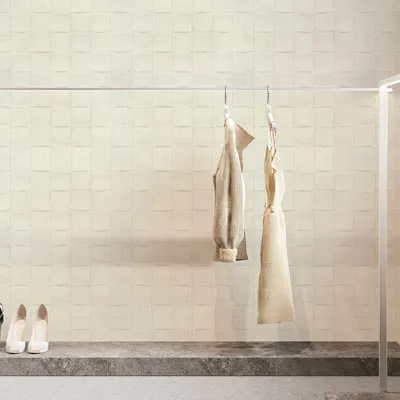
The timeless appeal of a travertine mosaic or a grand stone wall no longer requires us to scar the earth. Through the power of material science and forward-thinking innovation, we can now achieve and even surpass this classic beauty with materials that are lighter, more versatile, and infinitely more sustainable. COLORIA GROUP, with its exceptional range of MCM products—from the game-changing MCM Flexible Stone to the grand MCM Big Slab Board Series —is not just participating in this revolution; it is leading it. By providing architects, builders, and clients with these advanced one-stop solutions, they are proving that the future of architecture is one where exceptional design and profound respect for our planet go hand in hand. The choice is no longer between beauty and sustainability; it is about choosing the intelligent solution that delivers both.
Recommend Products












