
Before we explore Romanite, let's ground ourselves in what makes MCM a standout. Short for Modified Composite Material, MCM is engineered to mimic the look and feel of natural stone, wood, or metal—without the environmental toll. Traditional building materials like marble or granite often require intensive mining, high-energy processing, and generate massive waste. MCM flips the script: it's crafted using recycled industrial byproducts, plant-based binders, and a manufacturing process that slashes carbon emissions by up to 60% compared to conventional methods.
But MCM isn't just about being "green"—it's about performance . Lightweight yet durable, resistant to weathering and wear, it's designed to last decades, reducing the need for frequent replacements (and thus, more waste). And when paired with 3D printing technology? The possibilities become endless. The MCM 3D Printing Series allows for precision, customization, and scale that traditional manufacturing can't match—all while keeping sustainability front and center.
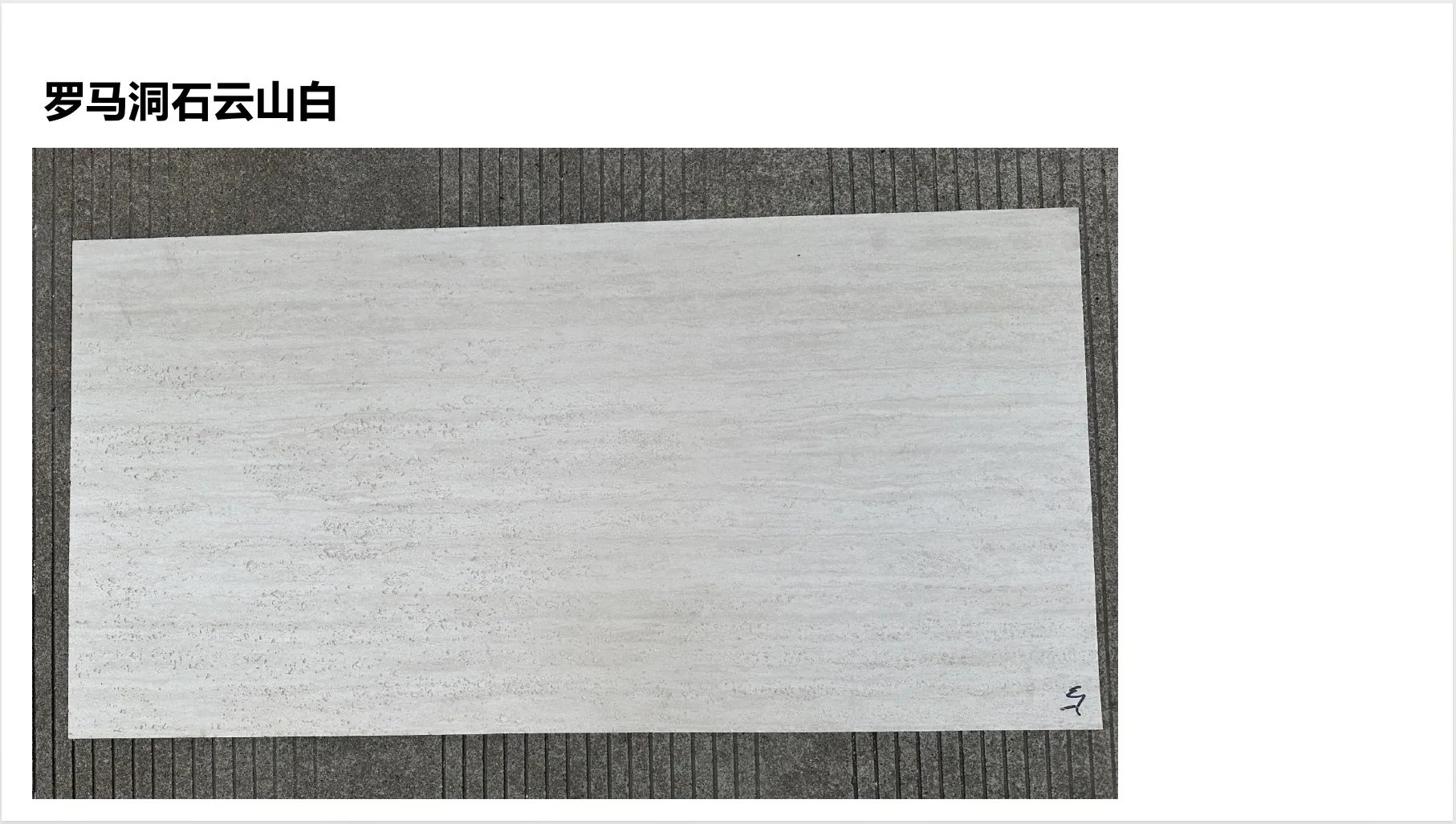
Imagine stepping into a lobby where the walls aren't just surfaces—they're canvases. That's the effect of Romanite Real Photos (Large Size). As part of MCM's 3D Printing Series, Romanite is a celebration of grandeur and detail, made possible by additive manufacturing. Unlike standard tiles or panels limited by mold sizes, 3D printing lets Romanite stretch to impressive dimensions—think 2m x 3m slabs—without sacrificing intricate textures or color depth.
What sets Romanite apart is its namesake: "real photos" that capture the essence of natural stone formations, ancient ruins, or even abstract landscapes. These aren't printed with generic patterns; they're high-resolution reproductions of actual geological wonders, digitized and then brought to life layer by layer through 3D printing. The result? A surface that feels organic, with depth that tricks the eye into thinking it's hand-carved from quarried stone—except it's lighter, more durable, and infinitely kinder to the planet.
Color-wise, Romanite offers a spectrum that nods to earth's diversity. From the soft, sunlit hues of travertine (beige) to the dramatic depth of lunar peak black , each shade is formulated using non-toxic, mineral-based pigments that resist fading over time. For projects aiming for a bold statement, there's the travertine (starry blue) variant—speckled with iridescent particles that mimic a night sky—proving sustainability doesn't mean boring design.
| Product Name | Key Design Features | Sustainability Highlights | Top Applications |
|---|---|---|---|
| Romanite Real Photos (Large Size) | Large-format slabs (up to 2m x 3m), high-res natural texture reproductions, customizable colors (e.g., starry blue, lunar peak black) | 3D-printed with 40% recycled content, zero VOCs, 60% lower carbon footprint than natural stone | Hotel lobbies, museum facades, residential feature walls |
| Foamed Aluminium Alloy Board (Vintage Silver) | Lightweight, metallic sheen, vintage finish, malleable for curved surfaces | Recyclable aluminium core, energy-efficient production, 70% lighter than solid metal (reduces transport emissions) | Retail storefronts, ceiling panels, outdoor signage |
| MCM Flexible Stone | Thin (3-5mm), bendable sheets, mimics slate/granite textures, available in slate veil white and granite portoro | Made from recycled stone dust, water-based adhesives, reduces material usage by 50% vs. traditional stone cladding | Curved walls, furniture accents, backsplashes |
| Fair-Faced Concrete | Raw, industrial aesthetic, subtle texture, available in light/dark grey | Low-carbon concrete mix, minimal processing, durable (50+ year lifespan) | Warehouse conversions, minimalist homes, public art installations |
3D printing isn't just a cool tech add-on for Romanite—it's a sustainability powerhouse. Traditional manufacturing for building materials often involves cutting, grinding, or molding, which generates 30-40% waste. Additive manufacturing, by contrast, builds objects layer by layer, using only the material needed. For Romanite, this means near-zero waste during production. Any excess material is recycled back into the manufacturing loop, closing the circular economy gap.
Energy efficiency is another win. MCM's 3D printers are designed to run on renewable energy (many factories use solar or wind power), and the process itself requires less heat than firing ceramics or smelting metals. Plus, Romanite's lightweight composition—thanks to MCM's foam core—cuts down on transportation emissions. A truckload of Romanite panels can cover 3x more area than a truckload of natural stone, reducing trips and fuel use.
Durability is sustainability, too. Romanite isn't just pretty—it's built to withstand the elements. Resistant to UV rays, moisture, and scratches, it won't fade, crack, or warp over time. This longevity means fewer replacements, less waste, and lower maintenance costs for building owners. And when the day comes that a Romanite panel is retired? It's fully recyclable, breaking down into raw MCM that can be repurposed into new panels.
Architects and designers often complain that sustainable materials limit creativity. Romanite shatters that myth. With 3D printing, customization is limitless. Want a wall that replicates the starry night sky over the Sahara? Romanite can do that. Dream of a facade that mimics the layered cliffs of the Grand Canyon? Consider it done. The "real photos" aspect means clients can bring in images of their favorite natural or cultural landmarks, and MCM's design team will digitize and print them at scale.
Take the travertine (starry red) variant, for example. It's a reproduction of a rare travertine formation found in Turkey, where iron oxide deposits create vibrant red veins. Traditionally, mining such stone would be destructive and expensive—but Romanite captures its beauty without harming the original site. Similarly, lunar peak silvery draws inspiration from moon craters, with a matte, cratered texture that feels otherworldly yet grounded.
Applications of Romanite are as varied as its designs:
Romanite may be the showstopper, but it's part of a larger ecosystem of sustainable MCM products. The MCM 3D Printing Series includes gems like boulder slab (vintage gold) —a bold, metallic-veined panel perfect for statement ceilings—and weaving (khaki) , which mimics handwoven textiles for a warm, organic touch. Each product shares Romanite's commitment to eco-friendliness, from foamed aluminium alloy boards (recyclable and lightweight) to flexible stone (ideal for tight spaces and curved surfaces).
What unites them all is MCM's core philosophy: sustainability shouldn't be a compromise. Whether you're designing a cozy home or a sprawling airport, there's an MCM product that balances aesthetics, performance, and planet. And with the 3D Printing Series leading the charge, the future of building looks both beautiful and bright.
As regulations around carbon emissions tighten and consumers demand more transparency, materials like Romanite will only grow in importance. MCM isn't resting on its laurels, either. The company is already experimenting with bio-based binders derived from algae and mushroom mycelium, aiming to make their products even more circular. They're also exploring 4D printing, where panels can self-heal minor cracks or adjust to temperature changes—further extending their lifespan.
For architects, designers, and builders, the message is clear: sustainable building doesn't mean sacrificing beauty. With Romanite Real Photos (Large Size) and the broader MCM 3D Printing Series, you can create spaces that inspire, endure, and honor the planet. It's not just about building for today—it's about building for the next century, with materials that tell a story of innovation and care.
So the next time you walk into a space and find yourself drawn to the walls, take a closer look. It might just be Romanite—proof that the future of architecture is not just sustainable, but stunningly so.
Recommend Products












