
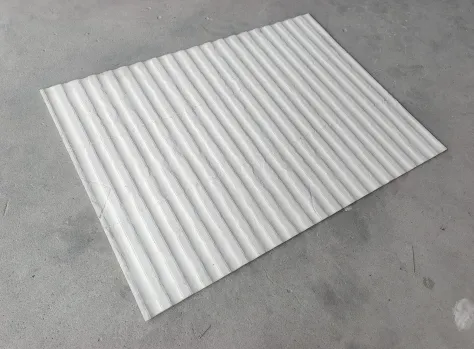
In our modern world, the skylines of our cities are testaments to human ambition. We build higher, faster, and more audaciously than ever before. But this progress comes at a cost—a significant environmental one. The construction industry has long been one of the largest consumers of natural resources and a major contributor to carbon emissions. For decades, the choice has been a difficult one: build with beautiful, durable materials like natural stone and accept the environmental toll, or compromise on aesthetics and longevity for the sake of sustainability. What if that choice was no longer necessary? What if we could have the timeless beauty of stone, the versatility of modern composites, and a genuine commitment to a greener planet, all in one material? This is not a futuristic dream; it's a present-day reality. Welcome to the era of Eco-Friendly Century Stone, a revolution in building materials spearheaded by the innovators at COLORIA GROUP. This is the story of how we are reshaping the very fabric of our built environment with materials that are not only stunning but also smart, sustainable, and designed for the future.
To truly appreciate the breakthrough that is "Century Stone," we must first be honest about the challenges we face. The materials that have built our world for centuries, while magnificent, carry a heavy environmental burden. Let's take a walk through a typical construction site, but this time, with an eye toward its ecological footprint.
Consider natural stone—marble, granite, travertine. Its beauty is undeniable, a product of millions of years of geological pressure. But extracting it from the earth is a violent, energy-intensive process. Quarrying involves blasting away entire mountainsides, destroying natural habitats and altering landscapes forever. The process consumes enormous amounts of water and energy, and the transportation of these incredibly heavy slabs from remote quarries to urban centers burns millions of gallons of fossil fuels, spewing CO2 into the atmosphere with every mile traveled. Once on-site, the installation is a laborious, costly affair, requiring specialized equipment and skilled labor.
What about manufactured alternatives like ceramic or porcelain tiles? They seem like a more controlled, less destructive option. However, the reality is more complex. The production of traditional tiles requires firing clay and other minerals in kilns at extremely high temperatures, often exceeding 1,200 degrees Celsius (2,200 degrees Fahrenheit). This process is a voracious consumer of energy, typically natural gas, and is a significant source of greenhouse gas emissions. Furthermore, the industry generates substantial waste, from raw material offcuts to broken tiles.
This isn't to demonize traditional materials; they have served us well. But in an age of climate consciousness, we must acknowledge their limitations. The construction and demolition waste they generate clogs our landfills. Their weight puts additional structural strain on buildings, requiring more steel and concrete in the foundational structure, which in turn have their own massive carbon footprints. The entire lifecycle, from extraction to demolition, is a linear path that ends in waste. This is the paradigm that COLORIA GROUP set out to shatter. We believed there had to be a better way—a way to build beautifully without bankrupting our planet.
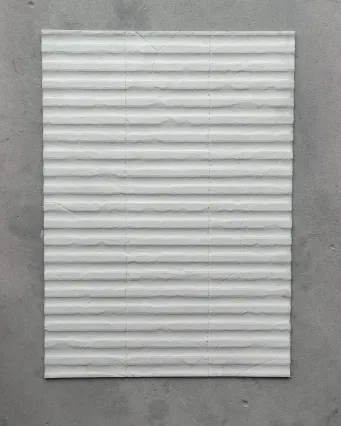
The solution lies in a remarkable material known as MCM, which stands for Modified Cementitious Material. This is the scientific heart beating within our "Eco-Friendly Century Stone." But don't let the technical name intimidate you. The concept is elegantly simple and rooted in nature itself.
Imagine taking the fundamental building blocks of the earth—natural soil, sand, and stone powder—and using cutting-edge technology to recombine them in a way that gives them extraordinary new properties. That's essentially what MCM is. It's not a synthetic plastic or a resource-intensive composite. It is, at its core, a re-imagination of earth itself. The "magic" happens during the modification process. Through a proprietary, low-temperature curing process, these raw materials are transformed into a material that is pliable, durable, and incredibly versatile.
This is where MCM truly distinguishes itself. Remember the high-temperature kilns of the ceramic industry? MCM completely bypasses that. The entire manufacturing process occurs at temperatures between 40 and 60 degrees Celsius. This isn't just a minor improvement; it's a seismic shift in energy consumption. Compared to traditional ceramic tile or natural stone production, the energy savings are monumental—up to 80% less. This directly translates to a drastically lower carbon footprint. We are no longer burning massive amounts of fossil fuels to create beauty; we are intelligently coaxing it from natural elements with minimal environmental impact.
The story gets even better when you consider the material's end-of-life. Traditional building materials become waste. MCM, however, is designed for a circular economy. Because its primary components are natural soil and minerals, it can be fully recycled. Unused offcuts from installation can be collected and re-integrated into the production process. At the end of a building's life, the MCM panels can be broken down and returned to the earth as soil, enriching it for agriculture, or they can be ground up and used as a raw material to create new MCM products. This closes the loop. It moves us away from the "take-make-waste" model and into a sustainable "take-make-reuse" cycle. It's a material that respects the planet from its creation to its eventual return.
At COLORIA GROUP, leveraging our decades of industry experience, we have honed this technology to perfection. We have refined the formulas and the processes to create a family of MCM products that not only meet the highest standards of sustainability but also push the boundaries of architectural design.
A material can be the greenest in the world, but if it doesn't inspire architects, delight homeowners, and perform under pressure, it will remain a novelty. This is why COLORIA GROUP has developed a diverse and sophisticated range of MCM products, each tailored to specific applications but all sharing the core benefits of being lightweight, thin, flexible, durable, and stunningly beautiful.
Before we dive into the specific series, let's talk about these shared superpowers. Being incredibly lightweight (typically one-sixth the weight of traditional tile) means easier and cheaper transportation, less structural load on buildings, and faster, safer installation. Its inherent flexibility is a game-changer, allowing it to be applied to curved surfaces, columns, and complex architectural forms that would be impossible for rigid stone or tile. Add to that Class A fire resistance, excellent water-repellency, and resistance to freeze-thaw cycles, and you have a material that is as tough as it is beautiful.
This is where the magic becomes tangible. Our MCM Flexible Stone series is perhaps the most iconic representation of the material's potential. We can replicate, with breathtaking accuracy, the look, texture, and feel of the world's most sought-after natural stones. Imagine a wall clad in the rich, layered texture of slate, or the warm, porous elegance of travertine, or the rugged charm of split-face rock. Now, imagine that this "stone" is only 2-4mm thick and can be bent by hand to wrap seamlessly around a curved reception desk or a grand, sweeping column.
This is the freedom that MCM Flexible Stone offers. Architects are no longer constrained by the rigidity and weight of natural materials. They can bring the organic beauty of stone into spaces and onto forms that were previously off-limits. It's perfect for interior accent walls, bathroom and shower enclosures (thanks to its water resistance), building exteriors, and even furniture cladding. Installation is a breeze; it can be cut with a utility knife and applied with a simple adhesive, dramatically reducing labor time and costs. It's the aesthetic of the quarry with the practicality of a 21st-century composite.
Modern architectural trends lean towards clean lines, minimalist aesthetics, and the sense of scale that comes from large, uninterrupted surfaces. Traditionally, achieving this meant using massive, heavy, and extremely fragile slabs of marble or large-format porcelain. The logistical nightmare of transporting, hoisting, and installing these behemoths without them cracking is a well-known headache for contractors. The MCM Big Slab Board Series is our elegant solution.
We offer our MCM material in large-format panels, providing the grandeur of a seamless stone wall without any of the associated drawbacks. These boards are still remarkably lightweight and retain a degree of flexibility, making them far less prone to cracking during transport or installation. They can be used to create stunning, grout-free walls in hotel lobbies, corporate headquarters, and luxury residences. The effect is one of monolithic luxury and sophisticated simplicity. With the MCM Big Slab Board Series , creating a monumental feature wall is no longer a high-risk, high-cost engineering feat; it's a straightforward design choice that delivers maximum impact with minimal fuss and a clear environmental conscience.
What if you could literally print your architectural vision onto a building's facade? This is the frontier that our MCM 3D Printing Series explores. By combining the unique properties of our MCM paste with advanced 3D printing technology, we can create custom textures, intricate patterns, and bespoke reliefs that are simply not possible with any other material.
This series unshackles creativity from the constraints of molds and traditional manufacturing. Do you want a facade that features a subtle, wave-like pattern that changes with the light? Or a lobby wall that incorporates a company's logo into a complex, tactile bas-relief? The MCM 3D Printing Series makes this possible. It allows for a level of personalization and artistic expression that can turn a building into a true work of art. This is the ultimate tool for brand storytelling in architecture, enabling companies to create unique, memorable, and tangible expressions of their identity on their physical spaces. It is the pinnacle of customization, proving that sustainable materials can also be the most creatively liberating.
For large-scale residential developments, commercial complexes, and public infrastructure projects, the key considerations are performance, consistency, and value. The MCM Project Board Series is the workhorse of our collection, engineered to deliver on all fronts. These boards provide a highly durable, weather-resistant, and low-maintenance exterior and interior cladding solution. Available in a wide range of standard colors, textures, and finishes, they offer an attractive and cost-effective alternative to traditional render, metal panels, or fiber cement boards. Developers and contractors love this series for its rapid installation and long-term reliability, while architects and planners appreciate its ability to provide a high-quality, sustainable building envelope for projects of any size.
| Feature | COLORIA MCM | Natural Stone | Ceramic / Porcelain Tile |
|---|---|---|---|
| Environmental Impact | Low energy production, low CO2, recyclable, made from natural minerals. | High-impact quarrying, habitat destruction, high transport emissions. | High-energy firing, high CO2 emissions, difficult to recycle. |
| Weight | Extremely light (approx. 4-6 kg/m²). | Very heavy (approx. 30-80 kg/m²). | Heavy (approx. 15-25 kg/m²). |
| Flexibility | Highly flexible, can wrap around curves and columns. | Zero flexibility, rigid and brittle. | Zero flexibility, rigid. |
| Installation | Fast, easy, low-cost labor. Can be cut with a knife. | Slow, requires heavy lifting equipment, high labor costs. | Moderately difficult, requires wet saws and grout. |
| Design Versatility | Limitless possibilities: stone, wood, brick, woven textures, 3D printing. | Limited to what can be quarried. Each piece is unique but non-uniform. | Good range of printed patterns, but lacks authentic texture and flexibility. |
| Durability | Class A fire-rated, water-resistant, freeze-thaw resistant, impact resistant. | Durable but can be porous, stain, or chip. | Durable surface but can chip, and grout can stain or fail. |
The challenges of climate change and resource scarcity are global, and so are the solutions. At COLORIA GROUP, our vision extends far beyond our production facilities. We see ourselves as a one-stop solution provider, partnering with architects, developers, and builders across the globe to help them realize their projects in a more sustainable way. Our business is not just about selling a product; it's about providing a comprehensive service that includes consultation, customization, and logistical support to ensure every project is a success.
Our established presence in key international markets is a testament to this global commitment. For instance, our agency in Saudi Arabia is actively engaged in a region undergoing one of the most ambitious construction booms in human history. In a landscape where visionary giga-projects are rising from the desert, the demand for innovative, high-performance, and sustainable building materials is paramount. The extreme climate—intense sun, heat, and occasional temperature swings—requires materials that are exceptionally durable and resistant. Our MCM products, with their proven resistance to UV degradation, heat, and moisture, are perfectly suited to this demanding environment.
By providing a lightweight, easy-to-transport, and rapidly installable cladding solution, we are helping these landmark projects meet their ambitious timelines and their equally ambitious sustainability goals. We are proud to be a part of building a new, more sustainable future in the heart of the Middle East and in countless other regions around the world. We believe that the choices we make in the building industry have a ripple effect. Choosing a material like MCM is not just an aesthetic or financial decision; it is a statement of values. It is a declaration that design excellence and environmental responsibility can, and must, go hand in hand. It demonstrates a commitment to the long-term health of our planet and the well-being of future generations.
The story of Eco-Friendly Century Stone is the story of a paradigm shift. It's about moving beyond the compromises of the past and embracing a future where we don't have to choose between beauty and sustainability. COLORIA GROUP's MCM technology offers the best of all worlds: the timeless appeal of natural materials, the boundless creative freedom of modern technology, and a profoundly respectful relationship with our planet.
From its low-carbon, low-energy manufacturing process to its circular, recyclable nature, MCM is a material designed for the 21st century and beyond. It is lightweight, flexible, durable, and capable of manifesting any design imaginable, from the rugged textures of our MCM Flexible Stone to the monolithic grace of the MCM Big Slab Board Series and the bespoke artistry of the MCM 3D Printing Series .
As we look to the skylines of tomorrow, we envision cities that are not only smarter and more efficient but also healthier and more beautiful. We envision buildings that inspire us with their design while treading lightly on the earth. This is the future that COLORIA GROUP is dedicated to building, one sustainable panel, one innovative project, and one global partnership at a time. The revolution in construction is here, and it's made from the very earth it seeks to protect.
Recommend Products












