
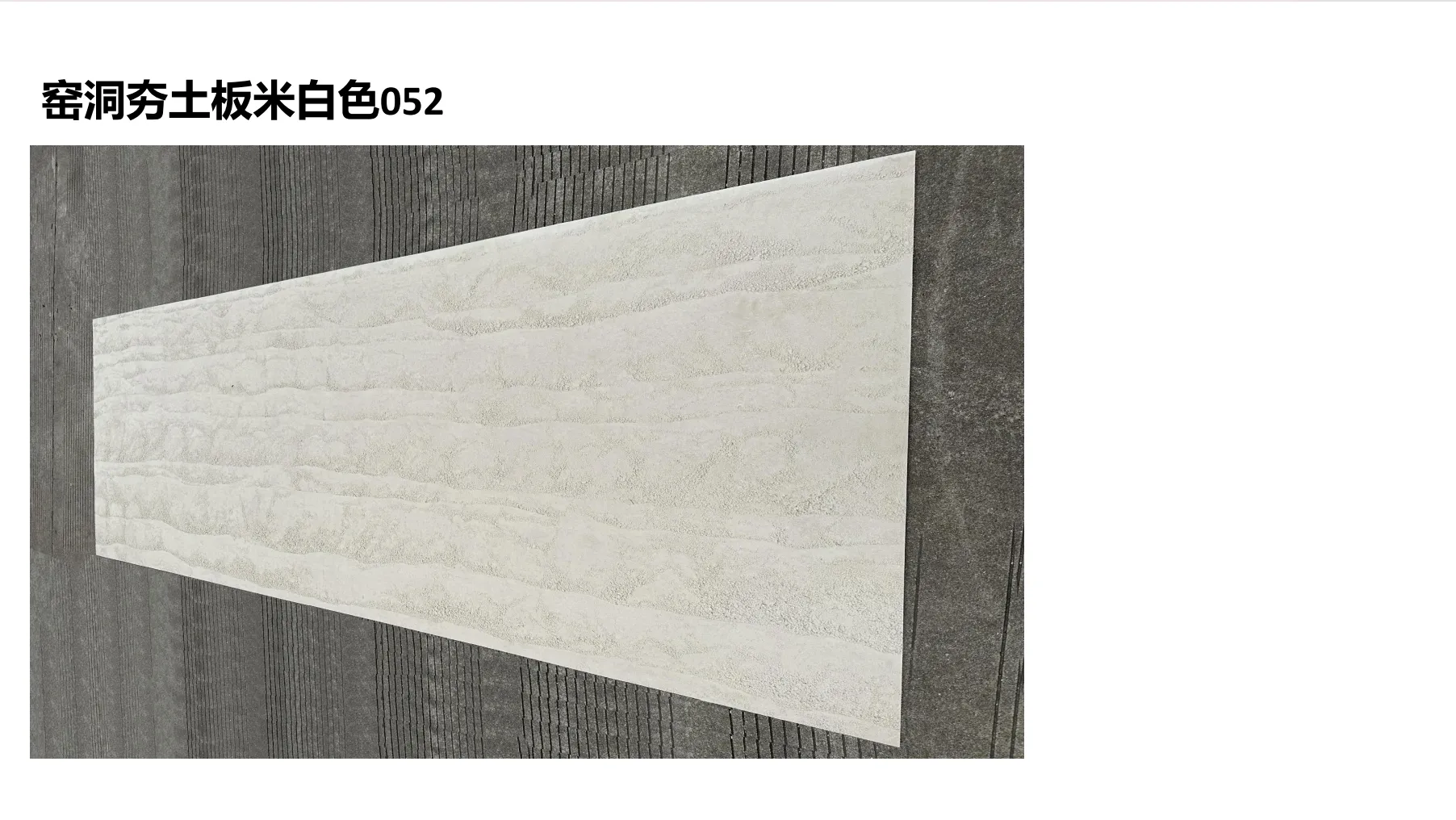
Walk into a modern home or office today, and you'll likely notice a quiet shift: walls that don't just divide space, but tell a story. They feel warm, grounded, and somehow *alive*—as if they've absorbed the sun, wind, and earth that went into making them. This isn't just good design; it's the rise of sustainable building materials that marry function, beauty, and responsibility. Among these, one material has been turning heads in architectural circles: gradient color rammed earth boards. More than just a pretty face, these boards are redefining what it means to build sustainably *and* beautifully—proving that going green doesn't mean sacrificing style.
If you're picturing rough, monotone adobe walls from old westerns, think again. Gradient color rammed earth boards are a modern take on an ancient building technique—one that blends time-tested sustainability with cutting-edge design. At their core, they're made from simple, natural ingredients: locally sourced soil (often clay, sand, and gravel), a small amount of natural binder (like lime or cement, though some formulas skip even that), and water. No harsh chemicals, no synthetic additives—just earth, shaped into solid, durable boards.
But what sets the "gradient color" version apart is the artistry in their layers. Instead of mixing soil into a single hue, manufacturers carefully layer different earth tones—soft beiges bleeding into warm terracottas, muted grays fading into sage greens, or even subtle pinks blending into golden yellows. The result? Walls that look like they've been painted by nature itself, with colors that shift gently as light changes throughout the day. It's a far cry from the flat, uniform surfaces of traditional building materials; these boards feel dynamic, alive, and deeply connected to the landscapes they're sourced from.
Sustainability isn't just a buzzword here—it's the foundation of how these boards are made. Let's break it down: First, the materials. By using locally sourced soil, manufacturers cut down on transportation emissions (no shipping heavy materials across the country or globe). In many cases, the soil comes from the same construction site where the boards will eventually be installed, turning "waste" into a resource. Then, the production process: Rammed earth is compacted using hydraulic presses or manual rams, which requires far less energy than firing bricks or manufacturing concrete. No high-temperature kilns, no fossil fuel-heavy mixing—just pressure and patience.
Even better? These boards are fully biodegradable at the end of their lifecycle. Unlike synthetic cladding or vinyl siding, which sits in landfills for centuries, gradient rammed earth boards will break down naturally, returning to the earth they came from. It's a circular approach to building that aligns with the planet's own rhythms—something that feels increasingly important in a world grappling with climate change.
Let's talk about the "wow" factor. In a world of cookie-cutter homes and generic office parks, gradient color rammed earth boards offer something truly unique: walls that are works of art. The gradient effect isn't just about looking pretty—it's about creating spaces that feel *human*. Warm, earthy tones have been shown to reduce stress and boost mood, making these boards perfect for homes, wellness centers, or even busy corporate offices. Imagine walking into a living room with walls that fade from soft terracotta at the base to pale sand at the ceiling, paired with wood grain board accents and large windows letting in natural light. It's not just a room—it's a retreat.
And the versatility is endless. Want a bold statement? Opt for a gradient that shifts from deep rusty red to golden amber, reminiscent of a desert sunset. Prefer something more subtle? Try soft beiges blending into light grays, a neutral palette that complements any decor. Designers love pairing these boards with other natural materials, too—like mcm flexible stone for a modern-industrial edge, or travertine (starry blue) for a touch of luxury. The gradient acts as a backdrop, letting other elements shine while still holding its own as a focal point.
Wondering how gradient color rammed earth boards measure up against other sustainable building materials? Let's take a look:
| Material | Sustainability | Durability | Aesthetics | Best For |
|---|---|---|---|---|
| Gradient Color Rammed Earth | Locally sourced materials, low energy production, biodegradable | 50+ year lifespan, resistant to fire and pests | Natural gradient hues, warm earthy tones, dynamic light interaction | Residential walls, wellness centers, eco-resorts |
| Fair-Faced Concrete | High carbon footprint, but durable (long lifespan) | 100+ year lifespan, weather-resistant | Minimalist, industrial, uniform gray tones | Museums, modern offices, commercial buildings |
| Wood Grain Board | Sustainable if FSC-certified, renewable resource | 20-30 year lifespan (with treatment), prone to moisture damage | Warm, organic, natural wood patterns | Accent walls, furniture, ceiling panels |
| MCM Flexible Stone | Lightweight (reduces transportation emissions), recyclable core | 30-40 year lifespan, impact-resistant | Variety of stone-like textures, versatile colors | Exterior cladding, retail spaces, hospitality venues |
These boards aren't just a theoretical eco-friendly option—they're already making waves in real buildings. Take the "Desert Bloom" residence in Arizona, a home that uses gradient rammed earth walls shifting from terracotta to sand to blend seamlessly with the surrounding desert landscape. The homeowners report that the walls keep the house cool in the scorching summer heat (thanks to rammed earth's natural thermal mass, which absorbs and releases heat slowly) and warm in the crisp winters, cutting their energy bills by 30%. "It's like living in a hug from the earth," one resident (laughed). "The colors change with the light—at sunrise, the walls glow pink; at sunset, they turn golden. It's never the same space twice."
On the commercial side, the "Green Horizon" office park in Portland, Oregon, features gradient rammed earth accent walls in its lobby, paired with mcm flexible stone cladding and wood grain board ceilings. The design team wanted to create a space that felt "rooted in nature but forward-thinking," and the gradient boards delivered. Employees mention feeling more calm and focused in meetings held in the lobby, with many noting that the earthy tones make the space feel less "corporate" and more "human."
It's not just homeowners and employees who love these boards—builders and designers are raving, too. For contractors, gradient rammed earth boards are a dream: they're lightweight (compared to traditional stone), easy to install, and require minimal maintenance. Unlike wood, they don't need staining or sealing; unlike concrete, they don't crack easily with temperature changes. And because they're made from natural materials, they're resistant to mold, mildew, and pests—no more worrying about termites or water damage.
Designers, meanwhile, appreciate the creative freedom. "Gradient rammed earth lets me tell a story with a wall," says Maria Gonzalez, an architect specializing in sustainable design. "I can evoke a specific landscape—a mountain range, a beach, a forest—just through color. Pair that with materials like travertine (starry blue) for a pop of contrast, or wood grain board for warmth, and the possibilities are endless. It's design without limits, but with a conscience."
As the world wakes up to the urgency of climate change, sustainable building materials are no longer a niche choice—they're a necessity. Gradient color rammed earth boards represent the best of both worlds: materials that honor the planet *and* elevate our daily lives. They remind us that sustainability doesn't have to mean sacrificing beauty; in fact, it can enhance it. When we build with the earth, we build spaces that feel alive, that connect us to something bigger than ourselves, and that leave a lighter footprint for future generations.
So the next time you walk into a building and feel an inexplicable sense of calm, or notice walls that seem to glow with natural light, take a closer look—it might just be gradient color rammed earth. And as more architects, builders, and homeowners embrace this material, we're not just building structures—we're building a future where sustainability and beauty go hand in hand. After all, the best buildings aren't just made of materials—they're made of heart.
Recommend Products












