


In the world of modern architecture and construction, a powerful shift is underway. The conversation is no longer just about aesthetics and durability; it's increasingly focused on sustainability, environmental impact, and the health of our planet. This movement towards green buildings isn't a fleeting trend but a fundamental re-evaluation of how we build the spaces where we live, work, and play. At the heart of this revolution are certifications like LEED (Leadership in Energy and Environmental Design), which set rigorous standards for creating high-performance, eco-conscious structures. For architects, designers, and builders, this presents a significant challenge: how do we source materials that are not only beautiful and functional but also align with these stringent green credentials?
For centuries, natural stones like travertine have been celebrated for their timeless beauty. The warm, earthy tones and unique porous texture of travertine have graced everything from ancient Roman monuments to contemporary luxury homes. The idea of a "mosaic travertine tile" finish evokes a sense of classic elegance and sophisticated design. However, the environmental cost of quarrying and transporting this heavy stone is substantial. The process consumes immense energy, disrupts natural landscapes, and generates a significant carbon footprint. This inherent conflict between classic aesthetics and modern environmental responsibility has left many searching for a better way. What if you could achieve the coveted look of travertine, in any format you desire, without the environmental baggage? This is where true innovation steps in, offering solutions that honor both design heritage and our collective future. COLORIA GROUP is at the forefront of this material innovation, pioneering a new generation of surfacing solutions that redefine what's possible.
The Green Building Imperative: Rethinking Traditional Materials
To fully appreciate the need for innovation, let's dive deeper into why the old ways are no longer sufficient. The concept of a green building extends far beyond simply adding solar panels or using energy-efficient light bulbs. It's a holistic approach that considers the entire lifecycle of a building, from the extraction of raw materials to its eventual demolition or repurposing. LEED certification, for example, awards points across several categories, with "Materials and Resources" being a critical component. This category specifically encourages the use of materials that are sustainably sourced, contain recycled content, have a low lifecycle impact, and contribute to a healthier indoor environment.
When we hold traditional building materials up to this green-tinted lens, their shortcomings become apparent:
- Natural Stone (e.g., Travertine, Marble, Granite): The primary issue is extraction. Quarrying is an invasive, energy-intensive process that scars the earth. The stone itself is incredibly heavy, leading to astronomical transportation costs and carbon emissions, especially when shipped across continents. Furthermore, installation requires heavy machinery and specialized labor, adding to the project's overall energy consumption and complexity. Waste is also a factor, as cutting large blocks into usable tiles or slabs often results in significant material loss.
- Traditional Ceramic & Porcelain Tiles: While more manageable in weight than stone, their production is far from green. These tiles are fired in kilns at extremely high temperatures (often exceeding 1,200°C or 2,200°F) for extended periods. This process is a massive consumer of natural gas or electricity, contributing directly to greenhouse gas emissions.
- Concrete and Cement-Based Products: Standard cement production is one of the world's largest industrial sources of carbon dioxide. The chemical process of producing clinker, a key ingredient, releases vast amounts of CO2. While concrete is durable, its environmental toll at the point of manufacture is immense.
This analysis reveals a clear gap in the market. The industry needs a material that captures the aesthetic richness of natural products but is born from a process rooted in sustainability. It needs a material that is light, versatile, and produced with minimal energy, thereby ticking all the right boxes for LEED compliance and responsible design. This is precisely the challenge that COLORIA GROUP has tackled head-on with its groundbreaking MCM technology.
The MCM Revolution: Introducing Modified Cementitious Material
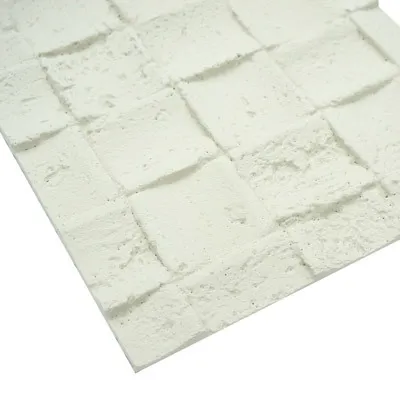
So, what exactly is this game-changing material? MCM, or Modified Cementitious Material, is an innovative composite material that represents a paradigm shift in surface technology. Forget everything you associate with traditional, heavy, and rigid cladding. MCM is something entirely different. Developed by COLORIA GROUP through decades of research and expertise, it's a technology that blends natural inorganic materials—like common soil, mineral powders, and stone dust—with a small amount of water-based polymers and fibers.
The real magic lies in the manufacturing process. Unlike the brute force, high-heat methods of ceramics or cement, MCM is formed through a low-temperature photocuring process. This is a crucial distinction. By avoiding high-energy kilns, the production of MCM consumes up to 80% less energy and emits virtually zero pollutants. It's a process that is gentle on the planet, transforming humble, readily available raw materials into a high-performance architectural product. The result is a material that is:
- Incredibly Lightweight: MCM products are remarkably thin and light, often just 2-5mm thick. This dramatically reduces transportation costs and carbon footprint. It also means less strain on the building's structure and allows for faster, easier installation with smaller crews and no heavy lifting equipment.
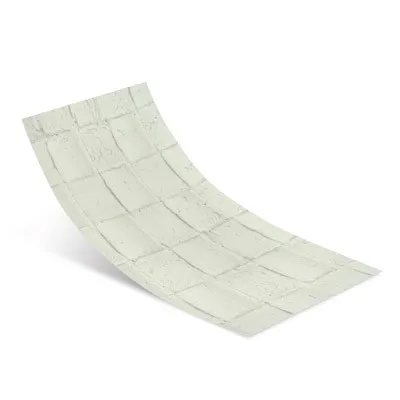
- Amazingly Flexible: One of the most stunning properties of MCM is its ability to bend. This isn't a rigid tile; it's a flexible sheet that can effortlessly wrap around curved walls, columns, and complex architectural features. This opens up a whole new world of design possibilities that are simply impossible with traditional stone or tile.
- Extremely Durable: Despite its flexibility and light weight, MCM is tough. It is Class A fire-resistant, waterproof, freeze-thaw resistant, and stands up to weathering, acids, and alkalis. It's a material designed to last, whether used on an exterior facade battling the elements or a high-traffic interior wall.
- Fundamentally Eco-Friendly: From its low-energy production and use of natural or recycled raw materials to its light weight and long lifespan, every aspect of MCM is designed with sustainability in mind. It's the ideal choice for projects targeting LEED certification and for any client who values environmental stewardship.
Achieving the Travertine Dream, Sustainably: A Closer Look at COLORIA GROUP's Solutions
Now, let's return to our original inspiration: the timeless beauty of mosaic travertine tile. How can COLORIA GROUP's MCM technology deliver this classic aesthetic in a way that is modern, practical, and green? The answer lies in the incredible versatility of the material and the specialized product lines developed to meet diverse architectural needs.
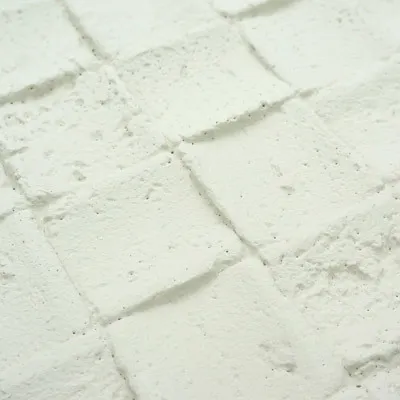
The key is MCM's ability to be molded with unparalleled precision. Using custom molds derived from high-resolution scans of real natural stone, the manufacturing process can replicate the subtle textures, clefts, and porous surfaces of genuine travertine. Advanced, through-body pigmentation techniques ensure that the color isn't just a surface layer but is integrated throughout the material, creating a rich, authentic, and non-fading appearance. This allows us to offer the travertine look in several innovative formats.
One of the most exciting applications is the MCM Flexible Stone series. This product is the ultimate stone alternative. Imagine a roll of "stone" that is thin, light, and can be cut with a utility knife. This material perfectly captures the nuanced appearance of travertine and can be applied seamlessly over curved surfaces, archways, and even furniture. For a "mosaic" effect, it can be cut into any tile shape and size and applied with minimal grout lines, creating a sophisticated look without the weight and installation complexity of individual stone tiles. Its flexibility means perfect adherence to substrates, reducing the risk of cracking or delamination over time. Using MCM Flexible Stone for a travertine finish instantly transforms a project, making it more cost-effective, faster to build, and significantly more eco-friendly.
For projects that demand a grander, more monolithic statement, the MCM Big Slab Board Series is the perfect solution. Traditional large-format travertine slabs are prohibitively heavy, expensive, and difficult to install. The MCM Big Slab Board Series, however, offers the same impressive, seamless look in large, lightweight panels. These boards deliver the visual impact of a solid stone wall without the need for massive structural reinforcement or specialized cranes for installation. This makes them ideal for large-scale exterior facades and expansive interior feature walls, providing the luxurious feel of quarried stone while contributing positively to the project's LEED scorecard.
| Feature | Traditional Travertine Tile/Slab | COLORIA GROUP's MCM Travertine-Look |
|---|---|---|
| Weight & Thickness | Very heavy (approx. 50-80 kg/m² for slabs). Typically 15-30mm thick. Requires significant structural support. | Extremely lightweight (approx. 4-8 kg/m²). Typically 2-5mm thick. Minimal structural load. |
| Environmental Impact | High. Energy-intensive quarrying, high carbon footprint from transport, significant water usage in cutting/polishing. | Low. Low-energy production, uses natural/recycled materials, low carbon footprint from transport, minimal waste. Excellent for LEED points. |
| Installation | Slow, labor-intensive, requires heavy machinery, specialized wet saws, and thick-set mortar. High labor costs. | Fast and easy. Can be cut with a utility knife, applied with a simple adhesive. Reduces labor time and costs by over 50%. |
| Design Flexibility | Limited. Rigid material, difficult to apply on curved surfaces. Cutting complex shapes creates significant waste. | Virtually unlimited. Highly flexible, easily wraps around columns, curves, and complex shapes without cracking. |
| Durability & Safety | Brittle and prone to cracking on impact or with building settlement. Porous and can stain if not sealed. Not fireproof. | Highly durable, impact-resistant, and accommodates building movement. Class A fire-resistant, waterproof, and non-porous. |
| Cost-Effectiveness | High initial material cost, plus very high transportation and installation costs. | Competitive material cost with massive savings on transportation, labor, and structural requirements, leading to a lower total project cost. |
Unleashing Creativity: Customization Beyond Imagination
While replicating classic materials like travertine is a powerful capability, the true potential of COLORIA GROUP's MCM technology lies in its capacity to break free from convention entirely. It serves as a blank canvas for architectural expression, enabling designers to create surfaces that were previously unimaginable. The "one-stop solution provider" philosophy of COLORIA GROUP is not just about supplying a product; it's about providing a platform for boundless creativity.
The customization possibilities extend far beyond stone finishes. MCM technology can be used to create hyper-realistic wood grains (without cutting down a single tree), the industrial chic of raw concrete, the classic appeal of face brick, the soft texture of woven fabric, or even the luxurious feel of leather. Any texture, any pattern, any color can be engineered into the material. This versatility allows a single, sustainable material to be used across an entire project to achieve multiple different looks, ensuring design cohesion while simplifying logistics and sourcing.
Pushing the boundaries of customization even further is the revolutionary 3D Printing Series . This is where technology and artistry converge. By integrating advanced 3D printing and digital carving techniques into the MCM production line, it becomes possible to create bespoke, three-dimensional surfaces. Architects and designers can now create custom-designed patterns, intricate bas-reliefs, corporate logos, or unique artistic textures that are an integral part of the wall panel itself. Imagine a hotel lobby with a feature wall that depicts a flowing, topographic map, or a corporate headquarters where the company's values are literally etched into the building's facade in a subtle, repeating pattern. The 3D Printing Series transforms walls from passive backdrops into active, dynamic elements of the architectural narrative. This level of personalization is simply not possible with traditional off-the-shelf materials.
The Clear Choice for a Greener Future
The path towards a sustainable future for the built environment is paved with innovation. As the industry continues to embrace green building standards like LEED, the choices we make about materials become more critical than ever. The era of accepting compromise—of choosing between beauty and sustainability, or between design freedom and practicality—is over.
COLORIA GROUP's MCM technology offers a comprehensive solution that elegantly resolves these old conflicts. It provides the aesthetic richness of cherished materials like travertine, but in a form that is lightweight, flexible, durable, and fundamentally green. From the versatile MCM Flexible Stone that wraps a building in a new skin, to the grand MCM Big Slab Board Series that makes a seamless statement, to the limitless creativity of the 3D Printing Series, this is a material platform built for the 21st century.
By choosing these advanced materials, architects, developers, and builders are not just selecting a wall finish. They are making a conscious decision to reduce their project's carbon footprint, improve construction efficiency, lower long-term costs, and create healthier, more inspiring spaces. They are embracing a future where stunning design and profound respect for our planet go hand in hand. In the quest to build better, smarter, and greener, the choice is clear. The future of architectural surfaces is here, and it is flexible, beautiful, and sustainable.










