
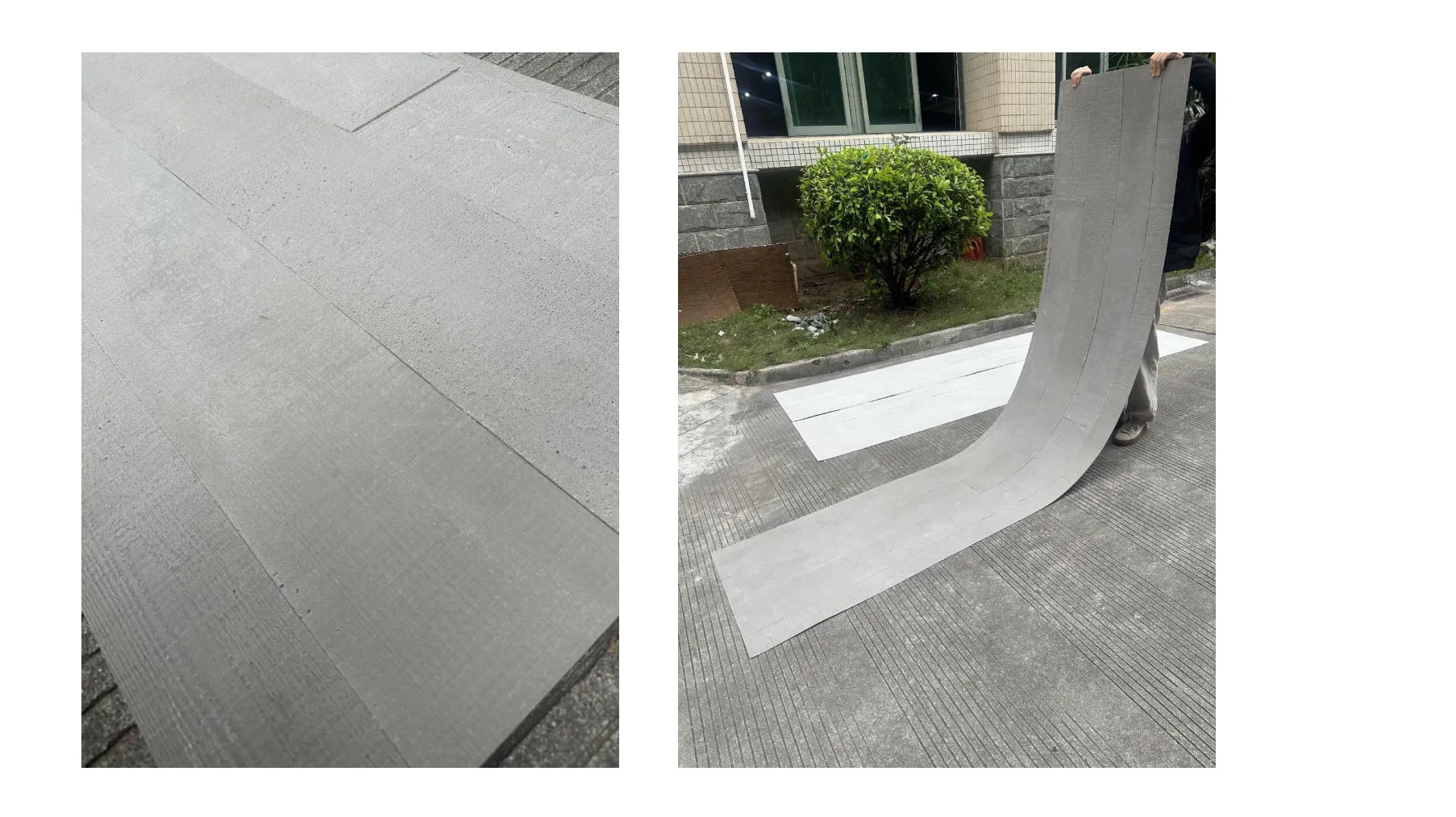
How one brand turned packaging from a problem into a promise—one earthy, sturdy board at a time
It starts with a box. Not the crinkly, plastic-lined kind that tears when you tug too hard, or the foam-stuffed one that leaves your hands sticky with static. This box feels different. Heavy, but warm—like holding a piece of a forest floor smoothed by rain. When you run your fingers over its surface, you can trace the faint grain of wood, mixed with the cool grit of cement. It doesn't scream "disposable"; it whispers "intentional." This is COLORIA's packaging, and unboxing it isn't just about getting to the product inside. It's about unboxing a story—one of waste reimagined, and a brand's quiet rebellion against the throwaway culture of modern commerce.
For years, COLORIA, a mid-sized home decor brand known for its artisanal tiles and stone accents, grappled with a guilty secret: their beautiful, handcrafted products arrived in packaging that felt like a betrayal. "We'd spend months perfecting a travertine tile's texture, making sure it captured the warmth of Italian quarries, then ship it in a cardboard box wrapped in plastic bubble wrap," says Maya Chen, COLORIA's sustainability director. "By the time the customer opened it, the packaging was already on its way to a landfill. We were selling 'natural beauty' while contributing to environmental harm. It didn't add up."
The numbers stung. In 2019, the brand calculated that over 60% of their carbon footprint came from shipping materials—cardboard that required deforestation, plastic foam that took centuries to decompose, and tape laced with chemicals. "We had customers write in, asking if we could do better," Maya recalls. "One note, from a teacher in Portland, stuck with me: 'I love your tiles, but my students made a diorama of the ocean using your packaging waste. The plastic fish we glued to it looked too real.' That's when we knew: packaging wasn't just a logistics problem. It was a trust problem."
The search for a solution led COLORIA to a material so humble, it had been hiding in plain sight: wood-cement board . "We'd seen it used in construction—siding for houses, outdoor benches—but never for packaging," says Raj Patel, COLORIA's head of production. "At first, our team laughed. 'A cement box?' they said. 'It'll weigh a ton! Customers will hate it!' But when we tested it, something clicked. Wood-cement board is durable enough to protect our lunar peak stone tiles from cracks during shipping, but it's also 100% recyclable. And unlike plastic, it doesn't leach toxins into soil or oceans. Plus, it looks… good . Not 'shiny packaging good,' but 'I could hang this on my wall' good."
The shift wasn't easy. Traditional packaging suppliers warned them about higher costs; logistics teams fretted over weight limits. But COLORIA persisted, partnering with a small factory in rural Vietnam that specialized in eco-friendly building materials. There, workers mix recycled wood fibers (from sawmills that would otherwise burn them) with low-carbon cement, pressing the blend into thin, flexible boards. "It's not automated," Raj explains. "Our factory partners are artisans. They adjust the ratio of wood to cement by hand, feeling the texture. Some have been making these boards for 20 years—they can tell if a batch is 'right' just by lifting it. That human touch? It ends up in the product. When you hold our packaging, you're holding someone's expertise."
Today, COLORIA's wood-cement board packaging is as much a part of their brand as the tiles inside. Customers don't just throw it away—they repurpose it. "We've seen people use it as plant pots, picture frames, even coasters," Maya laughs. "Last month, a bride in Barcelona sent us photos of her wedding favors: small succulents planted in our packaging. She wrote, 'Your box felt like a symbol of growth—for our marriage, and for the planet.' That's when I knew we'd hit something bigger than 'sustainable packaging.' We'd created something people connect with."
The wood-cement board real photos that flood COLORIA's social media feeds tell the same story. A designer in Tokyo posts a close-up of the board's surface, captioning it "Texture porn—nature's own Instagram filter." A DIY enthusiast in Texas shares a video of turning a COLORIA box into a wall shelf, writing, "Who needs IKEA when your packaging is already this cool?" These aren't just marketing wins; they're proof that sustainability, when done with heart, becomes a conversation.
Wood-cement board is the star, but it's not alone. COLORIA has expanded its sustainable packaging lineup to include other earthy materials, each chosen for its durability and low environmental impact. Take fair-faced concrete , a smooth, uncoated cement blend that adds a sleek, industrial edge to larger shipments. "It's perfect for our lunar peak stone series—those dark, moody tiles that look like they belong on a mountain," Raj says. "The concrete packaging mirrors their raw, minimalist vibe. It's like the tile and the box were made for each other."
Then there's rammed earth board , a material with roots in ancient construction. Made by compressing layers of soil, sand, and clay, it has a warm, terracotta hue that complements COLORIA's travertine and dolomitic travertine products. "Rammed earth feels alive," Maya says. "It has imperfections—small cracks, flecks of stone—that make it unique. Just like our tiles, which are designed to celebrate natural variation, not hide it. Packaging shouldn't be flawless. It should be honest ."
| Material | Environmental Impact | Durability | Aesthetic Appeal |
|---|---|---|---|
| Traditional Cardboard | High: Requires 17 trees per ton; often coated in plastic | Low: Tears easily; water-damaged in transit | Plain, disposable-looking |
| Plastic Foam | Extremely High: Non-biodegradable; releases toxic fumes when burned | Medium: Protects products but crumbles into microplastics | Cheap, artificial, static-prone |
| Wood-Cement Board | Low: Uses recycled wood fibers; 100% recyclable | High: Water-resistant; withstands drops and pressure | Earthy, textured, repurposable |
| Fair-Faced Concrete | Low: Made with low-carbon cement; minimal processing | Very High: Resistant to cracks and moisture | Sleek, industrial, modern |
| Rammed Earth Board | Very Low: Uses local soil; zero synthetic additives | Medium-High: Sturdy but develops characterful cracks over time | Warm, organic, ancient-feeling |
At the heart of COLORIA's sustainable packaging are the people who make it. In Vietnam, the factory workers—many of whom have worked in plastic packaging factories—speak of the difference in their daily lives. "Before, I came home with plastic dust on my clothes, and my kids would cough," says Minh, a 45-year-old press operator. "Now, I work with wood and soil. My hands smell like trees at the end of the day. My daughter says I 'smell like the park.' That's a gift."
"Sustainability isn't just about materials. It's about the people who make them. If our workers aren't proud of what they're creating, then we haven't done our job." — Raj Patel, COLORIA Production Head
Maya adds, "We visit the factory twice a year. Last trip, Minh showed me a photo album: his son's school project, a model house built with offcuts of our wood-cement board. 'He told his class, "My dad makes boxes that turn into homes,"' Minh said. That's the impact we're after—not just reducing waste, but creating pride . In the workers, in the customers, in ourselves."
COLORIA isn't stopping at wood-cement board. Next year, they plan to introduce rammed earth board (gradient) packaging, dyed with natural pigments like turmeric and indigo, and fair-faced concrete boxes embedded with seeds—so when you're done with them, you can plant them and watch wildflowers grow. "We want packaging to be part of the product's lifecycle, not the end of it," Maya says. "Imagine a world where 'throwing away' a box means giving life to something new. That's the dream."
It's a dream that starts, as all good things do, with a choice. A choice to see packaging not as a necessary evil, but as an opportunity—to connect, to respect, to reimagine. For COLORIA, that choice has transformed a guilty secret into a source of pride. And for the rest of us? It's a reminder that even the smallest things—the boxes we open, the materials we touch—can carry big meaning.
So the next time you receive a package from COLORIA, take a moment to feel it. Trace the wood grain, the cement grit, the faint indentations left by human hands. That's not just a box. That's a promise. And in a world of broken promises, it's a beautiful thing to hold.
Recommend Products












