
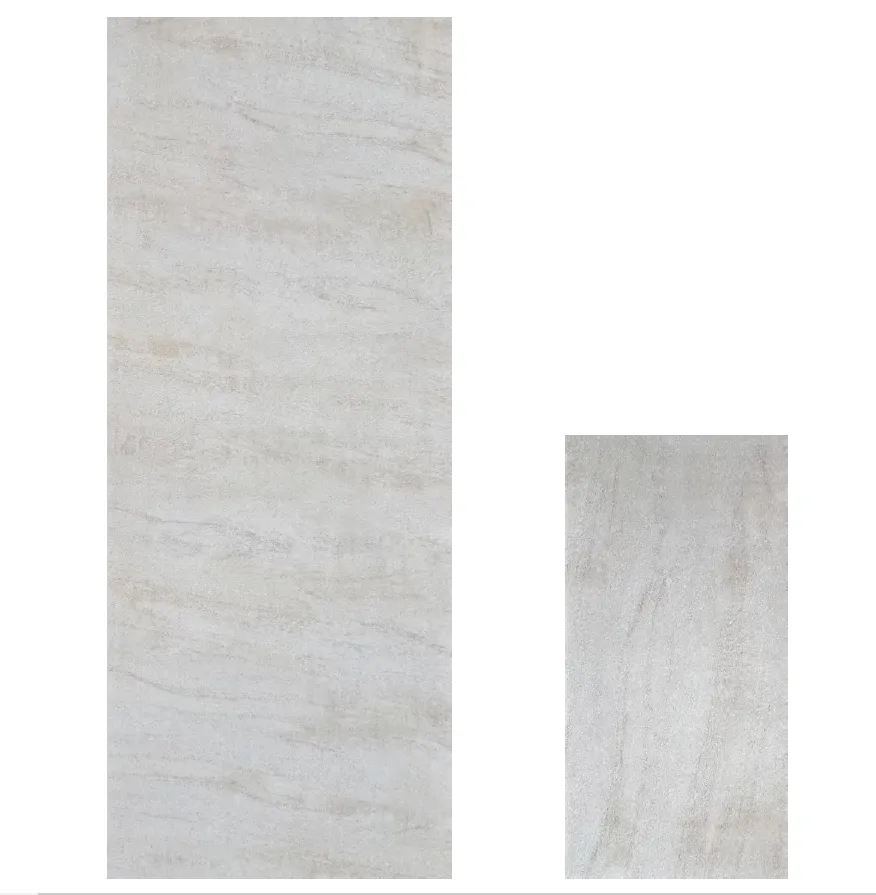
In a world where every choice echoes through the planet's ecosystems, the building materials we select carry more weight than just their aesthetic appeal. For architects, designers, and homeowners alike, the demand for beauty no longer conflicts with the duty to protect our environment—and COLORIA is leading the charge. Their Marble Stream Stone isn't just a feast for the eyes; it's a testament to how innovation, care, and cutting-edge technology can redefine sustainable luxury in construction. Let's dive into the story of how COLORIA turns raw materials into works of art, all while treading lightly on the Earth.
For centuries, natural stone has been the gold standard of luxury in architecture. From the marble columns of ancient Rome to the granite facades of modern skyscrapers, its durability and timeless elegance are unmatched. But behind that beauty lies a heavy environmental toll. Traditional stone mining and processing are notoriously resource-intensive: quarries carve into landscapes, displacing wildlife and disrupting ecosystems. Massive amounts of water are used to cut and polish stone, while transportation from remote quarries adds to carbon emissions. Perhaps most striking is the waste—up to 40% of extracted stone ends up as offcuts or debris, discarded because it doesn't fit the rigid dimensions of traditional production.
"We couldn't ignore the fact that the materials we love were harming the planet we're trying to preserve," says Elena Marquez, COLORIA's Director of Sustainability. "Architects came to us asking for alternatives—something that felt as authentic as natural stone but didn't come with the guilt of excessive waste or carbon footprints. That's when we set out to reimagine the entire process."
The Stats Speak Volumes: The global construction industry accounts for 39% of energy-related carbon emissions, with traditional stone production contributing a significant chunk. COLORIA's mission? To slash that number—without compromising on beauty.
COLORIA didn't just tweak the traditional playbook—they rewrote it. At the heart of their approach is a commitment to three pillars: waste reduction, renewable energy, and recycled materials . These aren't buzzwords; they're the foundation of every product, from their 3D Printing Series to their iconic Marble Stream Stone. Let's break down how they turn sustainability into a tangible, touchable reality.
When you think of 3D printing, you might picture small plastic trinkets—but COLORIA has scaled this technology to revolutionize stone production. Their 3D Printing Series uses additive manufacturing to build stone panels layer by layer, with pinpoint accuracy. Unlike traditional methods, which carve large blocks and discard the excess, 3D printing deposits material only where it's needed, slashing waste from 40% to a staggering 5% . "It's like building a house with only the bricks you need, instead of buying a mountain of bricks and throwing away half," explains Marcus Chen, COLORIA's Lead Engineer. "Every layer is calculated, every millimeter intentional. There's no guesswork, no waste—just pure efficiency."
This precision isn't just good for the planet; it's good for design. The 3D Printing Series allows for intricate patterns and custom shapes that would be impossible with traditional cutting tools. Imagine a facade that mimics the flow of a river, or a backsplash with organic, wave-like textures—all made with minimal environmental impact. "Architects love it because they're no longer limited by what a saw can do," Elena adds. "They can dream bigger, and we can build it sustainably."
Another star in COLORIA's eco-friendly lineup is their Flexible Stone—a material that defies expectations. Unlike rigid natural stone, Flexible Stone bends and adapts, making it ideal for curved surfaces, accent walls, or even furniture. But what truly sets it apart is its composition: up to 70% of its raw materials are recycled. "We take discarded stone dust from quarries, mix it with natural resins and recycled aggregates, and press it into sheets that are strong, lightweight, and infinitely versatile," Marcus explains. "It's a second life for materials that would otherwise end up in landfills."
The result? A product that's not only eco-friendly but also durable. Flexible Stone resists cracks, moisture, and UV damage, making it perfect for both indoor and outdoor use. "Homeowners often tell us they were worried flexible materials would feel cheap," Elena laughs. "Then they touch it—solid, cool, with the same depth as natural stone—and their minds are blown. It's proof that sustainability doesn't mean sacrificing quality."
Now, let's turn to the star of the show: Marble Stream Stone. Inspired by the fluid, organic patterns of mountain streams, this material captures the essence of nature—without depleting it. So how does COLORIA make a stone that looks like it was carved by centuries of rushing water, while keeping its environmental footprint tiny?
First, the base. Unlike traditional marble, which is mined in massive blocks, Marble Stream Stone starts with a blend of recycled marble dust (from other production processes) and natural minerals. This mixture is then shaped using COLORIA's 3D printing technology, ensuring minimal waste. The "stream" patterns aren't just printed on top—they're embedded into the material itself, created by layering different shades of stone dust to mimic the way sediment settles in a riverbed. "It's like painting with stone," Marcus says. "Every vein, every swirl, is a result of how we layer the materials—no two panels are exactly alike, just like no two streams are the same."
But the sustainability doesn't stop there. The production facility where Marble Stream Stone is made runs entirely on renewable energy—solar panels on the roof, wind turbines nearby, and a battery storage system that ensures zero reliance on fossil fuels. Water used in the process is recycled up to 10 times, and even the packaging is 100% biodegradable. "We wanted to make sure that from quarry to installation, every step honors the planet," Elena says. "Marble Stream Stone isn't just a product—it's a promise."
"When we used Marble Stream Stone for our client's villa, they fell in love with the texture first—the way it catches the light, like sunlight on water. But what sealed the deal was learning about COLORIA's process. They didn't have to choose between beauty and the environment. They got both." — Raj Patel, Principal Architect, Patel Design Studio
Curious how COLORIA's methods stack up against traditional stone production? Let's take a look at the numbers. The table below compares key environmental metrics, showing just how much of a difference sustainable innovation can make.
| Metric | Traditional Stone Production | COLORIA's Process (Marble Stream Stone) |
|---|---|---|
| Material Waste | 30-40% (offcuts, debris) | 5% (via 3D printing precision) |
| Energy Consumption | High (fossil fuel-powered machinery) | Low (100% renewable energy: solar, wind) |
| Carbon Emissions | High (transport, mining, processing) | 70% lower than industry average |
| Water Usage | 500-800 liters per sq.m. (non-recycled) | 50 liters per sq.m. (90% recycled water) |
| Recycled Content | 0-5% (minimal recycling) | Up to 70% (recycled stone dust, aggregates) |
"These numbers aren't just statistics—they're a roadmap," Elena says. "Every time someone chooses Marble Stream Stone over traditional marble, they're voting for a world with less waste, cleaner air, and healthier ecosystems. It's a small choice that adds up to big change."
COLORIA's impact doesn't end when a panel is shipped. They partner with architects, contractors, and communities to spread the message of sustainable building. "We don't just sell materials—we educate," Elena says. "We host workshops, share our research, and even help clients calculate their carbon savings when they switch to our products."
One such partnership is with GreenBuild, a global initiative to make construction carbon-neutral by 2050. COLORIA's 3D Printing Series and Marble Stream Stone are now certified by GreenBuild as "Low-Impact Materials," and the company regularly donates a portion of profits to reforestation projects near quarry sites. "It's about closing the loop," Marcus adds. "We take responsibility for the entire lifecycle of our products, from sourcing to disposal. If a panel ever needs to be replaced, we'll take it back and recycle it into new material. That's the COLORIA promise."
Real Impact, One Project at a Time: A recent luxury hotel in Bali used over 5,000 sq.m. of Marble Stream Stone for its lobby and facade. Thanks to COLORIA's process, the project saved 120 tons of stone waste, reduced carbon emissions by 45%, and conserved 3 million liters of water. "The hotel's guests now ask about the stone as much as they ask about the view," Elena smiles. "That's how we know we're winning—when sustainability becomes part of the conversation."
As we look ahead, the demand for sustainable building materials will only grow. Climate change, stricter regulations, and a new generation of eco-conscious consumers are driving the industry toward innovation—and COLORIA is at the forefront. With plans to expand their 3D printing technology to new materials (like their foamed aluminium alloy boards) and to launch even more recycled-content products, they're proving that sustainability isn't a trend; it's the future.
Marble Stream Stone is more than a material. It's a symbol of what's possible when we combine creativity with care. It says that luxury doesn't have to be extractive, that beauty and responsibility can coexist, and that every choice we make—whether in a skyscraper or a home—can be a step toward a healthier planet.
So the next time you walk into a space with stunning stone walls, take a moment to ask: What's the story behind that beauty? If it's COLORIA's Marble Stream Stone, the answer is simple: a story of innovation, respect, and a deep love for the Earth we all share.
Recommend Products












