
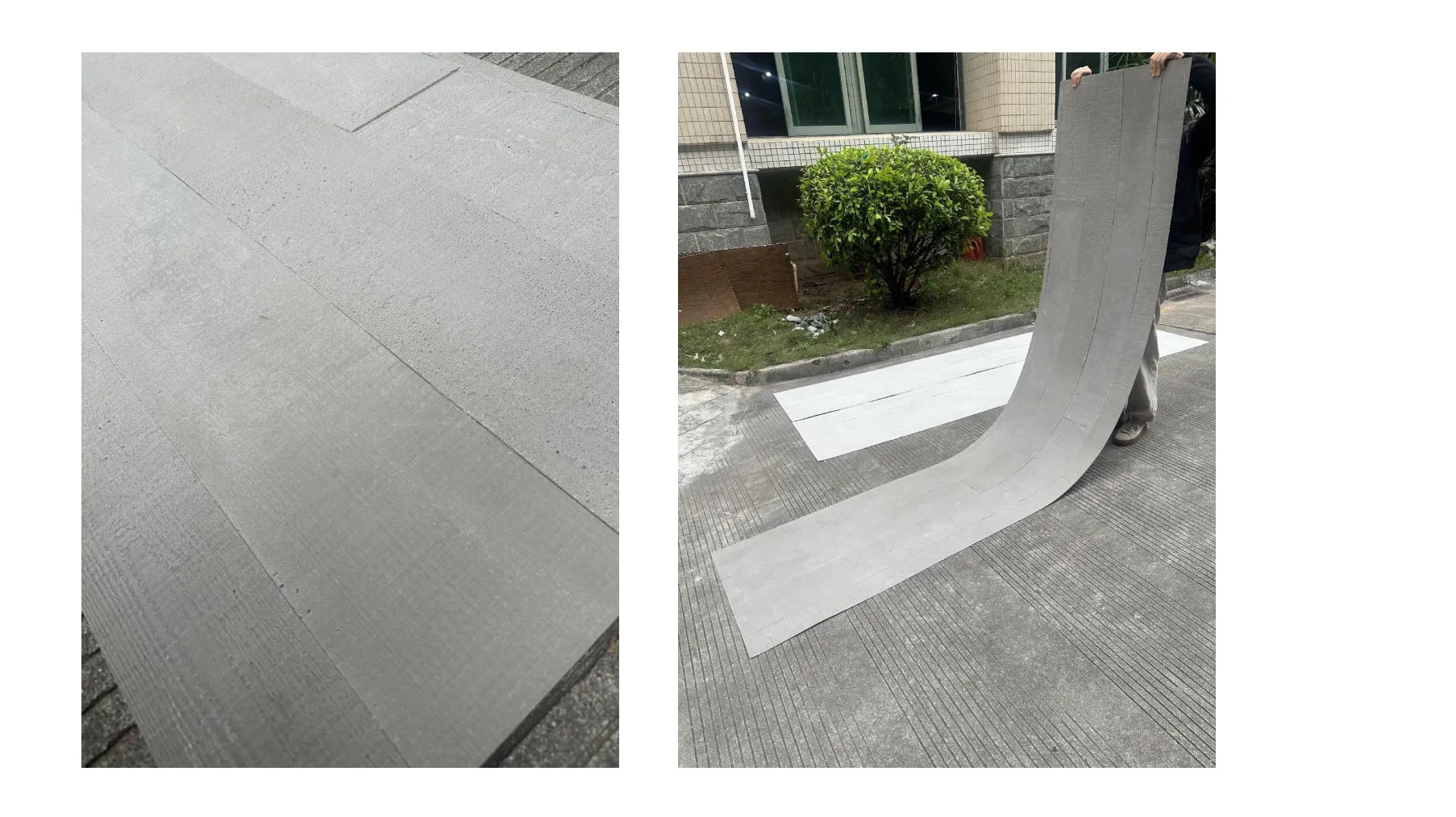
In a world where "going green" has shifted from a buzzword to a way of life, our homes and spaces are becoming reflections of our values. Renovating isn't just about updating a kitchen or refreshing a living room anymore—it's about creating environments that nurture us, respect the planet, and stand the test of time. And at the heart of this movement? The materials we choose. Today, we're diving into one material that's quietly revolutionizing eco-friendly renovation: wood-cement board. But we're not just talking specs and stats—we're talking about real photos, real spaces, and real impact. Because when it comes to building a sustainable future, seeing is believing.
Let's start with the basics: Why does the material you pick for your walls, floors, or countertops matter? It's easy to get swept up in the latest design fads—marble this, quartz that—but sustainable materials go deeper. They're about reducing your home's carbon footprint, yes, but they're also about creating spaces that are healthier for you and your family. Think lower VOC emissions (those harmful chemicals that off-gas from some plastics and paints), better moisture resistance to prevent mold, and durability that means less frequent replacements (and less waste).
Take it from Sarah, a homeowner in Portland who renovated her 1950s bungalow last year. "I used to get headaches whenever we painted or installed new flooring," she says. "Now, with materials like wood-cement board, the air feels cleaner. My kids don't sneeze as much, and I don't worry about what's leaching into our home. It's not just about being 'green'—it's about living better."
So, what exactly is wood-cement board? Picture this: a blend of recycled wood fibers and cement, pressed into panels that look and feel like natural wood but stand up to the elements like a champ. It's the kind of material that makes you do a double-take—"Is that wood? Or concrete?"—and that versatility is part of its charm.
Mark, an architect specializing in sustainable design, puts it this way: "Wood-cement board solves a classic problem. Traditional wood looks beautiful but warps, rots, or burns easily. Concrete is tough but can feel cold and industrial. This stuff? It's the best of both worlds. I've used it for everything from bathroom walls (no more mold!) to outdoor decks (survived two rainy seasons without a scratch)."
Let's break down its superpowers:
Here's the thing about sustainable materials: They're often sold as "good for the planet," but until you see them in a real home, it's hard to imagine how they'll fit into your life. That's where real photos come in. Wood concrete board real photos—snaps of actual kitchens, living rooms, and exteriors—aren't just pretty pictures. They're proof that eco-friendly can also be eye-catching.
Take the Miller family's kitchen renovation. They replaced their old laminate countertops with wood-cement board in a warm "wood grain" finish. "I was worried it would look too industrial," admits Mrs. Miller. "But the real photos we saw online—of another family's kitchen with the same material—sold us. Now, guests walk in and say, 'This wood is gorgeous!' They can't believe it's not real oak."
Or consider a downtown café in Seattle, where the walls are clad in wood concrete board with a rough, textured surface. "We wanted a cozy, cabin-like vibe but needed something that could handle coffee spills and daily scrubbing," says the owner. "The real photos of the material in high-traffic spaces gave us the confidence to go for it. Now, it's become a talking point—customers ask about it all the time."
For many homeowners and businesses, green certifications like LEED (Leadership in Energy and Environmental Design) or BREEAM aren't just badges—they're a way to prove a commitment to sustainability, and they can even boost property value. Wood-cement board checks off several key criteria for these certifications:
"We helped a client get LEED Gold for their office building, and wood-cement board was a big reason why," says Lisa, a sustainability consultant. "It ticked so many boxes—recycled content, low emissions, durability. Plus, the real photos of the finished space made their certification application stronger. You can't argue with visual proof."
Wondering how wood-cement board compares to other eco-friendly options? Let's break it down with a quick comparison:
| Material | Sustainability | Aesthetics | Durability | Cost (per sq. ft.) |
|---|---|---|---|---|
| Wood-Cement Board | High (recycled content, low carbon) | Versatile (wood grain, smooth, textured) | Excellent (moisture, fire, pest-resistant) | $5–$10 |
| Fair-Faced Concrete | Medium (high cement use, but durable) | Industrial, minimalist | Excellent (but prone to staining) | $8–$15 |
| Wood Grain Board (Solid Wood) | Low (requires deforestation, treatment chemicals) | Warm, natural | Low (prone to warping, rot, pests) | $10–$20 |
| Polish Concrete | Medium (high cement, but can use recycled aggregates) | Sleek, modern | Good (but cold underfoot, needs sealing) | $6–$12 |
Let's zoom in on a real project: the renovation of a 1970s ranch home in Colorado. The homeowners, Jake and Maria, wanted to update their exterior and interior while staying true to their sustainability goals. "Our old siding was rotting, and the kitchen walls were covered in mold from years of humidity," Jake recalls. "We knew we needed something tough but didn't want to sacrifice style."
After seeing wood concrete board real photos online—specifically, a home with a similar ranch-style architecture—they took the plunge. They replaced the exterior siding with wood-cement panels in a warm "travertine beige" finish and redid the kitchen backsplash with the same material in a smooth, polished texture. "The difference is night and day," Maria says. "The exterior no longer needs yearly painting, and the kitchen stays dry—no more mold! Plus, it looks amazing. Our neighbors stop by to ask about it."
Best of all? The project qualified for LEED Silver certification, thanks in part to the wood-cement board's recycled content and low emissions. "It felt good to know we weren't just fixing our home—we were doing our part for the planet," Jake adds.
We get it: Sustainable materials can feel intimidating. Let's tackle the big questions:
"It's too expensive upfront." It's true—wood-cement board can cost more than vinyl or particleboard. But think long-term: It lasts decades, needs no repainting, and resists damage. Sarah, the Portland homeowner, crunched the numbers: "We spent $2,000 more on wood-cement board for our floors than we would have on laminate. But laminate needs replacing every 10 years, and this stuff will last 50. Over time, we're saving money."
"Is it hard to install?" Not really. It cuts like wood (with a circular saw) and installs with screws or nails. Many DIYers tackle it, but hiring a pro ensures a smooth finish—especially for exteriors or wet areas like bathrooms.
"Will it look 'fake'?" Early versions of composite materials had that plastic-y "fake wood" vibe, but today's wood-cement boards are different. The real photos don't lie—they mimic the texture and grain of real wood so closely, even experts sometimes struggle to tell the difference.
Wood-cement board isn't the only player in the sustainable materials game. Innovations like MCM 3D printing series are opening up new possibilities, allowing designers to create custom textures and shapes with minimal waste. Imagine 3D-printed accent walls paired with wood-cement board panels—functional art that's also eco-friendly.
And as demand grows, we're seeing more options: wood-cement boards with integrated solar panels, or blended with other materials like foamed aluminium alloy for a metallic twist. The future isn't just about one "perfect" material—it's about mixing and matching to create spaces that are uniquely yours, and uniquely green.
Renovating is about more than walls and floors—it's about creating a space that tells your story. And in 2025, that story is increasingly one of care: for your family, for your community, and for the planet. Wood-cement board, with its durability, versatility, and sustainability, is more than a material—it's a tool to write that story.
So, the next time you're planning a renovation, skip the generic catalogs and dive into real photos. See how wood concrete board transforms a bathroom, how wood grain accents warm up a living room, how fair-faced concrete and wood-cement panels create a modern masterpiece. Let those images inspire you—not just to build a beautiful home, but to build a better future.
After all, the best renovations aren't just about what you see—they're about what you leave behind.
Recommend Products












