
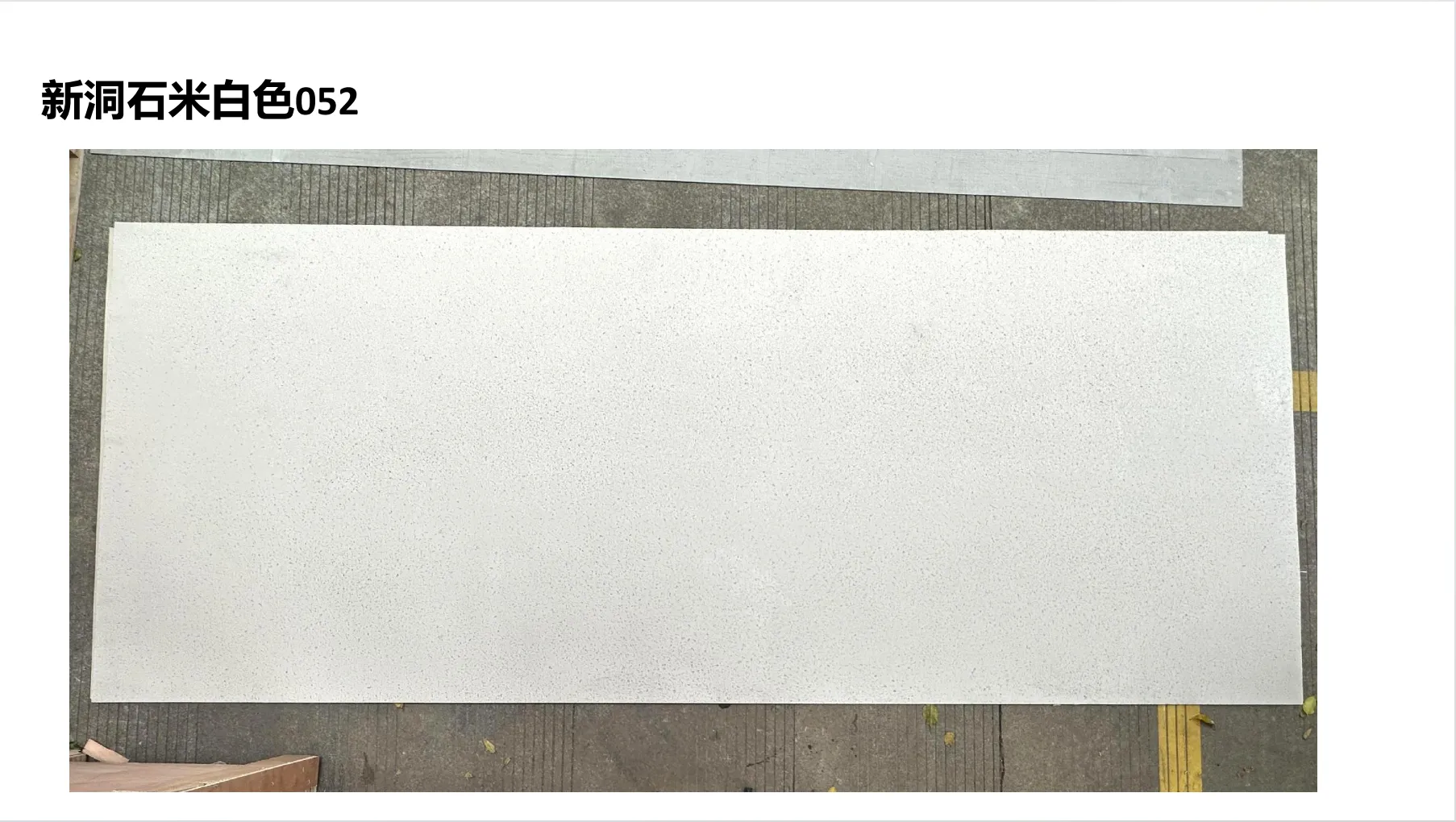
Architecture is more than just walls and roofs—it's the language of our spaces, speaking to who we are and what we value. For decades, travertino has been a darling of designers, admired for its warm, porous texture and timeless elegance. From ancient Roman baths to modern minimalist homes, its presence adds a touch of natural grandeur. But as our collective consciousness shifts toward sustainability, we're left asking: Can beauty and environmental responsibility coexist in building materials? For COLORIA MCM, the answer is a resounding yes. Through innovative engineering and a commitment to green practices, the brand has reimagined traditional materials like travertino, offering alternatives that honor both aesthetics and the planet. Let's dive into how COLORIA MCM is transforming the future of construction, one eco-friendly panel at a time.
Travertino's allure is undeniable. Formed by mineral-rich hot springs over thousands of years, its unique veining and earthy tones tell a story of geological time. Yet, extracting and processing this natural stone comes with a heavy environmental price tag. Quarrying travertino involves large-scale mining operations that disrupt ecosystems, displace wildlife, and contribute to soil erosion. The transportation of heavy stone slabs—often from distant quarries to global construction sites—adds significant carbon emissions to the mix. Then there's the water footprint: cutting, polishing, and finishing travertino requires thousands of gallons of water per ton, a precious resource wasted in a world grappling with droughts.
Durability, too, is a double-edged sword. While travertino can last for centuries, its porosity makes it prone to staining and weathering, requiring harsh chemical sealants that leach toxins into the environment over time. When structures are renovated or demolished, old travertino slabs often end up in landfills, as recycling heavy stone is energy-intensive and rarely prioritized. For architects and homeowners who love travertino's look but crave a greener option, the search for alternatives has long felt like a compromise—until now.
COLORIA MCM doesn't just create building materials; it crafts solutions that bridge the gap between tradition and innovation. MCM, or Modified Composite Material, is the brand's secret weapon—a blend of natural minerals, recycled polymers, and advanced binders that mimic the texture and appearance of natural stone, metal, and wood without the environmental toll. What sets COLORIA apart is its refusal to sacrifice beauty for sustainability. Each product in their lineup is designed to evoke the same emotional response as traditional materials: the rough-hewn charm of a mountain cabin, the sleek sophistication of a modern gallery, the warmth of a sunlit Mediterranean villa. But beneath the surface, these materials are engineered to tread lightly on the planet.
Let's explore some of COLORIA MCM's standout eco-friendly collections, each a testament to how innovation can redefine what's possible in sustainable design.
At the core of COLORIA's offerings is MCM flexible stone —a revolutionary material that captures the essence of travertino, marble, and slate while weighing up to 80% less than natural stone. Imagine a wall panel that bends slightly to follow curved architectural details, yet retains the depth and texture of quarried stone. That's the magic of MCM flexible stone. By combining natural mineral powders with recycled polyester fibers, COLORIA creates a material that's not only lightweight but also highly durable, resistant to cracks, and easy to install.
The environmental benefits are substantial. Because it's lightweight, transporting MCM flexible stone reduces fuel consumption and carbon emissions by up to 60% compared to traditional travertino slabs. Installation is simpler, too—requiring fewer workers and less heavy machinery, which further cuts down on construction-related energy use. And unlike natural stone, MCM flexible stone doesn't require water-intensive polishing; its finish is achieved through a low-energy curing process that uses recycled heat. For a recent boutique hotel project in Barcelona, switching to MCM flexible stone for accent walls reduced the building's carbon footprint by an estimated 30 tons over traditional materials—proof that small choices add up to big change.
For spaces that demand a touch of metallic sophistication, COLORIA's foamed aluminium alloy board (available in vintage silver, vintage gold, and gold) is a game-changer. Traditional aluminum production is notoriously energy-heavy, but COLORIA's foamed version flips the script. By injecting air bubbles into the alloy during manufacturing, the material becomes 70% lighter than solid aluminum while maintaining structural integrity. This not only reduces raw material usage but also slashes transportation costs and emissions.
What's more, COLORIA sources 90% of its aluminum from recycled content—scrap metal from old cars, appliances, and construction waste—giving new life to materials that would otherwise languish in landfills. The vintage finishes, achieved through a non-toxic anodization process, mimic the patina of aged metal without the use of harmful chemicals. A recent office tower in Tokyo used the vintage gold foamed aluminium alloy board for its facade, creating a shimmering, light-reflective surface that reduces heat absorption (lowering AC costs) while telling a story of circular economy. It's beauty with a conscience.
There's a reason rammed earth has been used in construction for millennia: it's durable, insulating, and deeply connected to the earth. COLORIA's rammed earth board reimagines this ancient technique for the 21st century, offering panels in hues like matcha green, gradient red, and light yellow that bring the warmth of earthen walls to any space. Unlike traditional rammed earth, which requires on-site mixing and compaction (a labor and water-intensive process), COLORIA's boards are factory-made using a blend of recycled soil, natural pigments, and a small amount of eco-friendly binder.
The result? A material that uses 85% less water than traditional rammed earth and emits 50% fewer greenhouse gases during production. The gradient color options, achieved by layering different soil blends, eliminate the need for toxic paints or dyes, ensuring that the boards remain breathable and non-toxic over time. A community center in New Mexico, built with COLORIA's rammed earth boards, now serves as a gathering space that stays cool in summer and warm in winter, thanks to the material's natural insulating properties—reducing energy bills by 40% and becoming a beacon of sustainable design in the region.
Concrete is the backbone of modern construction, but its production is a major contributor to CO2 emissions (responsible for about 8% of global carbon output). COLORIA's fair-faced concrete challenges this narrative by rethinking how concrete is made. Using a blend of recycled aggregates (crushed concrete from demolished buildings), supplementary cementitious materials (like fly ash and slag), and a carbon-capturing curing process, COLORIA reduces the carbon footprint of its concrete panels by up to 45% compared to standard concrete.
The "fair-faced" finish—smooth, unadorned, and rich in texture—celebrates the material's raw beauty, eliminating the need for decorative cladding and further reducing waste. A residential complex in Berlin used fair-faced concrete boards for both interior and exterior walls, creating a cohesive, industrial-chic aesthetic while diverting 200 tons of construction waste from landfills. The panels' thermal mass also helps regulate indoor temperatures, cutting heating and cooling needs year-round. It's concrete, but not as we know it.
For those who can't imagine parting with travertino's classic look, COLORIA offers a range of travertine -inspired panels that capture the stone's iconic texture without the environmental cost. The vintage silver, vintage gold, and vintage black travertine lines use a blend of natural travertine dust (a byproduct of traditional stone cutting) and recycled resins to recreate the stone's porous surface and warm veining. The starry collections—starry green, starry red, starry orange, and starry blue—add a whimsical twist, with embedded glass particles that catch light like distant stars, all made from 100% recycled glass.
By using waste materials from traditional travertine processing, COLORIA's travertine panels prevent tons of dust and debris from entering landfills or waterways. A recent restaurant project in Paris opted for the starry blue travertine panels in its dining room, creating a ceiling that mimics a night sky while keeping 5 tons of travertine waste out of landfills. It's a perfect example of how sustainability can spark creativity, not limit it.
| Factor | Traditional Travertino | COLORIA MCM Flexible Stone | COLORIA Foamed Aluminium Alloy | COLORIA Rammed Earth Board |
|---|---|---|---|---|
| Carbon Footprint (per sq.m) | High (15-20 kg CO2e) | Low (4-6 kg CO2e) | Very Low (2-3 kg CO2e) | Low (5-7 kg CO2e) |
| Water Usage (per ton) | High (2,000-3,000 gallons) | Very Low (100-200 gallons) | Low (300-400 gallons) | Low (500-600 gallons) |
| Recycled Content | 0% | 40-50% | 90% | 60-70% |
| Durability | High (but porous, prone to staining) | High (stain-resistant, crack-resistant) | Very High (corrosion-resistant, impact-resistant) | High (naturally insulating, weather-resistant) |
| Recyclability at End of Life | Low (rarely recycled, often landfilled) | High (can be ground down and reused in new panels) | Very High (100% recyclable back into aluminum) | High (can be crushed and used as aggregate) |
COLORIA MCM's commitment to sustainability goes beyond just the materials themselves—it's woven into every step of the manufacturing process. The brand's factories run on 100% renewable energy, with solar panels and wind turbines powering production lines. Water used in manufacturing is recycled and reused up to 10 times before being safely released (and even then, it's treated to remove any impurities). Waste is minimized through a closed-loop system: offcuts from panel production are ground into powder and reincorporated into new materials, and any unavoidable waste is sent to facilities that convert it into biofuel.
Even the packaging is eco-friendly. COLORIA uses 100% recycled cardboard and biodegradable stretch wrap, and encourages customers to return packaging materials for reuse. For international shipments, the brand partners with carbon-neutral logistics companies, offsetting remaining emissions through reforestation projects in Brazil and Indonesia. It's a holistic approach that ensures sustainability isn't just a marketing buzzword, but a core value.
Numbers tell part of the story, but it's the real-world projects that bring COLORIA MCM's mission to life. Take the Green Haven Community Center in Portland, Oregon. Designed to be a zero-net-energy building, the center's walls feature rammed earth boards in gradient red and khaki, while its facade uses foamed aluminium alloy in vintage silver to reflect sunlight and reduce heat gain. The roof, clad in MCM flexible stone (vintage black travertine), blends seamlessly with the surrounding forest, and the interior uses fair-faced concrete boards for flooring and accent walls. Since opening, the center has reduced local carbon emissions by an estimated 150 tons annually and has become a model for sustainable community design.
Closer to home, a private residence in Tuscany replaced its crumbling traditional travertino patio with COLORIA's starry green travertine panels. The homeowner wanted to preserve the region's architectural heritage while reducing maintenance costs and environmental impact. The new panels, which mimic the look of local travertino, have withstood harsh winters and hot summers without staining or cracking, and the family reports a 20% reduction in cooling costs thanks to the panels' insulating properties. "It's like having the best of both worlds," the homeowner said. "Our home still feels connected to the land, but now we know we're protecting it, too."
In a market flooded with "sustainable" building materials, COLORIA MCM stands out for three key reasons: authenticity, innovation, and accessibility. The brand doesn't greenwash—every environmental claim is backed by third-party certifications, including LEED, BREEAM, and Cradle to Cradle. Its materials are rigorously tested for durability, fire resistance, and low toxicity, ensuring they meet the highest safety standards. And while sustainable materials are often seen as a luxury, COLORIA works to keep costs competitive, making eco-friendly design accessible to homeowners, small businesses, and large developers alike.
Perhaps most importantly, COLORIA understands that beauty matters. Sustainability shouldn't mean sacrificing the textures, colors, and emotions that make a space feel like home. Whether it's the warm glow of foamed aluminium alloy, the earthy depth of rammed earth, or the timeless elegance of travertine-inspired panels, COLORIA's materials don't just build structures—they create spaces that nurture the soul.
As we face the urgent challenges of climate change, the choices we make in construction matter more than ever. Traditional materials like travertino have their place in history, but the future demands innovation—materials that honor the past while protecting the planet. COLORIA MCM's eco-friendly alternatives offer a vision of that future: one where buildings are not just shelters, but stewards of the environment; where beauty and sustainability dance hand in hand; where every wall, floor, and facade tells a story of care for the earth.
Whether you're an architect designing the next iconic skyscraper, a homeowner renovating a kitchen, or a business owner creating a welcoming storefront, COLORIA MCM invites you to reimagine what's possible. Because when we build with intention, we don't just create spaces—we create a legacy. A legacy of beauty, of resilience, and of respect for the planet that sustains us all.
The next time you walk into a room and pause to admire the walls, ask yourself: What story do these materials tell? With COLORIA MCM, the answer will always be one of hope—for a greener, more beautiful world.
Recommend Products












