
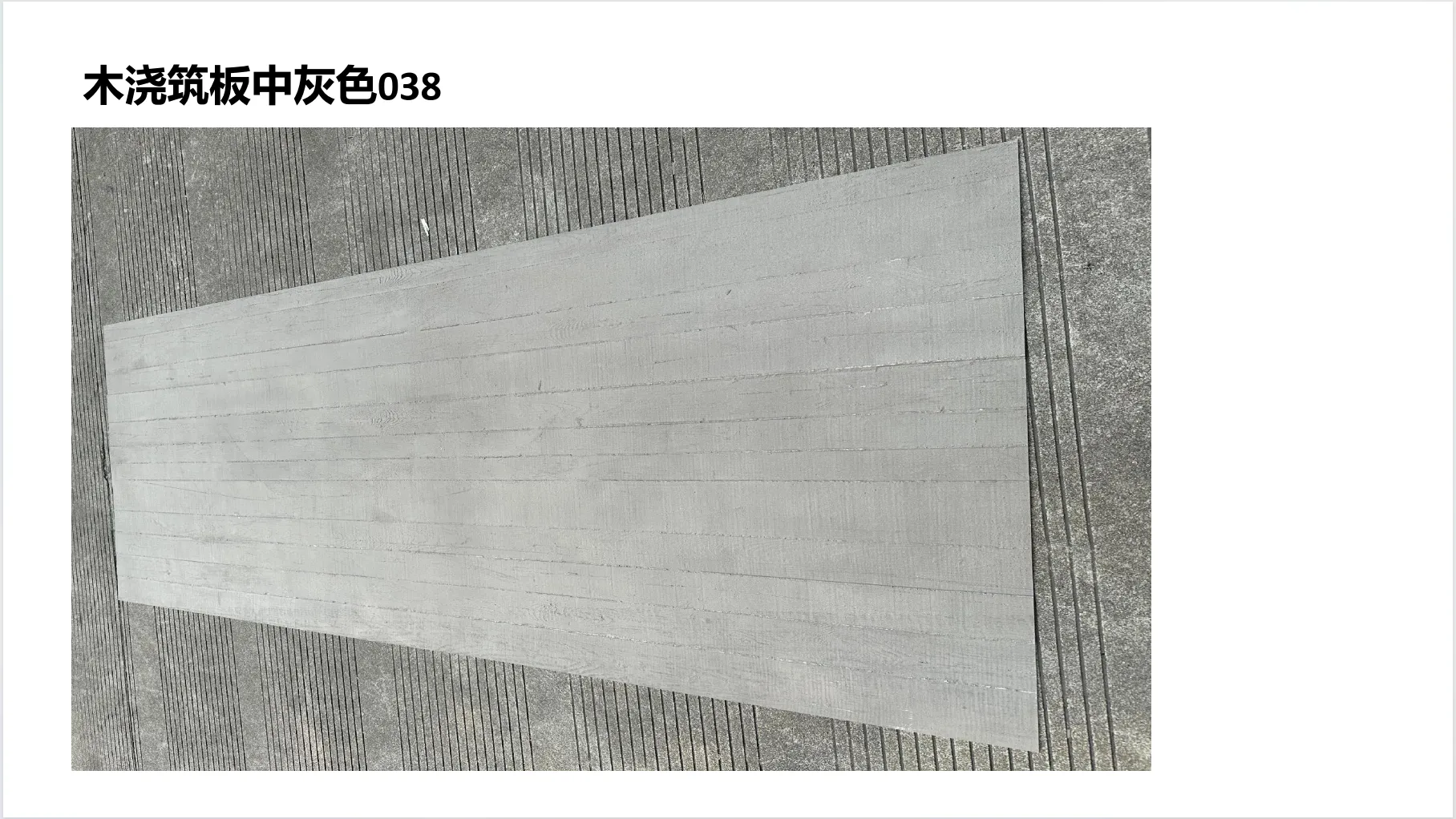
Step into a sunlit room, and the first thing that catches your eye isn't just the layout, but the walls themselves. They're not cold or sterile—instead, they feel warm, almost alive, like a bridge between the outdoors and the indoors. Run a hand along the surface, and you'll notice a subtle texture: the grain of wood woven into the strength of concrete, creating something that's both rugged and refined. This is the magic of wood concrete board —a material that doesn't just build spaces, but tells stories of sustainability, craftsmanship, and respect for the planet. In a world where every choice echoes far beyond our four walls, materials like these aren't just trends; they're a promise to do better, to build smarter, and to create spaces that nurture both people and the earth.
At its core, wood concrete board is a beautiful marriage of two timeless materials: wood fibers and concrete. But it's not just a simple mix—it's a carefully engineered blend that balances the best of both worlds. The wood brings warmth, texture, and a connection to nature, while the concrete adds durability, fire resistance, and structural stability. Think of it as the best friend you've always wanted: strong when you need it, gentle when you don't, and reliable through the years.
What makes it stand out, though, is its heart: sustainability. Traditional building materials often come with a heavy environmental price tag—deforestation for wood, high carbon emissions for concrete, or toxic chemicals for synthetics. Wood concrete board, on the other hand, often uses recycled wood fibers or fast-growing, sustainably sourced timber, paired with low-carbon concrete mixes. It's a material that doesn't just take from the earth, but gives back by reducing waste and lowering the carbon footprint of construction projects.
And let's talk about aesthetics. No two wood concrete boards are exactly alike. The wood fibers—whether from pine, oak, or bamboo—impart unique grains and tones, while the concrete base can be tinted, stained, or left in its natural state for a raw, industrial-chic look. Some boards have a smooth finish that highlights the wood's subtle patterns; others are textured, mimicking the rough-hewn charm of a mountain cabin. It's versatile enough to fit a minimalist apartment in the city or a cozy cottage in the countryside, proving that sustainability doesn't mean sacrificing style.
We've all heard the term "eco-friendly" thrown around, but with wood concrete board, it's not just marketing—it's a way of life. Let's break it down: the wood fibers used are often sourced from FSC-certified forests, where trees are replanted as they're harvested, ensuring forests thrive for generations. Some manufacturers even use reclaimed wood, giving new life to scraps that would otherwise end up in landfills. Then there's the concrete component: many producers now use low-carbon cement or add recycled aggregates, cutting down on the energy-intensive process of traditional concrete production.
The result? A material that has a significantly lower carbon footprint than solid wood (which often requires transporting heavy logs across the globe) or pure concrete (notorious for its high CO2 emissions). But it doesn't stop there. Wood concrete board is also lightweight, which means less fuel is used during transportation, and it's easy to install, reducing labor time and energy on-site. Even at the end of its life, it's recyclable—breaking down into materials that can be repurposed, closing the loop on waste.
Take, for example, a recent project in Portland, Oregon: a community center built entirely with wood concrete board walls and fair-faced concrete floors. The architects wanted a space that felt open and welcoming, but also stood up to the Pacific Northwest's rainy winters. The wood concrete boards not only kept the interior warm and dry but also became a focal point—visitors often comment on how the walls "glow" in the soft, diffused light. And because the materials were locally sourced, the project's carbon footprint was cut by nearly 40% compared to a similar building using traditional materials. That's the kind of impact that goes beyond bricks and mortar; it's a statement about what's possible when we prioritize the planet.
Let's be honest: sustainability is important, but if a material looks dull or out of place, it's hard to get excited about it. Wood concrete board, though, is a showstopper. Its surface tells a story—you can see the wood fibers peeking through, creating patterns that are never the same twice. Some boards have a smooth, polished finish, letting the natural grain shine like a piece of art. Others are left more textured, with a rough-hewn look that feels like it was chiseled from a mountainside. And because it's available in a range of tones—from warm honey to deep espresso to soft gray—it plays well with almost any design style.
Imagine a home office where the walls are clad in wood concrete board in a light oak tone. The morning light streams in, casting soft shadows along the grain, making even the most stressful workday feel a little calmer. Or a restaurant with accent walls in dark walnut wood concrete board, paired with mcm flexible stone countertops. The contrast is striking—industrial yet inviting, modern yet timeless. It's the kind of space where people linger, not just for the food, but for the feeling of being somewhere that feels "right."
And let's not forget about versatility. Wood concrete board isn't just for walls. It's used for flooring, ceilings, furniture, even outdoor cladding. Picture a backyard patio with wood concrete board panels underfoot—they're slip-resistant, weatherproof, and look like they belong in a high-end resort. Or a kitchen island with a wood concrete board top, where you can chop vegetables in the morning and host a dinner party at night, without worrying about scratches or stains. It's a material that adapts to your life, not the other way around.
Curious how wood concrete board holds up against other popular building materials? Let's take a closer look. The table below compares wood concrete board with traditional solid wood, pure concrete, and polish concrete across key factors like sustainability, durability, aesthetics, and maintenance.
| Feature | Wood Concrete Board | Solid Wood | Pure Concrete | Polish Concrete |
|---|---|---|---|---|
| Sustainability | High (recycled wood fibers, low-carbon concrete) | Medium (depends on sourcing; can lead to deforestation) | Low (high CO2 emissions in production) | Low (similar to pure concrete, plus energy for polishing) |
| Durability | Excellent (resistant to rot, fire, and pests) | Medium (prone to warping, rot, and termites) | Excellent (but brittle and prone to cracking) | Good (resistant to stains, but can scratch) |
| Aesthetics | Warm, textured, natural (blends wood and concrete looks) | Warm, classic, but limited by wood type | Cool, industrial, but lacks warmth | Sleek, modern, but can feel sterile |
| Maintenance | Low (occasional dusting, resistant to moisture) | High (needs sealing, polishing, and pest control) | Medium (sealing needed to prevent staining) | Medium (periodic resealing to maintain shine) |
| Cost | Moderate (higher upfront than pure concrete, lower than solid hardwood) | High (especially for rare or exotic woods) | Low (but high installation costs for large projects) | High (due to polishing process) |
As the table shows, wood concrete board strikes a rare balance: it's more sustainable than solid wood, warmer than pure concrete, and easier to maintain than both. It's not just a middle ground—it's a better ground, designed for people who refuse to compromise on either planet or style.
The beauty of wood concrete board is that it doesn't play favorites—it works in almost any space, big or small. Let's start with homes. Imagine a living room where the accent wall is clad in light beige wood concrete board, paired with stream limestone (claybank) flooring. The room feels open and airy, but the wood tones add coziness, making it the perfect spot for movie nights or lazy Sundays. In the bathroom, where moisture is a concern, wood concrete board shines: it's mold-resistant and doesn't warp, so you can create a spa-like retreat with walls that feel like they belong in a mountain lodge, not a sterile tile box.
Commercial spaces love it too. Coffee shops use it for walls and countertops, creating a rustic-chic vibe that feels both trendy and timeless. Offices opt for it in meeting rooms, where the warm texture helps spark creativity and collaboration. Even public spaces—libraries, community centers, parks—are getting in on the action. A recent project in Seattle transformed an old warehouse into a public art gallery, using wood concrete board for the walls and foamed aluminium alloy board (vintage silver) for accents. The result? A space that feels industrial yet inviting, where art and architecture complement each other perfectly.
Outdoors, wood concrete board is a game-changer. Traditional wood decks warp and rot over time, and concrete patios can crack in freezing temperatures. Wood concrete board? It stands up to rain, snow, UV rays, and even saltwater (making it perfect for coastal homes). Imagine a backyard with a wood concrete board deck, surrounded by gobi panel planters. It's a space that looks great year-round, requires almost no maintenance, and won't end up in a landfill after a few seasons. That's the kind of longevity that makes homeowners (and the planet) smile.
Materials are more than just products—they're part of people's lives. Take Maria, a single mom in Denver who renovated her 1950s bungalow using wood concrete board for the exterior. "I wanted something that would last, but also make the house feel like home," she says. "The old siding was rotting, and I didn't want to keep replacing it every few years. Now, when I pull up to the house, I don't just see walls—I see a future. The wood concrete boards have this warm, earthy tone that makes the house feel welcoming, even on the coldest days. And knowing that I'm using a material that's good for the planet? That's the best part."
"Wood concrete board isn't just a material—it's a partner in design. It lets us create spaces that are both functional and emotional, that connect people to nature without sacrificing durability. In a world that's moving faster than ever, that connection is everything." — James Chen, Architect, Chen Design Studio
Architects and designers are falling in love with it too. James Chen, who specializes in sustainable commercial spaces, calls it "a dream to work with." "Clients used to think 'sustainable' meant 'boring,'" he says. "But with wood concrete board, we can create spaces that are bold, beautiful, and green. I recently designed a yoga studio where the walls are all wood concrete board in a soft gray tone. The texture makes the room feel calm and grounded, like practicing in a forest clearing. The clients tell me students often comment on how 'peaceful' the space feels—and that's because the materials themselves evoke that feeling."
The demand for sustainable building materials is growing, and wood concrete board is leading the charge. As technology improves, we're seeing even more innovations: thinner boards that are easier to install, new colorways inspired by nature (think lunar peak silvery or historical pathfinders stone ), and blends with other eco-friendly materials like bamboo or hemp fibers. Manufacturers are also exploring ways to make production even greener, using solar power in factories and developing carbon-negative mixes that actually absorb CO2 from the air.
But the real future lies in how we think about building. It's not just about putting up walls—it's about creating spaces that nurture us, that reflect our values, and that leave a positive legacy. Wood concrete board is a step in that direction: a material that reminds us that sustainability and beauty don't have to be enemies. They can be partners, working together to build a world where every space feels like home, and every home feels like it belongs to the earth.
At the end of the day, wood concrete board is more than a building material. It's a choice—a choice to care, to innovate, and to believe that we can do better. It's about walking into a room and feeling something more than just the structure around you. It's about knowing that the walls you touch, the floors you walk on, and the spaces you love are part of a larger story—one of respect for the planet and for each other.
So the next time you're planning a renovation, or dreaming of building your own space, think about the materials you choose. Think about the stories they tell, the impact they have, and the legacy they leave behind. Choose materials that don't just build spaces, but build a better world. Choose wood concrete board. Your future self—and the planet—will thank you.
Recommend Products












