
Walk into a modern school, and you'll notice something beyond textbooks and whiteboards: the walls, the floors, the very skin of the building. These surfaces don't just hold up roofs—they shape how students feel, focus, and connect with their environment. In educational design, every texture, color, and material choice carries weight, influencing everything from creativity to calm. That's where MCM (Modified Composite Material) cladding steps in, and among its standout stars is Romanite—a large-format series that blends the grandeur of natural stone with the practicality modern schools demand. Today, we're diving into how Romanite, paired with other MCM classics, is redefining educational spaces, one real, tactile surface at a time.
Think back to your own school days. The cold, institutional concrete halls? They felt sterile, almost unwelcoming. Contrast that with a classroom with warm wooden accents or a library with stone walls that seemed to hum with history—those spaces stuck with you. Research backs this up: studies show that environments with natural textures and balanced colors reduce stress, boost focus, and even enhance memory retention. For students spending 6+ hours a day in these buildings, the "feel" of the space matters as much as the curriculum.
But schools aren't just about aesthetics. They're high-traffic zones: backpacks scraping walls, chairs dragging, spills, sunlight, humidity. Materials need to withstand it all without looking worn. They also need to be sustainable—with budgets tight and environmental concerns front and center, durability equals less waste, and eco-friendly production equals a smaller carbon footprint. Enter MCM cladding: lightweight, weather-resistant, and designed to mimic the look of natural materials (stone, wood, concrete) without the heaviness or maintenance headaches. And Romanite? It's the poster child for this balance.
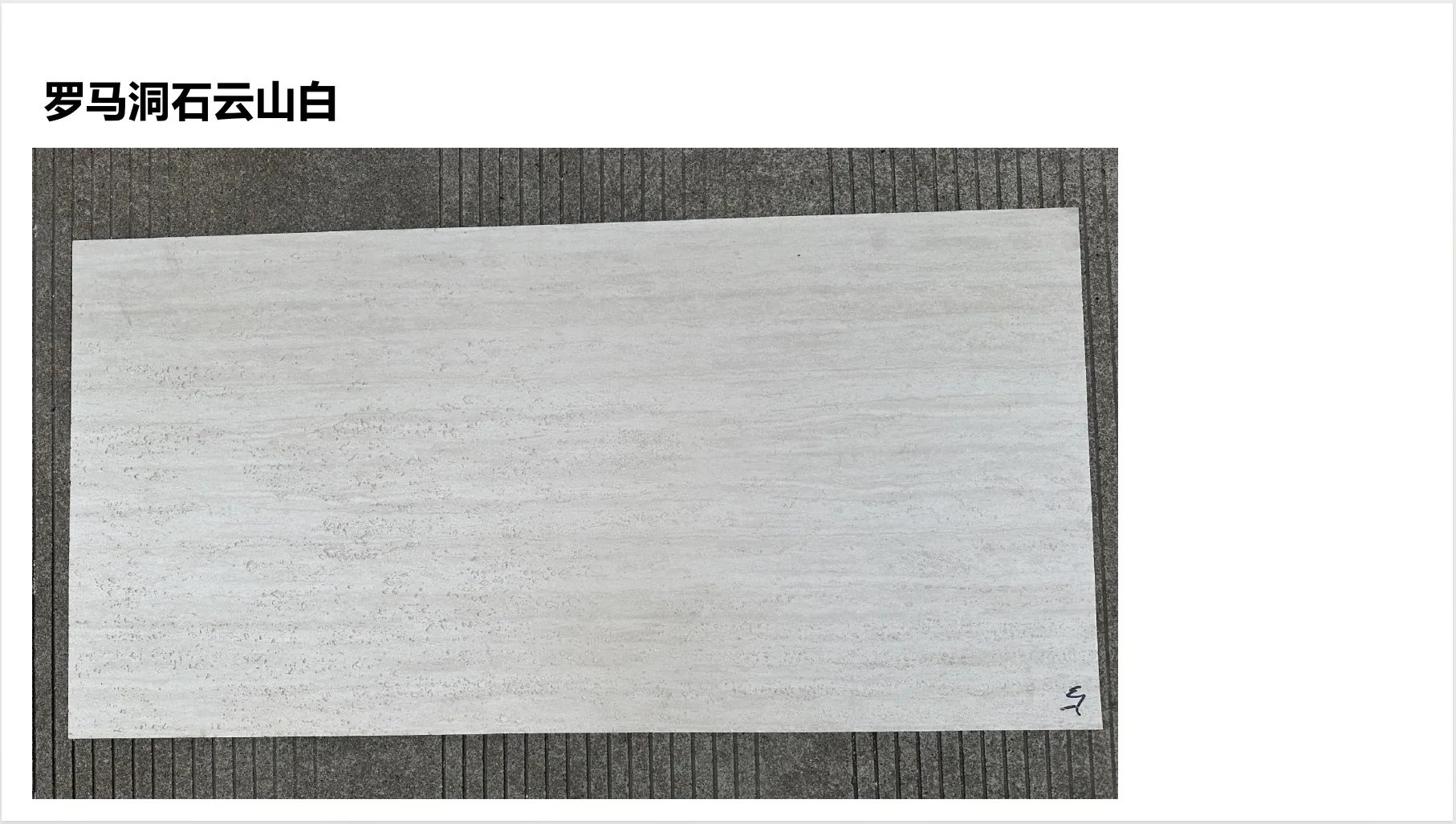
Romanite isn't just a cladding series—it's a design philosophy. Its claim to fame? Large-size panels (think 1200x2400mm and up) that create seamless, uninterrupted surfaces. In educational settings, this means fewer grout lines, less visual clutter, and a sense of openness that makes even small spaces feel expansive. Imagine a school auditorium wrapped in Romanite's soft, matte finish: from the stage to the back wall, it's a canvas that lets the focus stay on student performances, not patchy walls.
But what does Romanite feel like? Run your hand over it, and you'll notice a texture that's both refined and organic—like a polished stone that's been gently weathered by time. It's not overly rough (no scraped knees for younger students) but not too smooth (no glare from overhead lights). The color palette leans toward earthy neutrals: warm beiges, soft grays, and subtle off-whites, with undertones that shift gently in different lighting. This versatility means it plays well with other materials—whether paired with wood accents in a kindergarten or metal fixtures in a high school STEM lab.
Real photos of Romanite in educational settings tell the story best. Take the example of Lincoln Middle School in Colorado, which renovated its main hallway with Romanite (vintage silver finish). The result? A space that feels both modern and timeless. "Students used to rush through the halls like they couldn't wait to leave," says Principal Maria Gonzalez. "Now, they linger. They lean against the walls to chat. It's like the space itself started inviting connection." That's the magic of Romanite: it doesn't just cover walls—it transforms them into backdrops for human interaction.
Romanite shines brightest when paired with complementary MCM series, each adding its own personality to different areas of the school. Let's meet the supporting cast:
If Romanite is the grand storyteller, Lunar Peak is the quiet thinker. Available in silvery, golden, and black finishes, these panels have a subtle metallic sheen that's soft, not flashy—perfect for libraries and study rooms where calm concentration is key. The silvery variant, in particular, reflects light gently, reducing eye strain during long reading sessions. A middle school in Oregon used Lunar Peak Silvery in its media center, pairing it with warm wooden bookshelves. "The kids say it feels like studying under the stars," jokes librarian Jake Miller. "And honestly? I don't correct them."
For STEM labs and art studios, where creativity meets hands-on work, Fair-faced Concrete MCM adds an edgy, utilitarian vibe—without the coldness of real concrete. Its raw, textured surface feels "active," like a space where ideas are built, not just discussed. Plus, it's incredibly durable: resistant to chemicals (important for science labs) and easy to wipe clean (hello, paint spills in art class). A high school in Texas used it in its robotics lab, and the students love it: "It feels like a real workshop," says senior Maya Chen. "Not a classroom. That mental shift makes us take our projects more seriously."
Break rooms, courtyards, and outdoor classrooms need materials that bridge the gap between indoors and out. Travertine (Starry Green) MCM does just that, with its speckled, mossy-green finish that mimics the look of weathered travertine stone. The "starry" effect—tiny, iridescent flecks that catch the light—adds a playful touch, making it perfect for elementary school playgrounds or high school outdoor amphitheaters. It's also slip-resistant when wet, a must for areas exposed to rain or sprinklers. One elementary school in Washington replaced its cracked asphalt courtyard walls with Starry Green Travertine, and now the kids call it "the fairy garden wall." Mission accomplished.
Kindergartens and early learning centers thrive on warmth and comfort. Rammed Earth Board, with its soft, earthy gradients (think terracotta to sand, or matcha green to cream), feels like a big hug. The texture is smooth but not slippery, and the colors are muted enough to avoid overstimulation. A preschool in Vermont used Rammed Earth Board (Gradient B—soft yellows to khaki) in its nap room, and teachers report fewer restlessness issues: "The walls feel like a cozy blanket," says teacher Lisa Wong. "The kids settle down faster, and parents comment on how 'homey' the room feels."
Wondering which MCM series is right for which part of your school? Let's break it down with a side-by-side look at Romanite and its most popular educational companions:
| Feature | Romanite (Large Size) | Lunar Peak (Silvery) | Fair-faced Concrete | Travertine (Starry Green) |
|---|---|---|---|---|
| Best For | Auditoriums, main hallways, large open spaces | Libraries, quiet study rooms, planetariums | STEM labs, art studios, workshops | Outdoor classrooms, courtyards, playgrounds |
| Texture | Smooth-matte with subtle organic grain | Polished with metallic sheen, fine texture | Raw, slightly rough, industrial finish | Speckled, porous-look, slightly gritty |
| Color Palette | Beiges, grays, off-whites (neutral focus) | Silvery, golden, black (metallic neutrals) | Light to dark gray, industrial tones | Mossy green, with iridescent "star" flecks |
| Sustainability Perk | Large panels = less waste in installation | 100% recyclable core material | Low-VOC production, zero formaldehyde | Uses recycled stone aggregates in mix |
Schools are under pressure to teach sustainability—and lead by example. MCM cladding checks both boxes. Romanite, like all MCM series, is made with a high percentage of recycled materials (up to 40% in some cases), and its production process uses minimal water and energy compared to quarrying natural stone. Its lightweight nature also reduces transportation emissions, and because it's so durable, it lasts 30+ years with minimal maintenance—meaning fewer replacements, less waste, and lower long-term costs.
Take the example of a school district in California that switched to MCM cladding for its 10-school renovation project. They reported a 25% reduction in transportation costs (thanks to lighter panels) and a 40% drop in maintenance requests compared to the old brick and concrete walls. "Sustainability isn't just a buzzword here," says facilities director Raj Patel. "It's about using tax dollars wisely and teaching kids that their school cares about the planet. Romanite and these other MCM series let us do both."
At the end of the day, words can only describe so much. Real photos of Romanite in educational settings tell the full story: the way sunlight slants across a large-format panel in a hallway, turning the wall into a canvas of shadows. The way students lean against it, unafraid of scuffing it. The way it ages—gracefully, like a well-loved book, not a worn-out shoe. These aren't stock photos; they're snapshots of daily life in schools transformed by thoughtful design.
One such photo, from a high school in Minnesota, shows the school's main entrance: Romanite (vintage gold) panels rise two stories, flanked by Lunar Peak Black accents. The effect is grand but not intimidating—inviting students in like a friendly giant. Another, from an elementary school in Maine, captures a reading nook: Romanite (beige) walls curve gently around a window seat, with Travertine (Starry Blue) accents on the bookshelves. The kids in the photo? They're not looking at the camera—they're lost in their books, surrounded by walls that feel like part of the story.
Educational buildings are more than structures—they're partners in learning. They need to inspire, protect, and adapt, just like the students inside them. MCM cladding, with Romanite leading the charge, offers a way to build spaces that do all three: beautiful enough to spark joy, tough enough to keep up with chaos, and sustainable enough to feel good about. Whether it's the seamless sweep of Romanite in a hallway, the calm glow of Lunar Peak in a library, or the playful speckle of Starry Green Travertine in a courtyard, these materials don't just cover walls—they create memories.
So the next time you walk into a school, take a moment to touch the walls. If they feel warm, intentional, and full of life, there's a good chance MCM cladding is behind it—and maybe even a Romanite panel or two, quietly telling the story of a space designed with students in mind. After all, the best schools don't just teach—they feel like home. And home, as we all know, starts with the walls that hold us.
Recommend Products












