

For contractors tackling large-scale commercial builds, hospitality projects, or high-rise residential towers, the choice of wall cladding is more than just an aesthetic decision—it's a strategic one. It impacts everything from structural load to installation timelines, maintenance costs, and even the building's long-term environmental footprint. In a market flooded with options, Engineered Bali Stone Wall Cladding from COLORIA GROUP has emerged as a game-changer, particularly for teams prioritizing durability, flexibility, and project efficiency. Let's dive into why this innovative material, part of COLORIA's MCM (Modified Cementitious Material) product lineup, is becoming the go-to for contractors worldwide.
First things first: Bali Stone isn't your average natural stone. It's a premium engineered cladding material developed under COLORIA's MCM Flexible Stone series—meaning it's built on a foundation of modified cementitious technology. Think of it as natural stone's smarter, more adaptable cousin. By blending high-grade cement, crushed natural minerals (including traces of real stone aggregates), and advanced polymers, COLORIA has created a material that captures the texture and visual depth of traditional Bali stone while addressing its biggest drawbacks: weight, brittleness, and installation complexity.
Unlike solid natural stone slabs, which can weigh 25-30 kg per square meter, Bali Stone clocks in at just 4-6 kg/m². That's a 70% reduction in weight—a statistic that makes structural engineers breathe easier and crane operators smile. But don't let the lightness fool you: this stuff is tough. It's engineered to withstand extreme temperatures (from the scorching heat of Riyadh summers to freezing winters in temperate zones), resist moisture penetration, and stand up to the wear and tear of high-traffic areas.
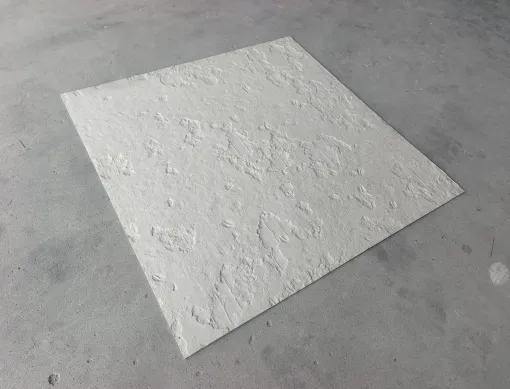
Let's break down the practical benefits that matter most when you're managing a tight schedule and a tighter budget:
Heavy cladding materials require specialized lifting equipment, additional structural support, and slower installation crews. With Bali Stone's lightweight profile, contractors report cutting installation time by 30-40% on average. Imagine a commercial project with 5,000 m² of exterior cladding: that's weeks shaved off the timeline. Plus, lighter materials mean fewer on-site accidents and less strain on scaffolding—critical for maintaining safety records and keeping insurance premiums in check.
Modern architecture loves curves, angles, and unique facades. Traditional rigid cladding (like solid granite or ceramic tiles) often forces compromises—either you simplify the design or pay a premium for custom-cut pieces that rarely fit perfectly. Bali Stone, as part of the MCM Flexible Stone line, bends. Not like rubber, but enough to conform to gentle curves, arches, and even radius walls without cracking. This flexibility was a game-changer for a recent hotel project in Dubai, where the contractor used Bali Stone to clad a 50-meter curved lobby wall that would have been nearly impossible with natural stone.
For contractors, callbacks and maintenance issues are the enemy. Bali Stone's modified cementitious core resists mold, mildew, and staining—common headaches with porous natural stones like travertine or sandstone. It also stands up to salt spray (great for coastal projects) and UV rays (no fading, even in desert climates). One contractor in Jeddah noted that a retail center clad with Bali Stone five years ago still looks brand-new, with zero need for resealing or repairs. Compare that to natural limestone, which often requires annual sealing and can develop unsightly efflorescence over time.
Bali Stone isn't a standalone product—it's part of COLORIA's broader MCM family, which includes solutions for every project need. Let's see how it stacks up against other key MCM lines, so you can choose the right tool for the job:
| Product Line | Key Strengths | Ideal Applications | Weight (kg/m²) | Thickness (mm) |
|---|---|---|---|---|
| MCM Flexible Stone (Bali Stone) | Lightweight, bendable, natural texture | Curved walls, exterior facades, accent features | 4-6 | 3-5 |
| MCM Big Slab Board Series | Large format (up to 1220x2440mm), seamless look | Lobby interiors, high-ceiling feature walls | 12-15 | 6-10 |
| MCM 3D Printing Series | Custom 3D geometries, artistic designs | Statement walls, sculptural elements | 8-10 | 5-8 |
| MCM Project Board Series | High impact resistance, cost-effective | Industrial facilities, low-rise commercial | 10-12 | 6-8 |
Notice a pattern? All MCM products share the core benefits of modified cementitious technology—lightweight, durable, and eco-friendly—but each line leans into specific project needs. For contractors balancing aesthetics with practicality, Bali Stone hits the sweet spot for most mid-to-high-end exterior and interior cladding jobs.
Numbers tell part of the story, but real project outcomes tell the rest. Let's look at a few examples where Bali Stone made a measurable difference for contractors:
A contracting team in Saudi Arabia was tasked with cladding a 15-story mixed-use complex with a "natural stone aesthetic" on a tight 12-week timeline. The original plan called for imported Italian travertine, but logistics delays and weight concerns (the building's facade couldn't support the 28 kg/m² load) forced a pivot. They switched to Bali Stone, and the results were striking: the installation crew, which had planned for 8 workers over 10 weeks, finished in 6 weeks with just 6 workers. The client was thrilled with the texture—"indistinguishable from real stone," they noted—and the project came in under budget thanks to reduced labor and equipment costs.
A hospitality contractor building a beachfront resort needed cladding that could withstand saltwater spray, high humidity, and intense sun. Natural Bali stone was the design inspiration, but local suppliers warned that it would weather poorly in the marine environment, requiring frequent replacements. COLORIA's Bali Stone offered a solution: its polymer-modified surface resists salt corrosion, and its fade-resistant pigments held up to 12 hours of daily sunlight. Two years post-completion, the facade still looks fresh, and the hotel's maintenance team reports zero issues—no peeling, no discoloration, no costly repairs.
Bali Stone is a standout, but it's part of a larger innovation: COLORIA's MCM platform. Modified cementitious materials, in general, are reshaping how contractors approach cladding. Here's why the technology itself is worth getting excited about:
Green building certifications like LEED and BREEAM are no longer optional—they're often deal-breakers for clients. MCM products, including Bali Stone, check multiple sustainability boxes: they're made with up to 30% recycled materials, require 50% less energy to produce than fired ceramic tiles, and are fully recyclable at the end of their lifecycle. For contractors bidding on eco-conscious projects, this is a major differentiator.
Clients want unique buildings, not cookie-cutter designs. COLORIA's MCM lineup, including Bali Stone, offers near-endless customization. Need a specific color to match a brand palette? They can tint it. Want a texture that mimics weathered wood or rough-hewn granite? The MCM 3D Printing Series can create it. One contractor recently used custom-colored Bali Stone (paired with MCM Big Slab Board for the lobby) to replicate the look of "starry green travertine" for a luxury hotel—at a fraction of the cost of the real thing.
Coordinating multiple material suppliers is a contractor's nightmare. COLORIA simplifies this by offering a one-stop shop: from Bali Stone for exterior walls to MCM Project Board for interior corridors, even 3D-printed accent pieces for the lobby. This streamlines logistics, reduces lead times, and ensures consistency across materials—no more mismatched textures or color variations between batches.
You're sold on the benefits—now, how do you make sure installation goes smoothly? Here are a few pro tips from contractors who've worked with Bali Stone:
Let's be honest: there are other engineered stone suppliers out there. So why do contractors keep coming back to COLORIA? It boils down to three things: experience, support, and quality control. With decades in the building materials industry and a dedicated R&D team, COLORIA doesn't just sell products—they solve problems. Need a custom size for a unique facade? Their factory in China can produce it. Stuck on a technical detail mid-installation? Their 24/7 support hotline (yes, even for international projects) connects you with engineers who speak "contractor." And every batch of Bali Stone undergoes rigorous testing—tensile strength, impact resistance, color consistency—before it ships. For contractors, that means fewer surprises on site.
At the end of the day, contractors don't just need materials—they need solutions that make their jobs easier, their projects more successful, and their clients happier. Engineered Bali Stone Wall Cladding delivers on all three. It's lightweight enough to simplify logistics, durable enough to stand the test of time, and flexible enough to bring even the most ambitious designs to life. And when paired with COLORIA's broader MCM lineup—from Big Slab Boards for grand interiors to 3D-printed accents for artistic flair—it becomes part of a holistic cladding strategy that sets projects apart.
For contractors ready to stop compromising between aesthetics and practicality, Bali Stone isn't just an option—it's the next step forward. So whether you're gearing up for a high-rise in Dubai, a resort in Bali, or a commercial complex in Riyadh, consider this: the right cladding material doesn't just cover walls—it elevates your entire project. And in a industry where reputation is everything, that's priceless.
Recommend Products












