


For centuries, architects and interior designers have been captivated by the power of the curve. Flowing, organic, and dynamic, curves introduce a sense of movement and grace into a space that rigid, straight lines simply cannot replicate. They soften interiors, guide the eye, and create spaces that feel more natural and human. But there's always been a catch. The materials we traditionally use to build—stone, wood, tile—are inherently straight and unyielding. Bending them to our will has been a constant struggle, a battle of brute force, immense cost, and frequent compromise.
Imagine a grand, sweeping feature wall that flows like a ribbon, or a reception desk that curves to welcome visitors without a single jarring seam. Picture columns clad in seamless stone, or an arched hallway that feels like it was carved from a single, massive block. For too long, these visions have remained confined to 3D renderings, often simplified or abandoned when faced with the harsh realities of construction budgets and material limitations.
But what if that changed? What if there was a material that combined the timeless beauty of natural stone with the flexibility of fabric? What if you could literally wrap a stone finish around any curve, no matter how tight? This isn't a futuristic dream; it's a present-day reality, and its name is Epoch Stone Flexible Stone. In this deep dive, we'll explore how this revolutionary material is not just solving the problem of interior design curves, but is completely redefining the boundaries of architectural possibility.
Chapter 1: The Magic Behind the Material – What is Epoch Stone?
Before we talk about wrapping columns and creating fluid walls, let's pull back the curtain. What exactly is this stuff? Is it just a printed vinyl sticker? Is it a fragile sheet that will crack? The answer to both is a resounding no. Epoch Stone Flexible Stone is a sophisticated, high-performance material born from cutting-edge technology. At its heart, it's a type of MCM Flexible Stone .
The "MCM" stands for Modified Cementitious Material. Think of it as a recipe that takes the best parts of nature and improves upon them. The core ingredients are natural mineral powders—the very same elements that make up real stone, sand, and earth—and inorganic pigments. These are combined with a specialized polymer resin in a water-based formula. This unique blend is then molded into thin sheets and cured through a low-temperature process. This process is crucial. Unlike the high-energy firing of ceramic tiles or the eons it takes to form quarried stone, this method is remarkably energy-efficient and environmentally friendly.
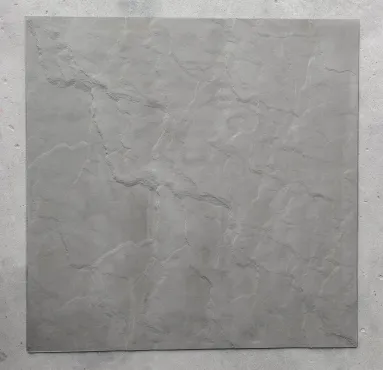
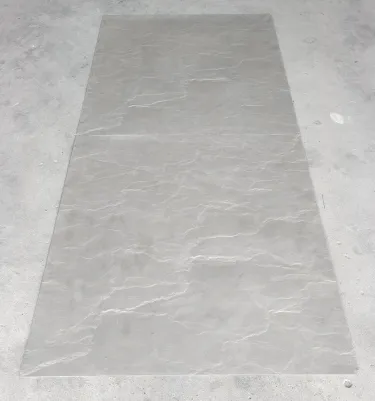
The result is a material that is, frankly, astonishing. It's incredibly thin, often just 2-4mm. It's lightweight, weighing a fraction of what traditional stone slabs do. And most importantly, it's flexible. You can bend it, roll it, and wrap it around tight corners and complex curves. Yet, despite this flexibility, it possesses the authentic look and tactile feel of real stone. When you run your hand across a sheet of Epoch Stone mimicking slate, you feel the clefts and textures. When you see it installed, its natural color variations convince the eye that it was hewn from a mountain. This is not a faux finish; it's a new state of matter for architectural surfaces.
Chapter 2: The Curve Conundrum: Solved at Last
To truly appreciate the breakthrough that Epoch Stone represents, we first need to understand the pain points it eliminates. Let's walk through the traditional options for tackling a curved wall and see why they so often lead to frustration and compromise.
The Old Ways and Their Flaws
- Natural Stone Slabs: The gold standard for luxury, but a nightmare on curves. To clad a column in marble, for instance, you either need to use incredibly thick, custom-carved segments (prohibitively expensive and heavy) or use thinner panels and "kerf" them—cutting dozens of slits in the back to allow a slight bend. This is labor-intensive, dramatically weakens the stone, and is only possible for very gentle curves.
- Ceramic or Porcelain Tiles: A common choice, but one that fights the curve every step of the way. You can use tiny mosaic tiles, but this creates a busy, grid-like look and a nightmare of grout lines to keep clean. Using larger tiles on a curve results in awkward, lipped edges and wide, V-shaped grout joints that completely disrupt the flow of the surface.
- Wood Paneling: Certain woods can be steam-bent to create beautiful curved surfaces. However, wood is a sensitive material. It's not suitable for wet areas like bathrooms or high-traffic commercial spaces where durability is key. It's also prone to scratching, denting, and requires regular maintenance.
- Plaster and Paint Effects: You can build a curved wall out of drywall and plaster, certainly. But what if you want the look of stone? Your only option has been faux finishing—a highly skilled artisan painting a stone effect by hand. This is expensive, time-consuming, and the final result can lack the authentic texture and durability of a real surface material.
The Epoch Stone Revolution: Embracing the Flow
Epoch Stone Flexible Stone enters this scenario and simply brushes all those problems aside. Its very nature is designed for interior design curves . The application is intuitive and elegant. The sheet of material is simply cut to size with a utility knife, a special adhesive is applied to the wall and the back of the sheet, and it is then pressed into place, following the contour of the surface perfectly.
Think about that for a moment. A column that would have taken a team of specialist masons days to clad with heavy, pre-cut stone segments can now be wrapped seamlessly by one or two installers in a matter of hours. An arched doorway can have a continuous stone finish that flows from the wall, through the arch, and onto the other side, with no visible joints. A serpentine reception desk, the centerpiece of a corporate lobby, can be clad in a material that looks and feels like solid granite but was applied as easily as a veneer.
This unlocks a level of design freedom that was previously unimaginable. Designers are no longer forced to "design around" the limitations of their materials. Instead, the material adapts to their vision. The curve is no longer a problem to be solved; it's an opportunity to be embraced. Epoch Stone empowers creativity, allowing for the creation of truly organic, monolithic, and breathtaking interior spaces.
Chapter 3: More Than Just Flexible – A Universe of Advantages
While its ability to conquer curves is its most headline-grabbing feature, the benefits of Epoch Stone extend far beyond flexibility. It is a holistic solution that outperforms traditional materials on nearly every metric, from logistics and installation to safety and sustainability.
1. A Featherweight Champion
Let's talk numbers. A typical 20mm thick slab of natural granite weighs around 55-60 kg per square meter. A standard ceramic tile can be 20-25 kg/m². Epoch Stone? It comes in at a mere 4-6 kg per square meter. This isn't just a small difference; it's a complete paradigm shift.
The implications are enormous. The reduced weight means less structural reinforcement is needed for walls, especially in high-rise buildings or renovations. It dramatically lowers shipping costs, reducing the carbon footprint of a project. On-site, large sheets can be easily carried and handled by a single person, eliminating the need for heavy lifting equipment. This translates directly into safer working conditions, faster installation, and lower labor costs.
2. Built to Last: Durability and Resilience
You might think that a material so thin and flexible would be fragile. The opposite is true. The unique composition of Modified Cementitious Material gives it incredible toughness. Unlike ceramic tiles, which are brittle and can shatter on impact, Epoch Stone has a degree of give. It can absorb shocks and impacts that would destroy other materials, making it ideal for high-traffic areas.
Its resilience doesn't stop there. It is highly resistant to abrasion, so it won't easily scratch or scuff. It is waterproof, making it a perfect choice for bathrooms, shower enclosures, and even swimming pool areas. It's also remarkably weather-resistant. It can withstand freeze-thaw cycles, UV radiation, and salt spray without fading, cracking, or degrading. This dual-purpose nature means you can create a seamless design that flows from an indoor living area right out onto an exterior patio, using the exact same material. Furthermore, it boasts a Class A fire rating, meaning it is non-combustible and won't contribute to the spread of flames—a critical safety feature for both commercial and residential projects.
3. A Canvas for Your Imagination: Unmatched Aesthetics
Epoch Stone is a master of mimicry, but it is also a platform for pure creation. The range of available finishes is staggering. Want the look of Italian travertine, Brazilian slate, or rustic sandstone? No problem. Prefer the industrial aesthetic of raw concrete or the classic appeal of red brick? It can do that too.
But it goes beyond mimicry. The technology allows for the creation of textures and patterns that don't exist in nature. This is where related product lines like the MCM 3D Printing Series come into play, showcasing the immense potential for customization. You can have geometric patterns, wave-like textures, or even custom logos embedded directly into the surface of the material. This provides an unparalleled level of design control, allowing every project to have a unique, signature finish. The colors are integrated throughout the material, not just printed on the surface, ensuring a rich, authentic look that won't wear off over time.
4. A Conscious Choice: Sustainability at its Core
In today's world, the environmental impact of our building choices matters more than ever. This is another area where Epoch Stone shines. The entire lifecycle of the product is designed with sustainability in mind.
- Raw Materials: Its primary components are natural mineral powders, often sourced from leftover materials from other industries, reducing waste.
- Production: The low-temperature curing process consumes a fraction of the energy required to fire ceramic tiles or process quarried stone. There's no quarrying, which means no destruction of natural landscapes.
- Transportation: As we've discussed, its lightweight nature means significantly fewer carbon emissions are generated during shipping compared to heavy stone or tile.
- Installation & Waste: Sheets can be cut precisely with a simple knife, leading to minimal on-site waste. Compare this to tiling, where off-cuts and broken pieces can amount to significant landfill. There is also no water used for cutting and no dust pollution.
Chapter 4: From Dream to Reality: A World of Applications
So, where can you use this wonder material? The better question is, where can't you? Its unique combination of flexibility, durability, and beauty opens up a vast range of applications for both residential and commercial spaces.
In the Home
In residential design, Epoch Stone allows for high-end, custom looks without the high-end price tag or construction headaches.
- Living Areas: Create a stunning, curved feature wall behind a sofa or TV. Wrap a dated brick fireplace in a sleek, modern concrete or slate finish. Clad a grand, circular staircase for a truly show-stopping effect.
- Kitchens: A seamless, curved backsplash is now a reality. Wrap a kitchen island, including its curved corners, for a monolithic, stone-carved look. It's easy to clean and resistant to stains and heat.
- Bathrooms: This is where Epoch Stone truly excels. Its waterproof properties make it perfect for full wall coverings in showers, eliminating grout lines and the potential for mold. Wrap a freestanding tub or create a curved, walk-in shower that feels like a natural grotto.
In Commercial Spaces
For commercial projects, where first impressions, durability, and speed of installation are paramount, Epoch Stone is a game-changer. Its proven performance in demanding markets, such as projects in Saudi Arabia, attests to its reliability under extreme conditions.
- Hotels & Hospitality: Imagine lobbies with towering, seamlessly clad circular columns. Reception desks that flow and curve to guide guests. Spa and pool areas with organic, stone-like walls that are safe and easy to maintain.
- Retail: Create dynamic, eye-catching storefronts and interior displays. The material can be bent around product shelving and point-of-sale counters to create a unique and immersive brand experience.
- Offices: Design impressive, curved entryways and reception areas that communicate a modern, forward-thinking company culture. Use it as an accent on boardroom walls or as a durable finish in high-traffic corridors. Its use as architectural cladding on building exteriors can completely transform a corporate headquarters.
Chapter 5: The Old Guard vs. The New: A Head-to-Head Showdown
Words can only go so far. To truly grasp the paradigm shift that Epoch Stone represents, a direct comparison is needed. Let's pit it against the traditional titans of surface finishing in a clear, objective analysis.
| Feature | Epoch Stone Flexible Stone | Natural Stone Slab | Ceramic / Porcelain Tile | Wood Paneling |
|---|---|---|---|---|
| Flexibility / Curves | Excellent (Can be wrapped around tight radii) | Very Poor (Rigid; requires expensive kerfing or carving) | Poor (Only possible with small mosaics; large formats cannot bend) | Fair (Some woods can be steam-bent; limited) |
| Weight (per m²) | Excellent (4-6 kg) | Very Poor (50-70 kg) | Poor (15-25 kg) | Good (8-12 kg) |
| Installation Speed & Ease | Excellent (Lightweight, cut with knife, minimal mess) | Very Poor (Heavy machinery, specialist labor, slow) | Poor (Grouting, wet cutting, dust, time-consuming) | Fair (Requires carpentry skills, precise cuts) |
| Durability & Impact Resistance | Excellent (Flexible, absorbs impact) | Good (Very hard but can chip or crack) | Poor (Brittle, shatters on impact) | Poor (Prone to scratching and denting) |
| Water Resistance | Excellent (Waterproof) | Good (Porous; requires sealing) | Excellent (Tile is waterproof, but grout is a weak point) | Very Poor (Susceptible to moisture damage) |
| Maintenance | Excellent (Easy to clean, no grout) | Fair (Requires periodic re-sealing) | Fair (Grout lines require regular cleaning/sealing) | Poor (Requires refinishing, sensitive to cleaners) |
| Design Versatility | Excellent (Huge range of textures, colors, custom 3D options) | Fair (Limited by what can be quarried) | Good (Many styles, but always flat and grid-based) | Fair (Limited to wood grains) |
| Sustainability | Excellent (Low energy, recycled content, low transport C02) | Very Poor (Destructive quarrying, high transport C02) | Poor (High-energy firing process) | Good (If sourced from certified sustainable forests) |
The table makes it clear. While each traditional material may excel in one or two areas, they all come with significant compromises. Epoch Stone Flexible Stone consistently scores at the top across the board. It offers the beauty of stone, the water resistance of porcelain, greater design freedom than wood, and a sustainability profile that is second to none. It is the quintessential "have your cake and eat it too" material for the modern built environment.
Conclusion: Embrace the Curve, Redefine Your Space
We began by talking about the simple, elegant power of the curve. For too long, the materials at our disposal have forced us to fight against this natural form. We have been compromising our designs, inflating our budgets, and complicating our construction processes, all in an attempt to bend the unbendable.
Epoch Stone Flexible Stone fundamentally changes this relationship. It is a material that works with the designer, not against them. It invites creativity and encourages the exploration of form. It removes the barriers between imagination and execution, making the most ambitious architectural visions achievable, practical, and sustainable.
From its core identity as a flexible Modified Cementitious Material to its vast applications as an interior finish or exterior architectural cladding , Epoch Stone is more than just a new product. It represents a new way of thinking. It's a testament to innovation, a tool for liberation, and a canvas for the next generation of iconic spaces. The age of rigid design is over. It's time to embrace the curve.










